8 Strange Discoveries About Secret Societies in History
Secret societies are usually filed away as the stuff of pulp fiction, but they have left real fingerprints on the historical record, from the courts of medieval Germany to the halls of Yale. Some pursued political revolution, others mystical enlightenment, and a few were little more than exclusive drinking clubs with good branding. Their common thread is secrecy itself: oaths, ciphers, and destroyed records that let rumor fill in whatever the documents leave out. The eight cases below separate what historians can actually verify from what legend has piled on top of it.
Skull and Bones' Stolen Skulls

Founded in 1832, the Skull and Bones fraternity at Yale University has a genuinely eerie reputation. Its windowless headquarters in New Haven, Connecticut, known simply as the Tomb, has housed a membership roll that includes U.S. presidents William Howard Taft and George H.W. Bush. In the 2004 election, both major-party candidates, John Kerry and George W. Bush, were Bonesmen, meaning the presidency was going to a member of the society either way. Skull and Bones has long been dogged by rumors of strange initiation rites, including nudity and sleeping in coffins. The most persistent and macabre rumor is that the society keeps the stolen skull of the Apache leader Geronimo, allegedly taken from his grave at Fort Sill by Prescott Bush (father and grandfather of two future presidents) and fellow members in 1918. In 2009, Geronimo's descendants sued Skull and Bones and Yale for the return of his remains; the society denied possessing them, and the suit was dismissed.
The Real Illuminati

The historical Illuminati was founded in Bavaria on May 1, 1776, by Adam Weishaupt, a professor of canon law at the University of Ingolstadt who had been educated by Jesuits. Weishaupt wanted to replace Christianity with a new faith built on Enlightenment reason and to see Europe's monarchies give way to republics. He built his network by quietly taking over existing Masonic lodges, and the order spread through the German states into France, Switzerland, and Italy before Bavaria's government banned secret societies in 1784, driving the Illuminati underground until it collapsed within a few years. That short lifespan hasn't stopped it from being blamed for the French Revolution and the assassination of Archduke Franz Ferdinand. One popular claim, that the order's insignia is why an eye-in-a-triangle appears on the reverse of the Great Seal of the United States, doesn't hold up: the seal's Eye of Providence was a standard Christian symbol of divine watchfulness for centuries before 1776, and the artist who designed the seal in 1782 wasn't a Freemason or connected to the Illuminati.
Persia's Hash-Fueled Assassins

In medieval Iran and Syria, the Hashashins were a breakaway Nizari Ismaili sect known for carrying out political assassinations with fanatical discipline. Legend holds that the sect's leader, Hassan-i Sabbah, known as the "Old Man of the Mountain," recruited followers through staged deception: he intoxicated prospective members and brought them into a walled garden meant to resemble paradise, promising them an eternal place there in exchange for absolute loyalty. The word "assassin" is often traced to "hashashin," a reference to the group's supposed hashish use, though historians point out that most of these stories come from Crusader chroniclers and rival Sunni Muslims who had every reason to portray the Ismailis as depraved. The Crusades brought the Hashashins into contact with another medieval order that would become just as mythologized: the Knights Templar.
The Knights Templar and Baphomet

Founded with just nine members at the end of the First Crusade, the Knights Templar were granted access to excavate at the Temple Mount in Jerusalem. Within a few decades, their ranks had swelled into the thousands. Members swore vows of celibacy and poverty, protected pilgrims traveling to the Holy Land, and effectively invented an early system of letters of credit that let travelers secure funds along the route. Over two centuries, the order became one of medieval Europe's wealthiest institutions, lending to crowns across the continent. Philip IV of France, deep in debt to the Templars and eager to seize their wealth, moved against them on Friday, October 13, 1307, arresting members across France and accusing them of heresy. The pope soon dissolved the order, and its last grandmaster was burned at the stake. Among the charges leveled at the Templars was the claim that they secretly worshipped a severed head or idol called Baphomet, an accusation historians largely attribute to confessions extracted under torture.
The Hellfire Club

More than two centuries before Stranger Things borrowed the name, several aristocratic clubs in 18th-century England went by "Hellfire Club," and their focus was debauchery, not world domination. The best documented was allegedly founded by Sir Francis Dashwood and the Earl of Sandwich in the 1730s and met at the George and Vulture Inn in London. Members never called themselves the Hellfire Club (that label came later), and they destroyed their own records, leaving mostly rumor behind: obscene parodies of religious ceremony, secret meeting spaces, and members who referred to the women they consorted with as "nuns."
Aleister Crowley and the Golden Dawn

The Hermetic Order of the Golden Dawn organized itself along Masonic lines, with lodges across England and one in Paris, each named for an ancient Egyptian deity. Blending Rosicrucianism, Hermeticism, and Kabbalah, the order drew wealthy and prominent members, including the poet W.B. Yeats and the occultist Aleister Crowley. When London's Isis-Urania lodge refused to initiate Crowley into its inner circle, he traveled to the Paris lodge and struck a deal with the order's supreme head, MacGregor Mathers, to seize control. Crowley returned to London dressed in an Osiris mask and kilt in an attempt to take the lodge by force. He was repelled, and the ensuing infighting split the Golden Dawn into rival factions.
Medieval Germany's Secret Courts

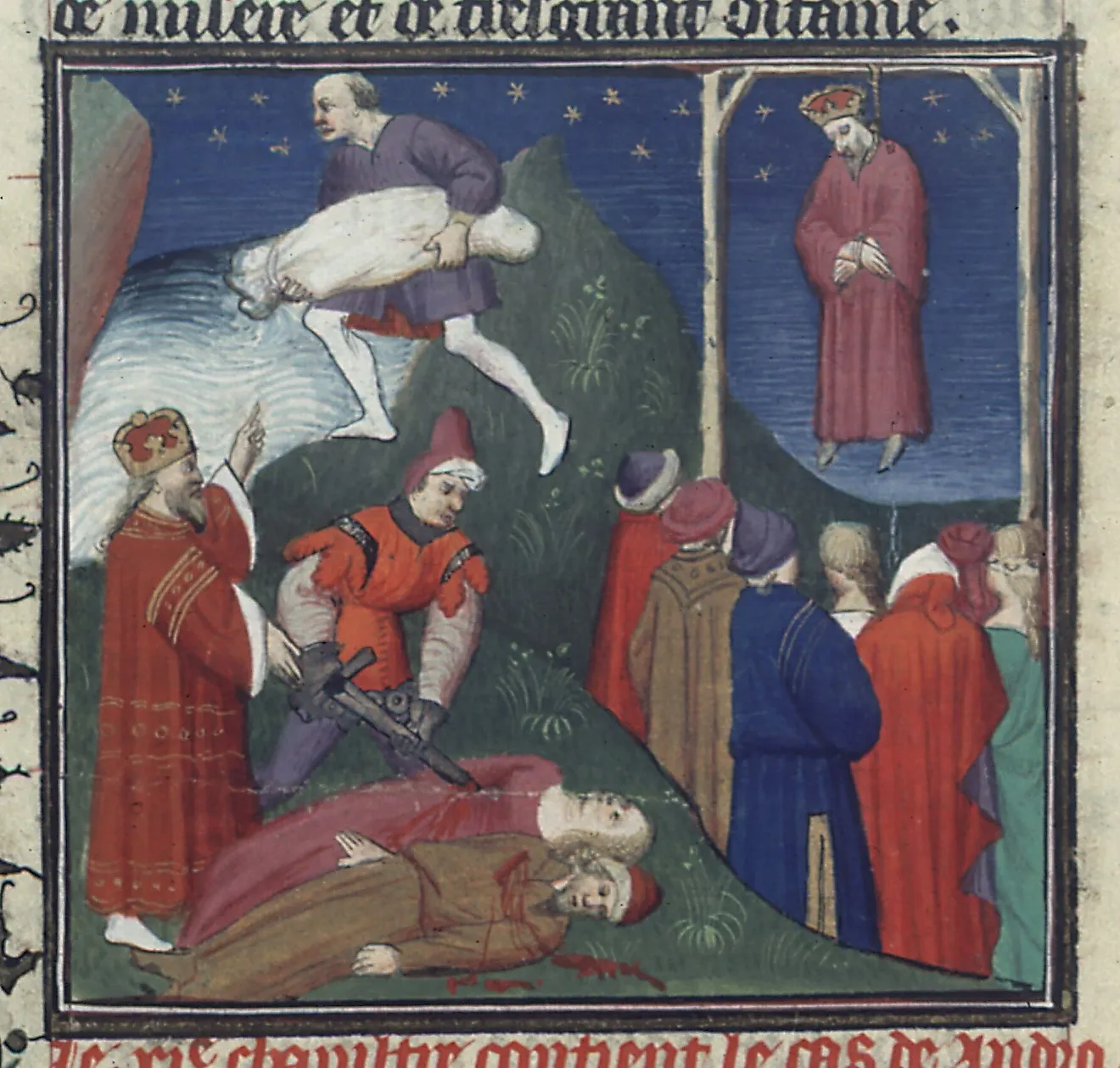
The Vehmgericht, German for "secret court," held its sessions at midnight in the forests and caverns of medieval Germany, mostly in Westphalia, hidden from public view. Members operated under oaths of secrecy with severe penalties for exposure, and stepped in as judge, jury, and executioner at a time when the Holy Roman Empire struggled to enforce order. A person convicted by the Vehm could expect to be seized at night and hanged, left with markings meant to warn others away from similar conduct.
Freemasonry's Lasting Influence
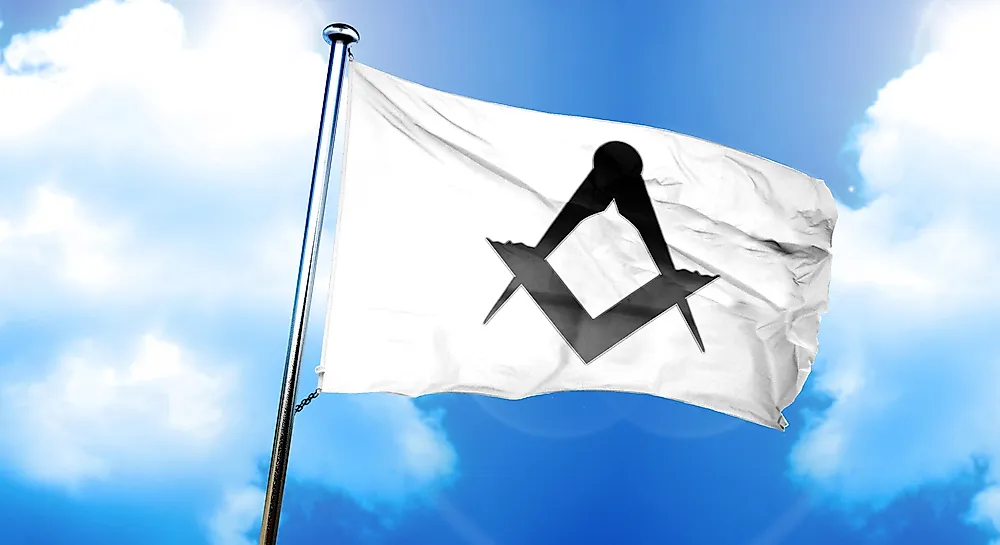
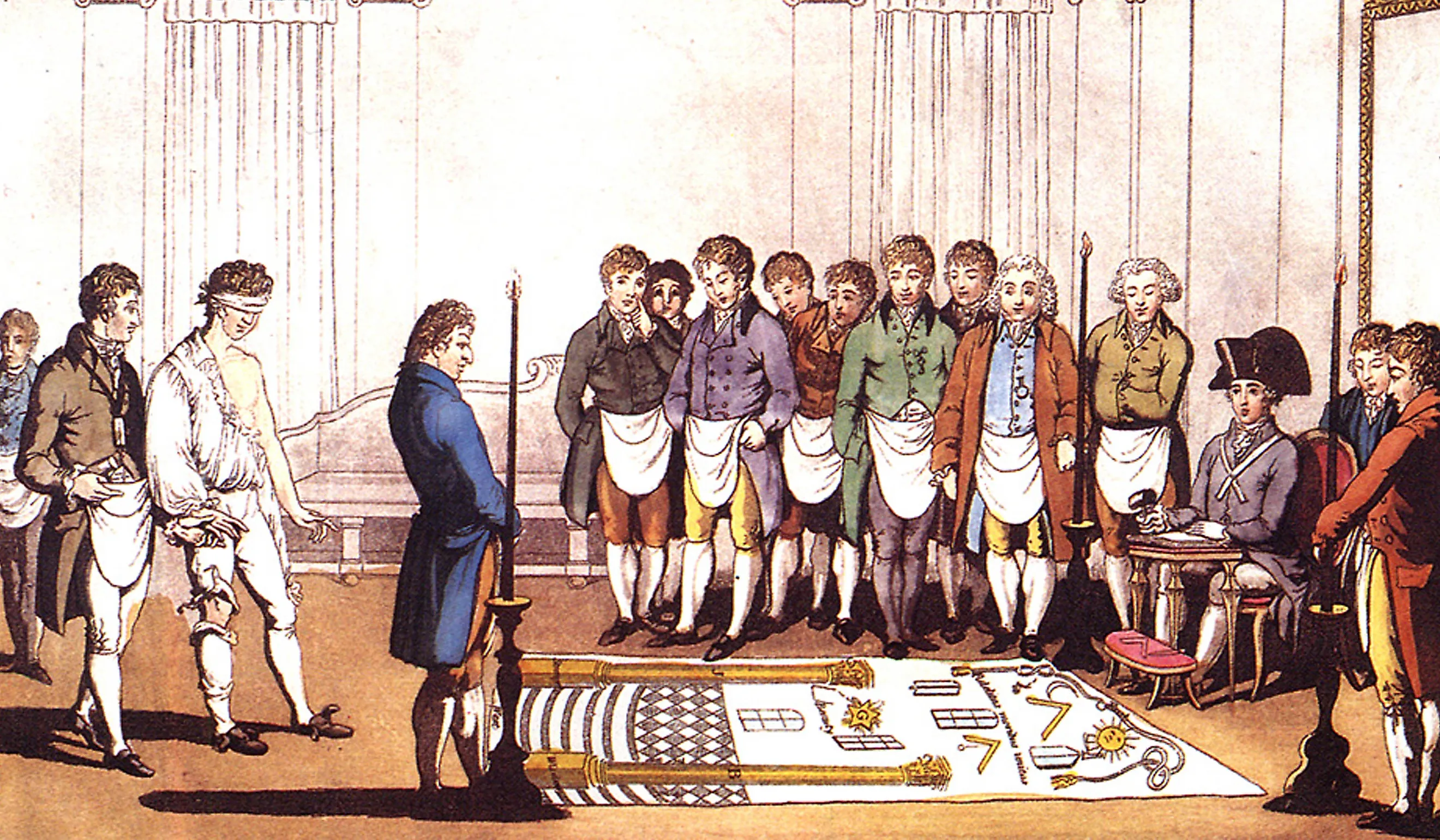
No order shows up in the history of more other secret societies than the Freemasons. Freemasonry traces its structure to the stonemasons' guilds of the late Middle Ages, and legend, unproven, connects it further back to the Knights Templar and the builders of Solomon's Temple. Despite periodic accusations of subversion, including several papal condemnations, most Masonic lodges have functioned as social and charitable organizations built around community service and self-improvement. Some 18th-century European lodges were infiltrated by the Illuminati, and later by Jacobin revolutionaries in France, though how far that influence actually spread remains disputed among historians. With its system of symbols, degrees, and oaths of secrecy, Freemasonry became the template that much of the rest of the secret-society world borrowed from.
The Pattern Behind the Secrecy
Most of the organizations here splintered, were suppressed, or quietly faded rather than achieving the world-spanning influence attributed to them. That gap between modest reality and outsized legend is really the point. Destroyed records and sworn silence leave room for fact, rumor, and conspiracy to blur together over the course of centuries, and there's rarely a clean way to pull them back apart.