8 Small Towns in Mississippi with the Best Downtowns
Mississippi's best downtowns each tie to something specific that shaped them. Ocean Springs has its arts district, built around the legacy of Walter Anderson. Laurel's downtown came back with the help of HGTV's Home Town. Bay St. Louis holds onto its coastal character alongside Creole and African American heritage. These eight towns represent different pieces of Mississippi's cultural, industrial, and literary history, and each downtown reflects that identity within a few walkable blocks.
Ocean Springs

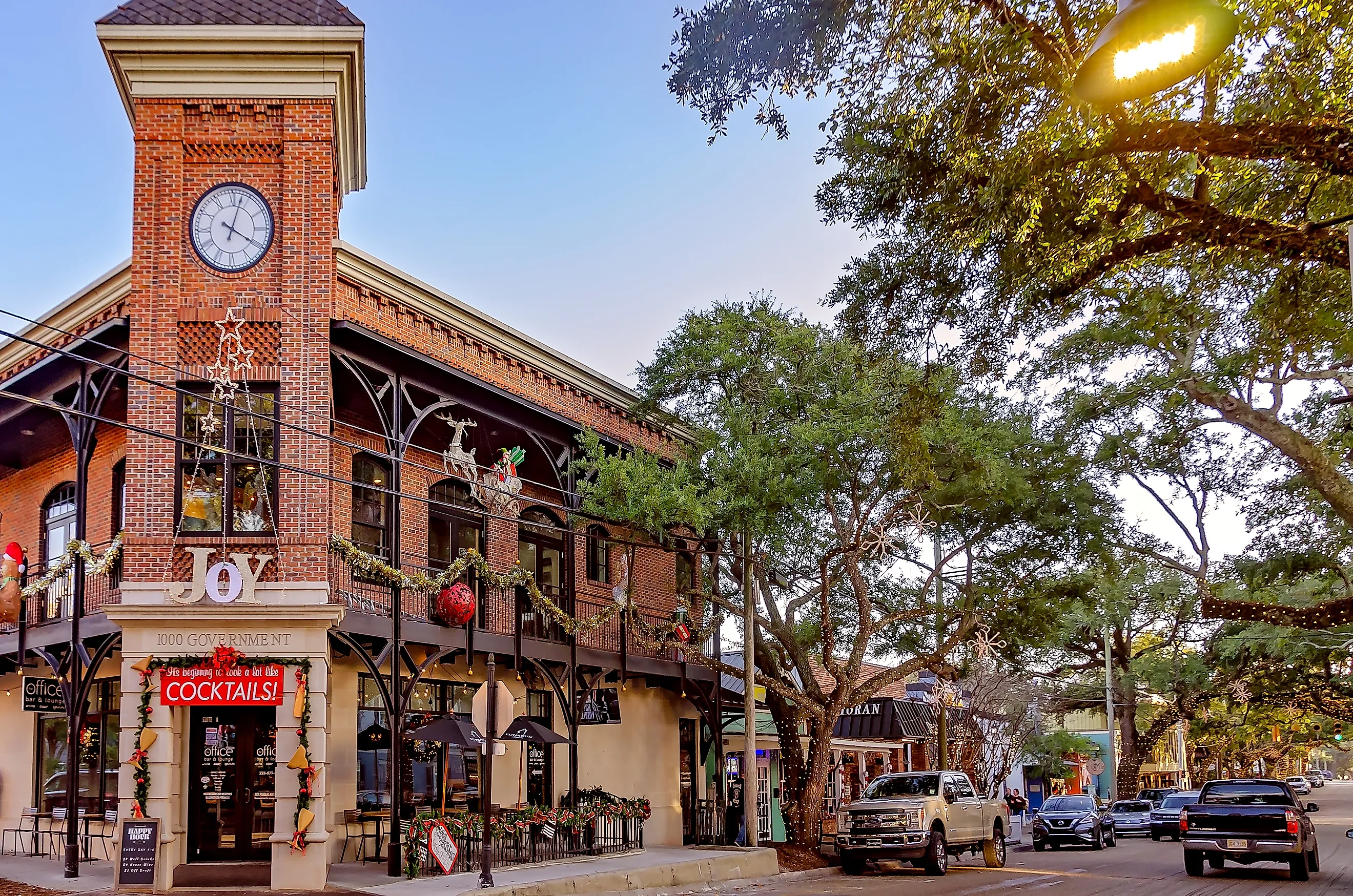
Downtown Ocean Springs is built around Washington Avenue, a walkable main strip with pastel storefronts, iron balconies, and oak trees. The arts anchor in town is the Walter Anderson Museum of Art, which houses the painter's Gulf Coast murals, sketches, and ceramics. Anderson's work and influence also turn up in smaller galleries and studios throughout the district, giving the downtown its identity as a working arts community rather than a gift-shop version of one.
The Ocean Springs Fresh Market brings farmers, bakers, and artisans onto the sidewalks. Government Street runs the dining corridor, with cafes, breweries, and courtyard restaurants including The Lady May, known locally for Italian and Southern fusion dishes.
Laurel

Laurel's downtown has been transformed in recent years by the national exposure of HGTV's Home Town, hosted by Erin and Ben Napier. The Napiers' Laurel Mercantile Co. sells American-made goods and homewares and has become a central stop for visitors drawn in by the show. Before the HGTV era, Laurel was already built on a different kind of legacy: the Eastman-Gardiner lumber company turned the town into one of the largest yellow pine milling centers in the country in the early 1900s, and that boom paid for the grand homes and downtown buildings that still define the city's architectural character.
The Lauren Rogers Museum of Art, founded in 1923 as Mississippi's first art museum, occupies a Georgian Revival building near downtown and displays European, Japanese, Native American, and American works. Just outside downtown, Landrum's Homestead & Village recreates 1800s Mississippi life across more than 30 historic structures, with seasonal festivals and demonstrations.
Bay St. Louis

Bay St. Louis sits on the Mississippi Gulf Coast, with South Beach Boulevard running along a wide public beach of soft white sand. The Alice Moseley Folk Art Museum occupies the historic L&N Depot and preserves the paintings of Alice Moseley, a folk artist and longtime local teacher. The L&N Historic Train Depot itself, a Spanish Mission-style building, doubles as the visitor center and houses exhibits on regional rail heritage and Mardi Gras history.
In Old Town, Saint Rose de Lima Catholic Church is recognized for a Christ mural that reflects the town's Creole and African American communities, and it remains one of the city's most visited cultural landmarks.
Columbus
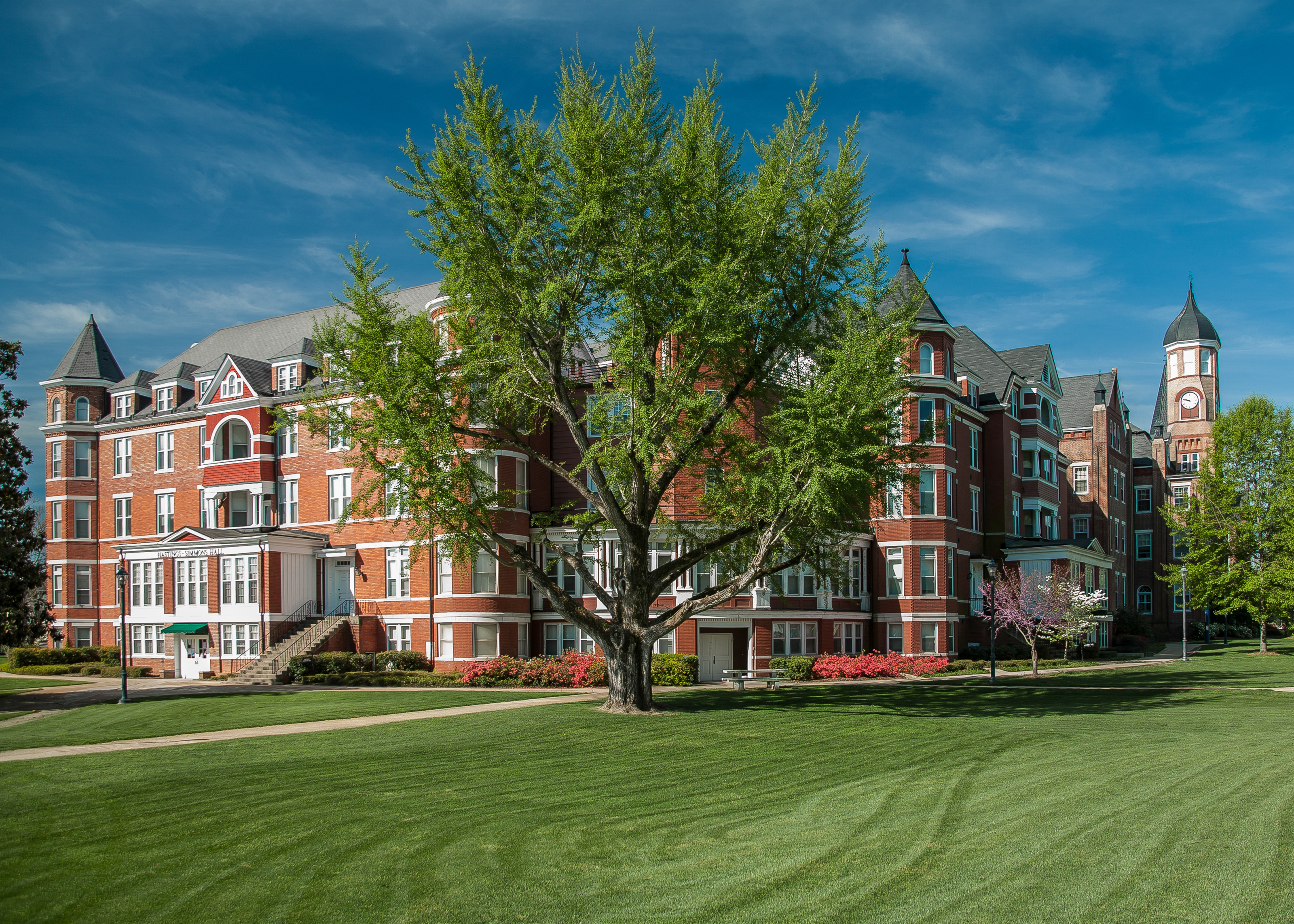
Columbus combines literary heritage, river history, and a working university campus. The Tennessee Williams Welcome Center, located in the playwright's 1875 Victorian birthplace, preserves family artifacts and materials from Williams's early life. Just north of downtown, Mississippi University for Women, founded in 1884 as the first public college for women in the United States, contributes a steady calendar of arts events and festivals to the city.
Downtown, the Rosenzweig Arts Center is the home of the Columbus Arts Council and hosts rotating exhibitions with monthly openings that are free and open to the public. The building itself is one of the more active cultural venues in northeast Mississippi.
Corinth

Corinth preserves one of Mississippi's most significant Civil War histories. The Corinth Civil War Interpretive Center, operated by the National Park Service, covers the 1862 Battle of Corinth and the town's strategic importance at the intersection of two major Southern railroads. The Corinth Contraband Camp site preserves the location where formerly enslaved people built a self-sustaining community under Union protection during the war.
The Crossroads Museum, located in the old depot, covers the city's identities across railroads, aviation, industry, and the Civil War, all tied to Corinth's self-given title as the "Crossroads of the South." For a lighter stop, Borroum's Drug Store and Soda Fountain, founded in 1865, is Mississippi's oldest continuously operating drugstore and still serves meals and soda-fountain staples from its original downtown location.
Cleveland

Cleveland sits in the Mississippi Delta and has leaned into the region's music heritage with the GRAMMY Museum Mississippi, a 28,000-square-foot interactive facility on Highway 8 that covers genres well beyond the blues the Delta is known for. The Martin & Sue King Railroad Heritage Museum adds railroad history alongside an extensive operating model-train layout.
The Crosstie District is Cleveland's walkable downtown, with pottery studios, galleries, boutiques, and restaurants. J & W Smokehouse is the best-known local barbecue spot, with a steady reputation across the Delta for brisket, pulled pork, rib tips, and smoked chicken.
Oxford

Oxford is the cultural center of north Mississippi, and the University of Mississippi keeps it active year-round with a full calendar of sports, music, and academic events. The Historic Downtown Square, built around the Lafayette County Courthouse, is lined with bookstores, galleries, and restaurants and is one of the most recognizable town squares in the South.
Rowan Oak, William Faulkner's home on the edge of the university grounds, preserves the author's writing spaces and personal effects. The Bailey Woods Trail, a short National Recreation Trail, connects the University of Mississippi Museum to Rowan Oak through a shaded hardwood forest, giving visitors a practical walking route between two of Oxford's most visited sites.
Natchez

Natchez sits on bluffs above the Mississippi River and is the state's oldest city, founded in 1716. Longwood, an unfinished octagonal mansion started in 1860, is the largest octagonal house in the United States and was halted by the Civil War before the upper floors could be completed. The interior remains frozen mid-construction, which makes it one of the more unusual historic home tours in the South.
Stanton Hall, a Greek Revival mansion that occupies an entire downtown block, is another of Natchez's signature antebellum properties and reflects the wealth generated by the city's cotton economy before the war. St. Mary Basilica stands out as one of the South's most architecturally notable Catholic churches. Just south of downtown, the Grand Village of the Natchez Indians preserves three ceremonial earthwork mounds and the cultural history of the Natchez people, whose presence on this land predates the European-built city by centuries.
A State Defined By Its Downtowns
Mississippi's best downtowns each reflect something specific about the state's history and culture. Ocean Springs is an arts town built around Walter Anderson's legacy. Laurel was reshaped by HGTV but rests on lumber money from a century ago. Corinth is inseparable from its Civil War history. Oxford runs on literature and the university. Natchez is the oldest of them and wears that age in its architecture and its setting above the river. Taken together, these eight cities cover the range of what small-town Mississippi has to offer within a few walkable blocks.