10 Overlooked Towns In Alabama Worth Visiting
Alabama often gets boiled down to Gulf Shores, Birmingham, and the other totally obvious tourist stops. But smaller towns quietly do their own thing, and it's worthy of attention. Eufaula rolls along Lake Eufaula with streets lined by antebellum homes and riverside diners. Fairhope's pier juts out into Mobile Bay, and Dauphin Island provides fantastic beaches without any of the full-on resort energy that permeates more of the Gulf of America. The quieter streets, diners named after local ghost stories, and unique historical attractions such as carved-up cedar trees tucked into forgotten spaces show that there's a side of the state that most visitors never even notice.
Dauphin Island

If Orange Beach and Gulf Shores are just too busy for you, Alabama has a beach resort definitely worthy of attention. Dauphin Island forms a 14-mile barrier at the mouth of Mobile Bay, with the Gordon Persons Bridge linking the island directly to the mainland and filtering traffic in a way larger Gulf towns never experience. Fort Gaines claims the island's eastern tip, its brick walls and original cannons marking the site of the 1864 Confederate surrender during the Battle of Mobile Bay and setting the tone for how much of the island still functions around preserved infrastructure rather than large-scale resort development. Still, attractions here aren't all historical. The Audubon Bird Sanctuary is a 164-acre protected one on the island's west end that serves as a major spring migration stopover and shapes seasonal movement through town. West End Public Beach concentrates swimming and fishing access behind a small gate fee, while East End Beach stays open and free beside Fort Gaines, creating two very different public shorelines within a few miles of each other. Indian Shell Mound Park preserves oyster shell mounds dating from 1100 to 1550 AD directly inside town, just a short distance from the historic Dauphin Island Harbor House.
Montevallo

Montevallo sits south of Birmingham with a layout shaped by a university core and a former coal town rather than a suburban sprawl or resort town. The University of Montevallo defines the town's daily movement, with an Olmsted Brothers-designed campus that folds academic buildings, lawns, and historic structures directly into surrounding streets. Reynolds Hall from 1851 and the King House predate the university itself and still function as visible markers of how long education has structured the town. The living history in this place is one of the main reasons it's worth visiting. A few blocks away from campus, Orr Park introduces Montevallo's most distinctive shared space. After an ice storm in 1993 damaged cedar trees throughout the park, local coal miner Tim Tingle carved faces and figures directly into the trunks. The Tinglewood Carvings now line the park's trail network, ranging from human faces to animals and mythical creatures, and the project has expanded into an annual Tinglewood Festival each September, with live carving demonstrations and competitions.
Bayou La Batre

Bayou La Batre's waterfront bears the marks of Hurricane Katrina, which in 2005 devastated the town's docks, seafood processing facilities, and residential area. Recovery has been gradual, but the community continues to reel in shrimp, oysters, and crabs along the Mobile Bay, sustaining Alabama's "Seafood Capital" title. Fishing vessels move along the bayou, while family-run processing plants on Shell Belt Road keep generations of maritime tradition alive. Each May, St. Margaret Catholic Church hosts the Blessing of the Fleet, a parade of decorated boats accompanied by gumbo cook-offs and live music that simply cannot be missed. The working waterfront frames the downtown streets, where seafood purveyors like Graham Shrimp Company and Dominick's Seafood offer fresh catches, and Murder Point Oysters lets visitors taste oysters straight from the bay. But dining options aren't just about what's caught in the waters; there's also Captain Frank's Smoke Shack, known for barbecue and Gulf-inspired gumbo.
Tuscumbia

Muscle Shoals and Sheffield often steal the spotlight in northwest Alabama, but Tuscumbia quietly stakes its own claim along the Tennessee River. Ivy Green, the 1820 home where Helen Keller grew up, gives the town a historical pulse, with guided tours and summer theatrical performances relaying the early life of the iconic author and educator. Downtown streets weave past the Alabama Music Hall of Fame, where memorabilia and a working recording studio celebrate the state's musical legends. Not far away is Spring Park, which features a waterfall, jet fountain, and an illuminated fountain show choreographed to music. The entire downtown area is really what makes Tuscumbia so special. A self-guided walk down the Historic District reveals charming cottages, preserved 19th-century buildings like Locust Hill, and great spots to grab a drink, including Kingpin's.
Mentone

Mentone slips quietly onto the map of northeastern Alabama, easy to miss even when scanning Lookout Mountain's western rim. Its population hovers just above 300, and the town relies on subtle draws rather than big-city buzz, giving it an understated energy rooted in nature and local culture. DeSoto State Park sprawls just outside town, offering hiking trails, waterfalls, and overlooks that stretch across the mountain landscape. Horseback rides at Shady Grove Dude Ranch trace forested paths, and the nearby Old Union Crossing Covered Bridge preserves a slice of 19th-century engineering. Downtown, Wildflower Cafe and Mentone Market anchor a small cluster of shops and eateries. Seasonal events like the Mentone Fall Festival bring the community together and welcome visitors on the historic Moon Lake School campus, while local inns, including the Mentone Inn and Bee on the Brow Bed and Breakfast, offer cozy accommodations framed by the town's wooded hills.
Eufaula

Eufaula stretches along the banks of the Walter F. George Reservoir, where anglers cast lines into what the town proudly calls the "Big Bass Capital of the World." Streets lined with towering oaks guide visitors past more than 700 historic homes in the Seth Lore and Irwinton Historic District, from the Italianate Fendall Hall to Shorter Mansion, whose halls echo stories of early 20th-century Southern life. You can stay right in this area thanks to places like Eufaula House on Barbour, one of the town's oldest homes. Just down a block or three, you'll find Cajun Corner on Broad, which serves up New Orleans-style cuisine. Lakepoint State Park threads along the shoreline and features a marina that launches boats into the quiet waters. Here, you'll also find a campground and an assortment of hiking trails.
Childersburg

With roots tracing back to 1540, Childersburg claims to be the oldest continuously occupied city in the United States. Majestic Caverns anchors modern exploration of the past. The cave system features the largest accumulation of onyx in the U.S. Tours combine geological insight with history, highlighting prehistoric Native American use of the caves, and include a laser light show that illuminates the stalagmites and stalactites. A few miles north, Kymulga Mill and Covered Bridge offer a window into Civil War-era Alabama. Built in the 1860s for a Confederate officer and completed posthumously at his wife's request, the mill still grinds grain with its massive stones and houses a park office and gift shop. The adjacent covered bridge, blending metal and wood, crosses Talladega Creek and connects to trails that follow the creek north. The town itself is miles from the big hubs of the state, yet still features a number of culinary musts, including Good Ole Boys BBQ and Old Town Grille, which is mere minutes from the Coosa River.
Fairhope

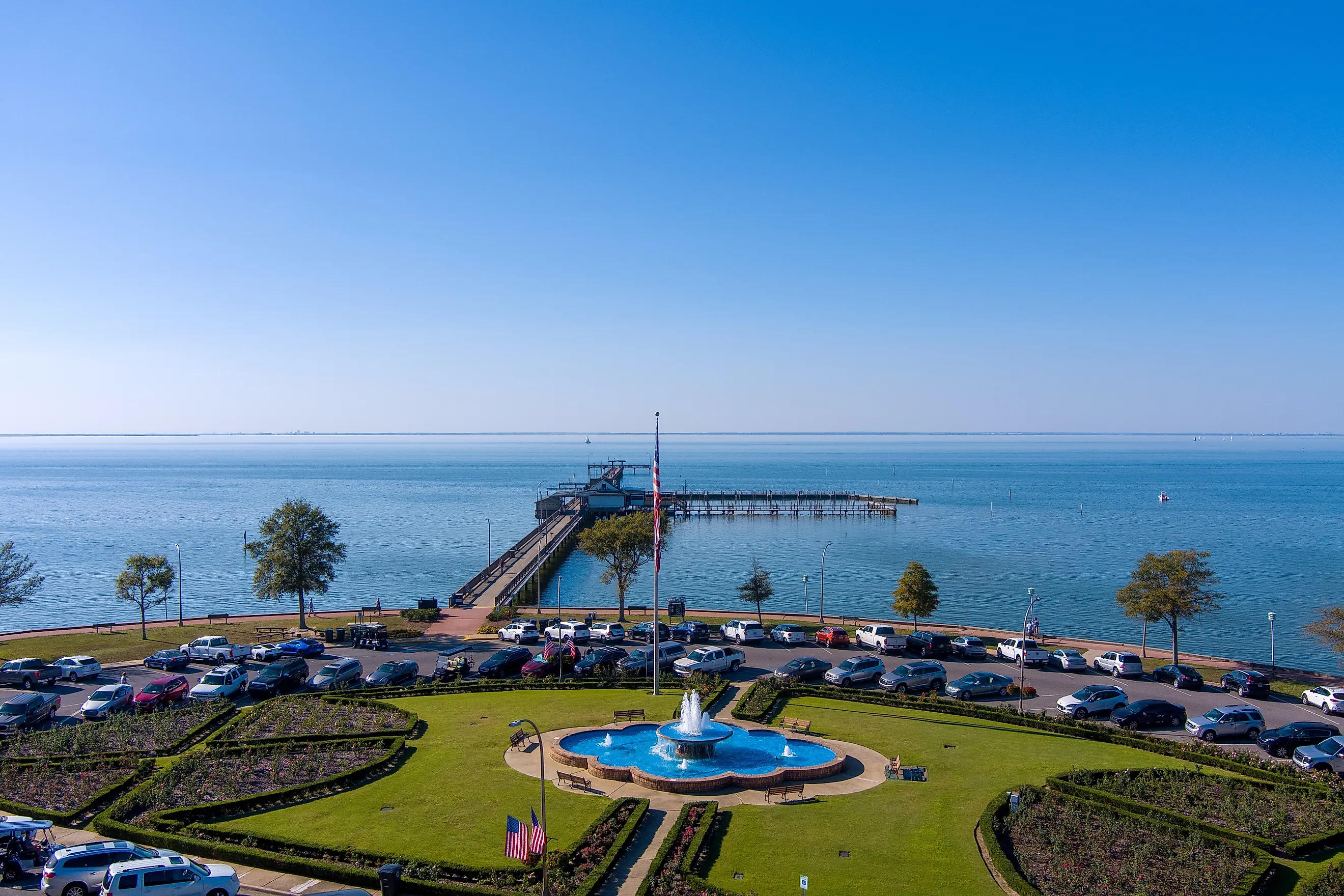
Roughly six miles south of Daphne and ten miles south of Spanish Fort is Fairhope. Its downtown streets form a compact, walkable area built around the Fairhope Municipal Pier, which extends 1,448 feet into Mobile Bay and hosts daily fishing, walking, and even gatherings. Next to the pier are South Beach and North Beach Park, the latter a quarter-mile of sand to explore and relax on. Perhaps Fairhope remains underrated because it overlooks the typical Gulf Coast marketing of white-sand beaches, but it certainly has its own as well as charming inns and bed & breakfasts, like Emma's Bay House, within walking distance. Antique stores such as Copper Roof Antiques sit nearby Seeley's Gallery by the Bay, where rotating exhibitions showcase regional artists. Art in general is a huge part of the culture here, with the annual Fairhope Arts & Crafts Festival, held each March for more than 70 years, being one of the most memorable and exciting events.
Abbeville

Abbeville's tree-lined streets and small-town scale keep it mostly under the radar, even though its downtown reflects decades of local investment and historic preservation. Downtown centers around the neoclassical Henry County Courthouse, while Town Square Shoppes occupy restored buildings with vintage signage. Huggin' Molly's, named for a local ghost story, serves Southern staples like fried chicken, turnip greens, and banana pudding in a 1950s-inspired interior that draws both residents and regional visitors. Each spring, Yatta Abba Festival fills the downtown square with music, food, and children's activities, celebrating the bloom of dogwoods and referencing the Creek Indian name for the area, Yatta Abba. The Abbeville Harvest Festival in the fall provides another focal point and has done so for over five decades.
Wetumpka

Tim Burton fans may recognize Wetumpka from his 2003 film, Big Fish. Similar to the movie, Wetumpka remains underrated, with its Victorian architecture, brick streets, and revived downtown. Main Street Wetumpka blends historic architecture with year-round energy. Merchants Alley, once quiet, now pulses with murals, cafe lighting, and spaces linking the Riverwalk Trail to the Farmers Market (May through August) and the Historic Bibb Graves Bridge. Seasonal events add further life to a town that simply doesn't get its due, including Coosa Palooza and Oktoberfest, which fill the downtown squares. Fort Toulouse-Jackson Park preserves centuries of history on the same grounds, with Native American mounds from the 1400s, Creek homes, a French fort, and an early U.S. fort tied to Andrew Jackson's treaty with the Creek Nation.
Alabama's most underrated towns reveal a side of the state often missed by typical travel guides. Despite facing incredible hardship, Bayou La Batre has preserved generations of shrimping and oyster traditions celebrated during the Blessing of the Fleet, and then there's Dauphin Island, which provides all of the Gulf spirit without the boisterous energy of more popular towns. Whether it's Montevallo, Fairhope, or Abbeville, these Alabama towns combine heritage, seasonal festivals, and incredible local communities, providing countless reasons to look beyond the state's better-known cities.