These 8 Towns In Alabama Have The Best Main Streets
Alabama’s small towns boast main streets that are the heart of Southern charm and distinct local character. These communities across the state offer exceptional experiences, combining history and commerce. Whether you seek the coastal elegance and water views of Fairhope, defined by its pier, boutiques, and Mobile Bay setting, or the artistic energy of Fort Payne, home to the Alabama Band Museum and historic depot, here are the eight towns with the state’s best, most vibrant main streets.
Fairhope

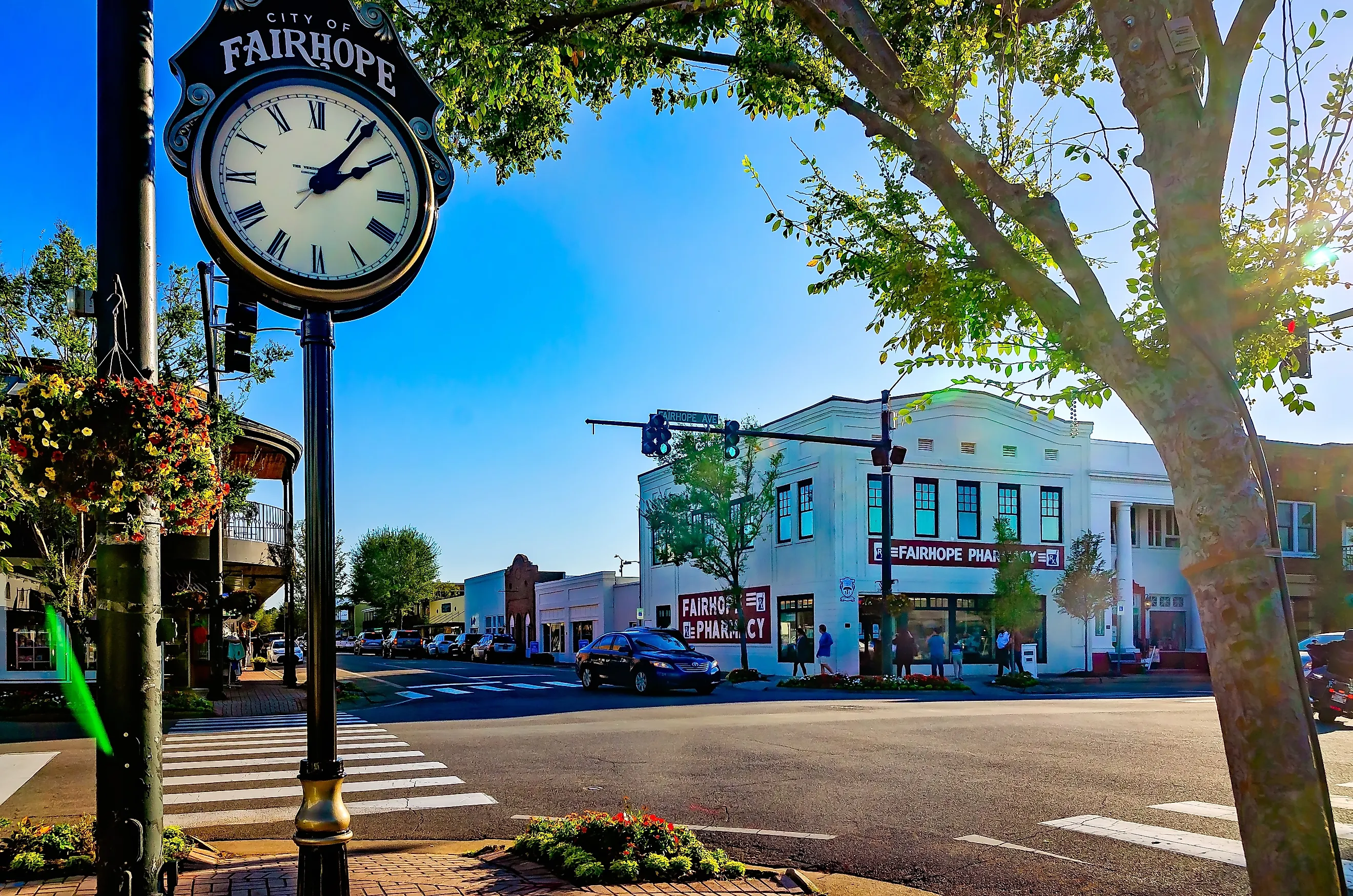
Fairhope is located on the shore of Mobile Bay, where its main street unfolds as a charming, walkable avenue lined with porches, boutiques, galleries, and cafés that reflect the town’s bayfront character. The Fairhope Municipal Pier stands as a centerpiece, drawing steady foot traffic with broad water views, a fountain and rose garden, fishing access, strolling paths, and constant bird activity above the bay. Nearby, the Fairhope Museum of History occupies the former city hall, presenting free-entry exhibits and artifacts that trace local stories within an intimate downtown setting.
Dining adds another layer of daily energy, with Another Broken Egg Cafe serving popular breakfast plates and brunch sandwiches that keep tables full from early hours onward. Knoll Park extends the main-street experience with well-kept grounds, an immaculate pier, beach frontage, a duck pond, playground, and shaded benches beneath canopies ideal for coastal picnics. Pelicans roaming the pier and diving along the shoreline quietly amplify the natural appeal.
Florence

Downtown Florence forms a vibrant, walkable district filled with shops, restaurants, and historical stops that invite easy exploration. Storefronts range from clothing boutiques and gift outlets to galleries and home furnishing spaces, while antique stores reward patient browsing with unique finds. Fashion draws attention along N. Court Street at designer Billy Reid’s flagship store. Each summer, the W. C. Handy Music Festival spreads rhythm through downtown streets and Wilson Park, blending blues, jazz, rock, country, gospel, plus performances paired with art events, educational programs, and athletic competitions that animate the entire district.
Cultural landmarks anchor the scene year-round. Shoals Theatre hosts concerts, plays, comedy shows, and varied live events within its classic interior. The Kennedy-Douglass Center for the Arts occupies three historic structures devoted to exhibitions, studio workshops, and outdoor creative spaces supporting the local arts community. Pope’s Tavern Museum adds depth with Civil War history preserved inside a former tavern-turned-hospital. Nearby, Wilson Park has a tranquil setting accented by its iconic 1934 fountain, a centerpiece often photographed as one of the Shoals area’s defining sights.
Eufaula

Historic Downtown Eufaula centers on a nationally recognized Main Street district that has hosted more than 300 community events over the past 18 years and now maintains over 90 percent storefront occupancy. Walkable blocks showcase an engaging mix of distinctive boutiques, quality furniture shops, salons, and inviting dining spots like El Jalisco Mexican Grill that keep sidewalks active throughout the week.
Just beyond the main corridor, the Seth Lore and Irwinton Historic District stretches across 942 properties lined with grand mansions set along shaded streets ideal for relaxed walks. Architectural highlights include Fendall Hall, an Italianate museum home built between 1856 and 1860 with its symmetrical villa-style design and cupola, along with the 1884 Shorter Mansion, which houses the Eufaula Pilgrimage Museum. Nearby, the Walter F. George Reservoir adds a scenic complement through fishing, boating, and campground access, balancing the downtown experience with outdoor appeal.
Monroeville

Monroeville Main Street earned the 2024 Great American Main Street Award, affirming the strength of its carefully preserved downtown setting. At the core stands the 40-acre Monroeville Downtown Historic District, arranged around the courthouse square and framed by Claiborne Street, Alabama Avenue, Pineville Road, and Mount Pleasant Avenue. Sixty-three structures fill the area, with 51 listed as contributing buildings representing Classical Revival, American Craftsman, Moderne, and varied commercial styles.
Furthermore, the Monroe County Courthouse commands the square as the famed model for the courthouse in To Kill a Mockingbird. Nearby, the Courthouse Café adds a friendly lunch stop known for club sandwiches and homemade onion rings. A short walk away, Monroeville Veterans Park enhances the district experience through playground spaces, athletic fields, and photo landmarks featuring a tank, airplane, and helicopter that draw families into the heart of town life.
Selma

Selma first rose as a trading center and market town during the antebellum era of King Cotton, with the Alabama River anchoring commerce and transportation along its busy waterfront. While renowned for its defining role in the Civil Rights Movement, the downtown corridor remains lined with historic landmarks that preserve layered stories of struggle, resilience, and riverfront life, creating a Main Street shaped by both economic ambition and social change.
The Edmund Pettus Bridge stands as a national landmark, forever tied to the events of Bloody Sunday in 1965. Nearby, the National Voting Rights Museum and Institute presents artifacts documenting African-American voting rights and women’s suffrage, reinforcing downtown’s educational depth. Civil Rights Memorial Park adds beautifully designed monuments honoring lives lost in the pursuit of freedom, justice, and equality. Along the riverbank, the St. James Hotel rises as one of the Southeast’s few surviving antebellum river hotels and the last remaining historic hotel in Selma’s downtown district, completed in 1837-1838.
Wetumpka

“Wetumpka in Full Bloom” reflects both the beauty and revitalization of the historic commercial district, where Main Street Wetumpka steers preservation and community connection as a nationally accredited Main Street America program. Throughout the year, downtown energy builds through signature gatherings such as Oktoberfest, Coosa Palooza, and themed shopping weekends, which animate storefronts while reinforcing the district’s welcoming spirit. As the Coosa River flows directly through town, water views merge naturally with brick-lined blocks, shaping a Main Street framed by scenic backdrops and active civic life.
Along the downtown edge, the Fall Line Overlook provides sweeping panoramas of the river and historic core. Merchants Alley adds a lively counterpoint, transformed from a quiet corridor into a colorful passage filled with murals, café lighting, and social spaces linking the central blocks to the Riverwalk and Farmers Market. Nearby, the imposing Elmore County Courthouse anchors the commercial area with architectural presence, grounding Wetumpka’s streetscape in heritage.
Tuscumbia

Downtown Tuscumbia mixes heritage and everyday energy, framed by the celebrated Tuscumbia Historic District and its self-guided Walking Tour. Charming cottages, graceful mansions, and preserved 19th-century buildings define streets made for strolls, with more than 25 antebellum structures listed on the National Register of Historic Places.
The downtown area highlights Ivy Green, the preserved 1820s home of Helen Keller, through guided tours and summer theatrical shows. The Alabama Music Hall of Fame celebrates the state’s legendary performers with memorabilia and a working recording studio, anchoring a distinctly musical presence downtown. Nearby, the beautifully restored Historic Tuscumbia Railway Depot recalls the town’s era as a major rail stop, standing as a focal point of the district. Completing the scene, Spring Park sits right in town with its dramatic manmade waterfall, illuminated light shows, and jet fountains shimmering across the pond.
Fort Payne

Fort Payne combines old and new within a quaint small-town setting, where shopping and dining line a lively Main Street that pulses with artistic energy. The district carries an unmistakable creative spirit through local galleries and a close-knit community theater scene.
Nearby, the Fort Payne Depot Museum preserves rail history inside the former 1891 depot through rotating exhibits and permanent displays. The Alabama Fan Club and Museum continues the musical story with more than 50 years of memorabilia displayed in a modern, reimagined space. A short walk away, the restored Fort Payne DeKalb Theatre remains an active multipurpose venue that echoes the glamour of its mid-century roots. Completing the scene, Alabama Walking Trail Park adds natural balance with well-maintained paths, a small splash pad for toddlers, and a cheerful playground, framing Main Street with easygoing outdoor charm.
Eight Main Streets That Define Southern Charm
From the music-filled sidewalks of Florence to the event-driven charm of Eufaula’s nationally recognized downtown, Alabama’s best main streets reflect community pride and everyday vibrancy. These eight towns feature cultural landmarks, boutique shopping, inviting dining, and scenic surroundings in walkable districts that reward slow exploration. Each street tells a local story from festival rhythms and art spaces to grand historic homes and waterfront backdrops, showing how small-town corridors continue to anchor connection, creativity, and Southern character across the state.