Discovering England’s Blenheim Palace, the Birthplace of Winston Churchill
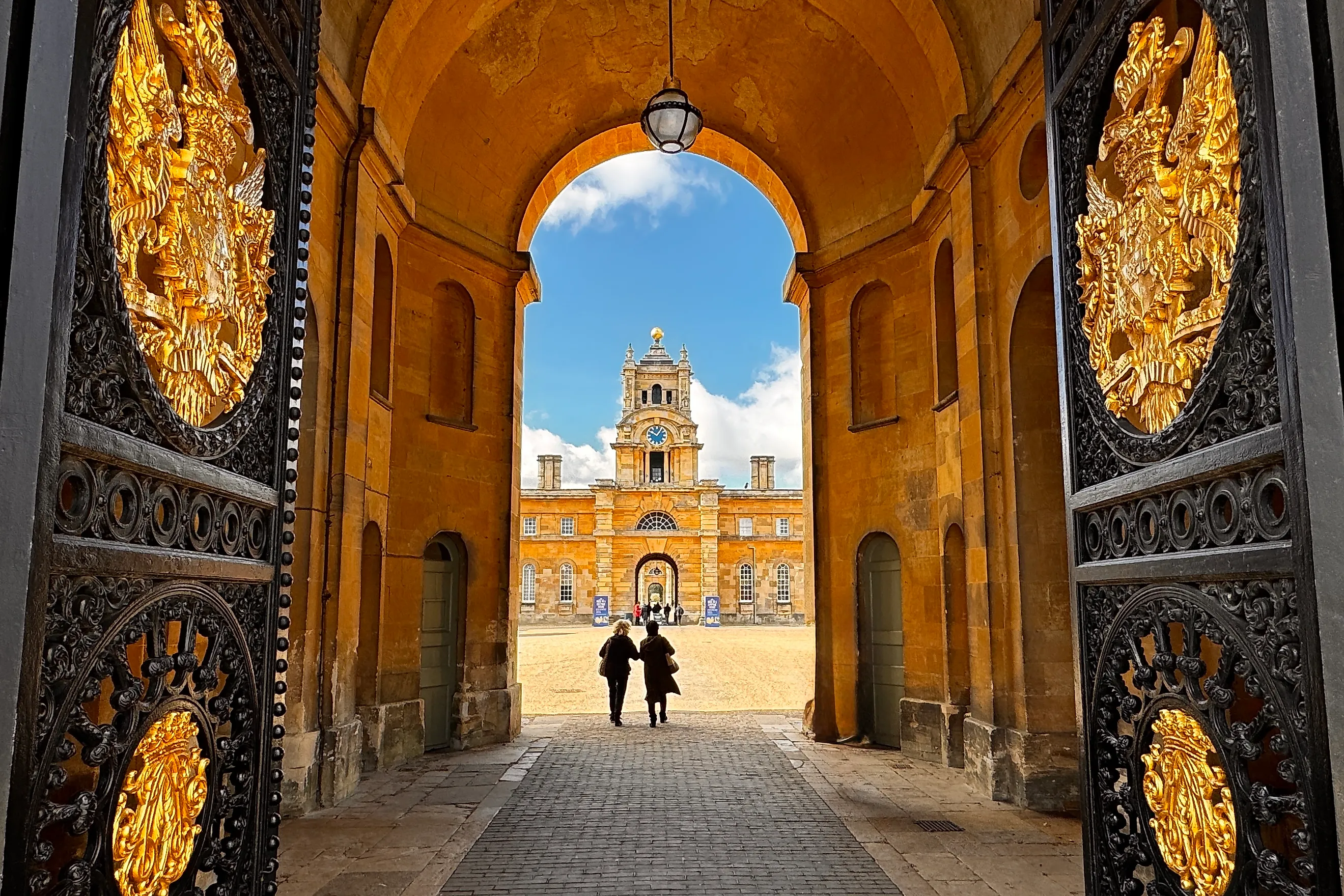
Blenheim is the only country house in England to carry the title of "palace" despite never having belonged to royalty or the church. Dubbed "Britain's Greatest Palace," this UNESCO World Heritage Site near Woodstock, Oxfordshire, is also famous as the birthplace of Sir Winston Churchill.
A fan of both Churchill and elegant country estates, I knew I had to see for myself whether the "greatest palace" claim was an accurate one. And boy, is it ever.
England's Only Non-Royal Palace

Blenheim was a gift from Queen Anne and a grateful nation to John Churchill, the 1st Duke of Marlborough, in recognition of his victory at the Battle of Blenheim in 1704. Fought near the small town of Blindheim ("Blenheim" to the English) during the War of the Spanish Succession, this important historic battle saw an allied army defeat the combined forces of France and Bavaria.
Built between 1705 and 1722 in the English Baroque style, Blenheim's vast scale was meant to impress all who saw it. Although very much a family home, it was also designed as a national monument to the duke's military success. Yet despite his status as an English hero, the Crown ended its financial support in 1712, leaving the duke to pay for the bulk of the construction himself.
Now a Grade I listed building (the nation's top tier in terms of historic significance), it remains the seat of the Dukes of Marlborough and is today the home of the 12th Duke, Charles James Spencer-Churchill. More than three centuries after it was finished, it's now one of the country's most visited (and most impressive) historic houses.
The Great Hall and State Rooms

I opted for the self-guided palace tour and started in the Great Hall. Standing 67 feet (20 m) high, the ceiling of this vast room was painted by Sir James Thornhill in 1716 and shows the 1st Duke kneeling before Britannia, the personification of the British Empire, presenting his plan for victory at Blenheim.
The Great Hall's intricately carved stonework is equally impressive and looked familiar. My audio guide cleared this up by informing me it was the work of Grinling Gibbons, the same master carver who also worked on St Paul's Cathedral, which I had visited just a week earlier.

From here, I passed through the gilded State Rooms, hung with portraits and the famous Victory Tapestries, a set of woven hangings commissioned by the 1st Duke to record his military campaigns. The Saloon, the main dining room that's decorated with murals by the French artist Louis Laguerre, is still used by the family for dinner at Christmas.
The Long Library, originally conceived as a picture gallery, runs the length of the west front and holds more than 10,000 books, along with a statue of Queen Anne. Also of interest is Blueprints of Power. This fascinating exhibition looks at the politics, personalities, and architectural ideas that shaped the building.
The Birthplace of Winston Churchill

For me, though, the main reason to visit Blenheim was its connection to Britain's most famous wartime leader. A grandson of the 7th Duke, Winston Churchill was born here on 30 November 1874. His parents, Lord Randolph Churchill and American socialite Jennie Jerome, just so happened to be visiting Blenheim when Winston decided to make his entrance. It was fascinating to see the very modest bedroom in which he was born, furnished just as it would have been in 1874.
The Churchill Exhibition occupies several rooms overlooking the Water Terraces, where he often set up his easel and painted. Displays include a vest he wore as a baby, family letters and photographs, military uniforms, and the red dispatch box he used while Secretary of State for War in 1919. There's also a fascinating display that covers his childhood adventures with his pony, Rob Roy.

Another room is arranged to look just as it would have in his later years, complete with an armchair, a radio, a bottle of whisky (of course!), and newspapers. Though never his full-time home, the young Churchill returned to Blenheim for holidays and to paint, socialize, and spend time with his family. He later wrote: "At Blenheim I took two very important decisions: to be born and to marry."
The marriage Churchill referred to also began at Blenheim. It was here in 1908 that the then 34-year-old proposed to Clementine Hozier at the Temple of Diana, a small 18th-century summerhouse beside the estate's lake.

I was surprised to learn that the couple was also buried close by, at St Martin's Church in the village of Bladon. Just a mile (1.6 km) south of Blenheim and within sight of Churchill's beloved palace, I stopped by to pay my respects at what I felt was a very humble grave for so remarkable a man. That was, I learned, exactly as he wanted it, being laid to rest in a humble village churchyard rather than a grand cathedral.
Once-in-a-Lifetime Rooftop Views

When I first saw that a large section of the palace, including the central Great Hall, was under scaffolding, I was naturally disappointed. Palace staff soon put me right, though. The largest restoration project in the palace's history, the work involved repairing a section of roof almost an acre in size that was being drained by just six downpipes, leading to frequent leaks.
Rather than letting this be an inconvenience to us visitors, the palace turned the restoration into a truly unique experience. That ugly scaffolding contained a sturdy temporary staircase leading to the specially built Rooftop Viewing Platform with views never seen by the public.
Looking out across the Great Court to Vanbrugh's Grand Bridge and the Column of Victory, the astounding scale of Blenheim Palace really did sink in. The rooftop restoration project ended not long after my spring visit, so I certainly feel very lucky to have had an experience that Churchill himself never got to enjoy.
Blenheim's Grounds and Gardens

Once in Blenheim's magnificent grounds, it was easy to see why Churchill kept coming back to paint. Covering 2,000 acres of park-like perfection, they were designed by Capability Brown, the 18th century's leading landscape designer. The centerpiece is the Great Lake, created over an 11-year period by the damming of the River Glyme to create what is arguably one of the best views of any English country estate (and I've seen many!).
Walking the grounds was every bit as much fun as exploring the palace. Tucking away the map I was given upon entry, I wandered to whatever landmark caught my attention. First up were the Formal Gardens to the rear of the palace, which include Churchill's much-loved Water Terraces.
Taking my time, spring's first blush meant that flowers were already in bloom. In addition to the more traditional displays, including a Rose Garden and an Italian Garden, the newer Churchill Memorial Garden also caught my attention.

And purely by chance, after venturing a little distance from the gardens to find a different view of the palace, I stumbled across a life-size bronze sculpture of the great man himself painting the same view I had just captured. Unveiled in 2024, I learned that it was in this exact spot that Churchill would sit and paint. Given the remarkable realism of the statue, it felt like the great man himself was there enjoying the view with me.
Tips and Tactics
Blenheim Palace is in Woodstock on the eastern edge of the Cotswolds, just eight miles (13 km) north of Oxford. Here are a few tips and tactics I picked up along the way:
- Though tickets can sometimes be purchased on arrival, the popularity of Blenheim Palace means advance booking is recommended to avoid disappointment.
- Parking is included with admission.
- The palace is open year-round, with reduced opening hours in winter.
- Plan to make a day of it, making a food stop at the Orangery Restaurant, the Stables Café, the Oxfordshire Pantry, or the Walled Garden Pizzeria.
- Download the free Blenheim Palace self-guided tour app here.