The American Revolution Was Won in Virginia, and These 5 Sites Tell the Story
There's so much more to the American Revolution than patriotic troops in their blue uniforms skirmishing with British Redcoats. Across Virginia, towns and villages were the scene of fierce debates about potential outcomes of independence while stockpiling weapons of war. At the same time, leaders like George Washington were devising military strategies to defeat the world's biggest empire.
Although the opening shots of the conflict were fired miles from Virginia, the largest and most prosperous of the 13 colonies, the state not only contributed leaders like Washington, Thomas Jefferson, and Patrick Henry, it also became the stage for many decisive moments of the conflict. I visited many of the most important historic sites in Virginia to find out more about America's struggle for independence, and here's what I learned.
George Washington's Mount Vernon

There's no better place to start exploring this fascinating period of American history than at the former Virginia home of George Washington, the man responsible for leading the Continental Army to victory. The man who was to be the first President of the United States lived in this beautiful plantation home from 1754 until his death in 1799, and it now ranks as one of America's most visited historic sites, attracting over a million visitors a year.
Start your visit with the special-effects-heavy 4-D presentation that highlights Washington's key battlefield decisions. Another fascinating exhibit explores the effort to reconstruct Washington's appearance as it would have been during the war. Spoiler alert. It's very different from the face we're most familiar with. Instead of the elder statesman, we see a much younger, more energetic Washington as a skilled horseman and battlefield leader.

The highlight, though, is exploring the main home. Admission here is via guided tour only and includes a glimpse of his private quarters and original furnishings. Along the way, interpretive staff share stories not only about his leadership, but about farming innovations, as well as about the enslaved community that sustained the estate. Afterward, be sure to spend time exploring the grounds for the wonderful views of the Potomac River.
Colonial Williamsburg

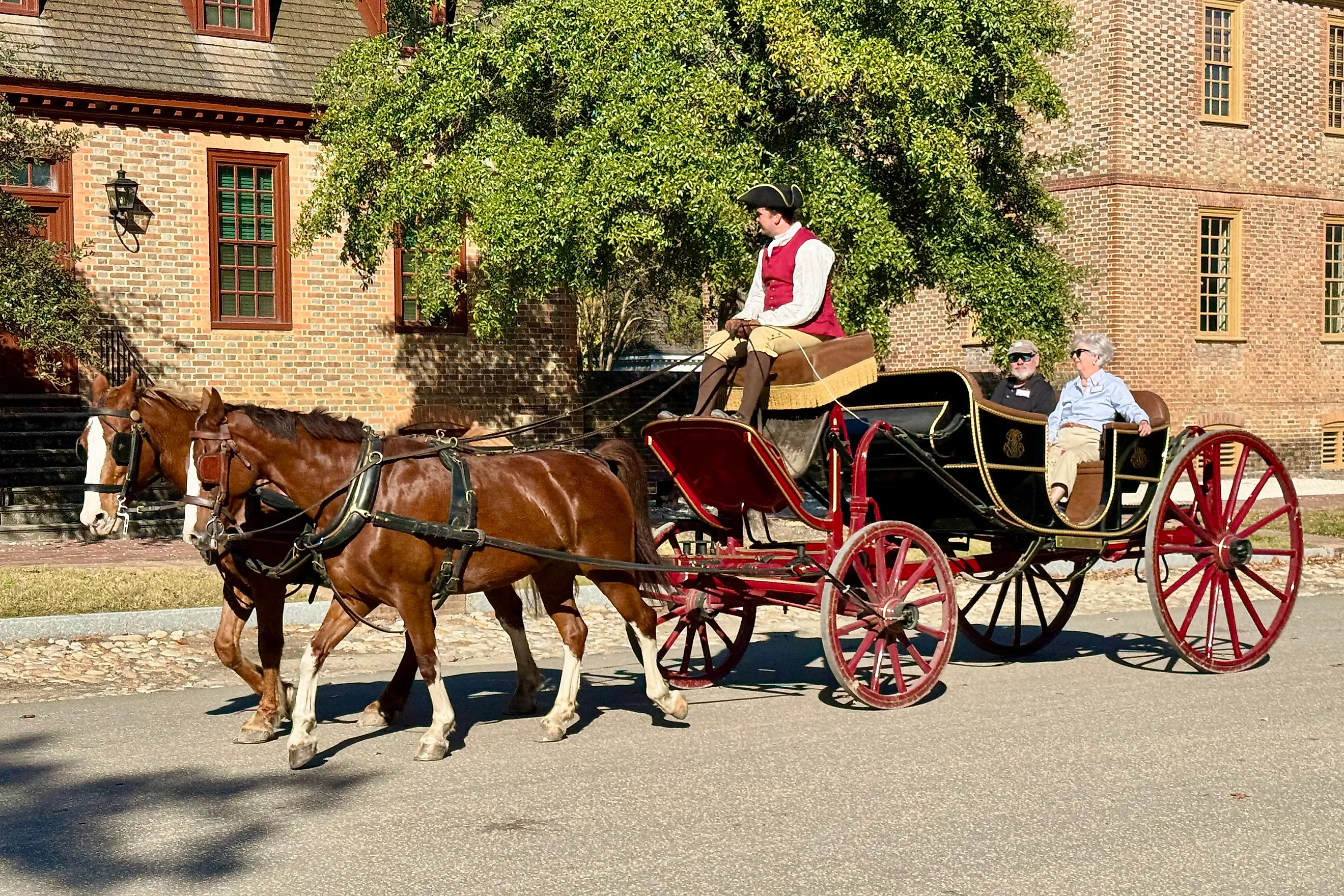
Located midway along the historic Colonial Parkway connecting Jamestown and Yorktown, Colonial Williamsburg covers some 300 acres and is chock-full of preserved and reconstructed 18th-century buildings that bring the American Revolutionary era to life. It is the world's largest living history museum. Highlights include interacting with skilled artisans dressed in period costumes who keep traditional trades alive, including tailors, dressmakers, tinsmiths, and blacksmiths, to name but a few.
You'll also encounter militia drills and watch overviews of how muskets were made, and if you time it right, might even be lucky enough to watch a cannon being loaded and fired. It's also tremendously fun for kids, with family-friendly activities including fife and drum performances and lantern-lit ghost tours centered on pirate legends. You can even rent colonial-style clothing to enhance the sense of stepping back in time.

If you're planning to cram as much into your day as possible, purchase a Colonial Williamsburg pass for admission to over 200 buildings and workshops, including the Capitol building where Virginia representatives boldly embraced separation from Great Britain prior to the formal Declaration of Independence. The pass also includes entry to the Governor's Palace, where key revolutionary figures like Thomas Jefferson and Patrick Henry lived as governors.
Yorktown Battlefield National Park

By the summer of 1781, Britain's General Cornwallis had assembled 8,000 troops and artillery on the Yorktown peninsula in the belief he would be reinforced by British naval forces. But when the Franco-American forces converged on Yorktown, they had more men, more artillery, and, even more importantly, control of the sea courtesy of the French fleet.
The Siege of Yorktown lasted 21 days, only ending when the surviving British forces surrendered on October 19, 1781. The pivotal battle of the eight-year conflict, America's Yorktown victory paved the way for peace and, ultimately, independence.

You get a real sense of the struggle at Yorktown Battlefield National Park, the very spot the British laid down their weapons. You'll also see the remains of the original siege lines, with context provided by handy interpretive signs. A free shuttle bus travels between the National Park Visitor Center and Yorktown, stopping at the Yorktown Victory Monument long enough for you to grab a photo.
The American Revolution Museum at Yorktown

The American Revolution Museum at Yorktown is an excellent place to learn more about this fascinating period in American history. And take your time, as there's a lot to see and do here.
Start your journey of discovery by catching one of the attraction's immersive 4-D films with its moving seats, sound effects, and even scents that all enhance the onscreen action. Fascinating exhibits of artifacts and interactive displays also add to the experience and provide a nuanced look at the heroes, the compromises, and the tragedies that defined the period.

Stepping outside, however, is an altogether more immersive experience that provides a compelling introduction to life during the war for independence. Costumed historical interpreters greet visitors with stories about the daily realities of soldiers, sailors, and civilians, and demonstrate period skills such as cooking and farming, explaining how their efforts would have contributed to the war effort.
A highlight is the replica of a Continental Army encampment complete with period tools and soldiers to chat with, some of whom perform live cannon and musket demonstrations. It's also extremely interesting to learn about the contrasting viewpoints within colonial society, including differences in rank, loyalty, and opportunities for freedom.
St. John's Church, Richmond

Patrick Henry's "Give me liberty or give me death!" speech is one of the most recognized rallying cries of the Revolution. These famous words were uttered by Henry at St. John's Church in Richmond, the state capital, on March 23, 1775, and were meant as a rallying cry that would unite Virginians for the upcoming fight against the British.
Located on the eastern edge of Richmond, this quaint wooden church, while modest in appearance, resonates with history. But it was here that delegates from across Virginia gathered to decide whether standing with the rebelling citizens of Massachusetts was worth the risks. Leaders including Jefferson, Washington, and George Mason debated for days, with Henry's closing argument urging action, not compromise. By a narrow margin, Virginia threw its weight behind Boston.
While the autumn day I visited was a quiet one, with the church and its grounds pretty much to myself, the importance of this historic site certainly impresses. Those planning on visiting in 2026, however, will enjoy an altogether different experience as live re-enactments of this pivotal debate are scheduled for Sundays throughout the summer.
Virginia's Revolutionary Sites
From the debates that pushed the colony toward independence to the British surrender at Yorktown, Virginia's towns and battlefields played pivotal roles in the birth of the United States. Together, these five sites show where America won its independence.