The State Parks With Ghost Towns You Can Explore
Most abandoned Western towns are long gone, bulldozed, buried, or fenced off on private land where no one can reach them. A rare few ended up inside state parks, and that changed everything about them. Instead of vanishing, they got roofs kept on, streets kept clear, and original buildings you can actually walk into and through. The four below are the best of them, spread across California, Montana, Nevada, and Michigan, each preserved as a public site you can spend an afternoon exploring rather than a ruin you can only read about.
Bodie State Historic Park, California

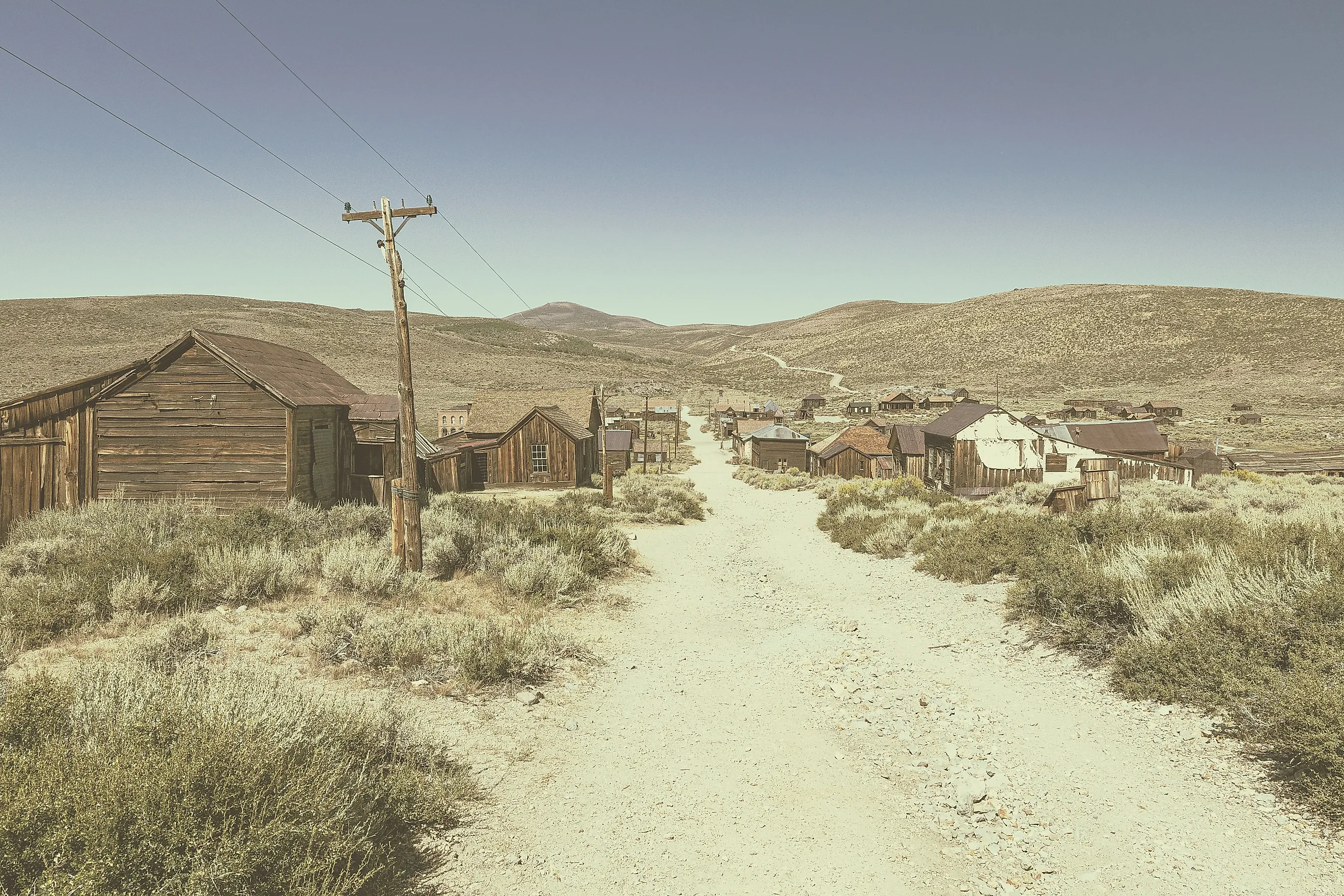
Sitting in the Sierra Nevada Mountains of California, Bodie State Historic Park protects the remnants of the former mining town of Bodie, established in 1859 during the aftermath of the California Gold Rush. Visitors today can explore the over 100 buildings left from the community members that packed up and left.
During its period of activity, Bodie represented the typical cycle of a boomtown founded in the west. Abundant amounts of silver and gold were discovered at the nearby Bunker Hill Mine in 1876, and the town grew to include 10,000 residents. Estimates of what the district ultimately produced vary widely, from about $34 million to figures approaching $100 million, depending on the years counted and the prices used. This boom period encouraged immigrants and other types of laborers to establish a school, churches, and a jail, among other structures.
However, the amount of silver and gold left to extract began to decline, and with it the population, also known as a "bust" period. The town became abandoned after the War Production Board stopped mining operations in 1942, causing the remaining residents to leave for other opportunities.
Years after the town suspended mining operations and the population thinned out, Bodie was declared a State Historic Park in 1962. The buildings are intentionally kept in a state described as "arrested decay," meaning that they contain the original interiors, furniture, and other objects left behind when inhabitants went elsewhere.
Bannack State Park, Montana
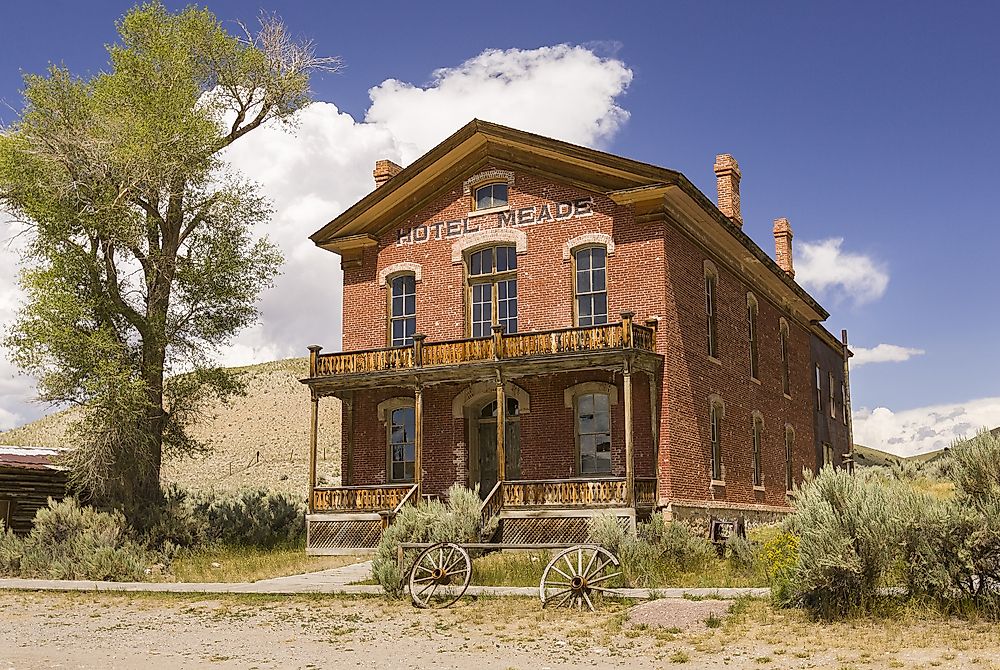
Much like the large swaths of prospectors racing to California for the chance to strike it rich, Montana experienced its own gold rush. Bannack State Park contains Bannack, the most well-preserved ghost town in the state. Homes, mercantile storefronts, and more structures made of logs are preserved for visitors to tour and learn more about this frenzied era.
Bannack served as the first territorial capital of Montana after gold was discovered in the area in July 1862. The rush to start extracting gold drove both European immigrants and Americans from the east to the town of Bannack, which had a population of over 3,000 residents in 1863.
However, as the century neared its end, Bannack's gold mining industry took a hit when copper became a more valuable material in the 1890s. The population fell and eventually disappeared completely. Today, Bannack is a valuable National Historic Landmark for the wooden frame structures that tell visitors part of the story of Montana's evolution.
Berlin-Ichthyosaur State Park, Nevada

The devastating boom and bust cycle also affected the town of Berlin, now a ghost town in Nevada's 1,540-acre Berlin-Ichthyosaur State Park. Similar to Bodie, Berlin remains in "arrested decay" to best preserve the history of the 19th-century mining town, and parkgoers explore many of the original buildings that remain standing.
Berlin was established in the 1890s, years after silver was discovered in the region in the 1860s. The town and the surrounding suburbs grew to house a community of around 250 residents at its height, around the time the Nevada Company purchased the Berlin Mine in 1898. In addition to miners, the town also supported woodworkers and charcoal makers.
The town's population began to retract around 1908, losing residents until it was abandoned around 1911. Notably, town residents are buried in the town's cemetery. Today, the townsite also includes over 80 signs to accompany the surrounding structures and narrate the story of Berlin's rise and fall, as described by former resident Firmin Bruner.
Fayette Historic State Park, Michigan

Unlike the mining towns preserved in other state parks, the abandoned structures in the ghost town of Fayette show a different kind of decline. Within the bounds of the Fayette Historic State Park along the coast of Lake Michigan is the former manufacturing town of Fayette, founded in 1867, where visitors can marvel at the cluster of over 20 remaining structures.
Uniquely, the town was established not by pioneers but by Fayette Brown, a Jackson Iron Company manager who saw an opportunity for industry using the natural resources of the Garden Peninsula. The community of 500 immigrants manufactured around 230,000 tons of charcoal pig iron in the town and operated structures like the blast furnace.
Eventually, new methods of ironmaking emerged, and demand for pig iron dropped. When the Jackson Iron Company suspended their smelting operation in 1891, it marked the decline of the town's population as workers and their families went elsewhere.
Fayette was left with the remains of giant furnaces, which visitors can see today after the townsite was acquired by Michigan in 1959. The site's visitor center goes into even more depth about history behind the residents who once inhabited and operated these structures, including exhibits examining life after the Civil War.
These Abandoned Townsites Continue to Educate
The preservation of these ghost towns ensures that future generations will be able to interact with the history of mining and industry as the United States expanded westward. While they showcase the sometimes devastating effects of a community's dependence on industry, each site also makes the resilience of the communities that inhabited them clear.