The State Parks With Abandoned Towns Inside Them
If you love ghost towns, you will enjoy our collection of abandoned towns that you can walk through and explore in many state parks across the country. Of course, real ghosts are not guaranteed, but the feeling of being in an old and abandoned place where live people lived and worked decades, or even centuries, ago may be just as good. Some of the state parks we've included in this list are also "state historic parks," which means they were established to focus on a particular historic event or structure. Others are state parks that were developed as recreational areas, but also include historic structures, such as an abandoned town. Both types tend to include other things to do, such as hiking, and have lodging of various kinds.
In some cases, the park has decided to leave the abandoned town in what is called a state of "arrested decay," which means they've kept the town exactly as it was when it was abandoned but make sure the buildings are stable. Bannack State Park in Montana and Bodie State Historic Park in California are among those. Other parks, such as Malakoff Digging State Historic Park in California have renovated or replicated some of the structures. These are the state parks that have abandoned towns in them.
Bannack State Park

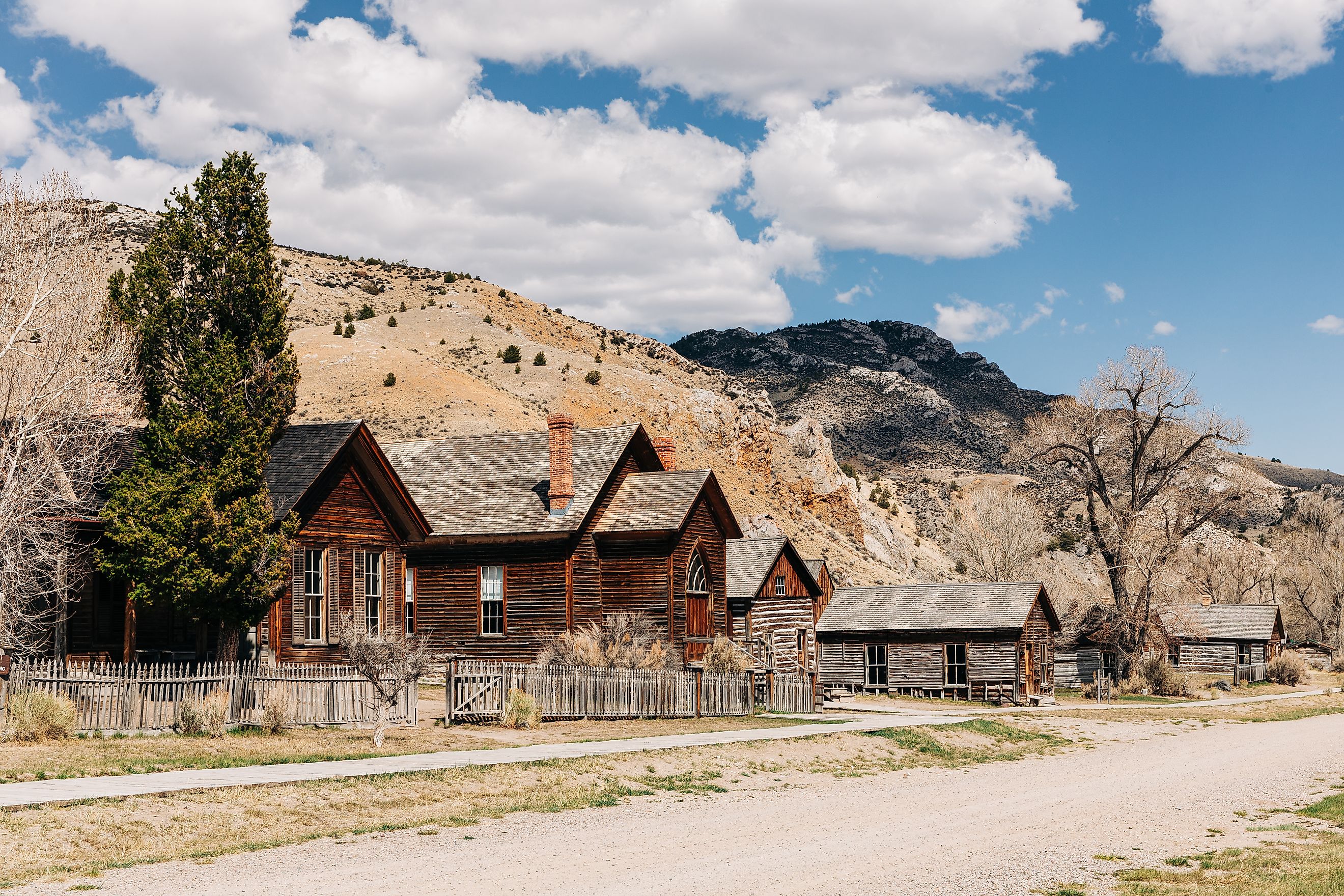
One of the best abandoned towns to visit is within Bannack State Park in Beaverhead, Montana. On July 28, 1862, John White discovered gold in Bannack, creating a huge strike that quickly increased the population to 3,000 within less than a year. Once the value of gold went down, however, so did the population.
Today, Bannack is abandoned but is protected by the state park system and is a National Historic Landmark. If you want to feel as though you are in a ghost town, this is one of your very best options. There are more than 50 remarkably preserved buildings that you can enter and explore. There is an old schoolhouse, the former Hotel Meade, saloons, churches, and jails that positively vibrate with the atmosphere of a 19th century town. Speaking of jails, given the stakes at hand (gold), the town was plagued with outlaws. The Sheriff himself, Henry Plummer, was just as corrupt and eventually hanged.
Visit in late October and you can really feel as though you are actually back in the 19th century during the annual Ghost Walk, where actors in costume portray the past. The park is open year-round and includes a campground. The visitor center is open seasonally and conducts tours. In 2026, the entrance fee was eight dollars per car and four dollars for walk-ins. Montana residents can enter for free with a state park sticker.
Bodie State Historic Park

Another gold-mining ghost town with that Old West feel is Bodie State Historic Park in California. In this town, the original buildings have been left exactly as they were when it was abandoned, although it is preserved.
In 1859, Waterman S. Body, for whom the town was named (though spelled differently), discovered very small pieces of gold. Then in 1875, a mine cave-in revealed a rich lode of gold. By 1876, the town was booming with an influx of thousands. By 1880, there were over 10,000 residents. But then in 1942, mining stopped completely, but by this time, millions of dollars of gold and silver had been brought to the surface.
There are over 150 original buildings in Bodie, in that state of arrested decay, meaning that they still have all of the original furnishings, canned goods, tools, and more, that were left behind. To preserve this park's incredible history, it is asked that visitors do not take anything that they see with them. This is just a fraction of the 2,000 structures that once made up this town.
The park is open all year round for day use only, however in the winter months it is often inaccessible by car. There are no campgrounds or concessions. The visitor center is open from May 1st to November 1st and has guided tours and a small book shop. In 2026, the entrance fee for an adult was eight dollars.
Fayette Historic State Park

Fayette Historic State Park, in Michigan's Upper Peninsula, houses an entire abandoned industrial town, The Fayette Historic Townsite. It was originally founded by Fayette Brown, the general manager of the Jackson Iron Company in Cleveland. It was ideally situated on Lake Michigan, making transportation of the finished product easy. Smelters used dolomite from nearby cliffs as flux to purify molten iron. It grew quickly, populated largely by people from Canada and Scandinavia. In its heyday it was home to about 500.
The smelter and its workers created their own small town, complete with a baseball team, cornet band, horse racing track, school, post office, and company store. There was even a hotel on the site.
By 1891, the town of Fayette had created its own demise by over foresting to create the charcoal needed to run the massive smelters. As well, the type of iron smelted there, pig iron, became less used.
The town was purchased by the state of Michigan in 1959 and is now open to visitors. There are 20 buildings to explore, including the original massive stone blast furnace complex and machine shop ruins. There is a visitor center that offers tours. You can stay overnight at an adjacent campground or a lodge. Admission is free, but you must have a Michigan State Parks Vehicle Permit to enter with your car.
Berlin-Ichthyosaur State Park

Imagine an abandoned ghost town right in the middle of the desert and you'll have an idea of what it's like to visit the isolated Berlin-Ichthyosaur State Park in Nevada. The mining towns of Berlin and Union were created after a group of prospectors discovered gold in Union Canyon in 1863. In 1864, the Union Mining District was formed, which included several of the nearby towns.
In 1898, the mine and surrounding mining claim was purchased by the Nevada Company, and this brought the town of Berlin into its gold boom. That continued until 1908, but by 1911, the town was abandoned. Today, 13 buildings remain and can be seen via a self-guided tour. Trails go through the town remains and interpretive information along the way describes the former towns' history. You cannot go inside of the buildings but can peer through the windows and doorways to see original artifacts that remain inside.
The park is also home to the most abundant concentration, and largest known remains, of Ichthyosaurs, an ancient marine reptile that swam in a warm ocean that covered central Nevada 225 million years ago. The fossils are protected and displayed at the park's Fossil House.
The entrance fee for a non-resident is $10 and $5 for Nevada residents. There is also a campground. The park is open year-round, seven days a week.
Malakoff Diggins State Historic Park

Tucked into the Sierra Nevada Foothills in California is the 3,000 acre park, the Malakoff Diggins State Historic Park. This park contains California's largest hydraulic gold mine at the historic Diggins site. The hydraulic mining process involved sending huge jets of water into mountain sides to find the gold within, and you can see the remains of that destruction today in the tall, colorfully layered cliffs. After inheriting the property in 1965, the state of California has worked to heal the area and allow nature to restore itself.
Of particular note is that the devastating mining activity in this park kicked off the first ever environmental protection legislation in the US in 1884 after downstream farms sued the mining company.
There are 30 historic 19th-century buildings remaining on site, including a Catholic Church, a blacksmith shop, and homes. Cummins Hall, a former saloon and dance hall, now houses the parks' headquarter and interpretive center. If you would like to enter some of the buildings, you can only do so on a ranger-led guided tour. Many of the buildings are original and contain original furnishings and other items, but some have been reproduced or moved from another location.
There are miles of hiking trails and a campground. To enter, the fee in 2026 was $10 per vehicle in peak season and $5 off-season. Entrance is free if you have one of the California state parks passes.
Greenwood Furnace State Park

Greenwood Furnace State Park, in Huntingdon Pennsylvania, is another abandoned industrial iron town. Similarly to Fayette, this town was more of a historic "company town" and doesn't have the same Western ghost town feel that the others listed here do. Also, similarly to Fayette, the town collapsed in 1904 when the supplies of trees with which to keep the smelter going were decimated. Three acres of trees had to be cut down every single year. In its heyday it produced four tons of pig iron ingots per day.
The company town was founded in 1834 by the iron company of Norris, Rawle and Company who built the Greenwood Furnace. A population of 500 workers soon settled in, with tenant houses and its own school, general store, and a gristmill. Today, six of those buildings and the historic cemetery still stand, along with a reconstructed 1860 stone furnace stack that stands as a historic monument. The state of Pennsylvania purchased the land in 1906 and has worked to reforest the stripped area. The remaining structures have been either carefully restored or are kept stable as needed.
The 423-acre park is open year-round from dawn to dusk for self-guided tours through the abandoned town. You cannot enter the buildings. There is also hiking and camping. There are no entrance fees.
How to Enjoy Abandoned Towns
Of course, there are other places in the US where abandoned towns exist, some of them off in the middle of nowhere. State Parks, however, take especial care to make sure you can both understand and enjoy these historic sites by being good stewards of them. Help them to do this by being sure to take only photographs as your souvenirs. Just soak in the atmosphere of an older time and imagine what it might have been like to actually call these old towns home.