The Best State Parks In The United States
The national parks get the postcards. The state parks get the people who actually live nearby and know where the good trails are. Spread across all fifty states, many of them built by the Civilian Conservation Corps in the 1930s and still run on shoestring budgets by rangers who clearly love the work, these parks protect free-roaming bison, billion-year-old bluffs, and wintering swans without the shuttle lines and timed-entry permits. Here are nine that earn the trip.
Red Rock State Park, Arizona

Here is something the locals will tell you: the famous Sedona formations, Cathedral Rock and Bell Rock, the ones on every Arizona calendar, sit in the surrounding national forest, not inside this 286-acre state park. What Red Rock State Park actually protects is quieter and arguably rarer, a green ribbon of Oak Creek winding through the desert, one of the few year-round streams in Arizona. It is a day-use nature preserve and environmental education center laced with about five miles of looping trails. Climb the Eagle's Nest loop to the high point and Cathedral Rock finally swings into view, earned rather than handed to you. More than 150 bird species work the creek corridor. The land was nearly lost to a resort development until Governor Bruce Babbitt brokered a three-way land swap, and it opened to the public in 1991. The old Frye family mansion, the House of Apache Fires, still stands on the grounds near Sedona.
Custer State Park, South Dakota

South Dakota's first and largest state park spreads across 71,000 acres of the Black Hills, and its most reliable traffic jam has four legs. Roughly 1,300 bison roam free here, descendants of a starter herd of 36 animals bought in 1914, and every autumn cowhands stage a thundering roundup to sort them. The park is named for Lieutenant Colonel George Armstrong Custer, whose 1874 expedition found gold along French Creek and triggered the Black Hills rush, a history that sits uneasily on this land. Drive the Needles Highway and the granite spires close in tight enough to make you fold in your mirrors. Sylvan Lake, dammed into existence in 1881, sits below them like a held breath.
Silver Falls State Park, Oregon

In 1926, a National Park Service inspector took one look at the logged-over stumps here and rejected the place. Their loss: the area became Oregon's largest state park instead, and at more than 9,000 acres it arguably got the better deal. The draw is the Trail of Ten Falls, a roughly seven-mile loop in the Cascade foothills that passes ten waterfalls and ducks behind four of them. The headliner is South Falls, a 177-foot curtain you can walk behind and look out through. The falls pour over hard basalt ledges left by ancient lava flows, with the softer rock beneath worn away to form those walk-behind alcoves. Much of what makes a visit comfortable, the lodge, the trails, the bridges, was built by Civilian Conservation Corps crews in the 1930s.
Valley Of Fire State Park, Nevada

Nevada made this its first state park in the 1930s, and the name is not hyperbole: when low sun hits the Aztec sandstone, the whole valley looks like it is burning. The rock is roughly 150 million years old, petrified dunes from the age of the dinosaurs. People left their mark far more recently. Ancestral Puebloan petroglyphs, some around 2,500 years old, are pecked into the desert varnish at Mouse's Tank, a natural basin named for a Southern Paiute man who used the canyon as a hideout. Do not miss Fire Wave, a swirl of red and cream sandstone that ripples underfoot like a frozen sea. It all sits in the Mojave Desert, about an hour from the Las Vegas Strip and a world away from it.
Myakka River State Park, Florida

At 37,000 acres, Myakka is one of Florida's oldest and largest state parks, and one of its wildest. The Myakka River, the state's first designated Wild and Scenic River, threads through wetlands, prairies, and palm hammocks thick with alligators sunning on the banks. For a different vantage, climb the Canopy Walkway, a suspension bridge strung 25 feet up in the treetops with a tower rising higher still, and watch the marsh from a hawk's point of view. The bones of the park, its roads and shelters, were laid down by the Civilian Conservation Corps in the 1930s. Come by foot, bike, or paddle; the gators do not charge admission.
Devil's Lake State Park, Wisconsin

Wisconsin's most-visited state park hides in plain sight in the middle of the state, drawing well over two million people a year to a 360-acre lake pinned between 500-foot quartzite bluffs. Those bluffs are roughly 1.6 billion years old, among the oldest exposed rock on the planet, the worn-down roots of a vanished mountain range. The lake itself is far younger: Ice Age glaciers plugged both ends of an old river gorge with debris and trapped the water inside. Scramble the Balanced Rock or Devil's Doorway trails for the postcard view, and watch for the effigy mounds left by Native builders centuries ago. The Ice Age National Scenic Trail runs straight through.
Dead Horse Point State Park, Utah

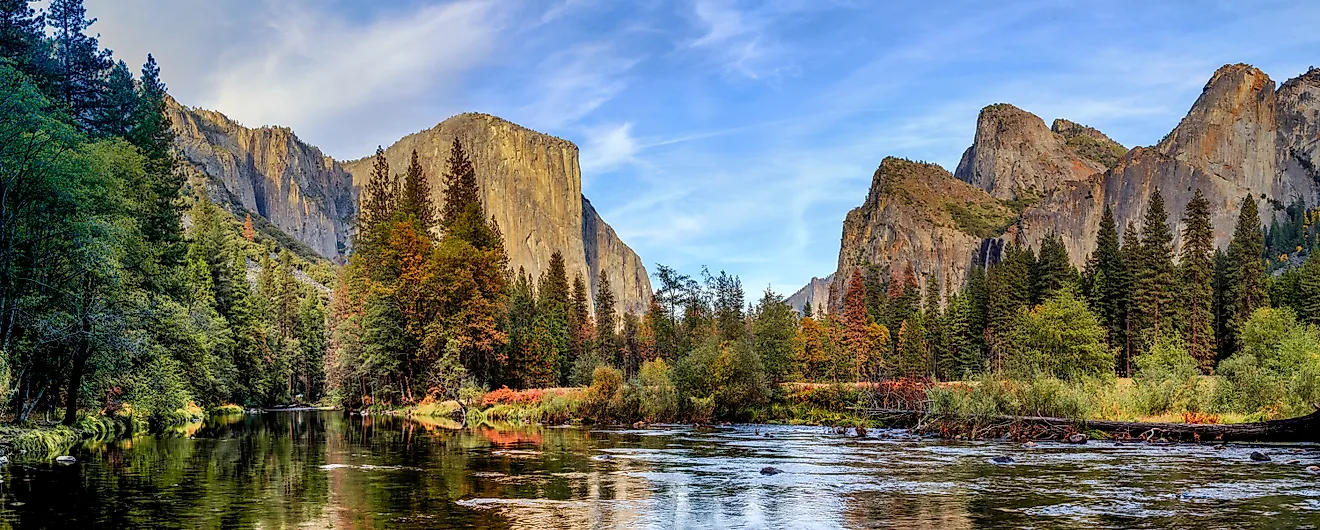
The view from Dead Horse Point is the kind Utah usually charges a national park entry fee for: a gooseneck bend of the Colorado River carving 2,000 feet below, with the spires of Canyonlands stacked up beyond. The name is grim. Legend says cowboys once corralled wild mustangs on this narrow point, fenced off the neck, and left some horses behind to die of thirst within sight of the river. The Intrepid Trail System lays down more than 16 miles of hiking and biking across the slickrock, and the overlook itself becomes a slow light show as the sun moves and the canyon walls deepen toward rose.
Harriman State Park, Idaho

Harriman comes with strings attached, in the best way. When the Harriman family, the Union Pacific railroad dynasty, handed their 11,000-acre "Railroad Ranch" to Idaho, the gift came with a condition: the state had to build a professional parks agency to look after it. Idaho did, and its modern state park system traces back to that deal. The reward is a stretch of the Henry's Fork of the Snake River that fly anglers speak about in hushed tones, plus a wildlife roster headed by trumpeter swans, the largest waterfowl in North America. In winter, roughly two-thirds of all the trumpeter swans in the Lower 48 settle in here. Moose, elk, and sandhill cranes fill out the cast, and more than twenty original ranch buildings still stand.
Franconia Notch State Park, New Hampshire

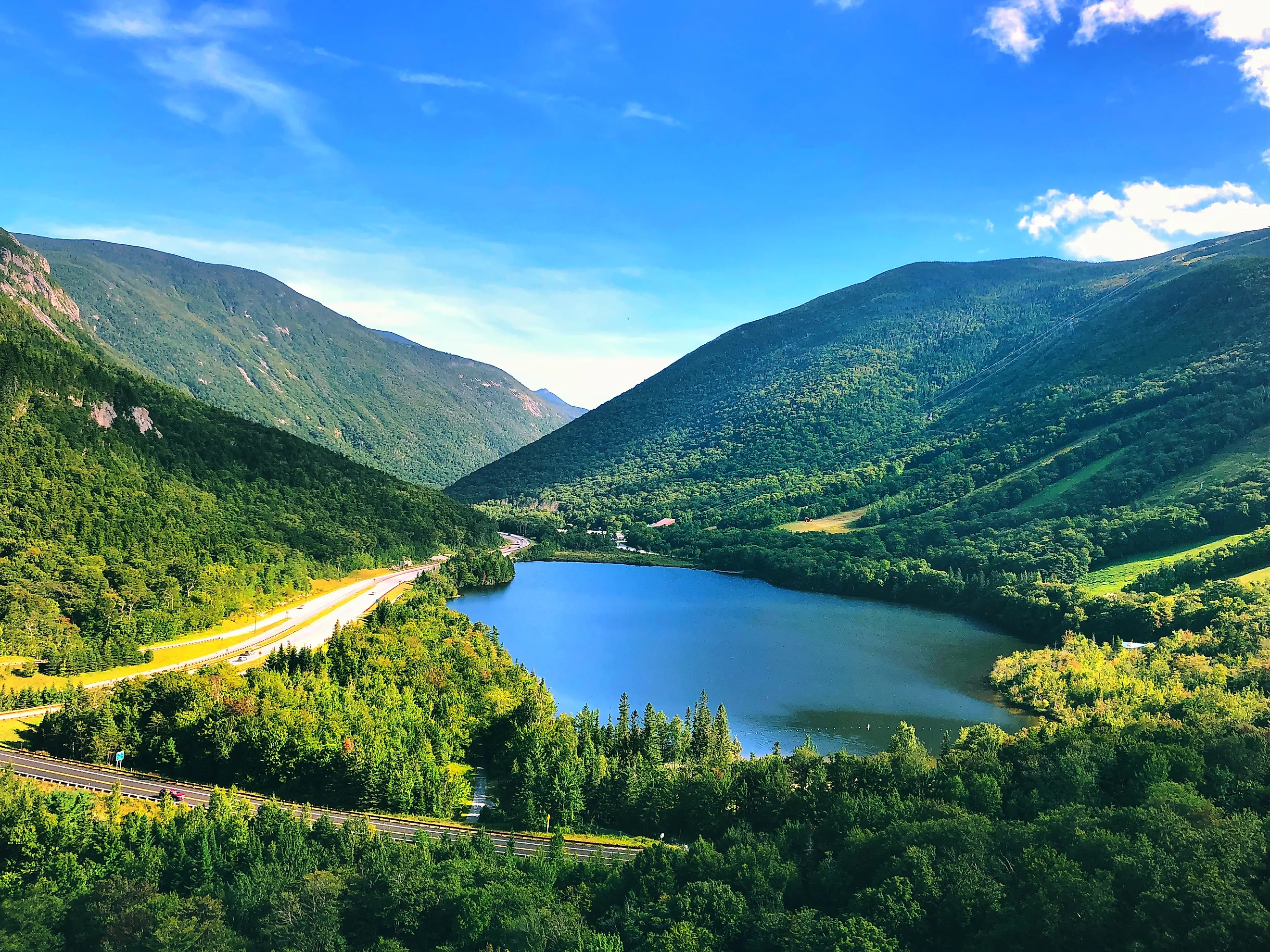
For two centuries a craggy granite profile jutted from a cliff in Franconia Notch, and New Hampshire loved the Old Man of the Mountain enough to put him on its license plates and its state quarter. Then, one night in May 2003, he let go and slid into rubble. The mountains he watched over are still here, threaded by a stretch of the Appalachian Trail along the Franconia Ridge. So is the Flume Gorge, an 800-foot granite slot barely wider than the boardwalk that runs through it, with mossy walls climbing on either side. Cannon Mountain's tramway still hauls visitors up for the long look across the White Mountains.
None of these places are wilderness in the strict sense. People built the trails, dammed the lakes, and saved the land from developers. That is the point. State parks are where conservation happens at human scale: close to home, cheap to enter, run by people who know the regulars by name. Pick one within a few hours of you. The national parks will still be there, far less crowded, once you have a favorite of your own.