10 Offbeat Italy Towns To Visit In 2026
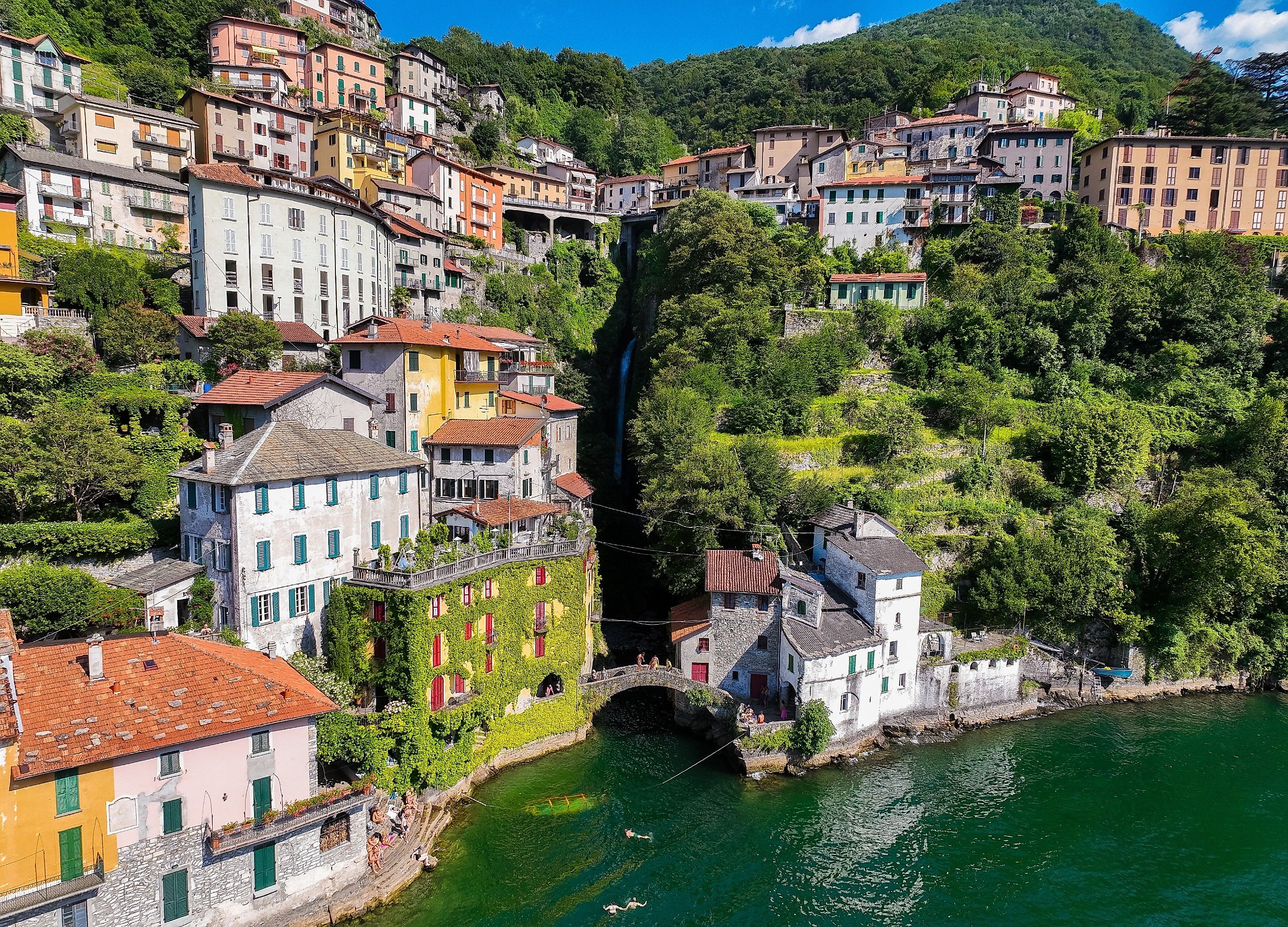
Long before you reach the famous coast roads, Italy hides towns like Nesso, where two rivers meet in the Orrido gorge and fall as one waterfall into Lake Como. A short ferry out of Naples reaches Procida, a car-free harbor lined with painted fishermen's houses. At Camogli, weekend boats still run to the tuna nets that have worked the Ligurian coast for generations. Deeper inland, in Locorotondo, winemakers press native grapes in an 1860 cellar and leave them to macerate into deep orange wine.
Camogli

Camogli is a fishing village in Liguria, Italy. Tucked away on the Italian Riviera, it is one of Italy's best-kept secrets due to its maritime history, coastal scenery, and local traditions. Its unique charm makes it stand apart from the likes of Portofino. Visitors can join Ziguele's guided boat visit to the Tonnarella di Camogli, which runs on weekends from June through October. On the maritime history tour, guides take riders to see the town's sustainable netting system, Tonnarella di Camogli, while teaching them about the local fishing history. Another scenic stop is Porto Pidocchio, a small natural cove on the route between San Rocco and Punta Chiappa. For wide sea views, hikers can follow the park route from San Rocco toward Punta Chiappa, passing the Romanesque Church of San Nicolò di Capodimonte. It would be a mistake to visit Camogli without trying some of the local wine. To enjoy the town's wine, visitors can take private nature treks that include a Ligurian Wine Tasting. The attraction offers delicious, exquisite wines from the area.
Procida

Procida is a colorful island that lives up to its reputation. Just around the corner from Naples, this Campania town is known for its architecture, maritime history, and slow-paced coastal lifestyle. Palazzo d'Avalos is an important historic site, but the complex was ordered closed after an interior wall collapsed in February 2026. When the complex reopens, guided access may again include former cells, work areas, and the prison courtyard. Marina Corricella, also known as the Postcard Village, is arguably the most iconic on the island. Visitors explore the car-free area to see the beautiful houses stacked on top of each other in a painted maze of pink, yellow, and blue. For some outdoor recreation, visitors head to one of Procida's many hidden beaches. A local favorite, Il Postino Beach is a beloved horseshoe-shaped bay known for its jet-black sand and role in the film Il Postino.
Locorotondo

Locorotondo is a must-see town located in Puglia. Situated in the heart of the Valle d'Itria, it is known for its architecture and impressive valley views. Much quieter than its neighbor, Alberobello, it offers memorable experiences without the city noise. Named for its circular plateau, the town has plenty to do and see. Travelers should confirm which sections of the Apulian Aqueduct Cycle Route are officially open before setting out, because the expanded route had not yet been inaugurated as of September 2026. Using rented e-bikes, they can travel through the countryside to catch glimpses of ancient stone walls, fortified farms, and lush oak forests. Nearby, visitors may find the Il Tempo Ritrovato artisan workshop, but they should confirm that it is operating before making the trip. The artisan workshop showcases the work of Nunzia Spalluto, who is one of the last keepers of the local treasure and lace-crocheting technique, "Punto Margherita." Locorotondo is also known for its rare white wines and hosts wine tastings for visitors daily. Aficionados head to Cantina MIR, an underground cellar built in 1860, to taste the macerated orange-style white wines made from native grapes.
Sperlonga

Situated between Rome and Naples, this hillside town features beaches, the Tyrrhenian Sea, and a history shaped by emperors, pirates, and its coastal surroundings. At the National Archaeological Museum and Villa of Tiberius archaeological park, visitors can see reconstructed sculpture groups recovered from the Grotto of Tiberius, although the area directly in front of the cave was closed for improvements in August 2026. It is just one of Sperlonga's many wonders. To see more sea caves and secret grottos, visitors hop on the Blue Grotto Boat Cruise. The cruise allows visitors to swim inside the hidden Grotta Azzurra, where natural light collides with water to create a vivid blue glow. For some Italian flavors, food lovers head to the town's restaurants, where they indulge in Tiella Gaetana and some of the best Roman wines.
Nesso

Nesso is an underrated town located within the world-famous Lake Como. It is most known for its ancient stone bridge and the natural gorge, Orrido di Nesso. On the gorge, the Tuf and the Nosè crash into a powerful waterfall, plunging straight into Lake Como. The waterfall is such a memorable sight that even Leonardo Da Vinci was impressed by its river and mountains. The town's upper village is made up of tight-knit communities centered around its village square, Piazza Castello. Framed by the remnants of an ancient castle, the square provides sweeping views of Lake Como and the surrounding area. On the waterfront, people swim in the beautiful Lake Como without the worry of crowds or noisy tourists.
Ponza & Palmarola

Ponza & Palmarola are scenic islands located in Lazio. An alternative to islands like Capri, they are known for their grottos and dramatic cliffs. The two areas function together, with Ponza acting as an inhabited community and Palmarola as an uninhabited space filled with natural wonder. Known for its seclusion, most of Ponza is experienced by boat and through hidden paths. In Ponza, secret coves and beaches lure tourists who want the beauty without the foot traffic. A popular spot is Cala Feola, located on Le Forna. It is home to shallow volcanic rock pools where visitors can swim between natural rock arches. The Grotte di Pilato is another notable spot, where visitors swim in the carved rooms inside the 2,000-year-old system of tunnels and pools.
Exploring Palmarola is an adventure of its own. Usually completely empty except for peak summer months, it has remarkable natural attractions that wow tourists and residents. Adventurers can swim beneath the Cathedrals, or Le Cattedrali, during peak months. The colossal, vertical columns shoot straight out of the sea, mimicking the likes of Gothic church spires. O' Francese is also a popular spot. O' Francese is a seasonal restaurant and guesthouse at Cala del Porto, where several private homes also stand. Because Palmarola lacks an electrical grid, O' Francese uses a generator and specializes in seafood.
Giovinazzo

Giovinazzo is a picturesque seaside town located in Puglia, Italy. Its scenic harbor, maze-like alleys, and tranquil vibe make it a perfect alternative to more popular destinations. Built and improved by Emperor Trajan, this town has a rich history that many overlook in favor of more popular destinations. Dolmen di San Silvestro is an archaic monument where visitors can witness the Bronze Age chamber tomb. Nature lovers can hike or bike into the countryside to Borgo Sette Torri, a rural hamlet of historic villas in Giovinazzo's municipal territory. For a swim, visitors can head to Cala Porto, a small rocky cove below Giovinazzo's old town. To get there, visitors walk down the steps along the West Seafront. At the pools, they find natural rock formations and calm saltwater pools away from tourist crowds. Though Giovinazzo is small, it is full of community action. The free Giovinazzo Rock Festival marked its 24th edition in September 2026 through the new G.R. Village event.
Oratino

Oratino is a cliffside village located in Molise. Despite its small size and population, it is considered to be among the most beautiful villages in Italy. Situated on a limestone cliff, this small enclave overlooks the Biferno Valley and offers breathtaking views of the Matese and Maiella mountains. The town lives up to its nickname as the village of stonecraft due to its centuries-old stonemason legacy. An artistic center, it hosts work for master painters, gilders, and sculptors throughout the region. Baroque churches are a prime spot for viewing ethereal sculptures and historic tombs. The Palazzo Giordano is also a sight to see. Though it is now private, its exterior is worth a peek. Built with beautifully sculpted motifs and 15th-century architecture, it showcases the town's great stonemason history. For some adventure, rock climbers head to La Rocca di Oratino. La Rocca is a medieval watchtower about 15 meters high on a limestone outcrop where separate Bronze Age remains have been excavated. The Piazza Giordano is a staple for those looking to experience the town's lively community. At Piazza Giordano, visitors can stop at local cafés before walking to nearby Belvedere Calise for views toward the Matese and Maiella mountains. Local village shops host everything from butcher shops to independent boutiques, showcasing the best of the tiny enclave.
Ascoli Piceno

Ascoli Piceno is a Renaissance city located in Marche. Its main square, Piazza del Popolo, is known for its beautiful travertine glow and deep Italian heritage. Called the Living Room of Italy, it is home to art galleries, restaurants, and remnants of the town's storied past. When it comes to history, the Crypt of Ascoli Piceno Cathedral is one of the town's most popular attractions. Visitors can walk beneath Piazza Arringo to explore the cathedral's crypt. Noted for its colorful mosaics and frescoes, it is a local treasure for its architecture and notable stone coffins. Forte Malatesta is a Renaissance fortified complex whose fabric reflects changes from the 14th through 19th centuries, and it houses the Museum of the Early Middle Ages.
Visitors can explore the museum to witness regional Lombards and archaeological treasures from the Gothic era. Art lovers also enjoy the town's arts scene, which rivals even the biggest of cultural capitals. At the Pinacoteca Civica, visitors can view works by Titian, Carlo Crivelli, Cola dell'Amatrice, Guido Reni, and other artists highlighted by the museum. To unwind, many visitors head to the Cascatelle di Castel Trosino, where they hike across the town's waterfalls to reach the Cascatelle waterfalls. With such scenic views and history, Ascoli Piceno is one of Italy's most beloved offbeat towns.
Comacchio

Comacchio is a quiet lagoon town in Emilia-Romagna. Known as "Little Venice," it is an ethereal fishing village scattered across 13 small islands. With its unique heritage and unforgettable charm, it has a deeply rooted history. Explorers can walk the Loggiato dei Cappuccini. As the longest covered portico in Italy, it features 142 brick arches that were once used to provide shelter for churchgoers as they moved between the town center and the remote Sanctuary of Santa Maria. They can also get a taste of offbeat Italy by riding a Batana. During selected festivals, volunteers offer free rides through the historic-center canals in traditional batanes, while regular guided outings are paid and require reservations. It would be a waste to visit Comacchio without tasting its signature eel. A town staple, it is called the "Queen of the Valley" and is applauded for its salty, rich flavor. Pairing this with the town's Vino delle Sabbie, or sand wine, is a local tradition and delicacy.
Procida’s pastel harbor, Nesso’s rushing waterfall, and Comacchio’s canals leave vivid impressions long after the journey ends. Locorotondo opens onto the Valle d’Itria, while Sperlonga leads visitors toward beaches and sea caves. Oratino adds mountain drama to an itinerary filled with food, architecture, and coastal scenery. These towns turn an Italian detour into the heart of the journey.