The State Parks With The Last Fall Color In The South
By the time the bald cypress trees at Louisiana's Chicot State Park turn copper, most of the country's fall color has already come and gone. In the Deep South, fall arrives late. Warm days hang on well into November, so peak color in the lowland swamps and river canyons here often lands around Thanksgiving. In some years, it stretches into the first weeks of December. The show belongs to bald cypress, sweetgum, Florida maple, and oak rather than the blazing maples of colder climates. These state parks offer one last chance to catch the season before winter.
Chicot State Park, Louisiana

Louisiana's fall color typically arrives from late November into mid-December, and Chicot State Park, in the rolling piney woods of south-central Louisiana, is one of the best places to catch it. The park wraps around Lake Chicot, a large reservoir studded with bald cypress and water tupelo. In late November, the cypress needles turn a rusty copper, and their reflections spread across the still water. A long hiking trail loops around the lake, and boat rentals and fishing piers let visitors get close to the trees. Next door, the Louisiana State Arboretum preserves a stretch of mature hardwood forest, where beech, maple, and oak add yellow and red to the mix.
Garner State Park, Texas

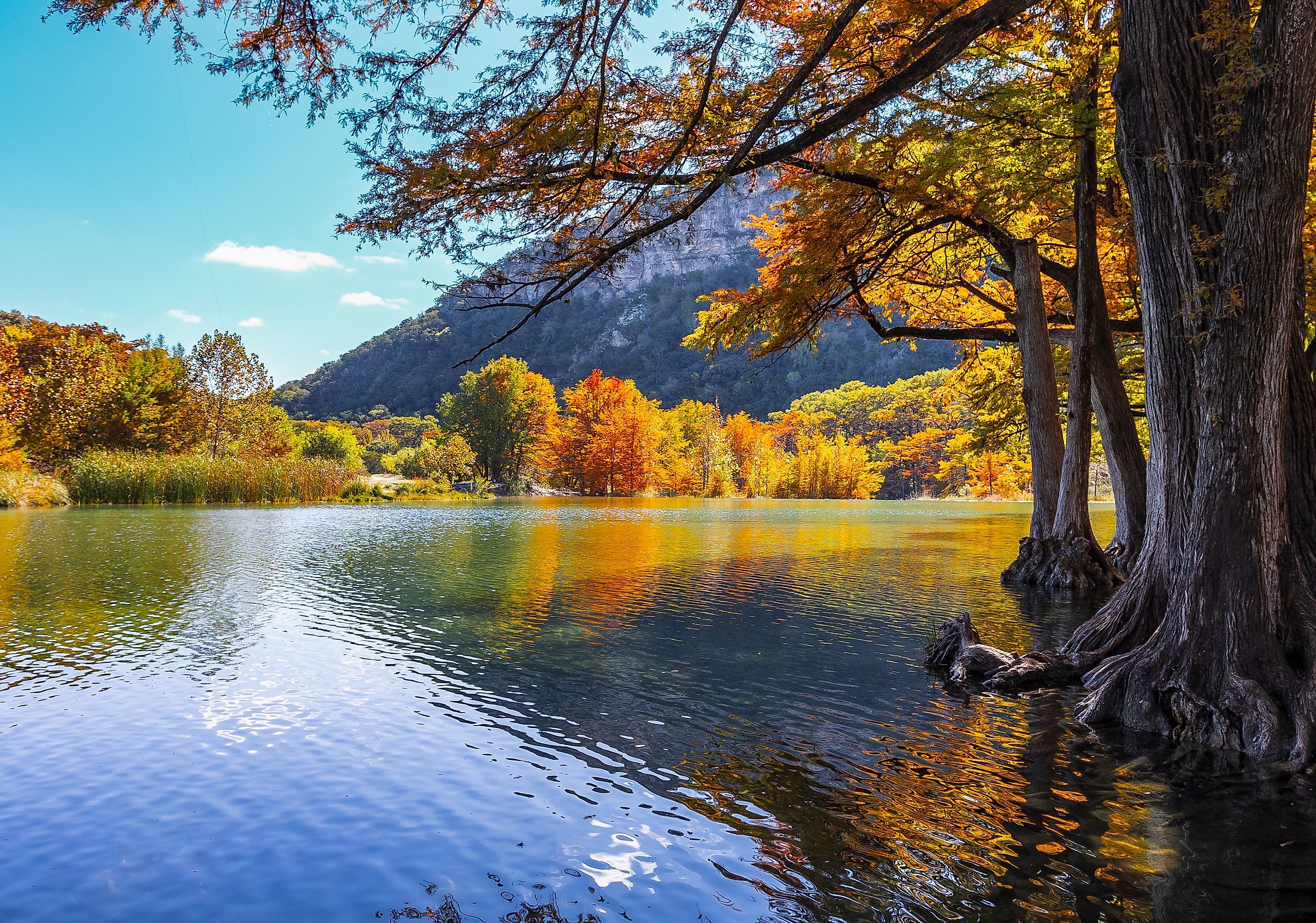
Most people think of Garner State Park as a summer swimming spot on the Frio River, but it also holds some of the latest color in Texas. According to Texas Highways, the bald cypress trees lining the Frio turn a deep bronze, and peak conditions tend to arrive around Thanksgiving and last for a few weeks afterward. The canyons here hold cool moisture that lets trees like Texas redbud, pecan, and lacey oak thrive in the Hill Country. For the best view, hike to the top of Old Baldy, a steep climb that rewards visitors with a wide look over the river valley and the color below.
Torreya State Park, Florida

Torreya State Park, Liberty County, Florida. By Michael Rivera - Own work, CC BY-SA 4.0
Florida is not known for fall foliage, but Torreya State Park, west of Tallahassee, is the exception. The park sits on steep bluffs and ravines above the Apalachicola River, terrain more like the Appalachians than the rest of Florida, and it holds hardwoods such as Florida maple, sweetgum, and sourwood that change color each fall. Peak color usually arrives from mid-November through the first week of December. The park is named for the Florida torreya, one of the rarest conifers in North America, which grows naturally only in a small area along the river. Nearby Three Rivers State Park, where the Chattahoochee and Flint rivers meet at Lake Seminole, peaks around the same time.
Caddo Lake State Park, Texas

On the Texas-Louisiana border, Caddo Lake State Park sits on the shore of Saw Mill Pond off Big Cypress Bayou, a maze of sloughs and channels leading into the vast cypress swamp of Caddo Lake. Some of the park's bald cypress trees are more than 400 years old, and in fall their feathery needles turn copper and bronze above the dark water, framed by maple, sweetgum, oak, and hickory. Texas Highways reports that color here usually peaks from the last week of October through late November, a little earlier than the parks farther south, so it is the first stop on a late-season road trip. A paddle through the bayou is the best way to see the cypress up close.
Timing The Last Leaves
Fall color in the South depends heavily on the weather. A warm, dry autumn can push peak color later or dull it, while an early cold snap can bring it on quickly. Before you go, check the park's website or social media pages for recent foliage updates, and plan to visit on a weekday if you can, since the best-known parks can get busy during Thanksgiving week. With a little timing, a December trip to Chicot or Torreya can deliver the final burst of color of the year.