What are the Gas Giants?
The four largest planets in our solar system share a fundamental feature: none of them has a solid surface to land on. Jupiter, Saturn, Uranus, and Neptune are giant planets, sometimes called Jovian planets after Jupiter, and they are made overwhelmingly of low-boiling-point materials such as hydrogen, helium, water, methane, and ammonia rather than the rock and metal that build smaller worlds like Earth and Mercury. Together they hold roughly 99 percent of the mass orbiting the Sun outside of the Sun itself. The phrase "gas giant" was coined in 1952 by the science fiction writer James Blish, and it has since become the standard term for the two largest of these worlds. The two smaller and colder giants, Uranus and Neptune, are now more often classified separately as "ice giants" because of their different bulk composition. This article explains what these planets are, how they formed, and what makes each of the four uniquely strange.
What Is a Giant Planet?
A giant planet is one whose mass is large enough that its formation gathered substantial amounts of hydrogen and helium gas from the disk of material around the young Sun, rather than just rock and ice. The result is a world dominated by fluid layers rather than solid ground. If you tried to descend into Jupiter or Saturn, you would pass through atmosphere that gets denser and hotter the deeper you went until the gas effectively transitioned into a liquid, with no clear surface to mark the change. There is no point at which a probe could land. Pressures and temperatures inside these planets are so extreme that hydrogen, the simplest element in the universe, behaves in ways that have no parallel anywhere on Earth.
Giant planets are usually divided into two subcategories. Gas giants (Jupiter and Saturn) are made mostly of hydrogen and helium throughout. Ice giants (Uranus and Neptune) have hydrogen and helium atmospheres, but their interiors contain large amounts of heavier compounds, particularly water, methane, and ammonia, which planetary scientists call "ices" regardless of their actual physical state inside the planet. The distinction matters for understanding how each world formed and how its weather, magnetic field, and chemistry behave today.
How the Giant Planets Formed
The leading explanation for how the giant planets came to be is the core accretion model. In the early solar system, a disk of gas, dust, and ice surrounded the young Sun. Beyond a boundary known as the "frost line," located somewhere around the present orbit of the asteroid belt, temperatures were cold enough for water and other volatile compounds to freeze into solid grains. Those grains stuck together, building up rocky and icy cores that eventually grew massive enough to gravitationally pull in the surrounding hydrogen and helium gas. Jupiter, the closest to that frost line and the first to reach a critical mass, captured the largest share of gas and grew into the largest planet. Saturn formed soon after on a similar pattern. Uranus and Neptune formed farther out where gas was sparser, which is why they are smaller and have proportionally less hydrogen and helium and proportionally more "ice."
This formation history is still actively studied. Observations of distant planetary systems around other stars suggest that giant planets can also migrate inward or outward through a disk after forming, which may help explain features of our own outer planets and asteroid belt.
Jupiter

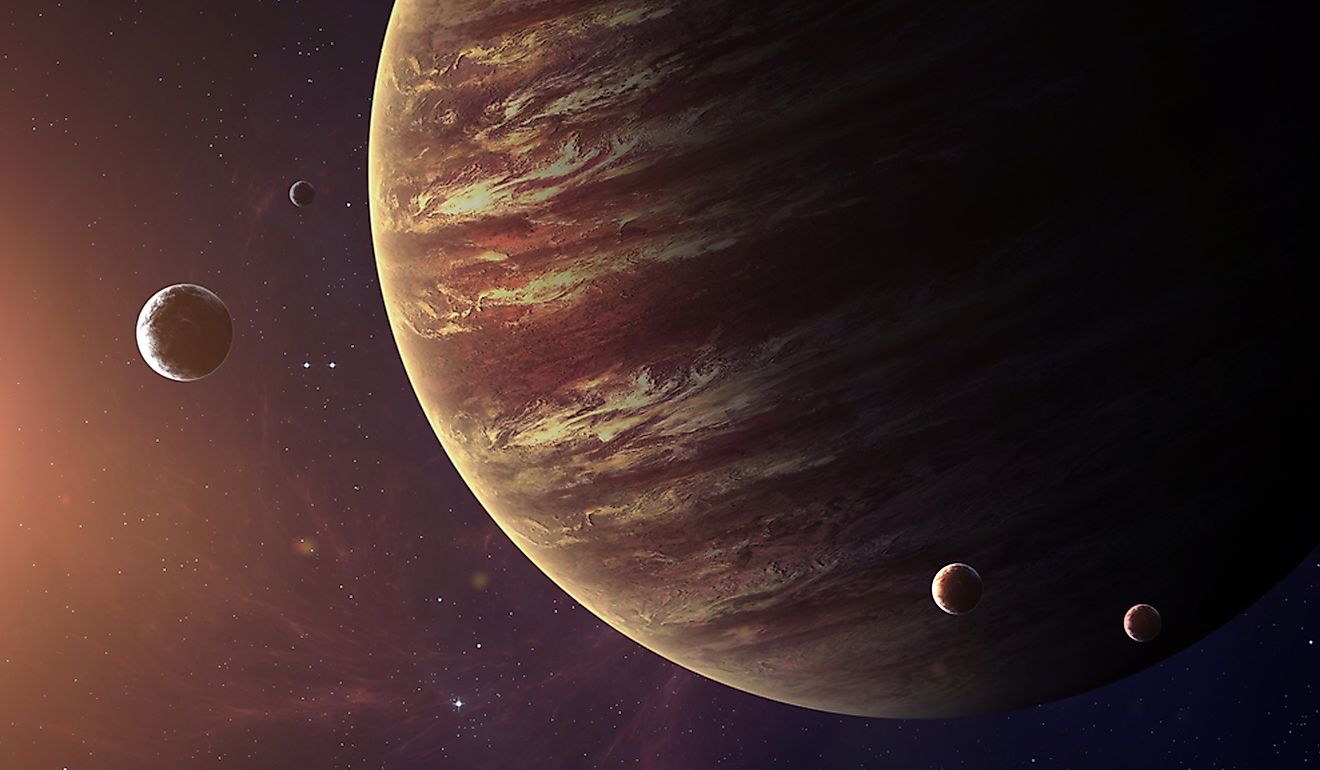
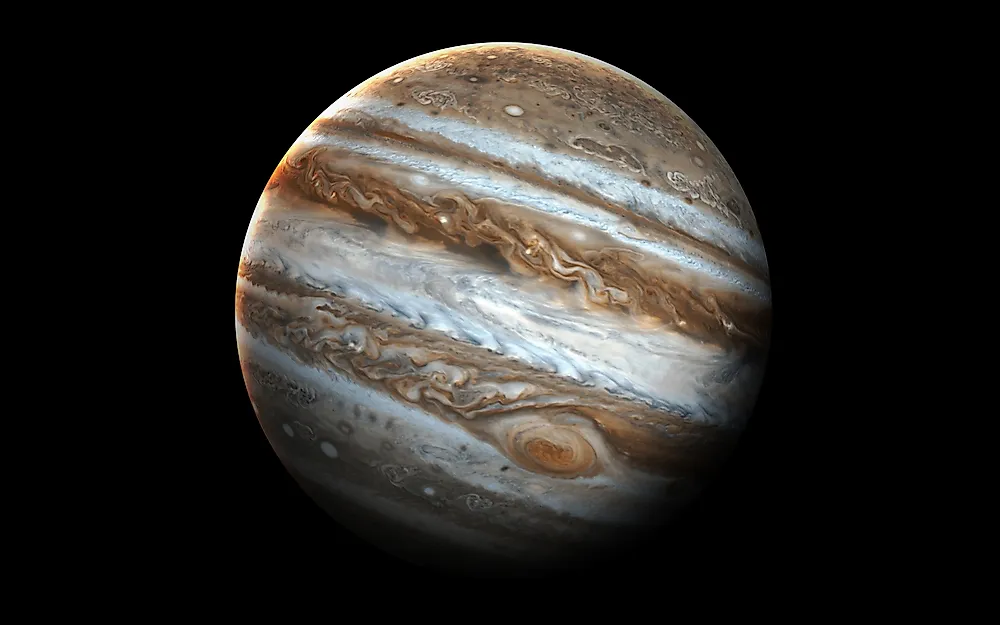
Jupiter is the largest planet in the solar system by a wide margin. Its mass is about 318 times that of Earth, more than twice the combined mass of every other planet in the solar system, and roughly one-thousandth the mass of the Sun. Its equatorial diameter is 88,846 miles, more than 11 times Earth's. The planet rotates so quickly (a full day takes only about 9 hours and 56 minutes) that the spin visibly flattens it into an oblate spheroid, with the equator bulging outward.
Jupiter is composed mostly of hydrogen, with about a quarter of its mass in helium. Beneath its colorful banded clouds, pressures rise so high that hydrogen is compressed into a liquid form and then, deeper still, into a strange phase called liquid metallic hydrogen, which conducts electricity. Currents in this layer generate Jupiter's magnetic field, which is the strongest of any planet in the solar system and produces brilliant auroras at the poles. The atmosphere itself features hundreds of long-lived storms, the most famous being the Great Red Spot, an anticyclone wider than Earth that has been continuously observed since at least 1830 and possibly since the 1660s.
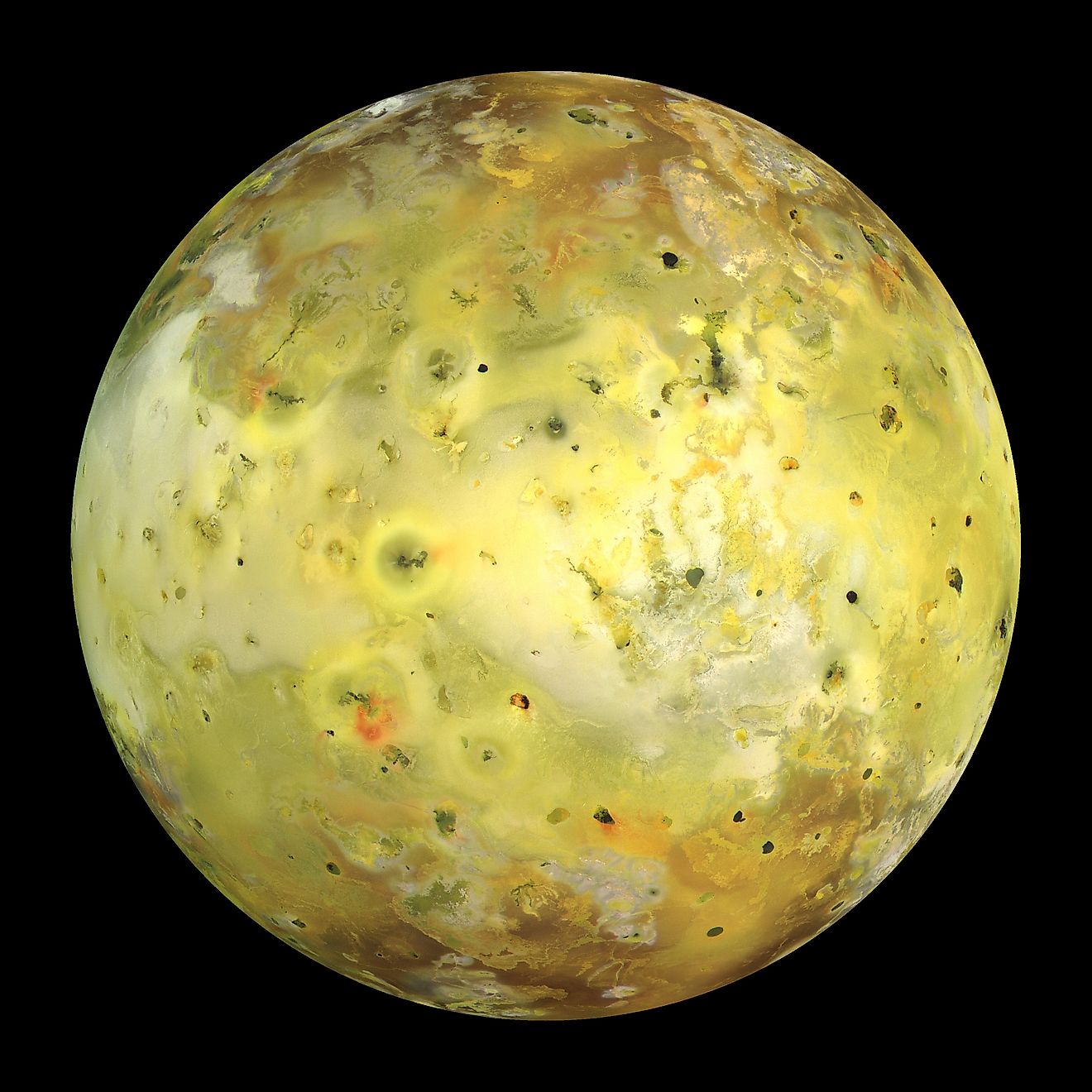
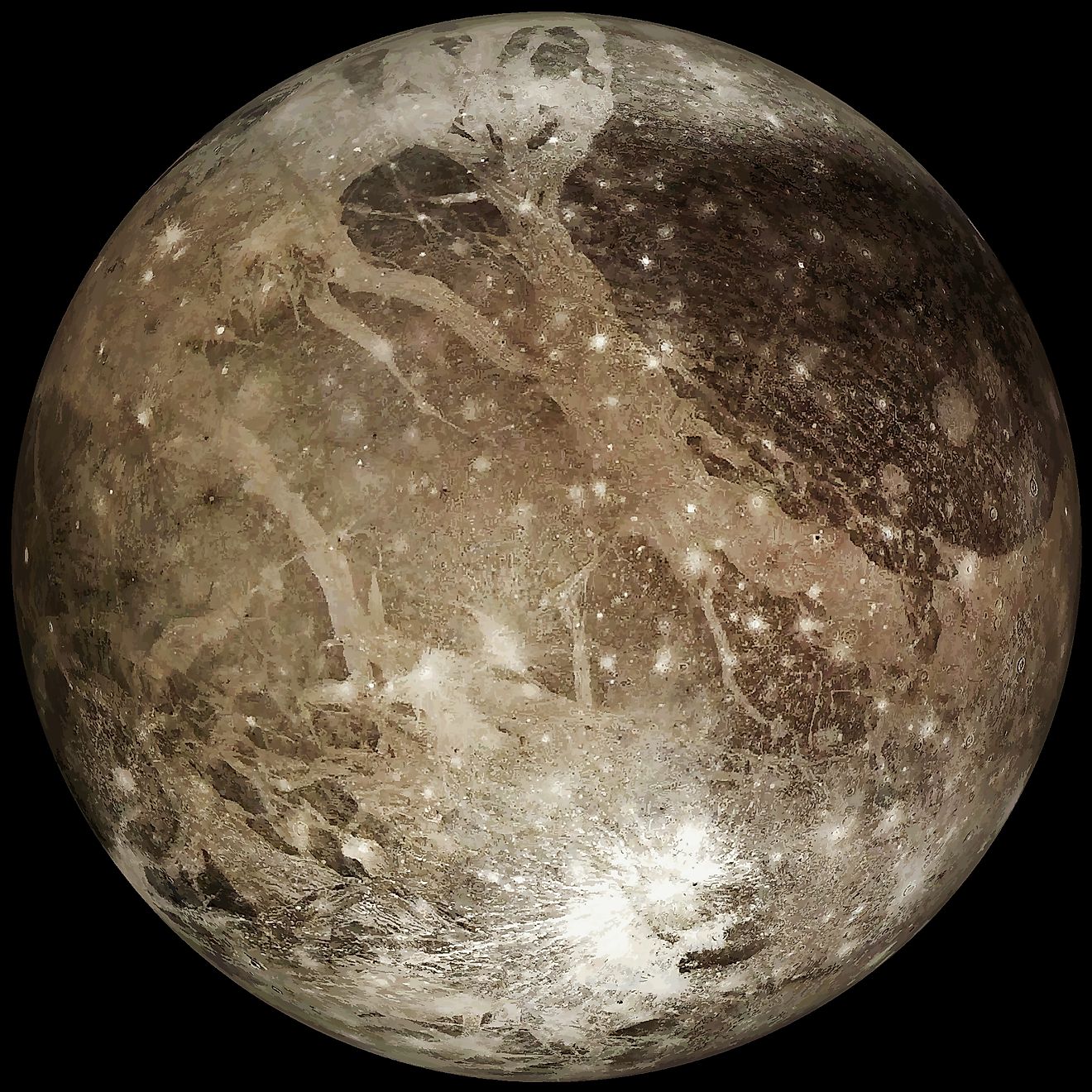
Jupiter has 95 confirmed moons as of the latest counts, with new small moons still being discovered periodically. Four of them, the Galilean moons (Io, Europa, Ganymede, and Callisto), were observed by Galileo Galilei in 1610 and are visible through a small telescope today. Ganymede is the largest moon in the solar system; it has a diameter larger than Mercury's. The Romans named the planet for Jupiter, the king of their gods, and the planet has been studied at increasingly close range by the Pioneer, Voyager, Galileo, and Juno missions.
Saturn

Saturn is the second-largest planet, with about 95 Earth masses. Like Jupiter, it is composed mostly of hydrogen and helium, and it has a similar layered interior with a deep zone of liquid metallic hydrogen. Together, Jupiter and Saturn hold about 92 percent of the planetary mass of the solar system. Saturn's average density is about 0.69 grams per cubic centimeter, lower than the density of water, which is why the trivia line that Saturn would float in a sufficiently large bathtub keeps showing up in textbooks.
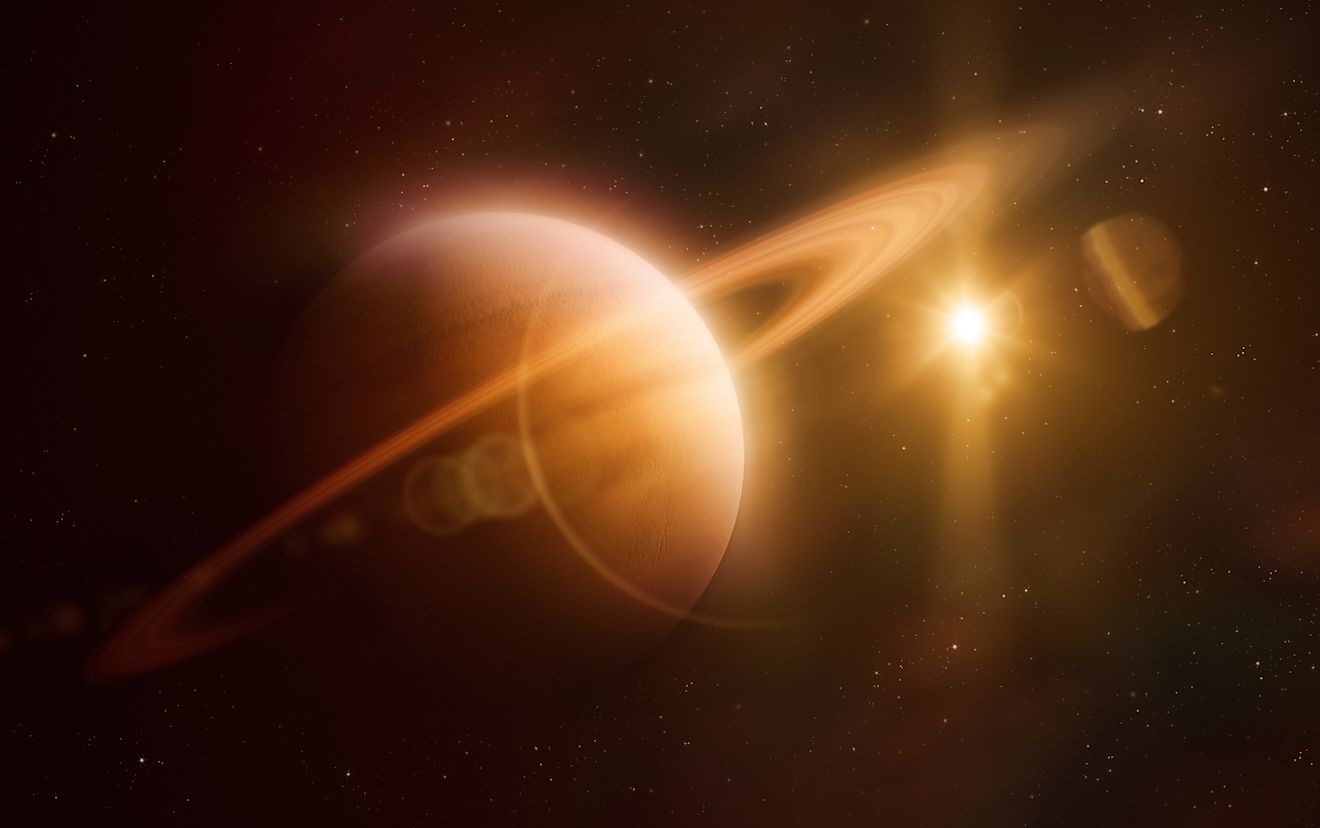
Saturn's rings are the most spectacular in the solar system and the planet's defining visual feature. They consist of countless particles of water ice, ranging from grains the size of dust to chunks the size of houses, organized into a system of nine continuous main rings and several fainter arcs. The rings are remarkably thin, only about 30 feet thick on average despite being more than 170,000 miles across. Cassini mission data has shown that Saturn's rings are slowly raining down into the planet's atmosphere and may disappear within a few hundred million years.
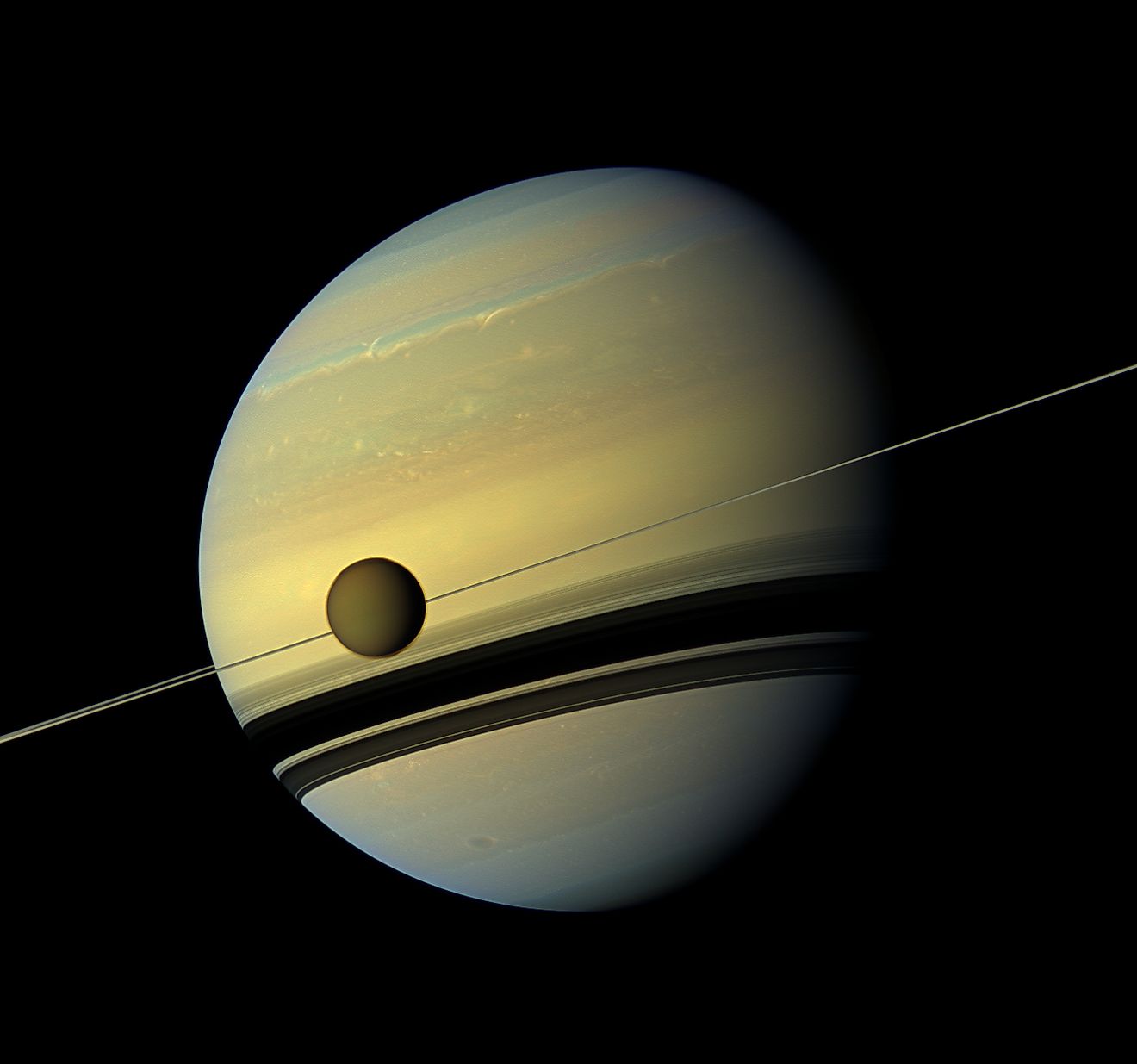
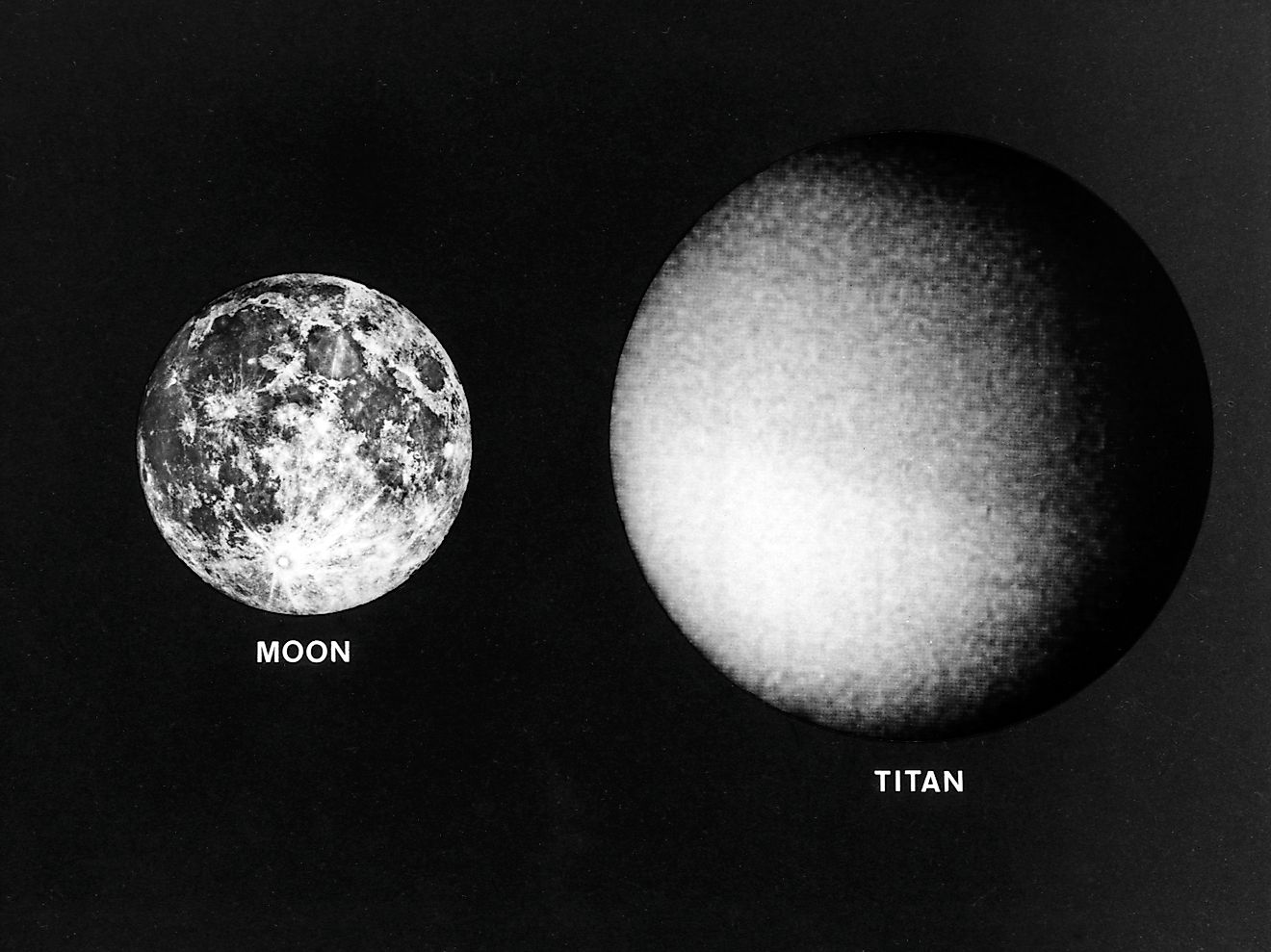
Saturn's moon system is also the most populous of any planet, with 146 confirmed moons as of the most recent surveys. Most are small, but Titan is the second-largest moon in the solar system after Ganymede, and the only moon in the solar system with a substantial atmosphere. Titan has methane lakes and rivers on its surface and is one of the most actively studied bodies in the solar system. Saturn's north pole holds another oddity, a persistent hexagonal cloud pattern surrounding the polar storm, the cause of which is still debated. The Cassini-Huygens mission orbited Saturn from 2004 to 2017 and is responsible for most of what is currently known about the planet and its moons.
Uranus

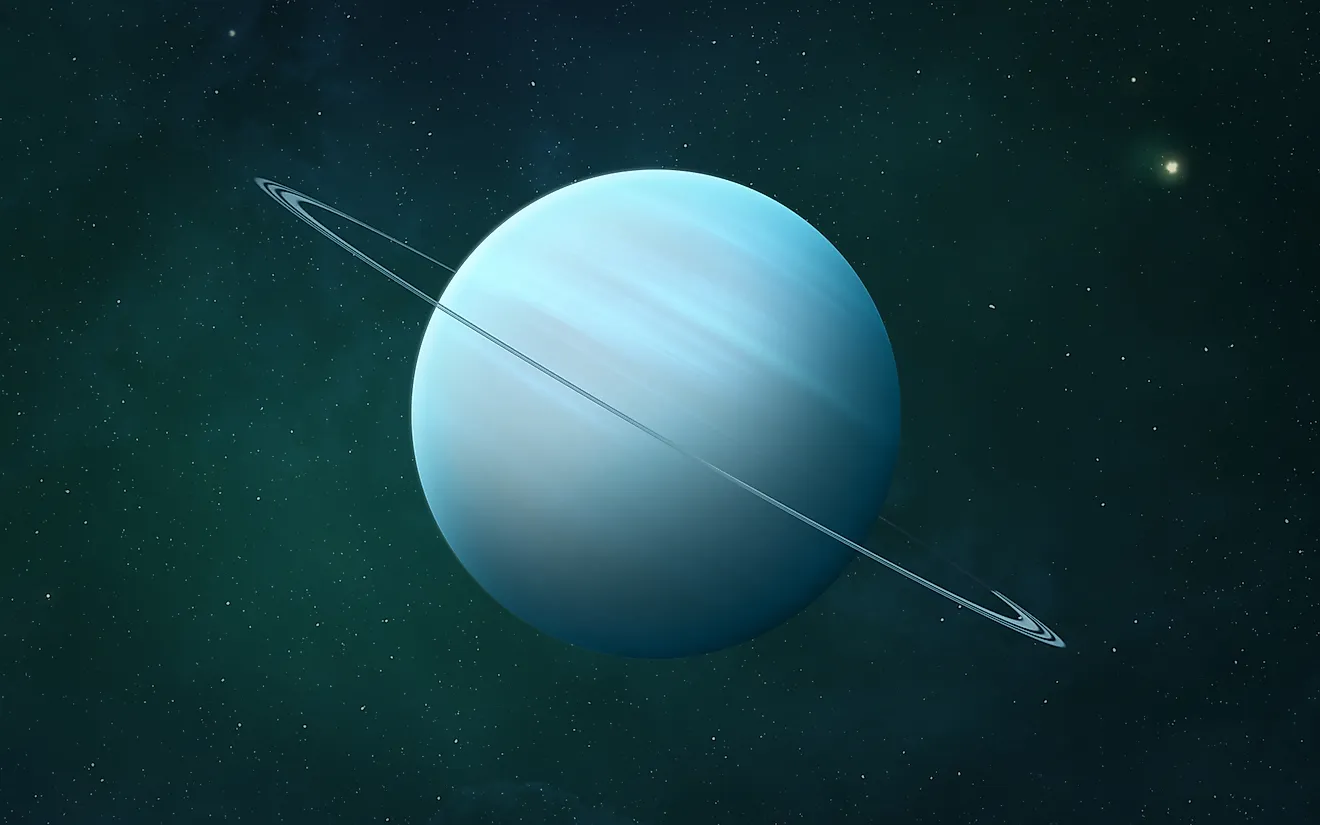
Uranus is the seventh planet from the Sun and the first of the two ice giants. Its atmosphere is hydrogen and helium with a small amount of methane that gives the planet its pale blue-green color. The interior, however, is dominated by water, ammonia, and methane in fluid form, which is why Uranus and Neptune are classified separately from Jupiter and Saturn. The planet has a mass of about 14.5 Earth masses and orbits the Sun at an average distance of about 19.8 astronomical units, taking 84 Earth years to complete a single orbit.
The most distinctive feature of Uranus is its tilt. While most planets spin roughly upright relative to their orbital plane, Uranus is tipped over by about 98 degrees, meaning it essentially rolls along its orbit on its side. This unusual orientation produces the most extreme seasons in the solar system: each pole receives 42 years of continuous sunlight followed by 42 years of darkness. The cause is generally thought to be a massive collision early in the planet's history.
Uranus has the coldest atmosphere of any planet in the solar system, with measured temperatures dropping to about -224 degrees Celsius (-371 Fahrenheit), even though Neptune is farther from the Sun. The planet also has a faint ring system and 28 known moons, all named after characters from the works of William Shakespeare and Alexander Pope. The planet was discovered by William Herschel in 1781, becoming the first planet found in modern history (the inner planets having been known since antiquity), and was named for the Greek sky god Ouranos. It is the only planet in the solar system named for a Greek deity rather than a Roman one. Voyager 2 remains the only spacecraft to have visited Uranus, with a brief flyby in 1986.
Neptune

Neptune is the eighth and most distant planet, with a mass of about 17 Earth masses. Like Uranus, it is an ice giant with a hydrogen-helium atmosphere and an interior dominated by water, methane, and ammonia. Methane in the upper atmosphere absorbs red light and gives Neptune its deep blue color, more saturated than Uranus's paler shade.
Neptune is the only planet in the solar system that was located by mathematical prediction before being seen through a telescope. Astronomers in the early 19th century had noticed that Uranus's orbit was being perturbed by something farther out, and Urbain Le Verrier in France and John Couch Adams in England independently calculated where the unknown perturbing body should be. On the night of September 23, 1846, the German astronomer Johann Galle, working with Le Verrier's predictions at the Berlin Observatory, identified Neptune within one degree of where the math said it should be. The discovery is still considered one of the great triumphs of celestial mechanics.
Despite being almost 30 times farther from the Sun than Earth, Neptune retains substantial internal heat from its formation, which drives the most violent winds in the solar system, with measured speeds exceeding 1,300 miles per hour. The planet's atmosphere features storms called Great Dark Spots, similar to Jupiter's Great Red Spot but shorter-lived, appearing and disappearing over periods of years. Neptune has 16 known moons, the largest of which is Triton, an unusual world that orbits the planet in a retrograde direction (opposite to Neptune's rotation), strongly suggesting it was a captured object from the Kuiper Belt rather than forming alongside the planet. Triton has active geysers of nitrogen and is geologically one of the most interesting bodies in the outer solar system. As with Uranus, Voyager 2 has been the only spacecraft to visit, passing Neptune in 1989.
Why the Giant Planets Matter
The giant planets are scientifically significant for several reasons beyond their sheer size. They preserve some of the original material from which the solar system formed, less altered by chemistry and impacts than the inner planets have been. Their structures and weather patterns are natural laboratories for physics under conditions that cannot be reproduced on Earth. Jupiter has played an outsized role in shaping the inner solar system over the past four billion years, with its gravity deflecting comets and asteroids that might otherwise have struck Earth (a useful function it continues to perform today). And as astronomers have discovered thousands of planets around other stars, many of those exoplanets turn out to be giant planets of various sizes, which makes a detailed understanding of our own four giants the foundation for interpreting whatever sits in orbit around stars hundreds of light-years away.