10 of the Oldest Incorporated Towns in Northern California
For about a year in the 1850s, the state Legislature met in a brick building in Benicia. When California became a state in 1850, most of its towns were little more than river landings, ports, and mining camps. A few grew fast enough to incorporate within the first decade, setting up their own governments to manage docks, streets, and fire protection. Many still have the courthouses, mansions, and storefronts built during those early years. Here are 10 of the oldest incorporated towns in Northern California, listed in the order they incorporated.
Benicia (1850)

Camels from a short-lived Army experiment were once kept at the old Benicia Arsenal, and the stone Camel Barns still stand. Benicia incorporated on March 27, 1850, about a month after the state's first city was chartered, making it one of the oldest incorporated cities in California.
From 1853 to 1854, the town served as the state capital, and its brick capitol building still stands on First Street. Benicia Capitol State Historic Park preserves the restored legislative chambers, complete with candles and quill pens. First Street leads down to the water along the Carquinez Strait.
Marysville (1851)

The Bok Kai Temple in Marysville, built by Chinese residents in the 1880s, honors a water god believed to protect the town from floods. Each year, the Bok Kai Parade, one of the oldest continuing parades in California, winds through downtown.
Marysville sits where the Yuba and Feather rivers meet. It incorporated on February 5, 1851, and quickly became a major supply center for the northern gold mines. Levees protect a downtown that still has blocks of brick buildings from that era. Ellis Lake, in the center of town, has a walking path and fountains, and the Mary Aaron Museum preserves a Gold Rush-era home.
Crescent City (1854)

Battery Point Lighthouse, first lit in 1856, sits on a small island in Crescent City that can be reached on foot only at low tide. Named for its crescent-shaped beach, the town incorporated on April 13, 1854, as a port serving mining camps in the mountains and in southern Oregon. It is the only incorporated city in Del Norte County.
The Del Norte County Historical Society Museum tells the story of the town's shipwrecks and the 1964 tsunami that destroyed much of downtown. Redwood National and State Parks begin just outside town.
Eureka (1856)

Lumberman William Carson's mansion in Eureka, completed in 1886, is one of the most photographed Victorian houses in America. The town incorporated on February 18, 1856, and grew rich on the redwood lumber trade around Humboldt Bay.
Lumber barons built some of the most elaborate Victorian homes in the country here, and the Old Town district is filled with restored storefronts. Fort Humboldt State Historic Park preserves the post where a young Ulysses S. Grant was once stationed. Sequoia Park Zoo, founded in 1907, is the oldest zoo in California.
Yreka (1857)

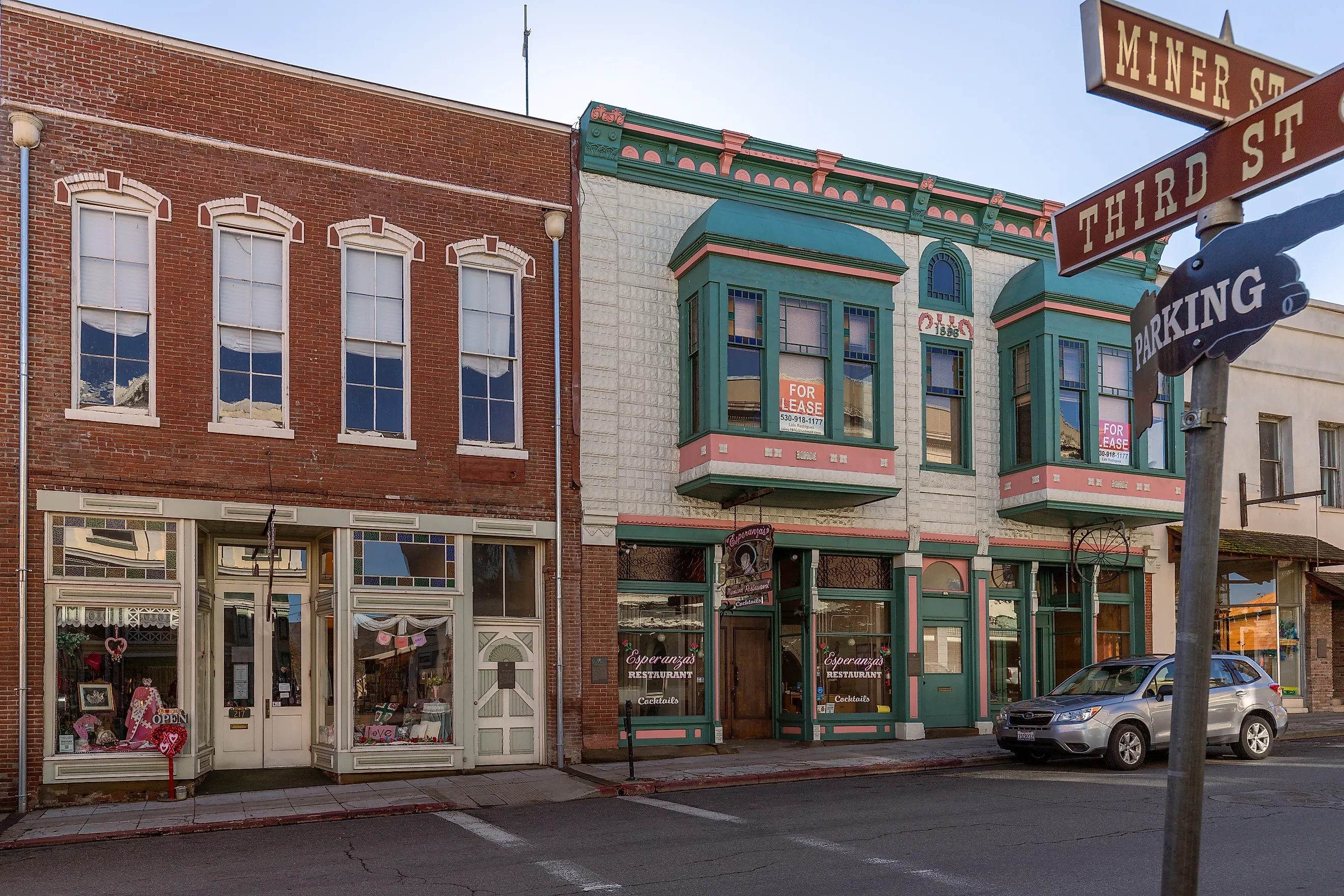
Yreka takes its name from a Shasta word for Mount Shasta, which rises to the south. The town grew from a gold strike in 1851 and incorporated on April 21, 1857.
Miner Street, the main street in its historic district, is lined with brick buildings and Victorian homes. The Siskiyou County Courthouse displays a collection of gold nuggets found in the area, and the Siskiyou County Museum shares the region's mining and ranching history. The surrounding mountains offer hiking and fishing.
Arcata (1858)

A statue of President William McKinley stands at the center of the Arcata Plaza, which is ringed by old storefronts and hosts a lively farmers market. The town on the northern end of Humboldt Bay incorporated on February 2, 1858, under the name Union, and adopted its current name in 1860.
Cal Poly Humboldt brings students and events to town, and the Arcata Community Forest offers miles of trails through redwoods on the edge of downtown. The Arcata Marsh and Wildlife Sanctuary, along the bay, is a favorite spot for birdwatching.
Petaluma (1858)

Petaluma was once known as the Egg Basket of the World for its poultry farms. It incorporated in 1858 as a river port shipping farm goods to the bay, and the Petaluma River still winds through downtown past restaurants and shops.
Many of downtown's ornate iron-front buildings survived the 1906 earthquake, and the town has appeared in films such as American Graffiti. Petaluma Adobe State Historic Park preserves the large adobe ranch house of General Mariano Vallejo, built in the 1830s and 1840s.
Healdsburg (1867)

Vineyards of the Dry Creek, Alexander, and Russian River valleys surround Healdsburg on all sides. Founder Harmon Heald laid out its Spanish-style plaza, and the town incorporated in 1867.
The tree-shaded plaza is still the heart of town, surrounded by shops, restaurants, and tasting rooms. The Healdsburg Museum shares the history of the town and the surrounding valleys. The Russian River flows along the edge of town and is popular for swimming and paddling.
Colusa (1868)

Steamboats once carried grain from the valley's farms down the Sacramento River from Colusa, which incorporated on June 16, 1868, as a river port. It has been the seat of Colusa County since the 1850s.
The Colusa County Courthouse, built in 1861, is one of the oldest courthouses in the Sacramento Valley. The Colusa National Wildlife Refuge, at the edge of town, hosts huge flocks of snow geese in winter, and the Colusa-Sacramento River State Recreation Area offers riverside picnics and fishing.
Suisun City (1868)

Suisun City incorporated on October 9, 1868, as California's 30th city, the same year the railroad arrived from Vallejo. The town grew up on Suisun Slough, where boats loaded grain and produce bound for San Francisco, and its old downtown still faces the water.
A waterfront promenade and marina line the slough today, and the town's Amtrak station sits a short walk from Main Street. Suisun Marsh, the largest brackish marsh on the West Coast, spreads out just beyond town and draws birdwatchers and hunters each winter. Rush Ranch, a protected open space on the marsh's edge, offers trails and a nature center.
Where It All Began
Water decided which of these towns came first. Benicia faces the Carquinez Strait, and Suisun City grew up on a slough off Suisun Bay. Marysville, Petaluma, and Colusa began as river ports. Crescent City and Eureka were harbors on the open coast, while Yreka and Arcata supplied the gold diggings of the far north. Healdsburg is the outlier, a farm town built around a plaza in the Russian River valley.