The National Forests With The Most Grizzly Encounters
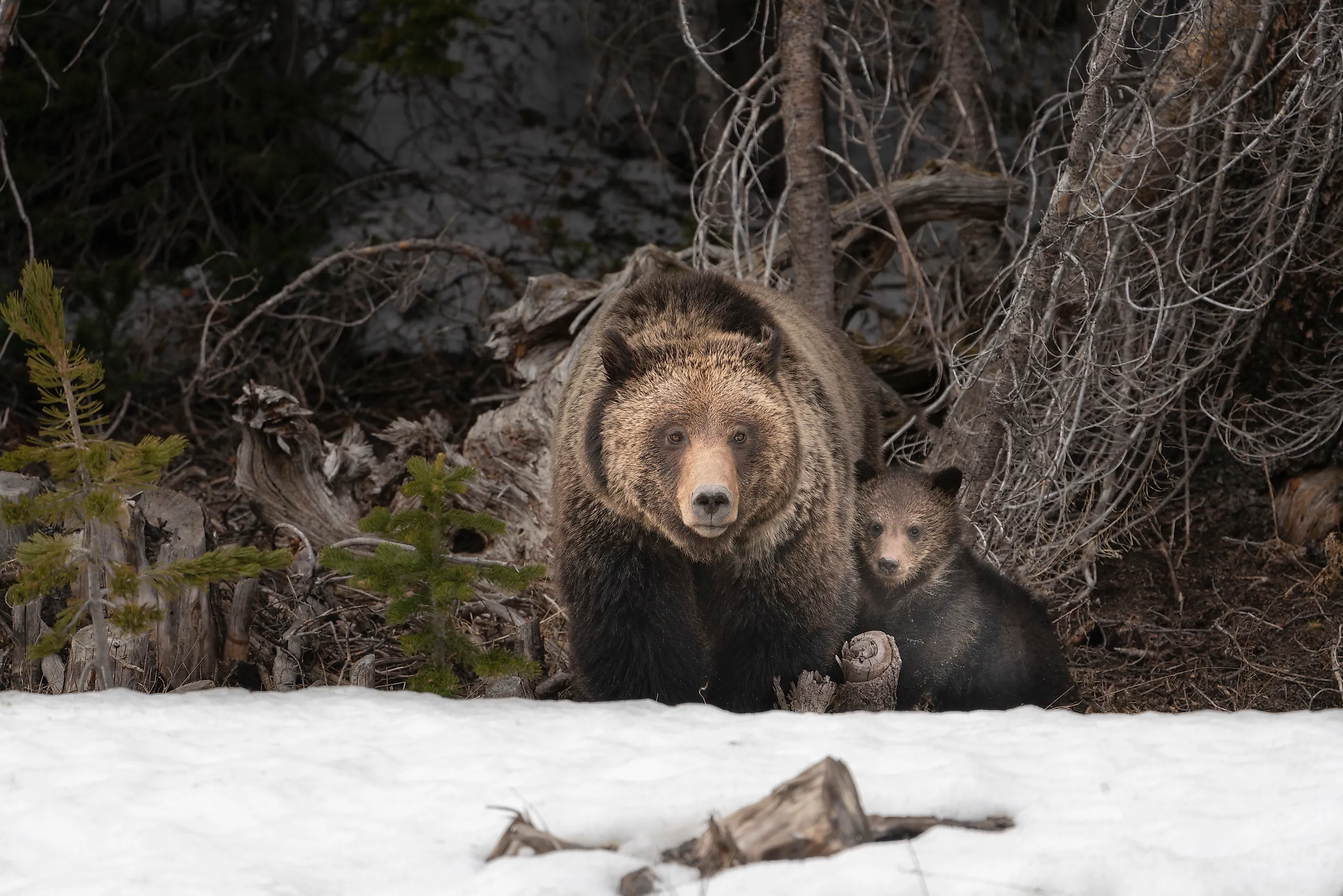
A grizzly bear can stand nearly nine feet tall and weigh close to 1,000 pounds. Seeing one on the trail is the stuff of a hiker's sharpest memories. More than 1,000 grizzlies now range across the Greater Yellowstone Ecosystem and the Northern Rockies. Their numbers have climbed steadily since federal protection began in 1975. The five national forests below sit squarely in that recovering range. All five draw heavy backcountry traffic through country where bears are common and close.
Bridger-Teton National Forest

Togwotee Pass is one of the few places in grizzly country where you can watch a bear from the safety of your own car. Roadside pullouts along the pass look out over huckleberry patches where grizzlies feed through late summer. That easy access is a draw and a risk at once. Bridger-Teton spreads across 3.4 million acres of western Wyoming, bordering both Yellowstone and Grand Teton National Parks, and grizzlies turn up in every corner of it. The forest has 37 developed campgrounds and more than 2,000 miles of trail. Crowds here run far smaller than in the parks next door, and the bears are just as numerous.

Rangers ask visitors to keep at least 100 yards between themselves and any bear, and the reason is not only human safety. A grizzly that learns to link people with food loses its wariness fast. Wildlife managers then face hard choices, from relocating the animal to, in the worst cases, killing it. A fed bear is often a dead bear, and the distance rule exists to keep that from starting.
Shoshone National Forest

Shoshone holds a distinction no other forest on this list can claim. Congress set it aside in 1891, making it the first national forest in the United States. Its 2.4 million acres climb through the Absaroka, Beartooth, and Wind River ranges, the kind of high, broken country grizzlies favor. Bear numbers here keep rising, and the animals show less and less fear of the people they meet. Roughly 1,300 miles of trail thread the forest, from short valley walks to punishing backcountry routes.

The pinch points are the 32 campgrounds and 11 picnic sites, several of them set on the same travel corridors bears use to move through the mountains. The busiest overlaps fall in the Clarks Fork and Wapiti ranger districts. Campers there can rent bear-resistant food storage bags, and the guidance on garbage is blunt. Anything left out teaches a bear to come back.
Caribou-Targhee National Forest

In May 2026, a man hunting black bears with his young son near Cave Falls Road watched a grizzly cross a meadow, catch their scent, and charge. He shot and killed it within a few yards, and investigators later ruled he had acted in defense of life. The encounter happened on Caribou-Targhee, more than 3 million acres spanning Idaho and Wyoming with a small reach into Utah. Grizzlies range throughout, though they concentrate along the eastern edge near Yellowstone. There they gorge on berries and forage across meadows and streambanks through the fattening months before winter.
Recreation and prime bear habitat sit right on top of each other here. Each summer, Idaho Fish and Game runs research trapping in the Cave Falls area near the Wyoming line, and the work continues through late August. Crews mark every trap site with bright warning signs, and hikers are expected to heed them and stay out. Cave Falls Campground itself sits on the southern boundary of Yellowstone National Park, deep enough in bear country that its 23 sites come with bear-proof storage boxes alongside the usual grills and picnic tables.
Custer Gallatin National Forest

In December 2025, a trail camera in the Bangtail Mountains photographed a young grizzly, the first one documented in that range in about half a century. Biologists took the image as proof that recovery is pushing bears back into old ground. Custer Gallatin spreads over 3 million acres between Montana and South Dakota. Wildlife move through it along a corridor between the Greater Yellowstone Ecosystem and the Northern Rockies, grizzlies among them. That expanding range is exactly why five of the forest's seven ranger districts fall under a food and attractant storage order each year from March 1 to December 1.

Thousands of miles of hiking and biking trail run across that same ground. As the bear population grows and backcountry use grows with it, the odds of crossing paths climb year over year. The Bangtail photograph was a milestone for conservationists, but for anyone on the trail it is also a plain reminder that occupied bear range now reaches farther than it did a generation ago.
Flathead National Forest

Few places in the lower 48 hold better grizzly habitat than the Great Bear Wilderness, a roughly 286,000-acre block inside Flathead National Forest. The forest covers 2.4 million acres of the Rocky Mountains in northwest Montana, running right up against Glacier National Park. Grizzlies and other wildlife move freely across a wide, connected landscape of alpine meadows, forested river bottoms, and open grassy parks.
Thousands of miles of trail cross that terrain, and people come for the water as much as the peaks. Hungry Horse Reservoir, which borders the Great Bear Wilderness, is a favorite for hiking, camping, and fly fishing. Anglers there get a specific warning: the local grizzlies are bold, and the smell of a fresh catch can bring one in. Carrying bear spray is standard advice, not a precaution for the nervous.
Sharing the Backcountry With Grizzlies
These five forests fall within three of the four states that still hold grizzly populations in the lower 48. Washington's bears are so few and so isolated by fragmented habitat that an encounter there is unlikely. Everywhere else on this list, the trend runs the other way. Decades of protection under the Endangered Species Act have let grizzlies reclaim ground they had lost, and rising backcountry use means people and bears meet more often than they used to. The good news is that most encounters pass without harm. Carrying bear spray, storing food and waste with care, and steering clear of marked trapping sites are what let two species keep sharing the same country.