The Largest Hot Springs In America
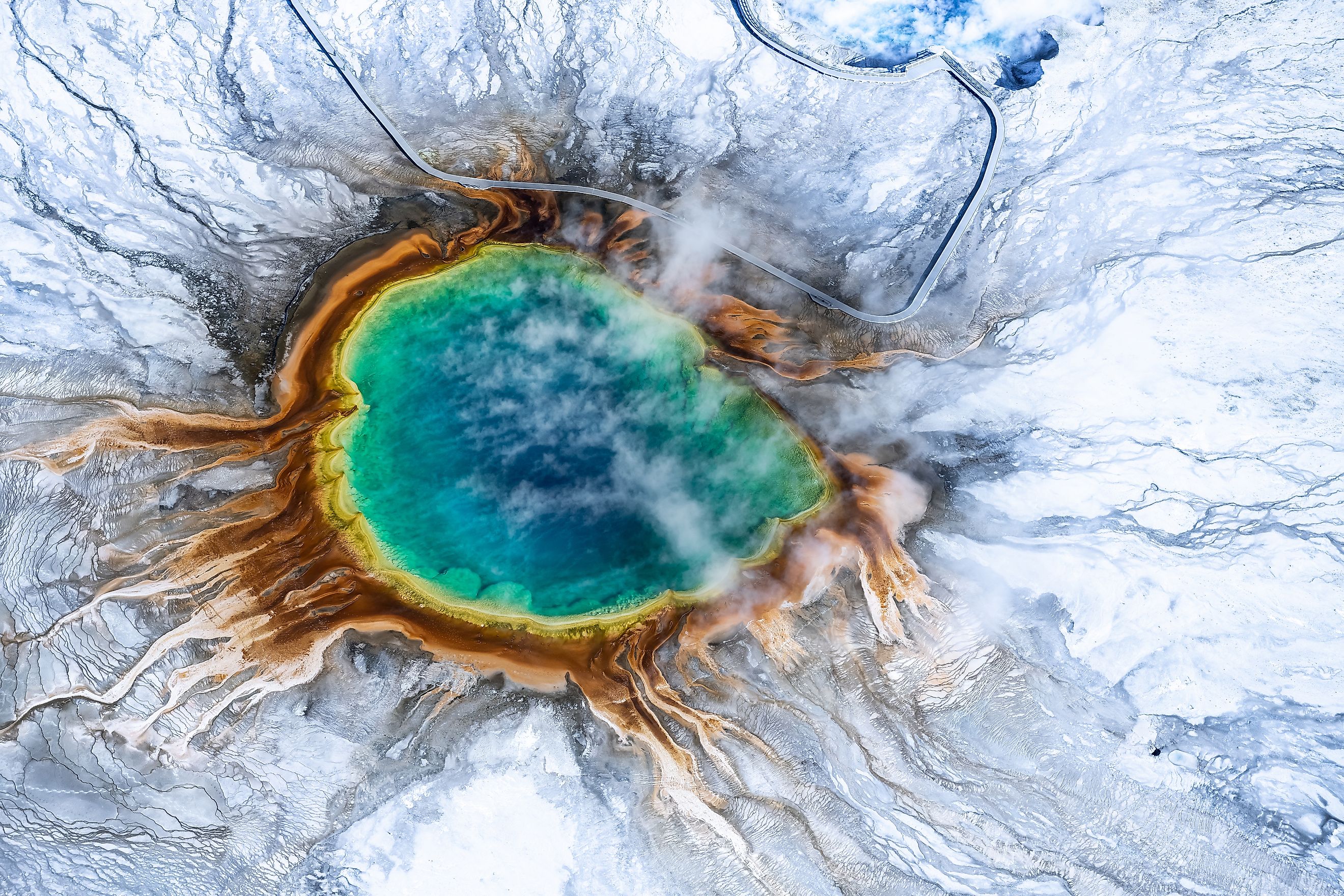
The color-shifting Grand Prismatic Spring is what NASA researchers look to when trying to understand how life began on Earth. The National Park Service confirms that it is the largest hot spring in America (and the third largest in the world), as it sits in Yellowstone's Midway Geyser Basin. It is believed to have been discovered by a trapper in 1839 who wrote an account of a "boiling lake."
There are many more large hot springs throughout the country, but it is tricky to rank an entire list of them, since there are so many variables. To keep things simple, in this article, the focus will be on the water surface area of the nine largest springs, which unsurprisingly all sit within Yellowstone National Park.
These springs are single hot springs, unlike some of the complexes found in other areas like Mammoth Hot Springs and Big Spring.
Grand Prismatic Spring

The Grand Prismatic Spring is longer than a football field. It is estimated to be around 370 feet wide and around 160 feet deep. (Some sources say it is 121 feet deep).
The spring releases 560 gallons of hot water per minute at temperatures of around 160°F. This scalding water is a breeding ground for heat-loving bacteria, which is where the orange, green, and brown colors come from. The center of the spring is the instantly recognizable azure blue made famous by published photographs.
Excelsior Geyser Crater

The Excelsior Geyser Crater also sits in the Midway Geyser Basin and was once a massive geyser. In the late 1800s, the crater was the site of huge eruptions that reached up to 300 feet before it later became dormant.
Today, it is a hot spring that measures 200 by 300 feet and discharges more than 4,000 gallons of water into the Firehole River every minute. The 199°F waters are a mesmerizing shade of blue, visible through the steam that rises from the surface.
As with the Grand Prismatic Spring, there are boardwalks around Excelsior to see the thermal waters from a safe distance.
Turquoise Pool

The waters of Turquoise Pool in the Midway Geyser Basin are a sparkling blue-green color, almost like a swimming pool, but the beautiful hue is deceptive, since no human can swim here.
The water temperature gets up to between 142 and 160°F. It is also the third-largest hot spring on this list, measuring 100 by 110 feet. As is the case with the other hot springs, the heat creates a home for bacteria and algae, which causes the bright turquoise color.
Gentian Pool

Animals have fallen into Gentian Pool over the decades and perished due to the 176°F waters. Some of their skeletons are still visible, seen by those viewing the pool from a distance.
This hot spring has an elongated shape that is around 85 to 89 feet long and 26 to 49 feet wide. Gentian Pool is associated with the Sprinkler/Kaleidoscope area of Yellowstone, and people are prohibited from walking on or touching the hydrothermal ground surrounding the water.
Black Pool

Black Pool in the West Thumb Geyser Basin was very dark and a lot cooler when it was named. Today, photos of the spring clearly show the hot steam rising off it while Yellowstone Lake in the background stays cool.
The spring heated up in 1991, killing its existing green and brown thermophiles to make way for yellow and orange thermophiles. Black Pool measures around 40 by 75 feet across and 35 to 40 feet deep.
Abyss Pool

Yellowstone's deepest pool also lies in the West Thumb Geyser Basin. Abyss Pool was named for its dark green waters that resemble an abyss, and it is 30 by 57 feet in diameter and 53 feet deep.
It is believed that vandalism over the years contributed to a change in temperature in Abyss Pool. Its vent was found to be blocked by coins and debris, reducing water flow. This reduced the pool temperature, allowing algae to grow rampantly. It is estimated that the current temperature of the water is around 172°F.
Emerald Pool

The Black Sand Basin is home to Emerald Pool, a hot spring with many different shades of green that is surrounded by brown stones and soil. The color comes from the yellow algae and bacteria that grow in the 154.6°F waters.
Emerald Pool is 27 feet wide and 38 feet long. The water is around 25 feet deep. Emerald Pool is not to be confused with Emerald Spring in the Norris Geyser Basin. This hot spring is an almost ice-blue color and is one of the hottest and most acidic springs in Yellowstone. It has a depth of 27 feet.
Crested Pool

Crested Pool is 25 by 30 feet and sits in the Upper Geyser Basin. It is around 42 feet deep. This hot spring got its name from the rim that surrounds its waters. It is also known for acting like a geyser at times, with water bursting out unexpectedly.
The clear blue depths heat to an average temperature of 191.1°F. Unfortunately, Crested Pool has a dark chapter in its history.
In 1970, nine-year-old Andrew Hecht fell into the water and succumbed to his burn wounds. The tragedy was commemorated with a special award that is given out every year to the person or group who makes the most effort to improve public safety.
Morning Glory Pool

Finally, Morning Glory Pool in the Upper Geyser Basin is around 23 feet in diameter and more than 20 feet deep. It is one of the many hot springs in Yellowstone that have been the site of vandalism, with visitors throwing rocks and coins into the water.
Because of this ongoing damage, the water has cooled and is subtly changing color. The spring has acted like a geyser a couple of times, erupting and shooting water into the air after an earthquake.
Yellowstone's Hot Springs Are Under Threat

Hats and other tourist trash continue to threaten the geysers and hot springs in Yellowstone. In 2025 alone, more than 300 hats had to be removed from the park's hydrothermal areas.
Pizza boxes are also found all over the place, putting the natural attractions at risk of losing their inherent beauty. The best way to prevent damage is for visitors to stay on the boardwalks and trails and not be allowed to bring in food containers, hats, or coins.
Of course, this is unrealistic at the moment, so park management will have to continue to work on measures to protect the park.