The First Public Parks Built In America
In 1634 the townspeople of Boston bought 44 acres of scrubland from a minister named William Blackstone for 30 pounds, each household chipping in six shillings, and the result is still open to the public 392 years later. Boston Common is the oldest public park in the United States and it is not a museum piece: people cross it on the way to work every morning. That pattern holds for almost everything on this list, which is the surprising part. Of the twenty oldest city parks in America, nearly all are still functioning public parks today, in the same footprints, under the same basic terms. Several of them were pastures, parade grounds or execution sites before they were anywhere anyone would picnic.
The chronology below follows the Trust for Public Land's ranking of the oldest city parks in the country, and every entry is one you can still walk into.
Boston Common, 1634
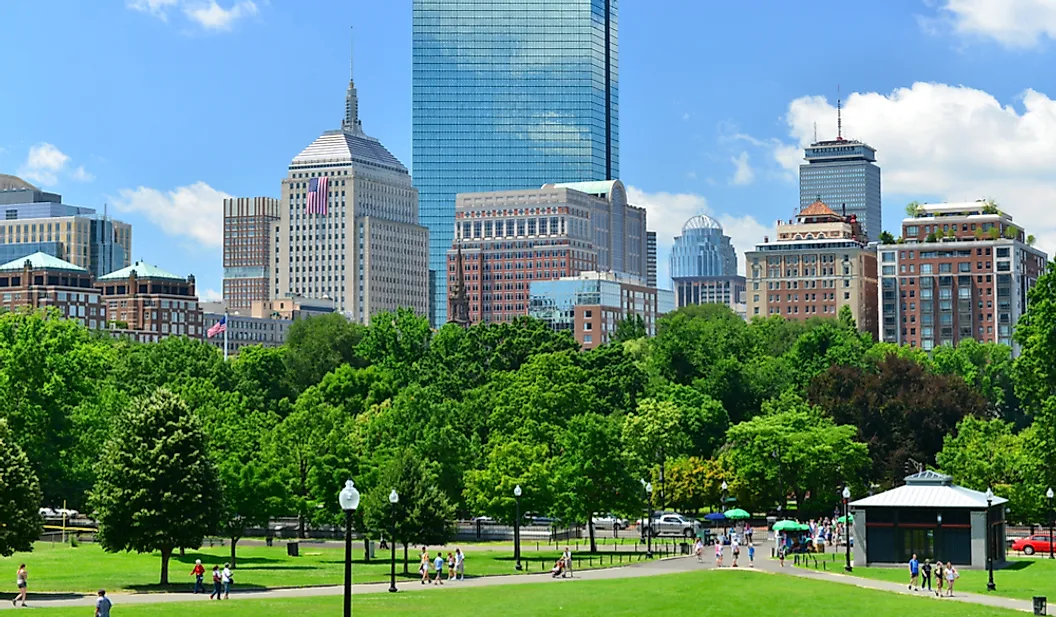
Fifty acres today, bounded by Tremont, Park, Beacon, Charles and Boylston in Massachusetts, and recognized by the National Park Service, the City of Boston and everyone else as the country's oldest public park.
It began as pasture. A town shepherd managed as many as 70 cows on it, and the arrangement lasted until Mayor Harrison Gray Otis banned grazing in 1830. Of the four original hills and three ponds, only Flagstaff Hill and the Frog Pond are still identifiable.
It was also a place of punishment. The Great Elm served as the gallows, including for the Quaker Mary Dyer in 1660, and the tree stood until a storm brought it down in 1876. British Redcoats camped here for eight years from 1768.
It is now the start of the Freedom Trail, a National Historic Landmark District since 1987, and crossed by millions of people a year.
The 1640 Decree Is Why It Survived
Buying land is easy. Keeping it public for four centuries in the middle of an expanding city is the hard part, and Boston solved it early.
In 1640 the town's magistrates decreed that no land would be granted for a house plot or garden out of the open ground or Common Field. That single sentence removed the Common from the property market permanently, and it was reconfirmed in the City Charter of 1822.
Almost every old American open space that vanished did so through incremental private encroachment. Boston wrote the prohibition down six years in.
New Haven Green, 1641
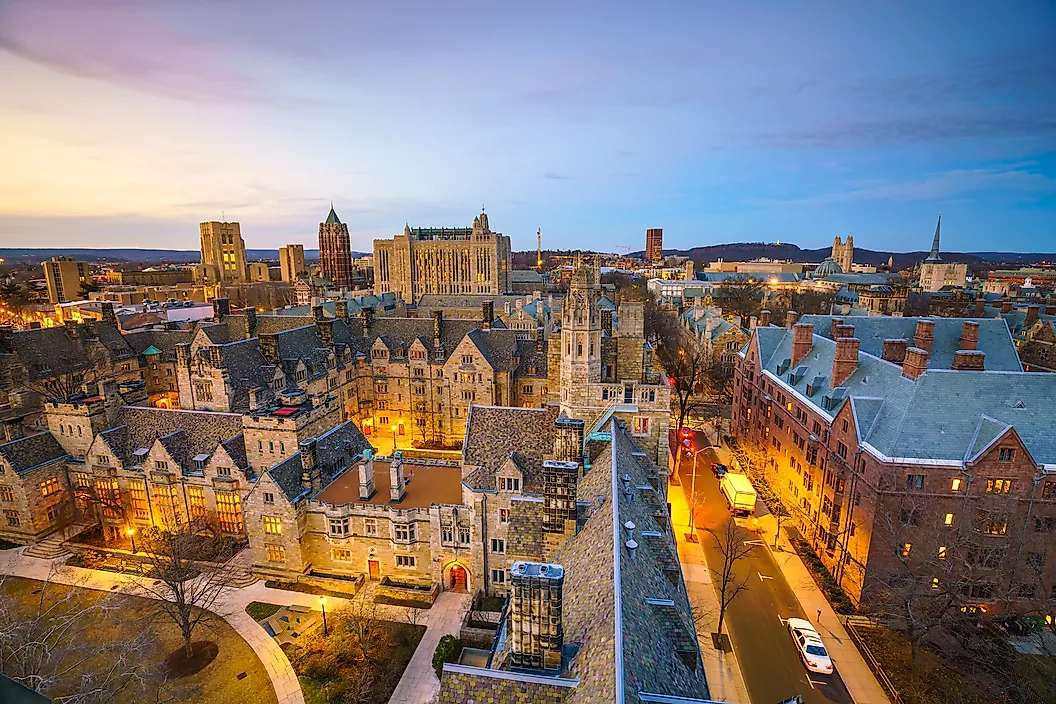
The second oldest, and the most deliberately planned of the early ones.
New Haven, Connecticut, was laid out in 1638 as nine equal squares, with the central square left permanently open. That grid is one of the earliest examples of formal town planning in the American colonies, and the Green is the square that was never built on.
It still holds three churches, still hosts the city's festivals, and is still bordered by Yale. The date is variously given as 1638 or 1641 depending on whether you count the survey or the formal designation.
Charleston's Squares, 1680

Charleston was founded on a grid with public squares built into it, and Washington Square and Marion Square both trace to the 1680 plan.
Marion Square spent much of its life as a military parade ground attached to the state arsenal, which is a common origin on this list. Washington Square is smaller and quieter, tucked behind the Exchange.
Both remain public. Marion Square now hosts the city's farmers market, which is a fair illustration of how these spaces get repurposed without ever changing hands.
Philadelphia's Five Squares, 1682

The most influential single act of park planning in American history, and William Penn did it before the city existed.
Penn's 1682 plan for Philadelphia, Pennsylvania, set aside five public squares, one at the center and four distributed through the grid. Four survive as parks under later names: Rittenhouse, Washington, Logan and Franklin. The fifth, Center Square, is now occupied by City Hall.
The idea that a city should be laid out with public green space designed in from the start, rather than carved out later, begins here. Savannah and Washington both borrowed from it.
Salem Common, 1685

Another New England common, and another one that started as something more useful than pleasant.
Salem Common served as a militia training field, which is why it appears in some records as Training Field rather than as a park. It was drained and landscaped in the early nineteenth century, at which point it became a park in the modern sense.
It is still open, still bounded by the Federal-era houses built to face it, and still in daily use in a city better known for other things.
Battery Park, New York, 1686

New York's oldest public land, though not its oldest official park, and the distinction is a legal one worth knowing.
The 1686 Dongan Charter placed all waste, vacant and unappropriated land in the city under municipal care for the first time. That single act put the open ground at the southern tip of Manhattan into public hands, along with the commons that became City Hall Park and the marketplace that became Bowling Green.
The Battery takes its name from the artillery batteries once stationed there. It is still a park, and still the point from which most people leave Manhattan for the Statue of Liberty.
Jackson Square, New Orleans, 1718

Laid out as the Place d'Armes when the French founded the city in Louisiana, which makes it the oldest public square in America established under a non-English colonial government.
It served as a military parade ground for a century under three flags, French, Spanish and American, and was renamed for Andrew Jackson after the Battle of New Orleans. St. Louis Cathedral has faced onto it throughout.
It is now the busiest public space in the French Quarter, full of artists and street performers, and functionally unchanged in footprint since 1718.
San Pedro Springs Park, San Antonio, 1729

The one almost nobody outside Texas can name, and it has a genuine claim to being the second oldest municipal park in the country.
The Spanish Crown designated the land around the San Pedro Springs in Texas as public in 1729, for a settlement that needed the water. The springs had drawn people to the site for thousands of years before that, and the park still surrounds them.
It has since been a Confederate camp, a stop on a mule-drawn streetcar line and a zoo. It is currently a public park with a swimming pool.
Bowling Green And Johnson Square, 1733

Two parks established the same year at opposite ends of the colonies, and both are still in use.
Bowling Green became New York's first official park by resolution of the Common Council on March 12, 1733. It was leased to a group of locals who paid rent in peppercorns and improved it with grass, trees and a wooden fence. A gilded statue of George III went up in 1770, the first statue in an American city park, and a crowd tore it down in 1776 after the first public reading of the Declaration of Independence. The iron fence installed in 1771 to protect the statue is still standing.
Johnson Square in Georgia was the first of the squares in James Oglethorpe's plan for Savannah, which eventually produced 24 of them. Twenty-two survive. It is the most complete surviving example of the Penn idea taken to its logical end: a city built as a repeating grid of public squares.
What First Actually Means Here

Three different things get called the first public park in America, and all three claims are defensible.
Boston Common is the oldest land continuously held in public trust for common use, from 1634. Philadelphia's squares from 1682 are the oldest spaces designed as public parks before the city around them was built. And Central Park, opened from 1858, is the first large American park deliberately landscaped as a designed work, which is a different achievement entirely and the one that created the profession.
What none of the colonial entries were is recreational. They were pastures, parade grounds, marketplaces and execution sites. The idea that a park exists for pleasure arrives much later, and it arrives with Central Park.
Nearly All Of Them Are Still Parks
This is the genuinely remarkable thing, and it is easy to miss inside a list of dates.
Boston Common, New Haven Green, Marion Square, four of Penn's five squares, Salem Common, the Battery, Jackson Square, San Pedro Springs, Bowling Green and Johnson Square are all still public parks. Same ground, same public ownership, in cities that have otherwise rebuilt themselves several times over.
Only one of the earliest entries was lost to development, and even that one went to a city hall rather than to private hands. For a country that has demolished most of what it built before 1800, the survival rate on its first parks is close to perfect.
The reason is the boring one from earlier. Boston wrote it down in 1640, Penn drew it on the plan in 1682, Oglethorpe repeated it 24 times, and once public open space is a line on the founding survey it is very difficult for anyone to quietly acquire.