7 Best Cities To Retire In Alberta
Each city in Alberta offers its own advantages. Calgary and Edmonton pair major medical centres with extensive parks, museums, and transit networks, while St. Albert adds a lively farmers’ market and a compact riverfront district. Lethbridge stands out for its Chinook-moderated winters, Grande Prairie supports northern residents with specialized cancer care, and Medicine Hat combines comparatively affordable living with arts, parks, and heritage attractions. From Red Deer’s trail system to Calgary’s riverside pathways, these Alberta cities offer distinct settings for an active and well-supported retirement.
Calgary

Downtown Calgary rewards people who would rather walk than drive. A retiree can leave a condo, cross Prince's Island Park, and walk over the Bow River footbridge to lunch at River Cafe. It is one of the most written-about restaurants in the country. That same footbridge feeds into the Bow River Pathway, a paved riverside trail that links Valley Ridge in the west with Fish Creek Provincial Park in the south, so a quick lunch and a two-hour ramble start from the same spot.
Follow the pathway south, and it reaches Heritage Park Historical Village, where more than 180 historic buildings and exhibits sit along the Glenmore Reservoir. A short hop away, Studio Bell, home of the National Music Centre, tells the story of Canadian music across five floors. Both sit close to the Kerby Centre, which has operated Calgary's seniors' hub in the Downtown West End since 1973 and still fills its rooms with tax clinics and travel groups. A few kilometres northwest, Foothills Medical Centre is the largest hospital in Alberta and the trauma referral point for two million people across southern Alberta, southeastern British Columbia, and southern Saskatchewan. That kind of backup sits close no matter which neighbourhood a retiree picks.
Edmonton

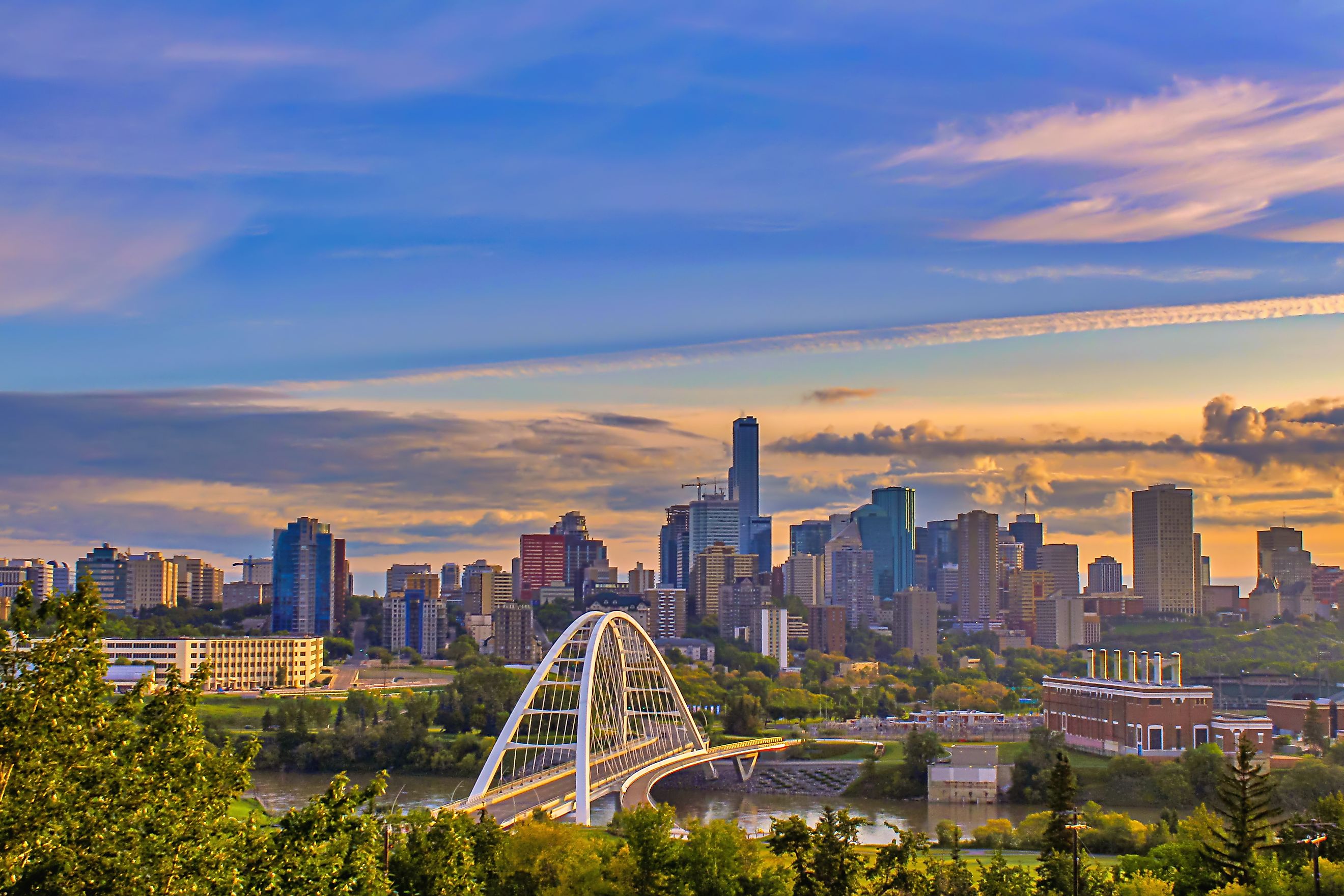
Edmonton's North Saskatchewan River Valley is the largest stretch of urban parkland in North America, running 22 times the size of New York's Central Park with 160 kilometres of trail through the middle of the city. Ride the Valley Line LRT to the Muttart stop, and the valley opens onto the Muttart Conservatory, four glass pyramids holding plant collections from three continents, with a regular seniors' programming series built into the calendar. Keep following the valley west, and it reaches Fort Edmonton Park, Canada's largest living history museum, where a retiree can move between recreated 1846, 1885, 1905, and 1920 streets in a single afternoon.
The same LRT line stops blocks from Old Strathcona and its year-round farmers' market, which trades indoors in a converted bus barn. A few more stops reach the University of Alberta Hospital, one of the largest academic medical campuses in the country. The city rounds it out with a discounted midday drop-in rate for adults 65 and over at municipal pools and fitness centres, which turns a transit pass into most of what an active retiree needs.
St. Albert

St. Albert keeps its best day out on the calendar all summer. Every Saturday from June through October, the St. Albert Farmers' Market fills the Perron District with more than 275 vendors, the largest outdoor market in Western Canada, and the Arden Theatre runs its season of music, comedy, and dance from the same downtown blocks. A few streets away, St. Albert Botanic Park opens several free acres of rose, lilac, peony, and daylily beds that peak in July.
Across the Sturgeon River on Mission Hill stands Father Lacombe Chapel, Alberta's oldest surviving building, put up in 1861. Nearby, the Musée Héritage Museum carries the region's Métis and Francophone history from its home in St. Albert Place downtown. Everyday care stays in town. Sturgeon Community Hospital handles emergency and inpatient needs without a drive into Edmonton, the St. Albert Seniors Association runs a purpose-built centre with hundreds of programs a week, and St. Albert Transit's accessible bus links both to Edmonton's LRT for anyone heading further.
Red Deer

Red Deer wraps six parkland sections into one system along its namesake river. Waskasoo Park strings 110 kilometres of trail past the Kerry Wood Nature Centre and Fort Normandeau, a reconstructed 1885 outpost, while the neighbouring Gaetz Lakes Sanctuary has protected migratory birds since 1924 and still turns up moose and porcupine on its trail cameras. Off the highway, the Alberta Sports Hall of Fame walks visitors through the careers of athletes like Kurt Browning and Catriona Le May Doan, and the Red Deer Farmers' Market sets up on weekends at Red Deer Polytechnic.
The care to match sits at the Red Deer Regional Hospital Centre, whose $1.8 billion redevelopment is the largest hospital project in Alberta's history and covers emergency and specialized care for all of central Alberta. The non-profit Golden Circle Senior Resource Centre has run the city's seniors' hub since 1974, and its Meals on Wheels reaches past the city limits. Red Deer Transit's ACTION bus handles door-to-door pickup for anyone who needs it.
Lethbridge

Lethbridge gets the mildest winters in Alberta, and the reason is the Chinook. Warm Pacific air spills over the Rockies and can lift a January afternoon by 15 degrees in an hour, and the city's coulees hold that warmth better than the open prairie. Those coulees are red-clay canyons cut by the Oldman River, and they run straight through Indian Battle Park. There, the replica 1870s trading post Fort Whoop-Up sits a short walk from the Helen Schuler Nature Centre, whose rooftop garden looks out on the High Level Bridge, the longest and highest railway trestle bridge in the world.
On the coulee rim, the Galt Museum and Archives looks back over the same river valley, and downtown Lethbridge feeds a farm-to-table scene built on the province's dense concentration of farms. A short drive east, the Nikka Yuko Japanese Garden opened in 1967 to mark Canada's centennial, its pavilions designed and built in Japan, and it keeps a Winter Light Festival glowing through the coldest months. Chinook Regional Hospital covers a five-county area, Nord-Bridge Senior Citizens Association runs the city's largest seniors' centre, and a door-to-door accessible service brings residents 65 and over to both.
Medicine Hat

RE/MAX ranked Medicine Hat sixth on its 2026 list of Canada’s cheapest cities for homebuyers, with an average home price of $394,774 in April 2026. It has also posted the lowest living wage in the province three years running, at $18.15 an hour in 2025. Affordability like that leaves room for the rest of a retirement. The Medicine Hat Regional Hospital handles acute care, the Veiner Centre runs the city's 55-plus programming from Allowance Avenue, and Medicine Hat Transit's Special Transit service reaches residents with mobility needs.
That leaves budget for the good part. Medalta in the Historic Clay District turns a century-old pottery factory into a national historic site, with working ceramic studios and beehive kilns open for tours, and Kin Coulee Park runs alongside it down Seven Persons Creek. A few minutes up the Trans-Canada Highway stands the Saamis Teepee, the world's tallest teepee at 65.5 metres, built for the 1988 Calgary Olympics and moved here in 1991. Downtown, Hell's Basement Brewery and two neighbours fill the historic core alongside the Esplanade Arts and Heritage Centre. The Esplanade holds a 700-seat theatre and the Ewart Duggan House, one of Alberta's oldest brick homes on its original foundation.
Grande Prairie

Grande Prairie sits up near the British Columbia border, further north than the usual retirement shortlists reach. That overlooks a 405-hectare park running right through the middle of town. Muskoseepi Park follows the Bear Creek corridor with 20 kilometres of paved trail, and its pond is stocked with rainbow trout each spring, free to fish for anyone over 65. Come winter, the same pond freezes into a skating rink.
Twenty minutes west at Wembley, the Philip J. Currie Dinosaur Museum gives the paleontologists working the Pipestone Creek Bonebed a public front door. Back in town, the Art Gallery of Grande Prairie inside the Montrose Cultural Centre holds a Category A rating that lets it host touring works from the National Gallery. The Grande Prairie Farmers' Market sets up downtown on Fridays and Saturdays with more than 100 vendors, a short drive from the Grande Prairie Regional Hospital. That $870 million hospital opened in December 2021 with 243 single-bed rooms and the first cancer radiation centre in northern Alberta. The 55 North Community Centre keeps a full weekly calendar for older adults on 101 Avenue, and Grande Prairie's accessible transit connects seniors to any of it.
Alberta’s best retirement cities balance healthcare, community support, recreation, and affordability in different ways. Calgary and Edmonton offer major hospitals and extensive amenities, while St. Albert, Red Deer, and Lethbridge provide strong seniors’ programs in smaller urban settings. Medicine Hat stands out for lower living costs, and Grande Prairie brings specialized care and cultural attractions to the north. The right choice depends on whether healthcare access, climate, affordability, or an active lifestyle matters most.