Where People Are Moving To In Alberta In 2026
Ask a moving-truck company which way Canadians are relocating right now, and the answer keeps coming back the same: west, and specifically to Alberta. More Canadians moved here from other provinces than to anywhere else in the country for three straight years running, and in 2025, the province's population passed five million for the first time. What makes that interesting is not the headline number but the shape of it. A tech worker priced out of Toronto and a welder leaving a shrinking Saskatchewan town are both landing here, often in different cities, for reasons that have almost nothing in common. The six places below are where the newcomers are actually settling, and a slightly different kind of person shows up in each one.
Calgary

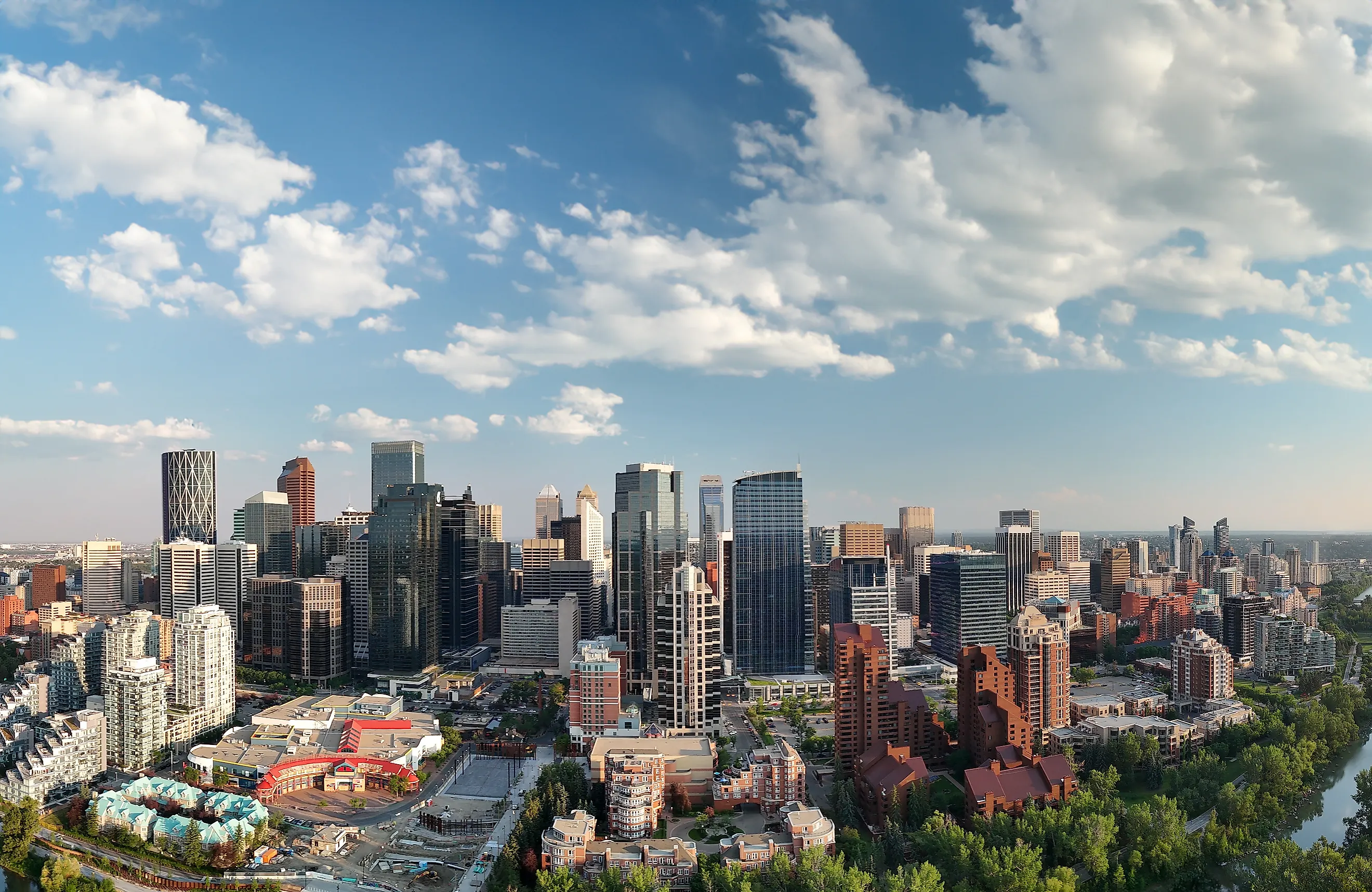
Calgary is still the most common first stop. The metro area is home to roughly 1.84 million people now, and it gained tens of thousands a year even as the growth rate eased from the wild six percent of 2023 to a steadier pace by 2025. The reason is not complicated: a downtown full of energy-sector head offices and a fast-growing tech scene pay salaries that go a lot further here than on the coast. A detached house averages a little under $600,000, roughly half what the same family would face in Vancouver or Toronto, and that math is exactly why so many of the arrivals come from Ontario and British Columbia. Interprovincial movers, not international ones, now account for most of the increase, a shift from a few years ago when new Canadians led the way. The Rockies sit an hour to the west, the CTrain actually runs on time, and a lot of people who came for the paycheck end up staying for the weekends.
Edmonton

Three hours north up Highway 2, Edmonton is growing just as fast among a different crowd. Where Calgary's arrivals skew toward Ontario and B.C. transplants, the capital's come heavily from Saskatchewan and the Atlantic provinces, along with a steady stream of people leaving small prairie towns as farm work thins out. Some are Calgarians: plenty of newcomers land in Calgary first, look at the housing math, and move north to Edmonton where a detached home runs closer to $485,000. That affordability edge showed up in the 2025 numbers in a way nobody expected. Edmonton quietly overtook Calgary for the largest net interprovincial migration surplus of any metro in Canada, with 11,742 people gained to Calgary's 11,195. Immigrants make up nearly a third of the population, with the Philippines, India, and China most common, and the university and government payrolls give the whole place a steadier, less boom-and-bust feel than its southern rival.
Red Deer

Sitting almost exactly halfway between the two big cities, Red Deer has one clear selling point: that in-between location. The population grew from about 100,000 people in 2021 to roughly 118,000 by 2026, and a lot of that came from families who wanted out of big-city traffic without cutting ties to either Calgary or Edmonton, both an easy drive down the same highway. Remote work made that possible in a way it wasn't a decade ago. The jobs are real, too: much of the province's oilfield services industry is based here, alongside one of the largest petrochemical clusters in the country, so the paycheck holds up while the cost of living stays well below the metros. Ontario and B.C. lead the interprovincial arrivals, and workers from the Philippines, India, Somalia, and Nigeria fill out much of the rest. On summer weekends much of the city heads for nearby lakes like Sylvan.
Lethbridge

Down in the province's far south, Lethbridge is what a lot of corridor commuters are quietly looking for: the amenities of a real city without the congestion of the Calgary-Edmonton stretch. The population climbed 11.2 percent over five years, from 98,406 in 2021 to 113,671, and much of that has been mid-career professionals and young couples who wanted shorter commutes, cheaper homes, and easy green space like Henderson Lake Park. The University of Lethbridge is the other engine, with strengths in neuroscience, agricultural science, and business that students and researchers travel from across the country and beyond to study. A good share of them stay after graduation, which is part of why the surrounding region has become one of Canada's real centers of agricultural research and food processing. More and more people choose it on purpose rather than pass through.
Airdrie

A lot of Calgary's young families end up living in Airdrie. The average resident here is just 34 years old, one of the youngest figures in the province, and the town's population jumped 26 percent between 2021 and 2025 to more than 94,000. The appeal is proximity without the price tag: it sits about 15 minutes north of Calgary, even closer to the international airport, with a deep bench of affordable housing that gives first-time buyers room to actually choose. Families get real amenities for the move, too. Genesis Place holds a fitness center, a competition pool and aquatic park, twin NHL-sized rinks, an indoor track, and a pair of fieldhouses under one roof, and the trails of Nose Creek Park run through the middle of town. There is no local business tax either, which has made the town a magnet for entrepreneurs, and a growing number of new arrivals from India have joined the Ontario and B.C. transplants.
Fort McMurray

For years, people flew into Fort McMurray, worked hard, and flew back out, taking their oil-sands paychecks home to other provinces. That is finally changing, and it is the most interesting story on this list. Local officials have pushed hard to convert the fly-in workforce into permanent residents, and the 2025 census showed the effort working: the region grew for the first time in a decade, with permanent residents up more than 11 percent since 2021 even as the camp-based temporary workforce shrank by over a fifth. The people staying are young, with 43 percent of residents between 20 and 44, and they are buying houses instead of renting bunks. A detached home runs somewhere between $340,000 and $395,000, which paired with oil-sands wages is a genuinely rare combination in Canada. After the wildfire years and the busts, a town rebuilding around people who want to stay is a quietly big deal.
What Ties It All Together
Young families priced out of Calgary land in Airdrie, remote workers who want to split the difference settle in Red Deer, people done with the corridor entirely head for Lethbridge, and in Fort McMurray the workers who used to leave are finally unpacking for good. It helps that almost 90 percent of the immigrants who arrive stay in the province a year on, behind only Ontario, Quebec, and British Columbia, and that there is no sales tax and no land-transfer tax here, so a dollar earned tends to stay a dollar. Different people, different reasons, one province at the center of all of it.