What Animals Live In The Australian Outback?
Drive into the Australian Outback and you cross 5.6 million square kilometres of country where the next petrol station can be 400 kilometres away and most of the residents have either fangs, claws, or both. The Outback covers about 73 percent of Australia's land area and ranges across tropical savanna in the north, true desert in the centre, and semi-arid scrubland nearly everywhere else. Almost every animal in it is found nowhere else on Earth. Here are nine worth knowing.
Kangaroos

A red kangaroo can clear nine metres in a single leap, sprint at over 60 kilometres per hour, and pause its own pregnancy by force of will. The pause is a real evolutionary trick called embryonic diapause: a female kangaroo with a joey already in her pouch can freeze the development of her next fertilised embryo until the pouch is free, then resume gestation on demand. In drought years she can hold an embryo for months. It is one of the more elegant Outback survival strategies, and it is built into the family Macropodidae across the continent.
The four common Outback species are the red, eastern grey, western grey, and antilopine kangaroos. All travel on two enormous hind legs balanced by a heavy muscular tail that effectively works as a fifth limb when they slow to a walk. Males of the larger species stand over two metres tall, can punch with the forelimbs, and kick with the hind legs hard enough to disembowel a dog. None of which keeps them off the highway: kangaroos remain Australia's most frequent vehicle collision hazard, with roughly 80 percent of Outback animal-vehicle strikes involving the family.
Dingoes

To keep dingoes out of the southeastern sheep country, Australia built the longest fence on Earth. The Dingo Fence runs 5,614 kilometres from the Queensland coast to the Great Australian Bight, and it has been maintained continuously since 1885. It does roughly what it was designed to do: dingoes remain abundant on the inland side and rare on the sheep-grazing side. The fence is so long it can be seen from low Earth orbit.
The dingo itself sits in a taxonomic argument that has been running for two centuries. Is it a wolf subspecies (Canis lupus dingo), a feral domestic dog (Canis familiaris dingo), or its own species (Canis dingo)? The IUCN previously listed pure dingoes as Vulnerable from 2004 to 2020 and currently lists the taxon as Not Evaluated while the science is unresolved. Most dingoes today are at least partially hybridised with feral domestic dogs, which complicates the question further. The animals themselves do not care: they live in family groups of a breeding pair plus offspring, hunt kangaroos, rabbits, lizards, and the occasional sheep, and have been doing it since at least 4,000 years before European arrival.
Australian Feral Camels

Australia has more wild camels than any other country in the world. Estimates range from 300,000 (state agriculture departments) to over one million (Northern Territory government, 2024), spread across roughly 3.3 million square kilometres of central and western Australia. They are all dromedaries (Camelus dromedarius), the one-humped kind, descended from animals imported by the British colonial administration between 1840 and 1907, primarily from northwestern India.
The camels were brought in to support colonial exploration and infrastructure construction across desert country that horses simply could not cross. They came with their handlers, an immigrant workforce from what is now Pakistan, Afghanistan, and northern India who were collectively (and somewhat inaccurately) called "Afghan cameleers." When motor vehicles took over freight in the 1920s, the camels were turned loose. They thrived. The current feral population may be doubling every nine years if left unmanaged, with single herds of over 1,000 animals reported in good seasons. They are now considered an invasive pest because they damage native vegetation, foul waterholes, and routinely knock down fences by leaning on them.
Saltwater Crocodiles

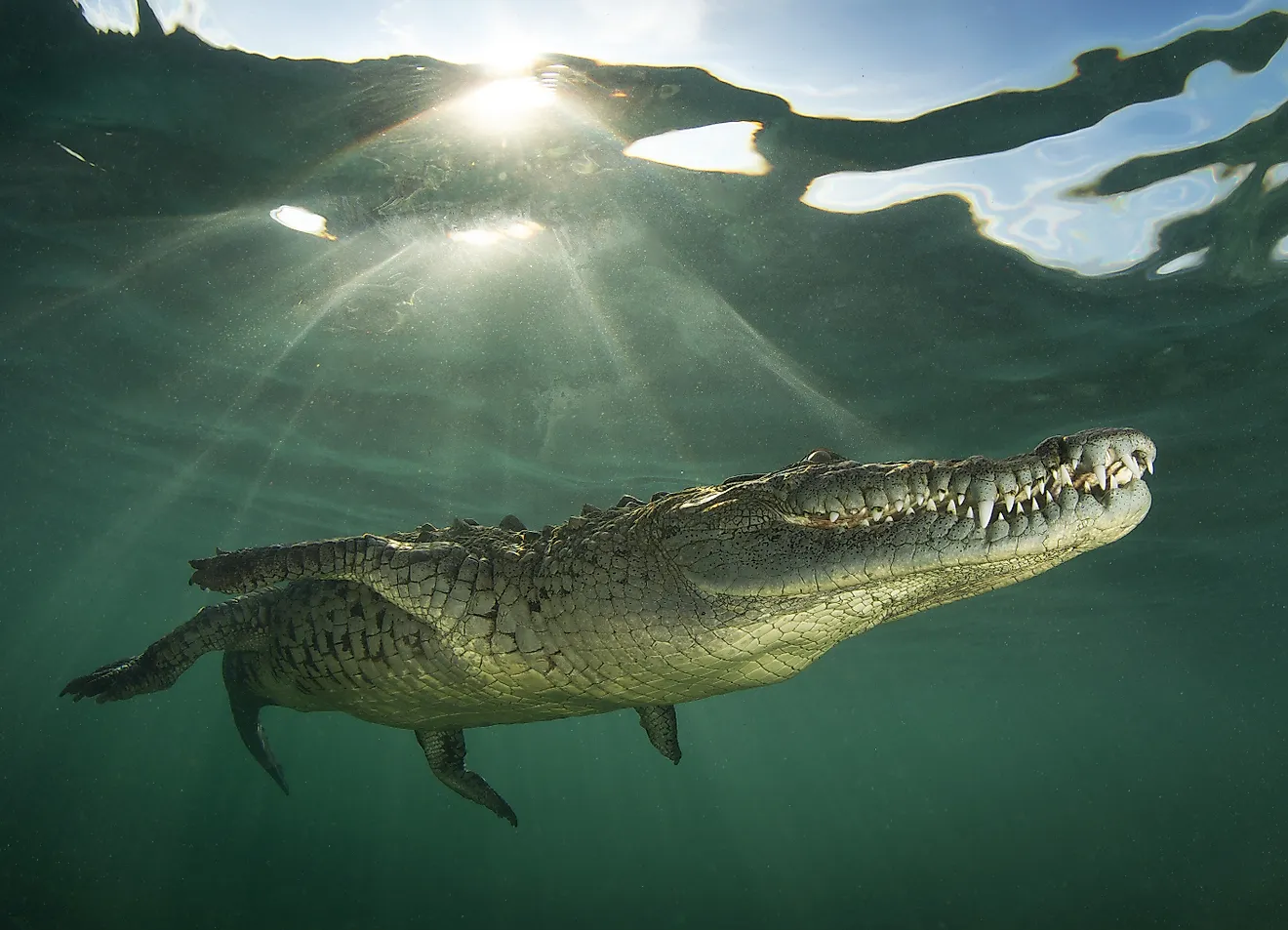
Saltwater crocodiles, known to locals as "salties," are the largest living reptiles. Adult males regularly exceed 5 metres and the largest documented specimens have approached 6.3 metres and over 1,000 kilograms. They are also faster in the water than just about anything they encounter, accelerating to 24 to 29 kilometres per hour in short bursts.
The name is misleading. Salties tolerate seawater (a salt-secreting gland on their tongues lets them excrete excess salt), but they live in freshwater and brackish river systems across the entire Top End of Australia, from northern Western Australia through the Northern Territory to Queensland. They turn up in inland billabongs and rivers hundreds of kilometres from any coast, and they have been recorded swimming across the open ocean between islands. Their diet runs from fish and turtles to wild pigs, cattle, kangaroos, and the occasional unlucky tourist. Australia averages one to two fatal saltwater crocodile attacks per year, mostly involving people swimming in clearly signposted crocodile waters.
Venomous Snakes

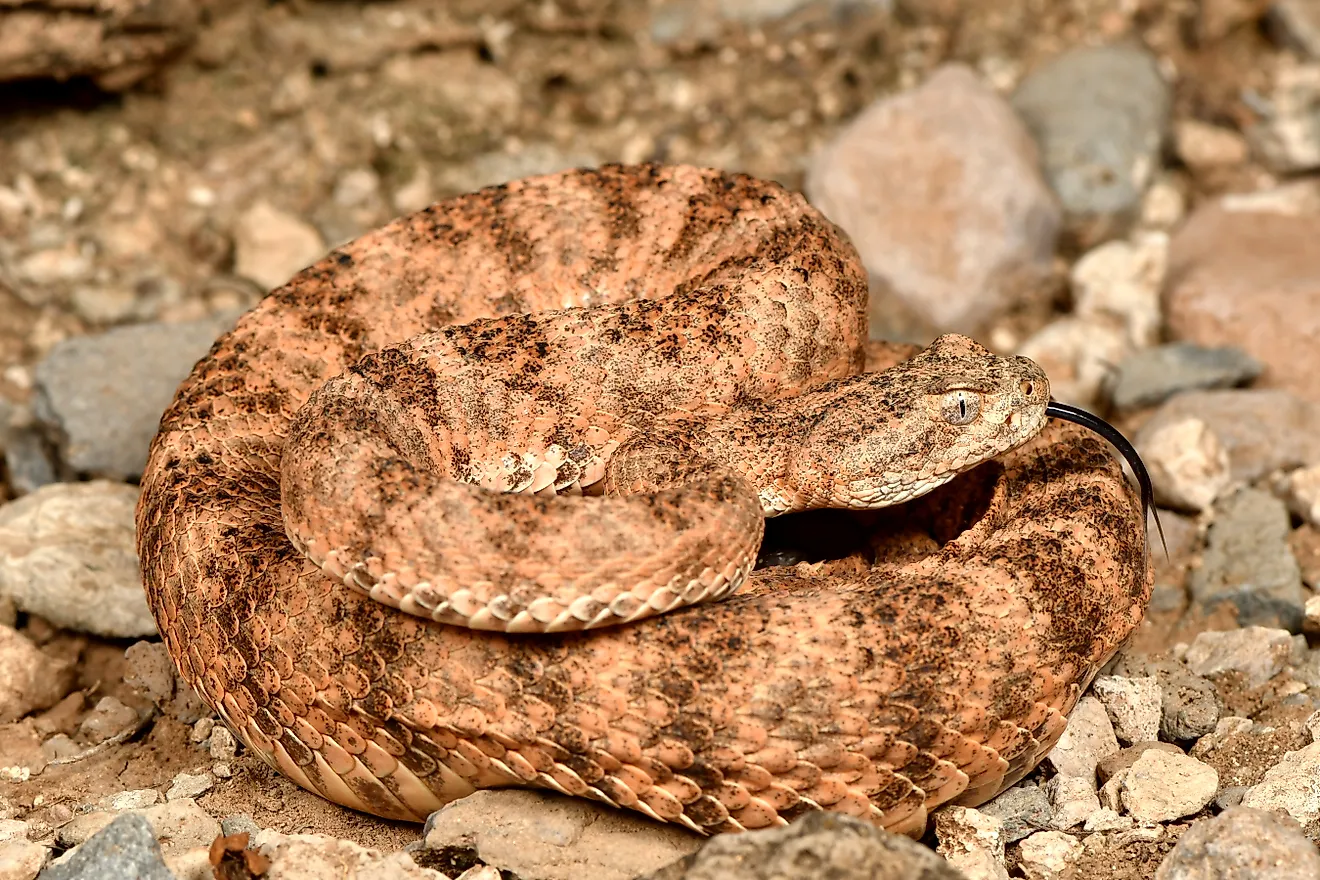
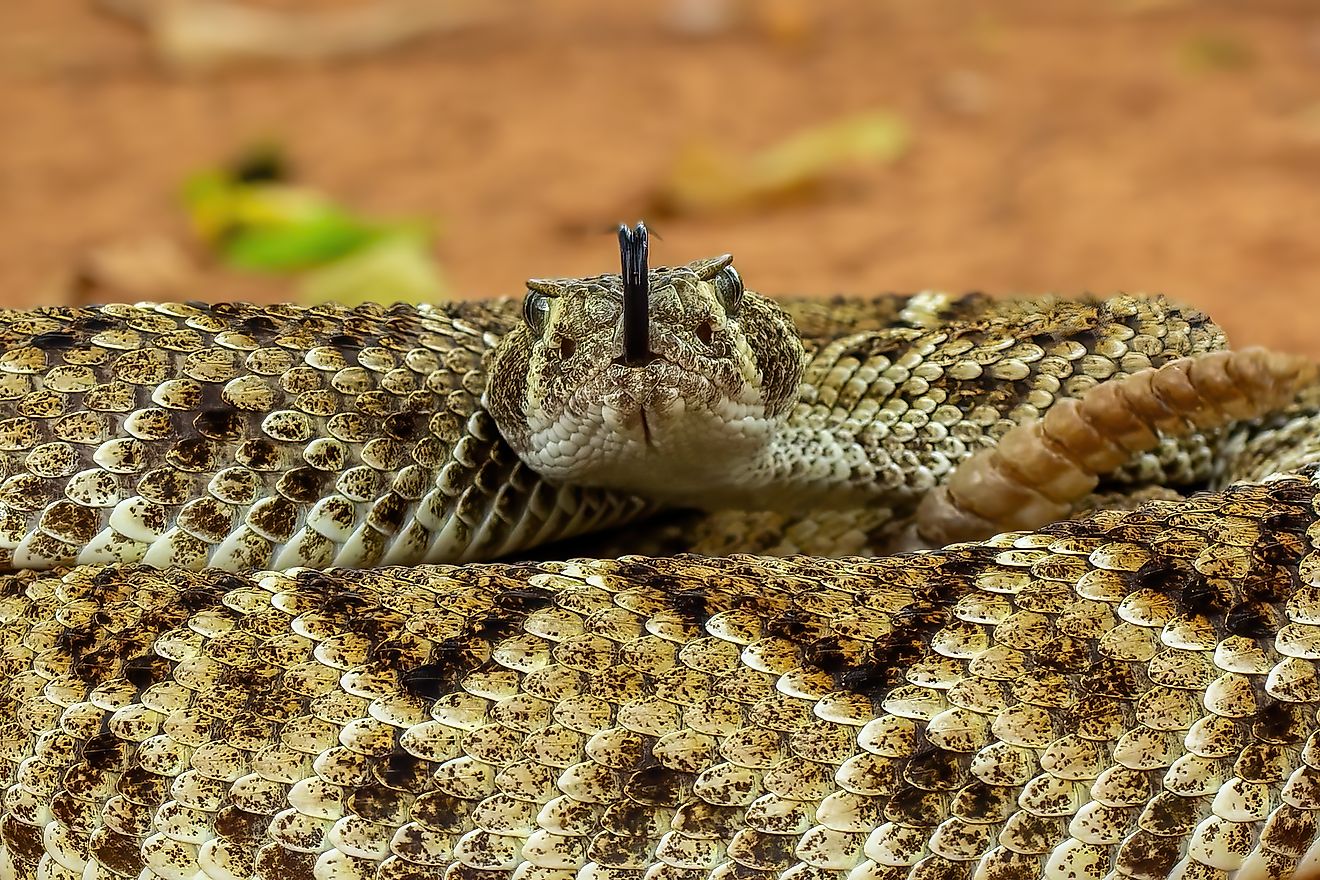
The most venomous snake on Earth lives in the central Australian desert and has never killed anyone in the wild. The inland taipan (Oxyuranus microlepidotus) has an LD50 in mice of 0.025 milligrams per kilogram, which makes it roughly 50 times more toxic drop-for-drop than a king cobra. A single bite delivers enough venom to kill at least 100 adult humans (or about 250,000 mice in theoretical extrapolation). Despite all this, the inland taipan is shy, reclusive, and lives in remote, sparsely populated country in the channel-country borderlands of Queensland and South Australia. There are no confirmed wild-bite human fatalities on record.
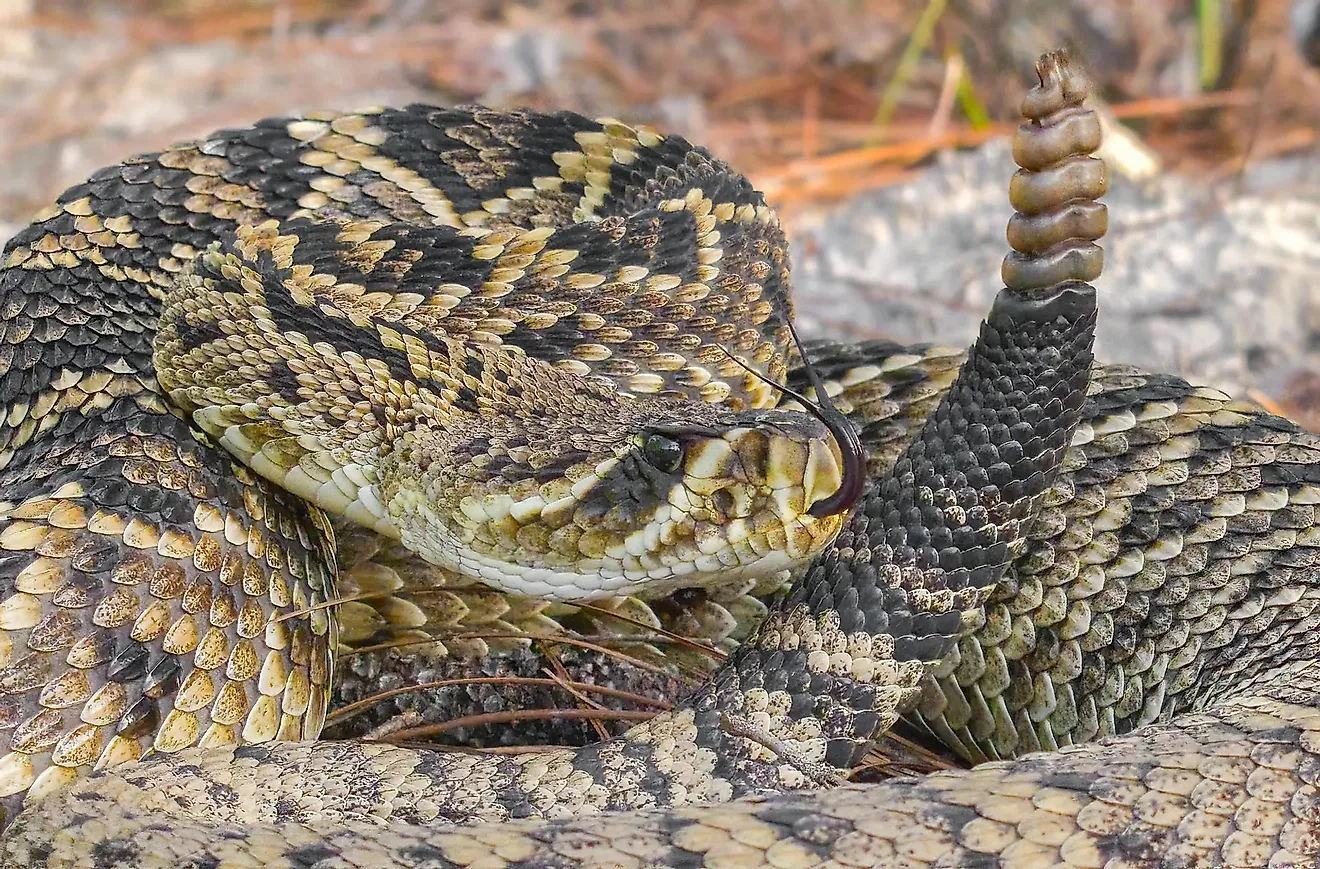
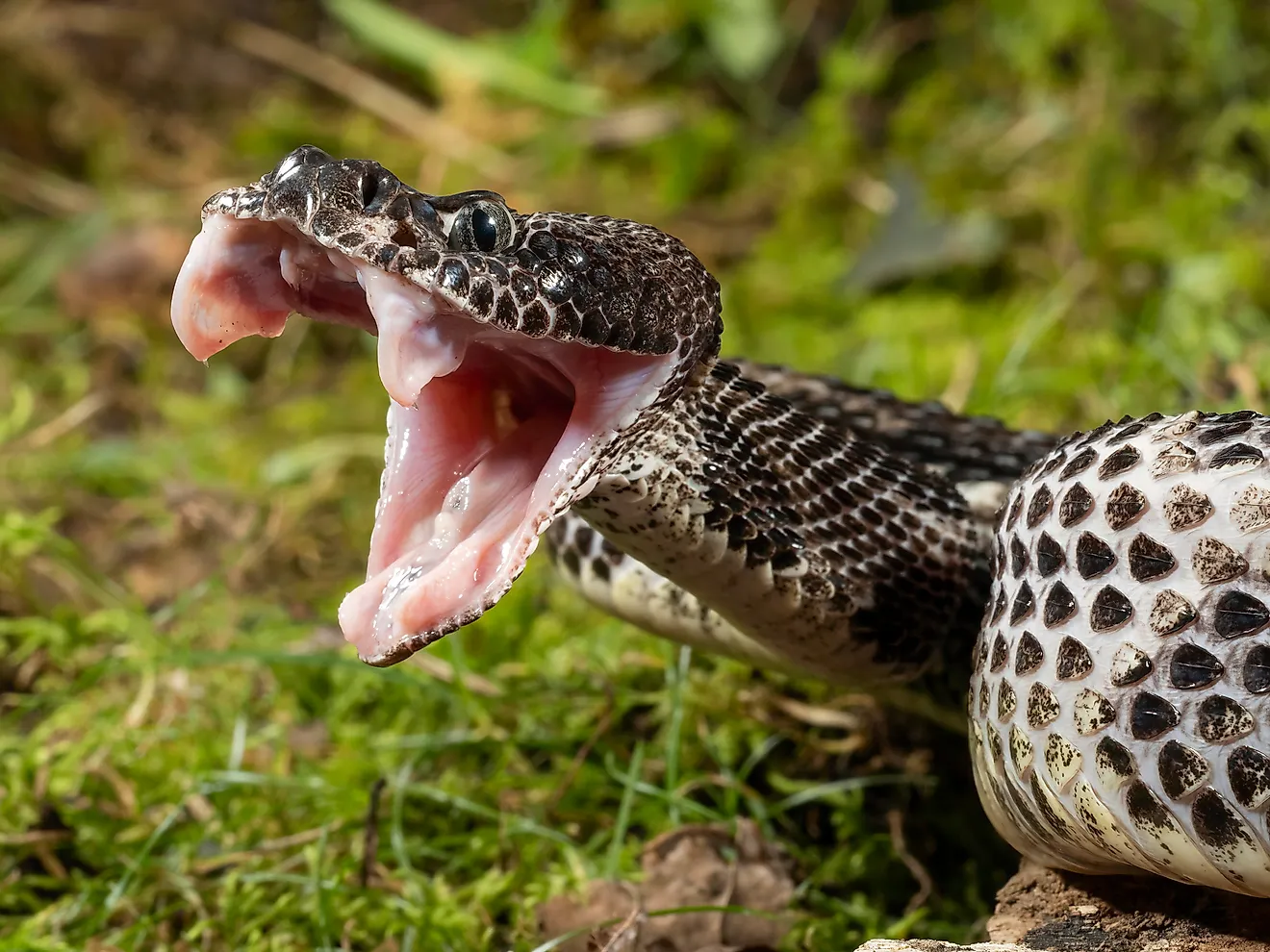
The snakes that actually kill Australians are less dramatic. Eastern brown snakes (Pseudonaja textilis) cause the majority of snakebite deaths in Australia despite venom only about a fifth as potent as the inland taipan's, simply because they live in farmland and suburbs and have a short temper. The mulga snake, the common and desert death adders, the dugite, and the speckled brown all carry venom potent enough to kill an adult human within hours. The good news is that Australian antivenom is among the best in the world, snakebite mortality has fallen sharply since the 1950s, and the country averages only two to four snakebite deaths per year despite hosting roughly 100 species of venomous snake.
Stimson's Python

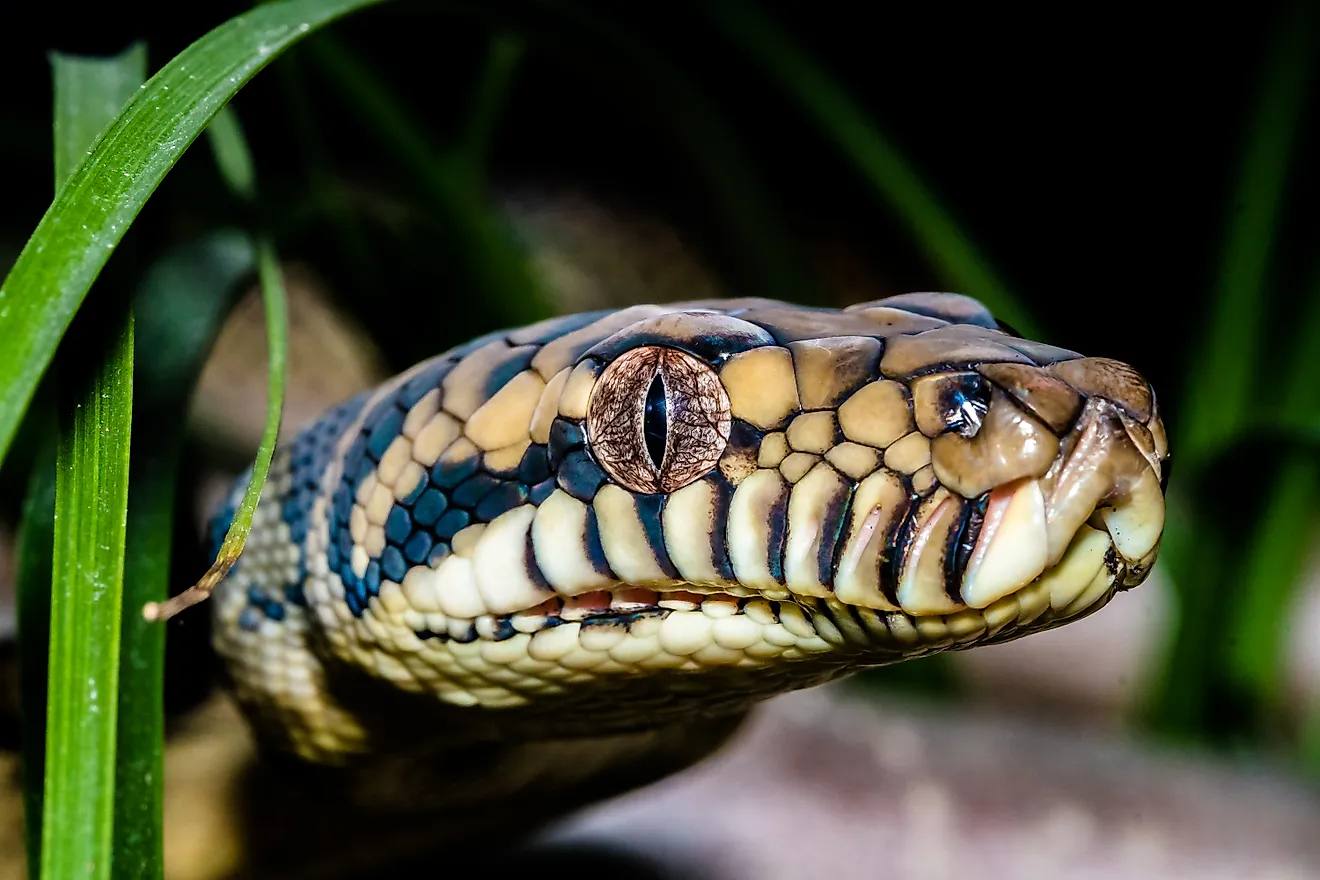
Not every Outback snake wants to kill you with venom. Stimson's python (Antaresia stimsoni) is non-venomous, modestly sized at about 1 metre, and goes about its evening business of locating small mammals, frogs, and lizards in rock crevices and abandoned termite mounds. It kills its prey by constriction, the standard python method of looping coils around the chest until breathing stops.
Stimson's pythons are remarkably adaptable. The species occupies arid scrubland, eucalyptus woodland, sand-dune country, and rocky ranges across most of the continental interior, making it one of the most widely distributed snakes in Australia. Females typically lay 6 to 14 eggs in a sheltered cavity and coil around the clutch for the entire incubation period of roughly two months, shivering their muscles to keep the eggs warm. The species is popular in the Australian reptile-keeping community, and most pet specimens in the country are captive-bred from a few well-established bloodlines rather than wild-caught.
Sand Goanna

Australia's lizards are not subtle. A full-grown sand goanna (Varanus gouldii, also called Gould's monitor) runs about 1.6 metres nose to tail, sprints upright on its hind legs when it really wants to move, and can be mistaken at a distance for a small crocodile cruising through the spinifex. Pull up to an Outback campsite at dusk and there is a reasonable chance one of the locals is a 1.5-metre lizard inspecting your gear.
The sand goanna is a diurnal hunter that ranges across grasslands and open woodlands throughout northern and eastern Australia. Its diet is whatever it can outrun or dig out of a burrow: mice, small reptiles (including other lizards and snakes), insects, ground-nesting birds and their eggs, and a fair amount of carrion. The species is also one of the most culturally significant Outback animals for several Aboriginal nations, who hunted it for meat and used its rendered fat in traditional medicine. Goannas appear in rock art and song cycles across central Australia.
Thorny Devil

The thorny devil drinks through its feet. The species (Moloch horridus) is covered in conical spines that look like a stress test for any predator brave enough to try, but the more impressive engineering is in its skin. A network of microscopic grooves between the scales conducts water by capillary action across the entire body surface to the corners of the mouth, where the animal can swallow it. Stand a thorny devil in damp sand or dew-wet grass and it drinks without ever putting its head down.
The diet is one thing: ants. A single adult thorny devil eats up to several thousand small black ants in a single feeding session, picked off one at a time with a quick flick of the tongue. The species is endemic to arid central and western Australia, ranges in size from 15 to 20 centimetres, and changes colour with temperature, going from pale tan in the heat of the day to deep brown when cool. It has no defence against predators except its spines and a curious head-bobbing behaviour that confuses pursuit. It is also, despite the name, one of the gentlest animals in the Outback.
Frilled-necked Lizard

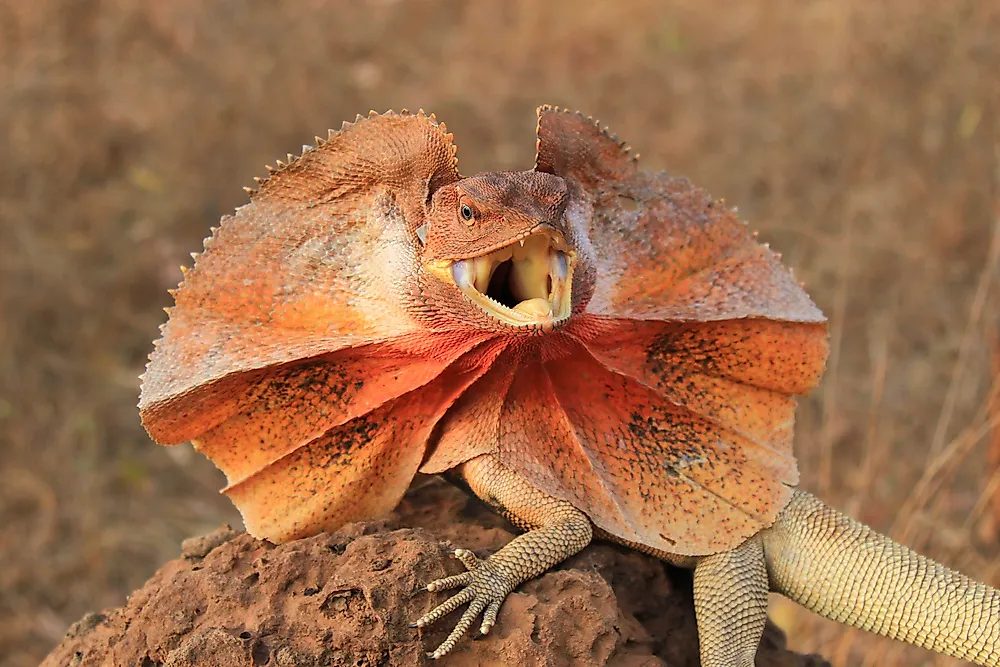
When a frilled-necked lizard wants you to back off, it opens an umbrella. The Chlamydosaurus kingii has a flap of skin around its neck that normally lies folded against its shoulders. When threatened, it springs to its hind legs, snaps the frill out to a circular display up to 30 centimetres across, opens its bright yellow mouth, and hisses. If that does not work, it sprints away on two legs faster than most predators can match.
Frilled-necked lizards live in the tropical north of Australia (Northern Territory, the Top End of Western Australia, and far north Queensland) plus southern New Guinea. They spend most of their time on tree trunks, where the brown-grey body blends into the bark, and they come to the ground for foraging or territorial fights. Diet is small insects, spiders, and the occasional smaller lizard. The frill display made the species famous well beyond Australia: it appeared on the country's two-cent coin from 1966 to 1991, and the lizard's bipedal sprint inspired several of the animated dinosaurs in the original Jurassic Park.