7 Tick Infested Areas In Northern California
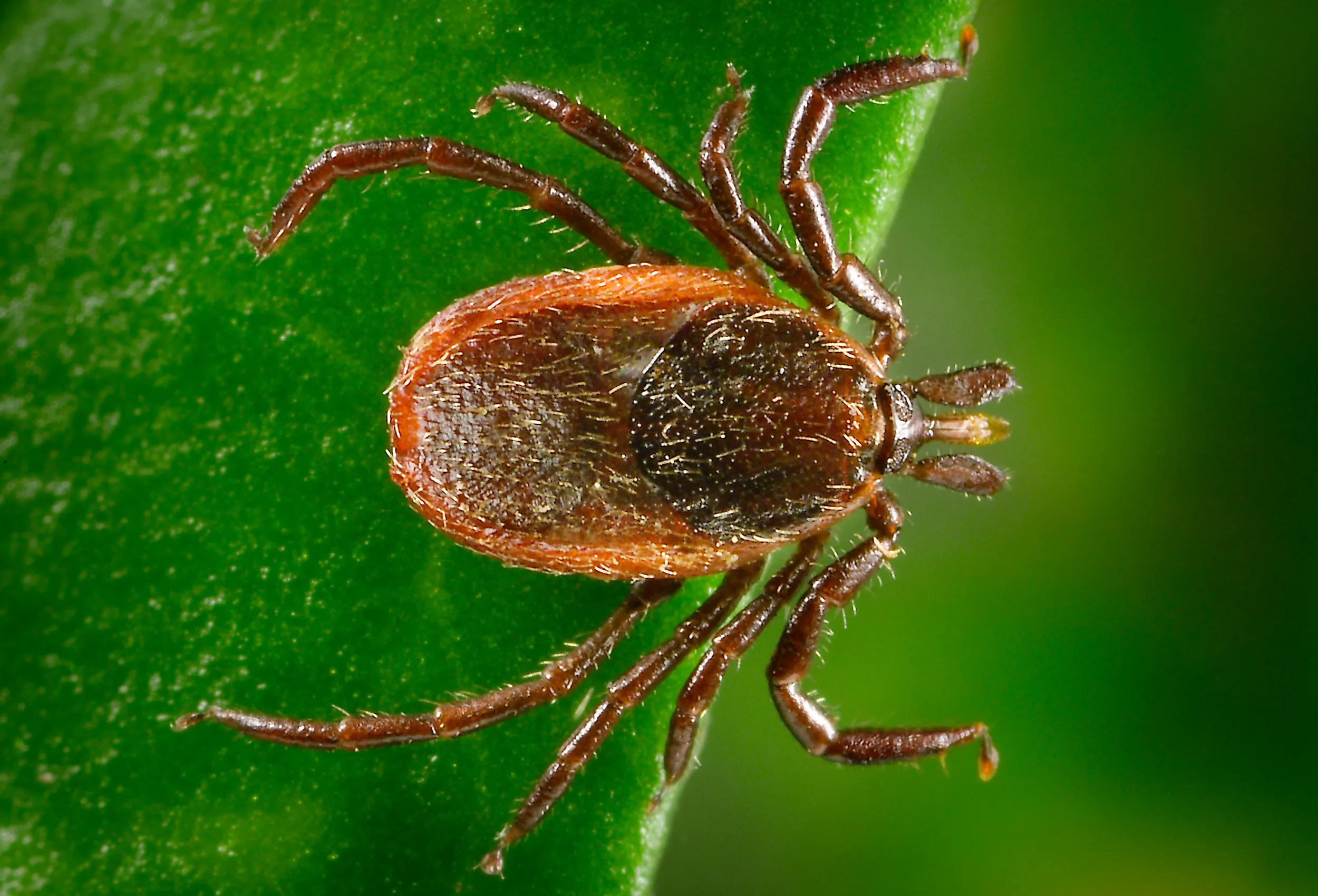
Most people picture tick season as a summer problem, but Northern California runs on a different clock. The adult western blacklegged tick (Ixodes pacificus) is busiest in the dead of winter, climbing grass stems along shaded trail edges from roughly Halloween through spring. It is the only tick that transmits Lyme disease to people in California, and it also carries anaplasmosis and Borrelia miyamotoi. Come late spring and summer, the pinhead-sized nymphs that drive most human infections take over, and a second species brings Pacific Coast tick fever into the mix. Statewide infection rates sit well below northeastern hot spots, but the northern coastal counties and the western Sierra foothills consistently report California's highest incidence. Each of the areas below supports the habitat these ticks need.
Oak Woodlands Of Mendocino County

Inland Mendocino County, around Hopland and Ukiah, is one of the most studied tick landscapes in the West. Dense oak, Pacific madrone, and Douglas-fir woodland drops deep leaf litter and downed logs where western blacklegged tick nymphs shelter. Dusky-footed woodrats can serve as reservoirs for the Lyme bacterium, while deer support and transport adult ticks. The mild climate supports ticks, but western blacklegged tick activity is seasonal: adults are most active from late fall through spring, while nymphs are most active in spring and early summer. California's human anaplasmosis reports increased through 2023, and canine test positivity also rose, but those statewide trends do not establish a comparable rise in locally acquired disease in Mendocino County. On oak-shaded trails at Low Gap Park in Ukiah and nearby North Cow Mountain, nymphs wait in the leaf litter for a passing dog walker or hiker. The University of California's Hopland Research and Extension Center is a long-term tick study site. Mendocino is also one of six California counties where more than 10 percent of the landscape carries forest types associated with elevated nymphal exposure risk.
Humboldt And Trinity Counties

Farther north, the redwood and Douglas-fir belt of Humboldt and Trinity counties holds the cool, damp, shaded forest floor that ticks thrive in. Under redwood, tanoak, and Douglas-fir, the leaf litter and fallen logs stay moist through the dry season. That damp cover concentrates western blacklegged tick nymphs along shaded trails and creek edges, while deer move the adult ticks through the same woods. Lyme disease and anaplasmosis are the documented concerns, and this corner of the state has long carried the numbers to match. CDPH mapping for 2015 to 2024 places the north coast among the highest-incidence regions in California. CDPH's epidemiologic summary for 2013 through 2019 put Humboldt at 3.4 cases per 100,000 person-years across 32 reported cases, and Trinity ranked at or near the top of the same county list in earlier surveillance periods. Humboldt Redwoods State Park and its Avenue of the Giants thread directly through this dense-woodland habitat, so the scenery that draws visitors is also the habitat that shelters the ticks.
Sonoma Valley And Trione-Annadel State Park

The oak-covered hills east of Santa Rosa are where California's tick story effectively began. California's first reported Lyme disease case was recorded in Sonoma County in 1978, though available official sources do not substantiate the additional claim that it was traced to a hiker. Oak woodland, brushy edges, and grassy trail margins with heavy deer traffic give the western blacklegged tick everything it needs to thrive, and Lyme disease is the documented risk. Sonoma County had a 2015-to-2024 resident incidence of 1.30 cases per 100,000 person-years. Local surveillance through 2023 found minimum Lyme-bacterium infection rates of 1.56 percent in adults and 4.07 percent in nymphs. Trione-Annadel State Park, with its oak woodland and creekside single-track just outside Santa Rosa, is a documented tick collection site and a favorite of hikers and mountain bikers.
China Camp State Park And The Marin Shoreline Woodlands

On the San Pablo Bay shore northeast of San Rafael, Marin County offers a textbook example of Northern California tick habitat. Its shaded, north-facing slopes are thick with coast live oak woodland and the deep leaf litter where western blacklegged tick nymphs shelter. That cover has made this one of the most closely studied tick sites in the state, where Lyme disease and anaplasmosis are the documented risks. Local surveillance through 2023 found minimum Lyme-bacterium infection rates of 2.05 percent in adult western blacklegged ticks and 4.16 percent in nymphs across Marin County. A small 2016 China Camp sample of one adult and nine nymphs found no positives. Ticks are present all year, and adults peak in winter, so the low-season quiet of the trails is deceptive. Marin County residents can submit ticks for fee-based identification and testing through the Napa-Solano-Yolo-Marin County Public Health Laboratory, and the Marin/Sonoma Mosquito and Vector Control District tests ticks collected through its own surveillance program.
Clear Lake And The Lake County Chaparral

Around Clear Lake and Cache Creek, Lake County stands out because there are two dominant tick species that share the same ground. In the mosaic of oak woodland, brush, and chaparral, the western blacklegged tick spreads Lyme disease. The Pacific Coast tick (Dermacentor occidentalis) spreads Pacific Coast tick fever, an eschar-and-fever illness. Its cause, the bacterium long tracked as Rickettsia 364D, is now classified by the CDC as Rickettsia rickettsii subspecies californica. Pacific Coast tick fever is rare, with zero to three confirmed California cases a year according to CDPH, but Lake County is one of only a couple of places in the state with a documented cluster of human infections, and the first confirmed case anywhere was reported in a Lake County patient in 2008. Lake is also one of the six California counties where more than 10 percent of the landscape carries forest types associated with elevated nymphal exposure risk, and its 2015-to-2024 resident Lyme disease incidence was 0.90 cases per 100,000 person-years. Adult Pacific Coast ticks are most active from March through May. Larvae and nymphs peak in midsummer, and so do reported Pacific Coast tick fever exposures, which stretches the exposure window across spring and summer.
Mount Diablo And The East Bay Hills

Risk does not stop at the edge of the cities. Grassland, coastal scrub, chaparral, and oak woodland stretch across Contra Costa and Alameda counties, running from Mount Diablo through the East Bay Regional Parks within reach of millions of residents. The western blacklegged tick is the main Lyme carrier here. In 2024, Contra Costa County surveillance found the Lyme bacterium in 0.9 percent of adults and in 2 of 17 nymphs, but the small nymph sample and countywide collection cannot be treated as a Mount Diablo-specific rate. The Pacific Coast tick is also present, and Contra Costa is one of the counties with a documented Pacific Coast tick fever cluster. The East Bay Regional Park District posts a tick advisory every spring through fall, most recently in 2026, warning that ticks wait on grass tips and brush along trail edges. Mount Diablo State Park, with its brushy, sun-and-shade trail margins, is prime questing habitat.
The Northern Sierra Nevada Foothills

On the other side of the Central Valley, the oak-and-pine foothills of Nevada, Sierra, Yuba, and Placer counties carry a surprisingly high tick population. Between about 500 feet and a few thousand feet of elevation, oak woodland and brush give western blacklegged tick nymphs the logs, rocks, and leaf litter they need to survive. Lyme disease is the documented risk, and CDPH's 2015 to 2024 mapping flags these western Sierra slopes, alongside the north coast, as the state's highest-incidence ground. A 2025 study of foothill sites detected Borrelia burgdorferi sensu lato in 4.9 percent of sampled nymphs, though not every positive was necessarily the Lyme-causing Borrelia burgdorferi sensu stricto. As on the coast, the adult ticks here are most active in winter rather than midsummer. South Yuba River State Park, with its rocky, wooded canyon trails, runs straight through this habitat.
Staying Safe In Northern California's Tick Country
For residents and visitors, the practical lesson is that exposure can occur in shaded woodland and leaf litter as well as in grassland, chaparral, and brushy trail margins; adult and nymphal activity varies by species, life stage, habitat, and season. After time outdoors, check carefully, since a western blacklegged tick usually has to stay attached for a day or two before it can pass on the Lyme bacterium. If one bites, local health or vector-control agencies may offer identification or direct residents to a testing service; in Marin, public submissions go to the Napa-Solano-Yolo-Marin County Public Health Laboratory, while CDPH tracks risk through its Vector-Borne Disease Section and interactive tick surveillance map. None of these areas is off-limits, but precautions and post-hike tick checks are appropriate year-round in wooded, grassy, or brushy habitat, with adult western blacklegged tick activity highest from late fall through spring, nymphal activity highest in spring and early summer, and Pacific Coast tick fever exposure peaking in summer.