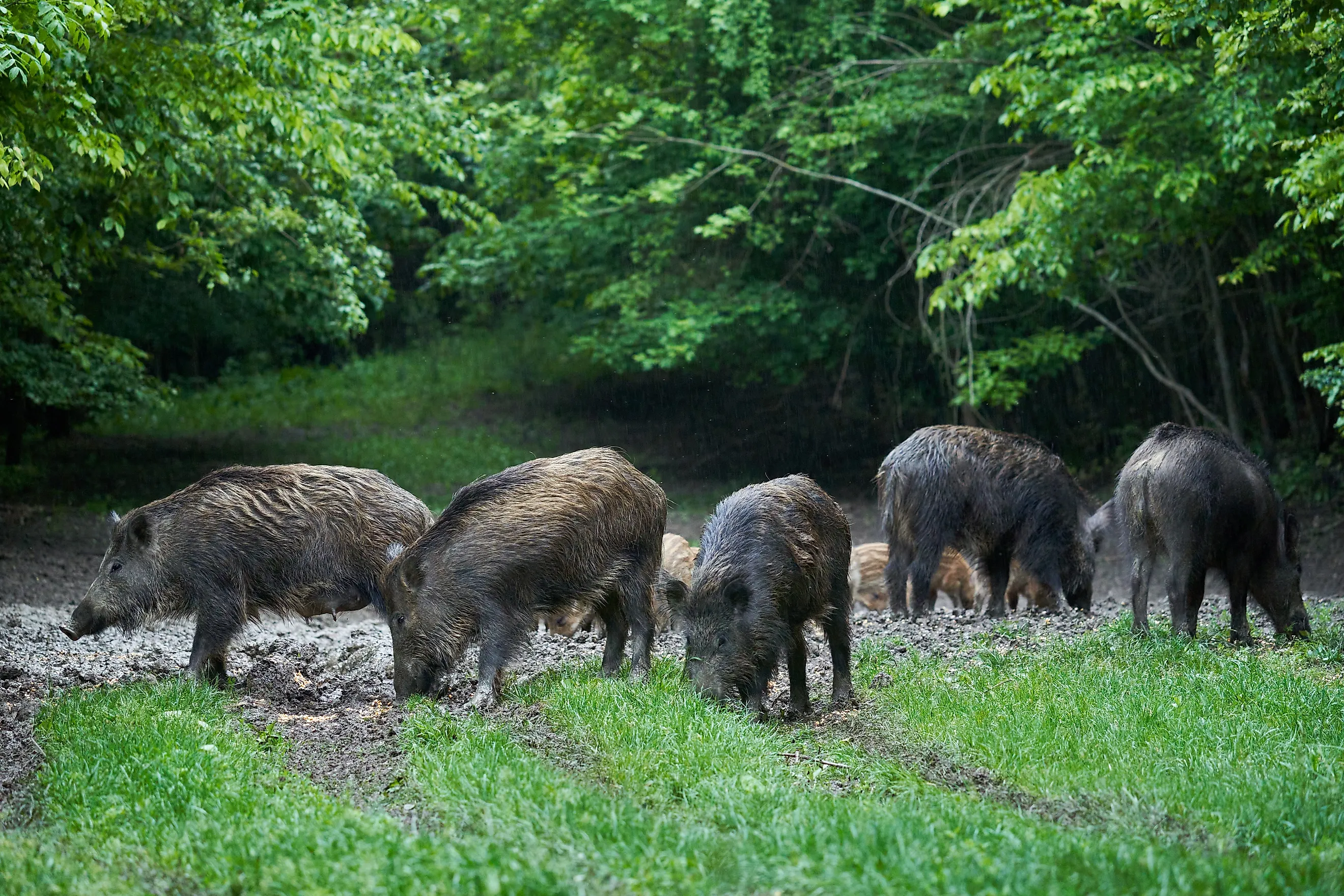
The State Parks Where Wild Boar Have Taken Over
They root up meadows overnight, destroy native habitat, breed faster than almost anything can control them, and shrug off nearly every attempt to get rid of them. Feral swine, known variously as wild boar, wild hogs, and feral pigs, are among the most destructive invasive species in the United States, with a population estimated at more than six million animals across at least 35 states. Protected land, with its abundant food and bans on hunting, can be an ideal place for them to thrive. Here are the state parks and public lands where these tusked bulldozers have most dramatically taken over, and why they are so maddeningly hard to stop.
Wild Boar or Feral Hog?

First, a quick clarification: the terms are often used interchangeably. Pigs are not native to North America. European explorers brought domestic pigs in the 1500s as a food source, and Eurasian wild boar were reintroduced for hunting in the early 1900s. Today's free-ranging population consists of a mixture of three groups: escaped domestic pigs that have become feral, true Eurasian wild boar, and hybrids of both, all classified under the species name Sus scrofa. Although "wild boar" sounds intimidating, most animals damaging American parklands are actually feral hogs or hybrids. There is one notable exception where genuine wild boar truly established themselves.
Great Smoky Mountains: The Original Invasion
The most legendary wild pig invasion in the nation didn't start from farm animals. Around 1912, businessman George Gordon Moore introduced 14 genuine Russian wild boars into a private hunting reserve on Hooper Bald in North Carolina's mountains. By the early 1920s, many escaped, spreading into what is now Great Smoky Mountains National Park and interbreeding with local pigs. This origin makes the Smokies population unique: it started as true wild boar rather than escaped farm animals. The rooting damage to the park's rare high-elevation ecosystems has been extensive, prompting the National Park Service to spend decades culling thousands of these animals, with the conflict ongoing. Although a national park, it is the site where the story of the American wild boar truly begins.
Mount Diablo State Park, California

In California’s western regions, Mount Diablo State Park near the San Francisco Bay Area exemplifies a persistent issue. Feral pigs, initially introduced in the 1920s and 1930s from European boars brought for hunting, interbred with escaped domestic pigs, leading to a population that has continuously impacted the landscape. To control this, California State Parks and other agencies trap and remove hundreds of pigs annually, as these animals can have two to three litters a year, with up to a dozen piglets each. The problem extends beyond wilderness areas; Henry W. Coe State Park, the largest in Northern California, has long struggled with feral pigs, and hungry hogs often invade East Bay suburbs, damaging lawns overnight.
Florida's State Parks: Rooting Up the Prairie

Florida is possibly the most thoroughly hog-infested state, with feral pigs present in every county. They are now a common sight in its famous state parks, from the expansive Paynes Prairie Preserve, where they disturb the same grasslands that host wild bison and horses, to the extensive Myakka River State Park, one of the oldest and largest in the state. The damage caused by these animals extends beyond simply tearing up turf: they can carry numerous diseases and have even transmitted trichinosis to the endangered Florida panther. Given that the state's reputation depends on its wild landscapes and unique wildlife, the presence of these uncontrolled, disease-ridden pests presents a significant ecological challenge.
Texas: Hog Capital of America

If there is a capital of the American hog invasion, it is Texas, home to an estimated 2.6 million feral pigs, nearly half the national population, spread across all but one of its counties. That tidal wave of swine inevitably washes into the state's parks. Popular spots like Brazos Bend State Park near Houston and Government Canyon State Natural Area outside San Antonio must actively manage the rooting, wallowing, and habitat destruction the pigs leave behind. Texas has thrown nearly everything at the problem, from large-scale trapping to relaxed hunting rules to experimental contraceptives, yet the population continues to grow. When the second-biggest state in the country is losing ground, you get a sense of the scale of the fight.
Why the Parks Can't Win

Why can't rangers simply solve this issue? Because feral hogs are almost perfectly adapted to thrive. They are highly prolific, with sows producing several litters annually, allowing their populations to recover quickly from heavy losses in a single breeding season. Additionally, they are genuinely intelligent, nocturnal, and cautious, quickly learning to avoid traps and humans. Importantly, casual hunting has minimal impact; studies indicate it only removes a small portion of the local population and can even cause survivors to disperse into new areas. In state and national parks, where recreational hunting is usually prohibited, managers rely on labor-intensive trapping and targeted culling just to maintain control. It’s not so much a war that’s won as a siege that persists, which is precisely why these tusked invaders have entrenched themselves for good.