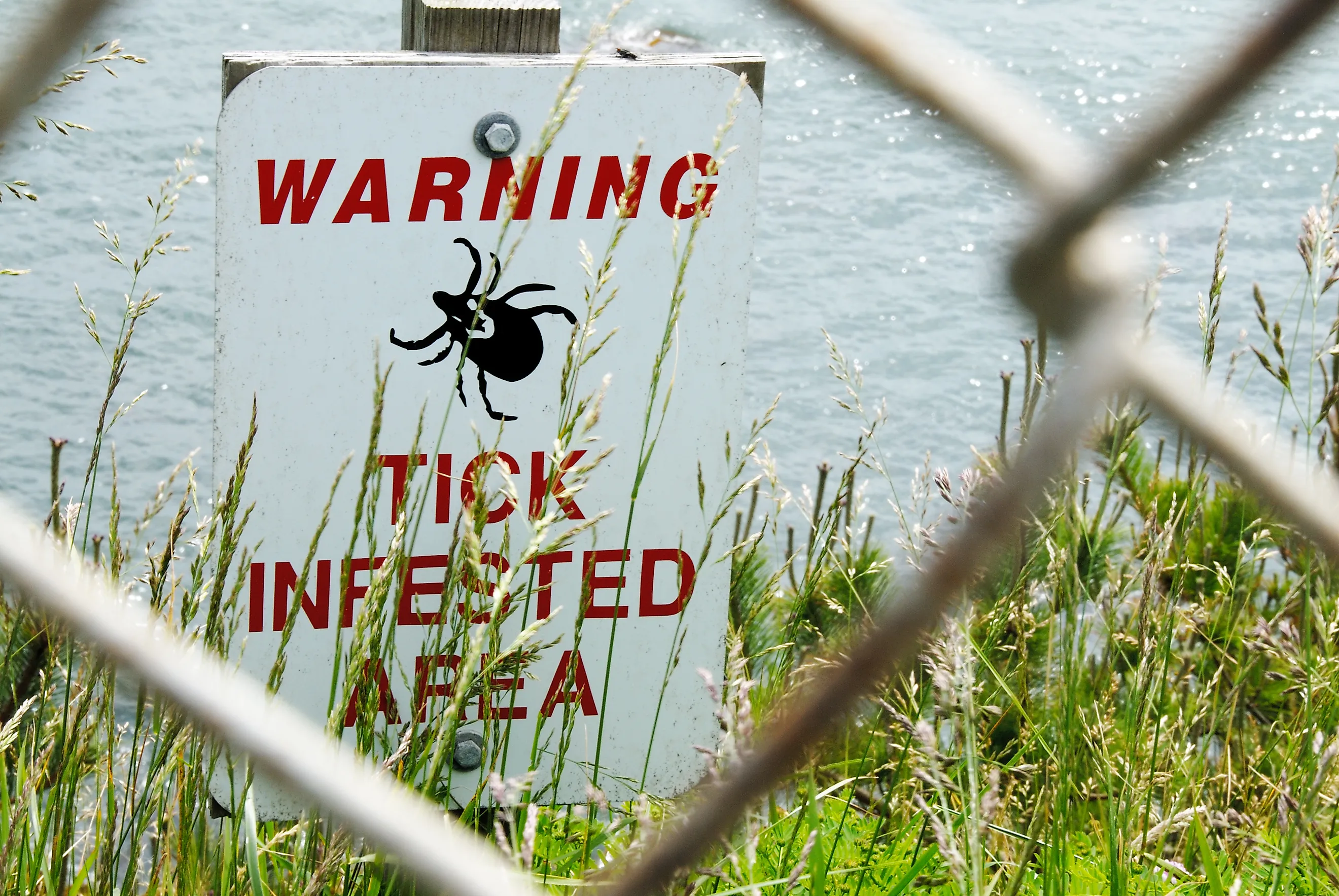
7 Tick Infested Areas In British Columbia
In 2025, residents across British Columbia photographed and logged more than 1,500 ticks through the provincial eTick program, and the results traced a clear split down the middle of the province. Along the wet southern coast, most were western blacklegged ticks (Ixodes pacificus), the only local tick that carries the bacterium behind Lyme disease. Across the dry interior, the great majority were Rocky Mountain wood ticks (Dermacentor andersoni), whose main threat is not Lyme but tick paralysis. The realistic risk picture is modest by eastern Canadian standards: locally acquired Lyme disease runs to roughly 1 to 14 cases a year, while Rocky Mountain spotted fever and tularemia are documented but rare. Still, some corners of the province put people shoulder to shoulder with questing ticks far more often than others. The areas below are where an afternoon outdoors is most likely to end with a tick along for the ride.
Southern Vancouver Island

At the south end of Vancouver Island, from Greater Victoria through the Sooke Hills and up the Cowichan Valley, the mild and damp maritime climate keeps ticks active for much of the year. Douglas-fir and Garry oak woodlands, brushy trail edges, and deep leaf litter give the western blacklegged tick exactly the cover it prefers, and abundant Columbian black-tailed deer keep the adults well fed.

This is the heart of British Columbia's Lyme disease range, where most of the province's locally acquired cases occur, even though the overall count stays low. The bacterium behind anaplasmosis has also turned up in ticks on southern Vancouver Island and in island dogs, though no human cases have been reported in the province. Blacklegged ticks have been collected in Goldstream Provincial Park and East Sooke Park, both busy with hikers from spring onward.
The Southern Gulf Islands

Scattered between Vancouver Island and the mainland, the Southern Gulf Islands, including Salt Spring, Galiano, Mayne, and the Penders, sit in a coastal rain shadow of Garry oak meadows, arbutus groves, and dry brushy slopes. Deer populations on the islands are famously dense, with few predators to thin them, and that steady supply of hosts sustains the western blacklegged tick along meadow edges and farm margins. The BCCDC Lyme risk map flags much of the island chain, and Lyme disease remains the tick-borne illness to watch here, even at the low provincial rate. Because the islands funnel hikers and cyclists onto narrow, grassy trails, like the Enchanted Forest Trail, brushing against a questing tick is almost too easy. Long pants and a post-walk check go a long way on Salt Spring and its neighbor islands.
The Fraser Valley and Fraser Canyon

East of Vancouver, the western blacklegged tick follows the Fraser River inland well beyond the coast. The damp forests and lakeshore brush around Chilliwack, Cultus Lake, and Harrison Hot Springs hold steady tick populations along popular trails, like Lookout Loop, Teapot Hill, or Slollicum, and collections place the species as far up the canyon as Yale and Boston Bar, the recognized inland edge of its range. Deer moving between farmland and forest keep the population well supplied. The Public Health Agency of Canada lists several Fraser Valley postal zones among its Lyme disease risk areas, which makes this the mainland's clearest Lyme hot spot. Cultus Lake, with its busy summer campgrounds and lakeside paths, is a documented collection site. Anyone heading up the canyon in spring should treat brushy trail edges as tick country.
The South Okanagan

Below Penticton, the South Okanagan turns hot and dry, and its antelope-brush flats, bunchgrass slopes, and rocky draws around Oliver, Osoyoos, and Vaseux Lake are prime range for the Rocky Mountain wood tick. Deer mice and other small rodents host the young ticks, while deer and livestock feed the adults, and the ticks concentrate on brushy, rocky ground near talus slopes.

A South Okanagan surveillance study that sampled wood ticks and deer mice found this the tick people are by far most likely to meet on a spring walk here. The wood tick does not spread Lyme, but it is the leading cause of tick paralysis in the province, a reversible weakness that eases once the tick is removed. Rocky Mountain spotted fever and tularemia are also documented in BC, though both remain rare. The beautiful White Lake grasslands, a popular spot for bird watching, hiking, and cycling, are a well-known spring hot spot for the pests.
The Thompson-Nicola Grasslands

The bunchgrass rangeland around Kamloops, Merritt, and the vast Douglas Lake ranch is classic Rocky Mountain wood tick country. Open grassland, sagebrush flats, and rocky bluffs, warmed early by the interior sun, bring the wood tick out from March into June, perfectly timed with hikers and cattle moving onto the range. The Lac du Bois Grasslands Protected Area on the hills above Kamloops is a favorite spring trail network and a reliable place to pick up a tick. The province records most of its tick paralysis consultations from the Interior, and this rangeland belt sits squarely within that zone, with children more often affected than adults. As on the rest of the dry plateau, Rocky Mountain spotted fever and tularemia are possible but rare. Check dogs and horses as carefully as people.
The Kootenays

In southeastern British Columbia, the warm valley bottoms of the Kootenays, around Creston, Cranbrook, Nelson, and Castlegar, carry the Rocky Mountain wood tick on their grassy south-facing slopes and forest edges, a good reminder that ticks can travel on birds and deer. The Columbia and Kootenay valleys stay dry and warm enough to support strong spring populations, and the wood tick has been collected across the region for decades.

In March 2026, Interior Health warned Kootenay residents that tick season was already in full swing. The tick is common enough on local trails that Pulpit Rock, the busiest hike in Nelson, tells hikers on its own trail guide to check for wood ticks the moment they finish. Tick paralysis, Rocky Mountain spotted fever, and tularemia are the illnesses on the books here, all documented in BC but uncommon. For most visitors, the spring wood tick is the one to expect.
The Cariboo-Chilcotin

The Cariboo-Chilcotin marks the northern edge of the Rocky Mountain wood tick's main range, which the province describes as reaching north toward Williams Lake. Along the Fraser River grasslands and the sagebrush benches of the Chilcotin plateau, warm, open, south-facing slopes hold the tick through spring. The bunchgrass of Churn Creek Protected Area, south of Williams Lake, is thick with them, as ranch hands, anglers, and hikers on the river benches know all too well. The entomologist whose survey named the wood tick the region's most commonly encountered species later plucked a questing one from the top of a grass blade right beside the trail there. The risks are the interior's familiar set, with tick paralysis first and Rocky Mountain spotted fever and tularemia documented but rare. Because this is working ranch country, livestock and dogs pick up ticks as readily as people do, so spring checks matter for the whole outfit.
Enjoy The Outdoors, Mind The Ticks
For British Columbians, the practical window is spring into early summer, when wood ticks peak from March through June on the interior grasslands and blacklegged ticks are most active along the southern coast. After any walk through brush, tall grass, or leaf litter, do a full-body check and remove attached ticks promptly, since quick removal lowers both the Lyme risk on the coast and the chance of tick paralysis in the interior. If you find one, photograph it and submit it to eTick.ca, the provincial tick-identification program, and check the BCCDC Lyme risk map before heading into the southwest. For symptoms or removal advice, HealthLink BC at 8-1-1 can point you toward care.