7 Best Natural Wonders To Visit In Georgia This Year
Georgia covers coastal islands, deep canyons, mountain summits, and a swamp that stretches into Florida. Cumberland Island runs feral horses through maritime forest along the Atlantic shore. Tallulah Gorge cuts through the northeast corner of the state. Okefenokee fills the southern border with cypress trees and alligators. These seven natural wonders cover every corner of the state and earn a visit this year.
Cumberland Island National Seashore

Cumberland Island is Georgia's largest barrier island and runs 17.5 miles down the Atlantic coast. Most of it is maritime forest, salt marsh, and undeveloped beach reached only by passenger ferry from St. Marys. Camping is the main draw, with the wilderness area covering nearly 10,000 acres across the interior. Miles of shoreline open onto the Atlantic Ocean on the eastern edge. Wildlife is everywhere here, including pelicans, alligators, sea turtles, herons, armadillos, and the well-known herd of feral horses that have roamed the island for over a century.

The ruins of the Dungeness mansion sit at the southern end of the island. Originally built by the Carnegie family in the 1880s, the mansion burned in 1959 and now stands as a stone shell among live oaks and feral horses. Spring is the best time to visit, when wildflowers cover the dunes and the temperatures stay mild. Fall is also strong, with fewer biting insects and cooler weather that does not chill the water out.
Providence Canyon

Providence Canyon in west-central Georgia is sometimes called the state's "Little Grand Canyon," and the layered clay walls make the case. The gullies drop up to 150 feet through bands of pink, purple, red, and white earth that mark different mineral deposits across the formation. The canyon system actually formed in the 1800s after cotton farming stripped the topsoil and triggered massive erosion. The result is a landscape that looks ancient even though it took shape less than two centuries ago.
Providence Canyon State Park covers 1,003 acres and includes the rim trail, a canyon-floor loop, and one of the most reliable places in the country to see the rare plumleaf azalea growing in the wild.

The plumleaf azalea blooms from July through August, making midsummer the best time to time a visit. Fall is the second-best window, when changing leaves give the colored canyon walls competition and the temperatures cool off enough for full-day exploration.
Brasstown Bald

Brasstown Bald rises to 4,784 feet, the highest point in Georgia. The summit observation deck delivers a 360-degree view that, on clear days, reaches across four states: Georgia, Tennessee, North Carolina, and South Carolina. The mountain sits in the Blue Ridge Mountains within the Chattahoochee-Oconee National Forests. A shuttle or a steep half-mile climb gets visitors from the parking lot to the top, and the visitor center holds an 8,000-square-foot museum with cultural and natural history exhibits.
Because this is the highest elevation in the state, fall arrives here before it reaches most of Georgia. Plan a trip from late September through October for the peak foliage window. Winter access can close due to weather, so do not push too far past the leaf season.
Warm Springs

The springs at Warm Springs hold a steady 88 degrees year-round thanks to natural geothermal activity. Native warriors were carried here for healing long before European settlers arrived. The most famous case in modern memory was President Franklin Roosevelt, who first visited in 1924 to treat his polio paralysis. The waters improved his condition enough that he founded the Georgia Warm Springs Foundation in 1927 to provide treatment for other patients.
The springs are the centerpiece, but F.D. Roosevelt State Park spreads across the area with more than 40 miles of trails that pass waterfalls, ridges, and hardwood forest. Spring offers the best trail conditions before the summer humidity sets in. Winter visits dodge the crowds entirely and still work for the soaks themselves.
Tallulah Gorge

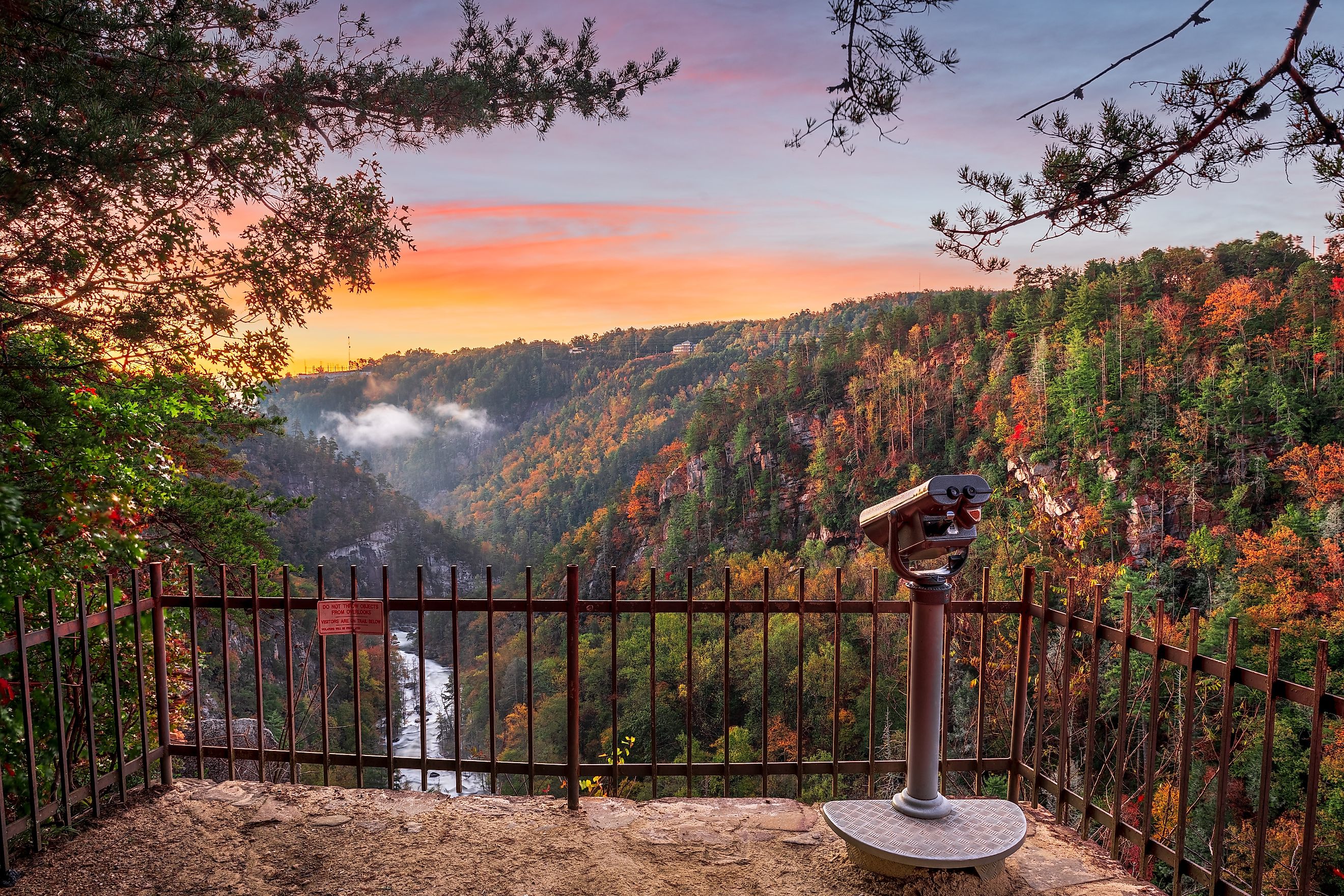
The Tallulah River cuts the Tallulah Gorge through quartzite bedrock at the northern edge of Georgia. The gorge runs about two miles long and drops nearly 1,000 feet from rim to river, making it one of the deepest gorges in the Eastern US. Six waterfalls cascade through the corridor as the river works its way south. Tallulah Gorge has been one of the region's most photographed natural sites since the 19th century and remains part of the broader Appalachian Mountain landscape.

Tallulah Gorge State Park manages access from the rim, including a suspension bridge that crosses 80 feet above the floor. Descending to the canyon floor requires a free permit that is issued daily and capped. Fall brings the best foliage from the rim trails. On select summer weekends, Georgia Power releases water from the dam upstream and the river becomes a destination for kayaking and whitewater rafting.
Amicalola Falls

Amicalola Falls plummets 729 feet, making it the tallest waterfall in Georgia and one of the tallest cascading falls in the eastern United States. The name comes from a Cherokee word meaning "tumbling waters," and the river still earns the label through several stair-step drops down the mountainside. Amicalola Falls State Park covers 829 acres in the rugged North Georgia mountains and includes lodges, cabins, and a campground for overnight stays.

The Appalachian Approach Trail starts at the visitor center and runs roughly 8.5 miles to Springer Mountain, the southern terminus of the Appalachian Trail itself. Several viewing platforms approach the falls from different angles, including a base view and a top-of-falls overlook reached by stairs. Zip line tours operate seasonally for another angle on the drop. Spring brings the strongest water flow and a full bloom of wildflowers across the park, making it the prime time to visit.
Okefenokee Swamp

Okefenokee Swamp covers 438,000 acres of cypress and tupelo forest along the southern Georgia-Florida border. It is the largest blackwater swamp in North America, fed by rainfall and ringed by peat that gives the water its dark tea color. Alligators are the most visible residents, sharing the wetland with great blue herons, sandhill cranes, and the occasional black bear. The low-water boardwalk inside the Okefenokee National Wildlife Refuge brings visitors close to the water without putting boots in it.

Guided boat trips are the most reliable way to cover ground here. Late winter and spring tend to be the best windows, when migratory birds peak, water depth is at its highest, and temperatures stay mild. Summer turns hot, humid, and bug-heavy, while fall brings drier conditions and a quieter feel before the cycle starts again.
The Natural Wonders Of Georgia
Georgia keeps its natural wonders spread across the entire state. Plan the trip around the season that matches what you want to see. Plumleaf azalea blooms in midsummer at Providence Canyon, Cumberland Island runs cooler and quieter through fall, and Okefenokee opens up in late winter and spring before the heat sets in. Warm Springs in Meriwether County and the "Little Grand Canyon" at Providence Canyon in Stewart County reward day trips most of the year. Whatever the season, these seven stops cover the best of the state's natural landscape this year.