6 Most Alligator Filled Places in Texas
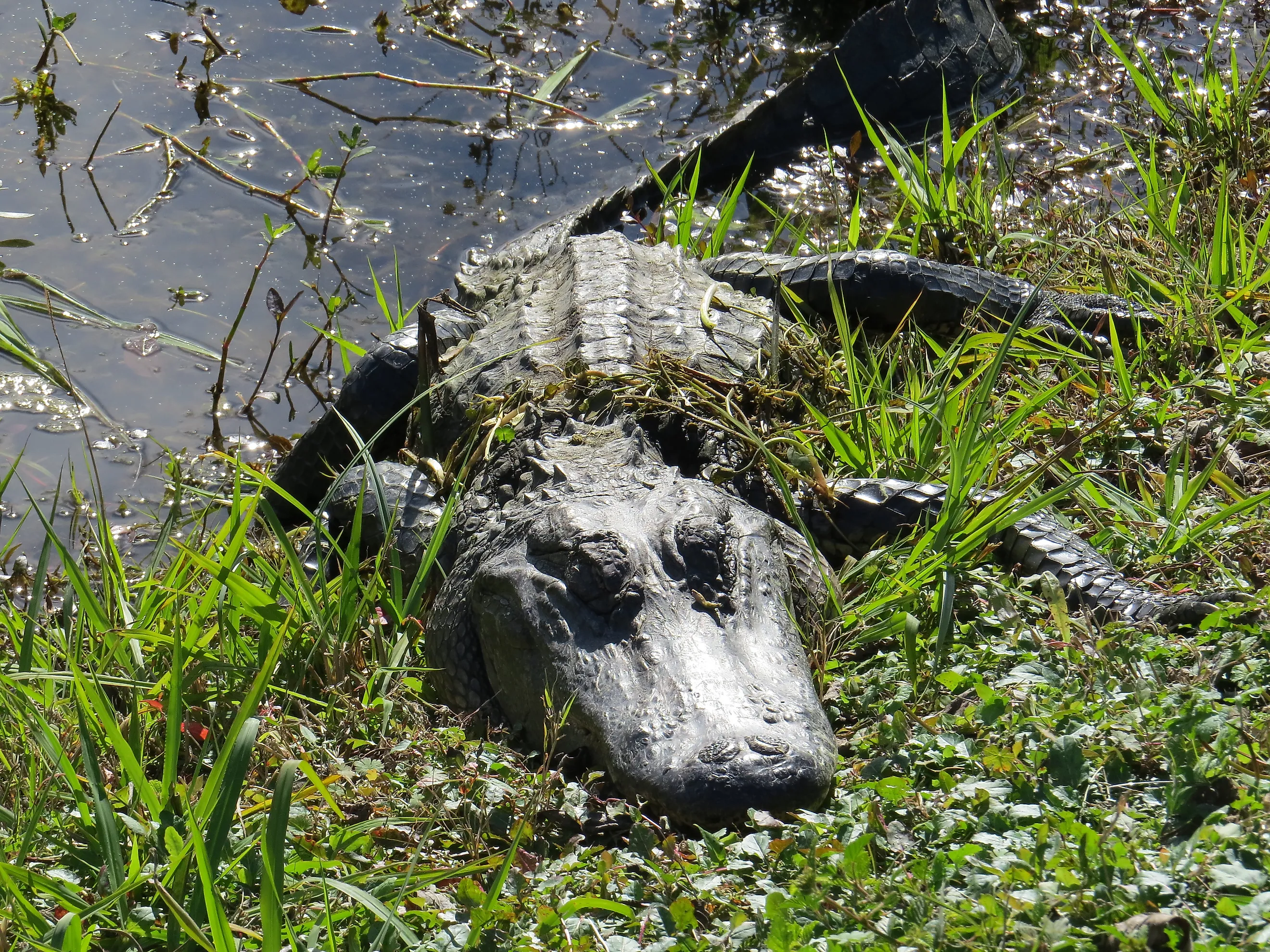
Texas is home to one of the largest populations of American alligators in the United States, with an estimated half a million living within its expansive borders. Certain regions offer particularly high concentrations of these reptiles, from sprawling coastal marshes to inland bayous and reservoirs. Whether along the Gulf coast or deep in East Texas woodlands, these areas attract both wildlife enthusiasts and photographers eager to observe alligators in their natural environment. With that, here are 6 where you're almost guaranteed a run-in. Just make sure you follow all safety precautions and use common sense when approaching what is one of North America's deadliest predators.
Brazos Bend State Park

Brazos Bend State Park is one of the most reliable destinations in Texas to see large numbers of American alligators in a relatively compact area. Located just southwest of Houston along the Brazos River floodplain, the park’s marshes and oxbow lakes create prime, wild habitat in abundance. Elm Lake, 40 Acre Lake, and Pilant Slough are especially known for frequent sightings, with alligators often visible along the banks or partially submerged near fishing piers.
While clear signage and marked trails will help you maintain safe distances, also keep in mind the aforementioned hotspots before and exercise extra diligence in and around them.
Covering more than 5,000 acres and supporting diverse wildlife beyond reptiles, including white-tailed deer, feral hogs, and over 300 bird species, Brazos Bend is a wonderland for animal lovers in general. It is also home to the George Observatory, operated by the Houston Museum of Natural Science, adding a cool astronomical component to a spot better known for its wetlands and resident predators.
Big Thicket National Preserve

Along with Big Cypress National Preserve in Florida, Big Thicket was established as the first national preserve in the United States in 1974 and watches over more than 113,110 acres across multiple habitat types. It is considered one of the most biologically diverse regions in the country, where eastern hardwood forests uniquely meet coastal plains ecosystems. And as with most popular parklands in the state, hiking trails and paddling routes are the most popular ways to explore here, with the previously mentioned safety precautions essential for dealing with local gators.
Big Thicket National Preserve supports one of the most concentrated alligator populations in inland Texas, in fact. Located north of Beaumont, this vast network of swamps, bayous, and meandering creeks boasts the warm, vegetated habitat alligators love to dwell in. Areas along Village Creek and the Neches River corridor are particularly productive for these large reptiles, with spottings common in late spring through early fall.
Guadalupe Delta Wildlife Management Area
Managed primarily for ecological conservation and regulated hunting, the Guadalupe Delta Wildlife Management Area is perhaps most well known as a critical stopover habitat for migratory waterfowl along the Central Flyway. Human access here is more limited than in other state parks spoken about on this list, which helps sustain stable wildlife populations of all kinds. Furthermore, the landscape is remarkably flat, windswept, and remote, reinforcing its reputation as a working coastal marsh, where a huge array of critters can live in relative peace from urban development.
With that in mind, it is also one of the most alligator-rich stretches of the Texas coast. Located where the Guadalupe River meets San Antonio Bay, this expanse of brackish marsh and tidal flats houses a healthy number of American alligators along with its birds. The blend of freshwater inflow and coastal wetlands creates productive feeding grounds, especially in the summer months when gators anywhere in the state tend to be more active near levees and shallow ponds.
Jocelyn Nungaray National Wildlife Refuge

Formely called Anahuac National Wildlife Refuge, Jocelyn Nungaray National Wildlife Refuge rests along the upper Gulf coast of Texas. Positioned on the shores of Galveston Bay, the refuge encompasses close to 40,000 acres of coastal marshes, ponds, and bayous. These remote wetlands have ample nesting and feeding space, with most alligators frequently seen by human eyes along adjacent auto tour routes and near observation platforms as thier out hunting.

Founded in 1963, the refuge is another Texan destination that plays a major role in bird conservation and supports thousands of migratory birds each year along seasonal flyways. Its setting is also fairly flat and open, offering clear, abundant visibility across marshland dominated by tall grasses and tidal channels.
Lake Livingston State Park

Lake Livingston State Park is another renowned hotspot for alligator activity in East Texas. Situated on one of the state’s largest reservoirs, the park’s wetlands and coves allow for a significant number of gators to thrive freely year-round. Note that sightings are common along the shoreline, namely near marshy areas and during the early morning or late evening. Although anglers fishing on boats in the middle of the lake are generally safer because of this, they should still be aware of the occasional alligator crossing the water from one side to another.
Lake Livingston balances recreation with preservation very well, providing a reliable destination for observing alligators in their natural environment, while being a major draw for outdoor adventure with its thousands of acres of forested terrain, hiking trails, and camping opportunities around its shores. So long as you keep an appropriate amount of space from the apex semi-aquatic predators sharing the space, you should be able to enjoy year-round draw with peace of mind.
Caddo Lake

Lastly, Caddo Lake is widely regarded as the most alligator-filled location in Texas. Spanning roughly 25,400 acres along the Texas-Louisiana border, this maze of bayous and flooded cypress groves provides ideal habitat for the American alligator, as well as a plethora of other reptiles such as snakes, turtles, and more.
The shallow, slow-moving waters here support an abundance of fish and waterfowl, too, sustaining a well-fed and visible population of predators, whether it be gators, snapping turtles, or venomous snakes. With that, sightings of alligators are more common in warmer months, particularly at dawn and dusk when they like to bask or cruise the shoreline.
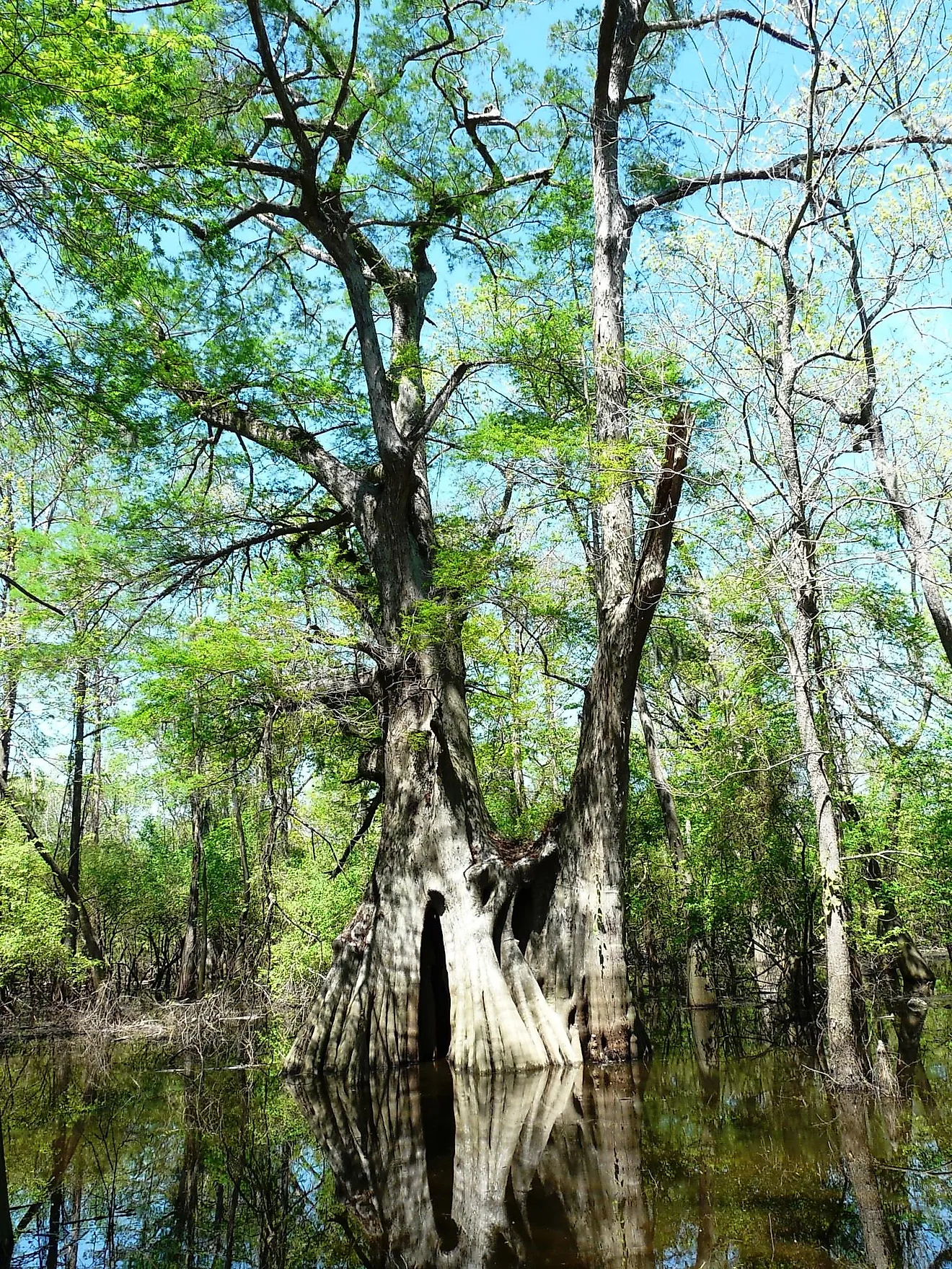
But beyond its reptilian reputation, Caddo Lake is one of the largest naturally formed lakes in Texas and contains the state’s only extensive bald cypress forest. Here, Spanish moss wonderfully drapes over centuries-old trees, giving the area an almost magical atmosphere that beckons nature photographers from around the world. Moreover, a network of established paddling trails through the park's watery borders offers the closest access to its distinctive ecosystems while also maintaining a safe distance from resident wildlife.
Head to these Lone Star State Hotspots for a Guaranteed Gator Sighting
Texas’s broad diversity of wetlands and waterways makes it a prolific destination for alligator encounters. From coastal marshes to man-made and natural lakes/swamps, the above-mentioned places have proven to be perfect for thriving populations while also offering unique wildlife experiences for tourists. Just remember that you ought to observe these reptiles responsibly, appreciating their role in the ecosystem and their ability to kill threats/prey with ease.