8 Best Places to Live in Mississippi
Tupelo is best known as the birthplace of Elvis Presley, but the stronger reason to consider it is the everyday math: low home prices, a major regional hospital, and an auto plant nearby that keeps good jobs close. That balance of affordable living and an unhurried pace runs through much of Mississippi. The eight places below are not ranked, and they are not interchangeable. A couple sit on the Gulf and run on seafood, gaming, and an Air Force base; others are college towns, historic courthouse squares, or manufacturing centers. What unites them is a real case for putting down roots rather than just visiting: jobs within reach, housing people can actually afford, and the kind of community life that keeps residents from leaving.
Tupelo

Tupelo is the commercial and medical anchor of northeast Mississippi, which is the practical reason people settle here. North Mississippi Medical Center is one of the largest hospitals in the state and a major regional employer, and the Toyota plant in nearby Blue Springs, which builds the Corolla, draws thousands more workers from the surrounding counties. Housing is inexpensive, the regional airport and the Natchez Trace Parkway make getting in and out easy, and for a city of about 37,800 the place carries the services of a much larger one.
The town's identity is built around Elvis Presley, who was born here in 1935; the two-room birthplace and its surrounding park now serve as a community gathering spot as much as a museum. Families have the Tupelo Buffalo Park and Zoo, the lake and trails of Tombigbee State Park just east of town, and the Mall at Barnes Crossing for everyday shopping, while a revived downtown has filled in with local shops and restaurants. None of it is flashy, which is the point: Tupelo delivers a full slate of jobs, care, and recreation in a place that still feels like a small city.
Biloxi

Biloxi is the largest city on the Mississippi Gulf Coast, and it runs on three industries that translate directly into paychecks: seafood, casino gaming, and the military. Keesler Air Force Base sits inside the city and is one of the coast's biggest employers, while resorts like the Beau Rivage anchor a gaming and hospitality economy that staffs thousands of year-round jobs. Add a working shrimp fleet and a port, and Biloxi, home to about 49,000 people, offers a steadier job base than its beach-town looks suggest. Homes stay affordable by coastal standards, though buyers should weigh hurricane exposure and insurance costs, a real factor on this shoreline since Hurricane Katrina in 2005.
Day to day, the draw is the water. The 1848 Biloxi Lighthouse, one of the oldest standing lighthouses in the country, still marks the beachfront, and the Ohr-O'Keefe Museum of Art celebrates the city's most famous potter, George Ohr. Residents walk and bike the Biloxi Bridge for its views over the Mississippi Sound and Deer Island, catch Biloxi Shuckers baseball at MGM Park, and eat fresh seafood within sight of the boats that landed it. It is a place where casual coastal living and a real job market overlap on the Gulf Coast.
Canton

Canton's economy leans on one very large neighbor: the Nissan assembly plant just outside town is among the biggest manufacturing employers in Mississippi, and it puts thousands of stable factory jobs within a short drive of a town of about 10,900. Canton also sits at the northern edge of the Jackson metro area, so residents get small-town housing prices alongside access to the capital's jobs, hospitals, and airport less than half an hour south. The historic courthouse square gives the center a genuine downtown rather than a strip of franchises.
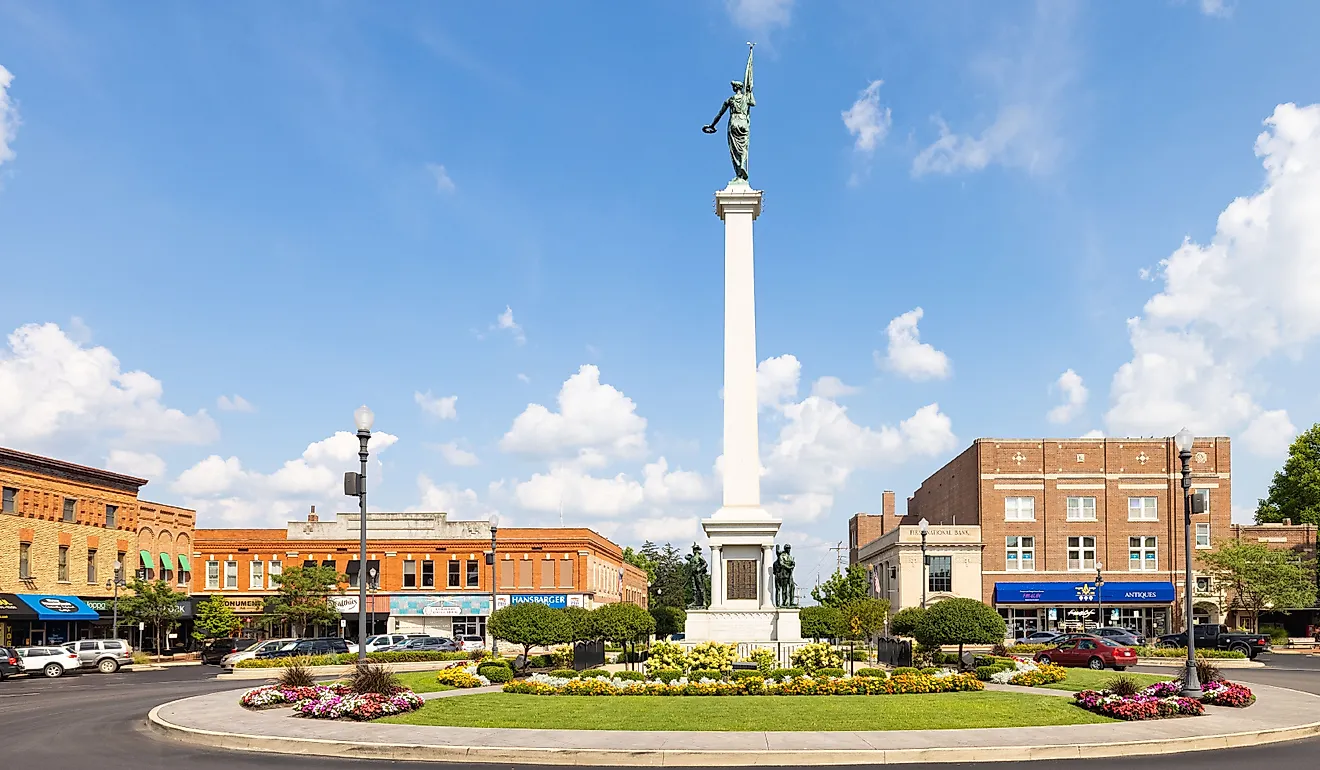
That square is also why Canton bills itself as the movie capital of Mississippi; films including A Time to Kill and My Dog Skip were shot here, and the Canton Movie Museums on the square keep the props and sets. The Canton Multicultural Center and Museum traces the local Black history and 1960s civil rights organizing that shaped the area. For a working town this size, Canton pairs an unusually intact historic core with a major job anchor next door, the two things that keep a small place viable.
Ridgeland

Ridgeland is the suburb people choose when they want the Jackson metro's opportunities without its drawbacks. Sitting just north of the capital in fast-growing Madison County, it pairs an easy commute with the strong schools and low crime that have made the county one of the most sought-after places to live in the state. It is also a retail and office hub in its own right, so plenty of its roughly 24,300 residents work close to home. There are modest starter neighborhoods as well as upscale subdivisions out toward the reservoir.
The Renaissance at Colony Park is the area's premier shopping and dining district, built around an Italian-style fountain plaza, while Repeat Street and a cluster of independent shops give the town its own character. The real amenity, though, is the Ross Barnett Reservoir along Ridgeland's eastern edge: Old Trace Park draws sailboats and walkers, and the Natchez Trace and reservoir trails put miles of biking and running paths right in town. For families weighing the Jackson area, Ridgeland is usually near the top of the list.
Oxford

Oxford lives and breathes the University of Mississippi, and that single institution shapes everything about it as a place to live. Ole Miss is the town's largest employer and the engine behind a cultural and dining scene far bigger than a city of about 25,400 would normally support, along with the steady stream of students, faculty, and retirees the university attracts. Lafayette County has been one of the faster-growing in the state, and the walkable courthouse Square keeps the center busy year-round rather than only on football weekends.
The Square anchors daily life, with Square Books, open since 1979, as its literary heart and the Lyric theater hosting live music a few doors down. Rowan Oak, William Faulkner's 1840s home, sits on a wooded plot linked to the Bailey Woods Trail and the campus, giving residents an easy walk through hardwoods near downtown. Add Lamar Park, a weekly community market, and a flagship university's calendar of events, and Oxford offers the kind of college-town quality of life that keeps many graduates from ever leaving.
Meridian

Meridian is the hub of east-central Mississippi, a regional center for healthcare, retail, and the military that serves a wide rural area. Two hospital systems and Naval Air Station Meridian to the north supply much of the steady employment, and a downtown that boomed in the railroad era is being slowly restored into a working arts and business district. Housing is among the most affordable in the state, part of why a city of about 34,000 stretches a paycheck further than most.
Culture is Meridian's surprise strength. The restored MSU Riley Center stages touring drama and music inside a Grand Opera House that dates to 1890, and the city's musical roots run deep, honored at the Jimmie Rodgers Museum, named for the Meridian native widely called the father of country music. Families have the Dentzel Carousel, a hand-carved 1896 ride that is a National Historic Landmark, and the 3,300-acre Bonita Lakes park, where lakes, trails, and jogging paths sit minutes from downtown. It adds up to a small city with a cultural footprint larger than its size.
Holly Springs

Holly Springs trades on two things: deep affordability and proximity to Memphis. The county seat of Marshall County, it sits within the Memphis metro area, close enough that some residents commute north for work while paying small-Mississippi-town prices for historic homes. The town is full of antebellum architecture that survived the Civil War, and its quiet pace and low cost of living appeal to retirees and to anyone priced out of the Memphis suburbs.
For a town of about 6,900, Holly Springs has real substance. The Marshall County Historical Museum holds an eclectic local collection, and Rust College, a historically Black college founded in 1866, has anchored the community for more than a century and a half. Just outside town, the Strawberry Plains Audubon Center protects thousands of acres of restored forest and grassland and hosts a well-known hummingbird migration festival, while Chewalla Lake and the Kirkwood National Golf Club give residents room to fish, paddle, and play. It is the kind of place where a modest budget goes a long way.
Ocean Springs

Ocean Springs is the Gulf Coast's most livable small town, the residential, arts-minded counterpart to Biloxi just across the bay. Where Biloxi runs on casinos, Ocean Springs runs on a walkable downtown of independent shops, galleries, and restaurants, and on a school system and median household income that rank among the better ones on the coast. Median home values sit higher than in much of Mississippi, but so does demand: this is a town of about 18,600 that people specifically move to rather than land in by chance.
The arts are central to its identity, anchored by the Walter Anderson Museum of Art, named for the painter who worked along this shore. Downtown stays busy with festivals, coffee shops, and the sort of independent storefronts that have vanished elsewhere, and The Shed Barbeque has become a Gulf Coast institution. For the outdoors, the Davis Bayou area of Gulf Islands National Seashore protects marsh, shoreline, and barrier-island habitat, and the Fontainebleau Nature Trail offers a chance to spot sandhill cranes and other coastal wildlife. It is the coast town to choose when the priority is daily living rather than nightlife.
Choosing Where To Land
These eight towns make their cases in different currencies. Tupelo and Canton offer manufacturing jobs and a low cost of living; Ridgeland and Ocean Springs offer schools, safety, and amenities for those who can pay a little more; Oxford and Meridian trade on culture and a deep arts calendar; Biloxi and Holly Springs sit at opposite ends of the state and the price scale. What they share is that the everyday math works, with housing people can afford, jobs within reach, and downtowns worth walking. For anyone weighing a move within Mississippi, the question is less whether these are good places to live than which kind of good fits the life you want.