5 Wild Animal Hotspots in Kansas
Kansas grasslands cover more than 15 million acres and sit at the crossroads of the Central Flyway, one of the busiest migratory bird routes in North America. The state's mix of tallgrass and mixed-grass prairies, river corridors, and wetland refuges supports a diverse cast of wildlife, including bison herds numbering in the hundreds and one of the densest concentrations of greater prairie-chickens left on the continent. Cheyenne Bottoms draws roughly 45% of all North American shorebirds during spring migration, making it one of the most important inland wetlands in the Western Hemisphere. Whether the draw is large mammals, raptors, or migratory waterfowl, these are five spots in Kansas that consistently deliver.
Tallgrass Prairie National Preserve

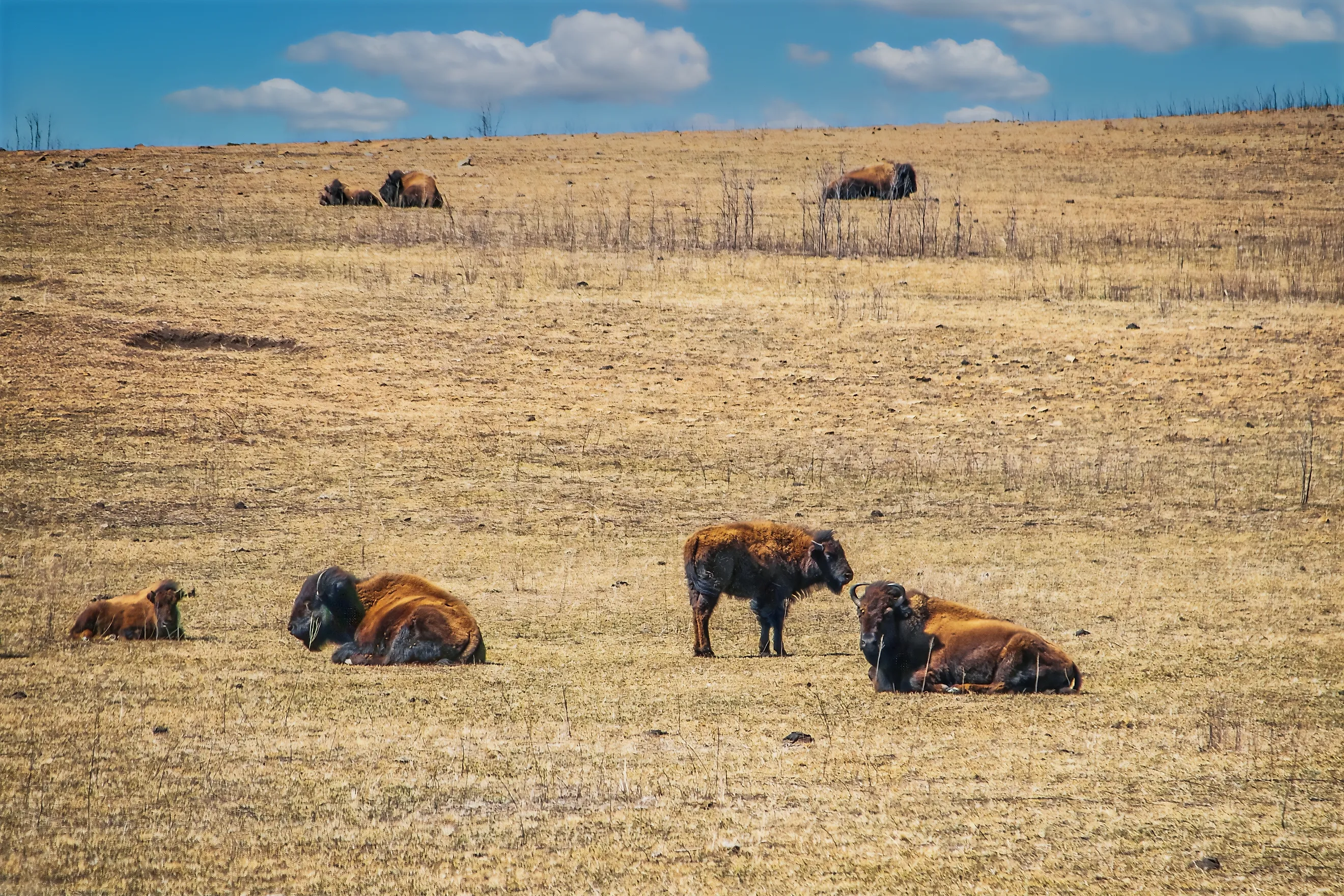
Tallgrass Prairie National Preserve in Chase County protects roughly 10,894 acres of the Flint Hills, one of the last remaining stretches of tallgrass prairie in North America. A free-roaming bison herd grazes across the preserve, and animals can often be spotted from the main trail network or the bus tours that run during the warmer months. Sightings tend to be most consistent in the northern units, particularly along the Upper Fox Creek trail.

Grassland-dependent birds are just as much a draw here as the bison. Greater prairie-chickens perform their booming courtship displays from late February through April, a spectacle that draws birders from across the region each spring. Dickcissels, upland sandpipers, and grasshopper sparrows nest in the tall grasses through summer, while coyotes and ornate box turtles move through the same terrain at a quieter pace. Rolling and almost entirely treeless, the Flint Hills skyline gives visitors unobstructed sightlines that forested wildlife areas simply cannot match.
Cheyenne Bottoms Wildlife Area

Cheyenne Bottoms Wildlife Area, managed by the Kansas Department of Wildlife and Parks just north of Great Bend, ranks among the most significant migratory shorebird stopover sites in the entire Western Hemisphere. Its complex of managed wetland pools and marshes covers about 20,000 acres in the Arkansas River lowlands and functions as a critical refueling stop along the Central Flyway. During peak spring migration in April and May, the pools fill with sandpipers, dowitchers, dunlins, American avocets, and Wilson's phalaropes in numbers that can be genuinely difficult to process.

Fall and early winter bring a different cast. Mallards, northern pintails, snow geese, and white-fronted geese stage in the thousands, joined by American white pelicans pushing through on their southward route. Bald eagles take up winter residence along the pool edges, hunting the open water. Muskrats and river otters work the marsh channels largely out of sight. A network of gravel dike roads lets visitors drive slowly through the wetland units and scan without leaving the vehicle, which keeps disturbance low and sighting quality high.
Quivira National Wildlife Refuge

Quivira National Wildlife Refuge sits about 15 miles northeast of Stafford in central Kansas, protecting 22,135 acres of wetlands, sand prairie, and salt flats. Rattlesnake Creek feeds the refuge's two main marsh units, Big Salt Marsh and Little Salt Marsh, creating the shallow, brackish conditions that concentrate shorebirds in large numbers during both spring and fall migration. Whooping cranes, among the rarest birds in North America, stop at Quivira each fall on their migration between nesting grounds in Wood Buffalo National Park in Canada and their wintering grounds at Aransas National Wildlife Refuge in Texas.

Resident species keep the refuge productive outside migration windows as well. American bitterns breed in the marsh edges, least bitterns nest in dense cattail stands, and Swainson's hawks hunt the uplands for small mammals through summer. Wild turkeys and white-tailed jackrabbits move through the drier sections of the refuge. At about 15 miles end to end, the auto tour route is long enough to cover serious habitat variety, from open salt flats to dense marsh edge, in a single visit.
Cimarron National Grassland

Cimarron National Grassland in Morton County covers 108,175 acres of shortgrass prairie and sand sagebrush grassland in the far southwest corner of Kansas, along the historic Santa Fe Trail corridor. Kansas's largest public land holding, it represents one of the more intact stretches of Southern Plains ecosystem left anywhere in the region. Pronghorn antelope move freely across the open terrain and are most active in early morning and late afternoon, when they feed along the grassland margins in small groups.

Lesser prairie-chickens, a species of conservation concern across most of their range, use the sand sagebrush uplands here as both nesting and mating habitat. Mule deer work the breaks and canyon edges along the Cimarron River, which cuts through the southern portion of the grassland and pulls in wild turkeys and mink along its riparian fringe. Scaled quail, loggerhead shrikes, and burrowing owls all breed on the unit. Point of Rocks, a sandstone outcrop along the old Santa Fe Trail route, sits above the surrounding flats and draws ferruginous hawks and prairie falcons, particularly during the colder months when those species concentrate in open country.
Flint Hills National Wildlife Refuge

Flint Hills National Wildlife Refuge runs along the Neosho River and John Redmond Reservoir in Coffey County, covering about 18,500 acres of river bottomland, seasonal wetlands, and upland prairie in east-central Kansas. Waterfowl arrive in force each fall, with thousands of Canada geese, mallards, and diving ducks staging on the reservoir and associated pools as they move south along the Central Flyway. Bald eagles follow the concentrations of waterfowl, wintering along the Neosho River corridor, with numbers peaking between December and February.

River otters and beaver use the Neosho corridor year-round, and wild turkeys are a constant presence in the bottomland timber along the river. Upland prairie units are managed with prescribed fire to hold habitat for greater prairie-chickens and dickcissels, two species that need open, grass-heavy terrain to breed successfully. Each October and November, sandhill cranes drop into the refuge's open fields and shallow pools overnight during their southward push, sometimes in flocks large enough to hear before they come into view. The auto tour loop, starting from the refuge headquarters east of Burlington, threads through the major wetland and prairie units.
Explore Kansas Wildlife
Kansas rewards wildlife watchers who move between habitat types. The same state that holds one of the continent's last intact bison prairies at Tallgrass Prairie National Preserve funnels a significant share of North America's shorebird population through Cheyenne Bottoms each spring. Quivira and Flint Hills add wetland and riparian depth to the picture, while Cimarron pushes into the shortgrass southwest, where pronghorn, lesser prairie-chickens, and ferruginous hawks occupy terrain found nowhere else in the state. So if you seek the majestic beauty of the wildlife of the Midwest, these five spots should top your list.