5 Tick Infested Areas In Virginia
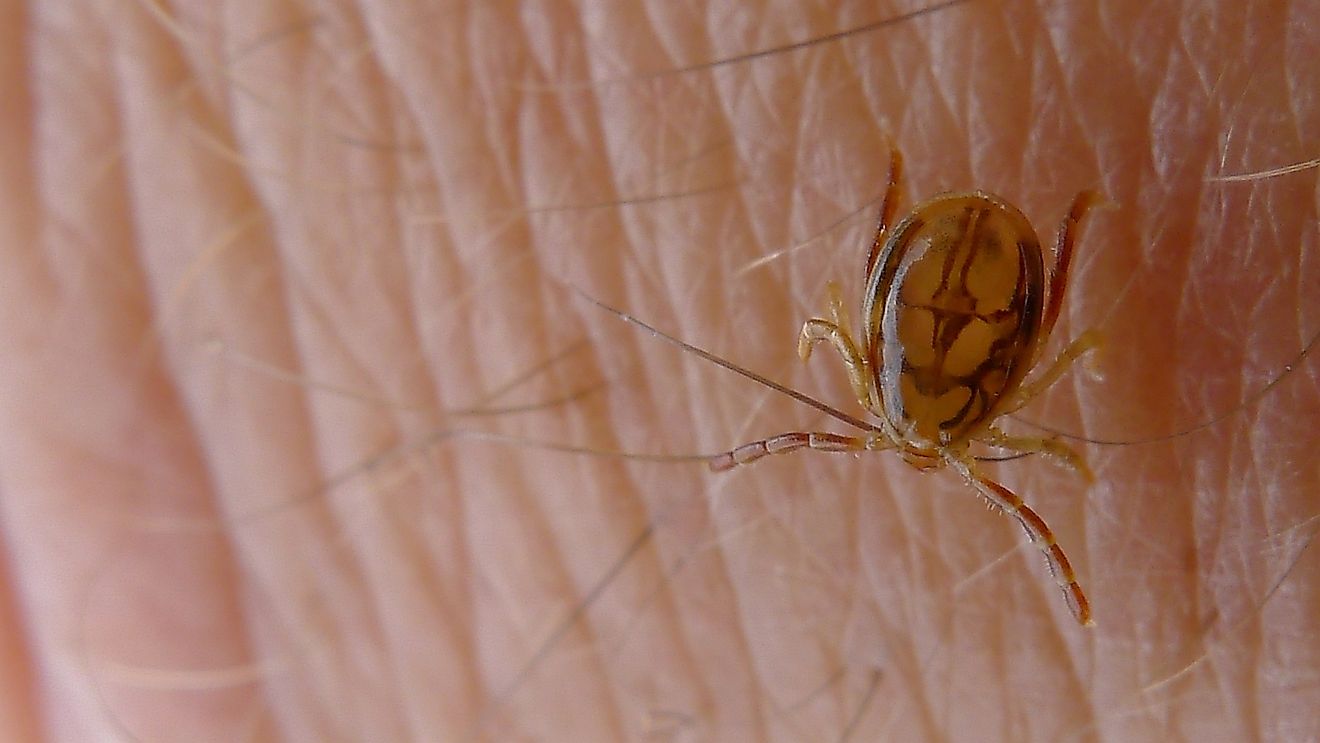
There are twelve different tick-borne diseases circulating through Virginia, according to its Department of Health. Ticks are active almost year-round in Virginia, making it one of America's more prevalent sources of tick-borne illness. Those illnesses include Lyme disease, Rocky Mountain spotted fever, Alpha-gal Syndrome, and ehrlichiosis. Out of 16 tick species in Virginia, only a handful commonly bite people: the American dog tick (Dermacentor variabilis), the blacklegged tick (Ixodes scapularis), the lone star tick (Amblyomma americanum), and the Gulf Coast tick (Amblyomma maculatum). Here is where you are most likely to cross paths with one of these troublesome critters.
Prince William County

Prince William County lies in Northern Virginia along the Potomac River, mixing hardwood forest, tidal wetlands, and dense wildlife corridors that support large deer and small-mammal populations, the hosts ticks depend on. The county is home to four of the biting species: the lone star tick, the blacklegged tick, the American dog tick, and the Gulf Coast tick. Sites such as the Occoquan Bay National Wildlife Refuge offer the leaf litter, understory, and humid microclimates that keep ticks active for much of the year, and they turn up especially in the refuge's tall grass.

The blacklegged tick is the county's primary Lyme disease vector, and the risk is highest during its nymph stage, when the tick is the size of a poppy seed and easy to miss. Infection takes a relay: larvae or nymphs pick up the bacteria feeding on infected hosts such as white-footed mice, then pass it on at a later meal.
Shenandoah National Park

The Blue Ridge Mountains are a subrange of the Appalachian Mountains, running roughly 615 miles between southern Pennsylvania and northern Georgia at elevations between 2,000 and 4,000 feet. Three of the most common tick species here are the blacklegged tick, the lone star tick, and the American dog tick. The blacklegged tick dominates, working the deciduous forests, tall grasslands, and the shrubby edges where woods meet open ground.

Shenandoah National Park covers 311 square miles of that high country. Blacklegged ticks are common on its tall grass and shrubby undergrowth, perching at the leaf edge to latch onto a passing deer or hiker. Lyme disease, which the blacklegged tick carries, is known to be transmitted in the park, and Rocky Mountain spotted fever, carried by the American dog tick, has been contracted there as well.
Fauquier County

Fauquier County sits in the north-central Piedmont, a landscape of rolling farmland and forested edges at the foot of the Blue Ridge Mountains. Much of that habitat is on display at Sky Meadows State Park, where fields and meadows press up against the mountains and a network of nature trails climbs the ridgeline toward the Appalachian Trail, brushing past exactly the kind of tall grass and forest edge that ticks favor.

Three tick species are plentiful in the park. Blacklegged ticks stay close to the leaf litter and vegetation of the forest floor. Lone star ticks turn up at elevations as high as 1,600 feet, including the Blue Ridge foothills within Sky Meadows. The American dog tick prefers open ground with less tree cover, such as trail edges and fields of medium-height grass.
Chesterfield County

Chesterfield County is bounded by the James River to the north and the Appomattox River to the south. Blacklegged ticks and lone star ticks are the most common here, working the forest leaf litter and shaded, grassy areas of the county, including Pocahontas State Park.

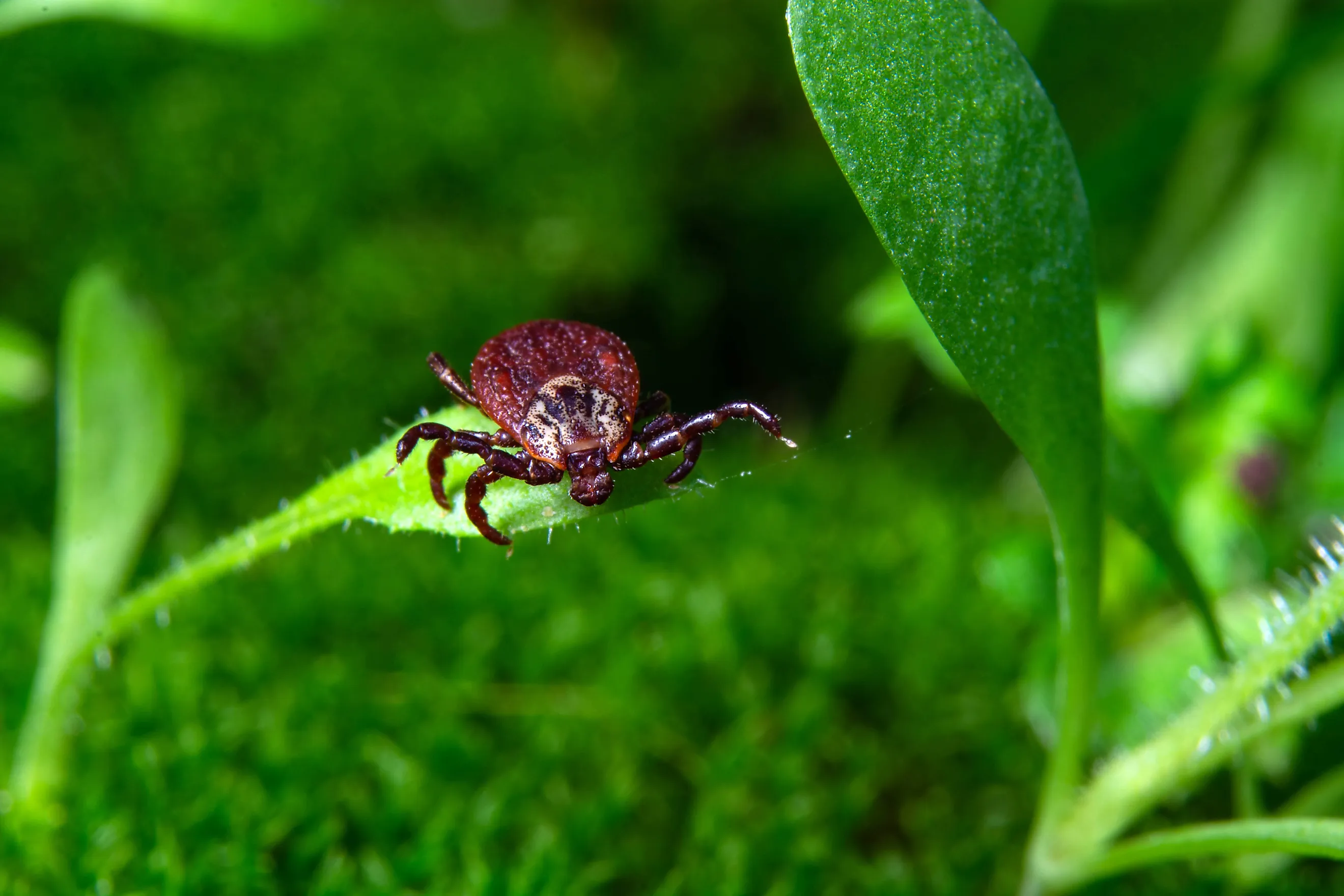
The American dog tick lives in the park as well, which makes Rocky Mountain spotted fever a concern. In the county's wilder corners, watch for ticks that are "questing," perching on the tips of grasses with their forelegs outstretched to grab a passing host.
Franklin County

Franklin County sits in the Blue Ridge foothills, where the blacklegged tick and the lone star tick are the most common species. The Booker T. Washington National Monument, a popular destination within the county, preserves part of a 207-acre tobacco farm whose buildings and surrounding plantings double as tick habitat. Blacklegged ticks here carry Lyme disease, while a lone star tick bite can trigger Alpha-gal Syndrome, an allergy to red meat and other mammal products caused by a sugar molecule the bite leaves behind.
Several nearby trails add to the exposure, including the Jack-O-Lantern Branch Heritage Trail, which is known for its ticks. Walkers should take care not to brush against grasses and branches, where questing ticks wait.
Ticks in Virginia
Tick activity in Virginia peaks from spring through early fall, though blacklegged and lone star ticks can stay active during mild winters. To lower the risk, wear long clothing, use an effective insect repellent, and do thorough body checks after time outdoors, and steer clear of obvious tick habitat where you can. If one does attach, grasp it close to the skin with fine tweezers and pull straight out with steady pressure rather than twisting. Virginia residents can also report tick encounters and find region-specific guidance through the Virginia Department of Health.