9 Prettiest Small Towns In Chesapeake Bay
The prettiest corners of the Chesapeake Bay belong to its smallest towns. Onancock sits along a creek lined with brightly painted Federal and Queen Anne homes. Cove Point keeps a whitewashed 1828 lighthouse tower at the water's edge. St. Michaels holds a working harbor inside colonial streets you can cover on foot. These nine towns earned their looks over four centuries of bay life. Each one offers a beach or a lighthouse or a historic waterfront worth the whole trip.
Onancock, Virginia

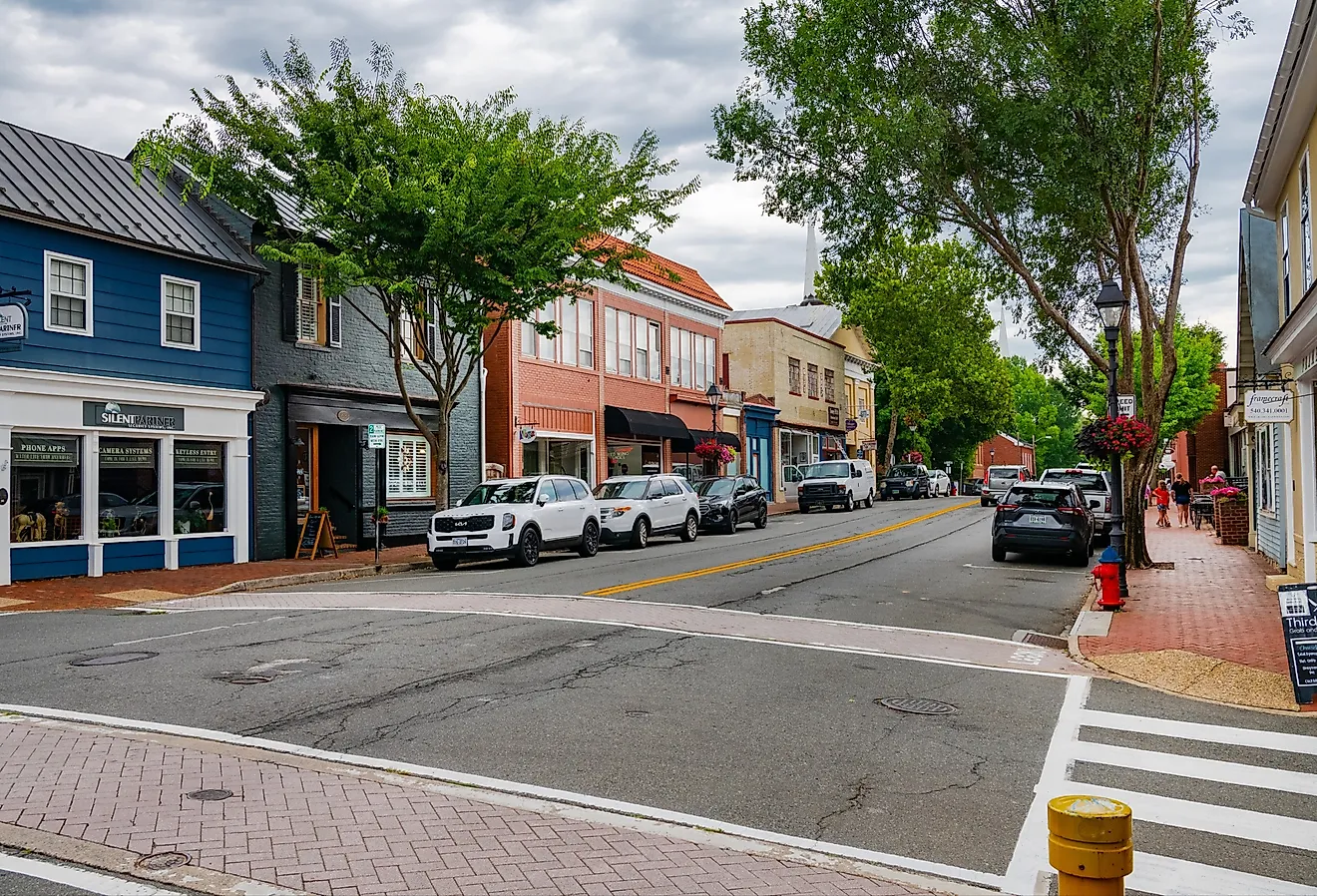
Founded in 1680, Onancock has long been regarded as an ideal spot on the eastern side of the Chesapeake Bay. None other than Capt. John Smith called it the "Gem of the Eastern Shore." Settlers agreed, which is why Onancock has some of the prettiest historic homes on the bay, such as Ker Place, a Federal-style home built between 1799 and 1802, which today is the headquarters of the Eastern Shore of Virginia Historical Society, with exhibits and a genealogy room.
Going on a walking tour of Onancock, one can find a range of architectural styles, such as the 1887 Queen Anne-style Harmanson House, with striking blue paint, and the Greek Revival-style Holly House, built in 1860. In downtown Onancock, one can enjoy a local show at the Roseland Theater or take the Tangier Island Ferry to Tangier Island.
Stevensville, Maryland

Stevensville is located on Kent Island, where it's easy to enjoy all the sights on foot. Nature trails circle the island and its beaches, and the artistic downtown sits within an easy walk. The Cross Island Trail goes for 6.5 miles through farmlands, meadows, and woodlands, while the South Island Trail goes from the Matapeake State Park to the Romancoke Pier.
For beachside experiences, there's the Terrapin Nature Park and Beach. Stevensville is best visited on the first Saturday of the month from May through December as it hosts art festivals and other events, including its Artoberfest in October. The town is filled with art galleries in cute settings, such as My Little Studio, owned by local artist Joan McWilliams, and Creatives Corner, with gifts ranging from fine art to graffiti-inspired creations.
Urbanna, Virginia

Urbanna sits on the Rappahannock River, which flows into Chesapeake Bay. Crowds fill this unassuming town every November for the Urbanna Oyster Festival. The event has run for nearly 70 years, drawing residents and outsiders alike to sample oyster creations. Visitors gather year-round at the Love Sign in Taper Park, close to local eateries and stores like Small Town Burger Urbanna and Bethpage Miniature Golf & Ice Creamery.
A favorite stop in Urbanna is the Urbanna Museum and Visitors Center, built in 1766 as a mercantile store. It is one of the oldest surviving colonial mercantile buildings in America and the last standing Scottish factor store on the continent. Inside sits a 1755 John Mitchell Map, considered one of the most complete maps of North America at the time.
Cape Charles, Virginia

Cape Charles, Virginia, sits on the eastern side of the Chesapeake Bay and is noted for having one of the most accessible beaches in the state. Visitors don't have to pay a fee to get to the beach, as they can simply walk from downtown Cape Charles to Cape Charles Town Beach and enjoy its calm waters. It is close to Eastern Shore National Wildlife Refuge, a stopover for songbirds, birds of prey, and monarch butterflies.
From the Cape Charles Natural Area, you can view a chain of barrier islands while standing in an old World War II bunker. One interesting driving spot is the Chesapeake Bay Bridge-Tunnel, a 17.6-mile bridge-and-tunnel complex that crosses the mouth of the Chesapeake Bay.
Yorktown, Virginia

Yorktown is of the utmost importance to American Revolutionary War history. In the autumn of 1781, George Washington, together with French forces, trapped the British commander Lord Charles Cornwallis in Yorktown. His surrender marked the last major battle of the American Revolution. That battlefield is now part of the Colonial National Historical Park, which regularly hosts artillery firing and fife-and-drum performances.
The American Revolution Museum of Yorktown provides a broader view of the American Revolution, including the events that led up to it, such as the settlement from across the Atlantic Ocean.
St. Michaels, Maryland

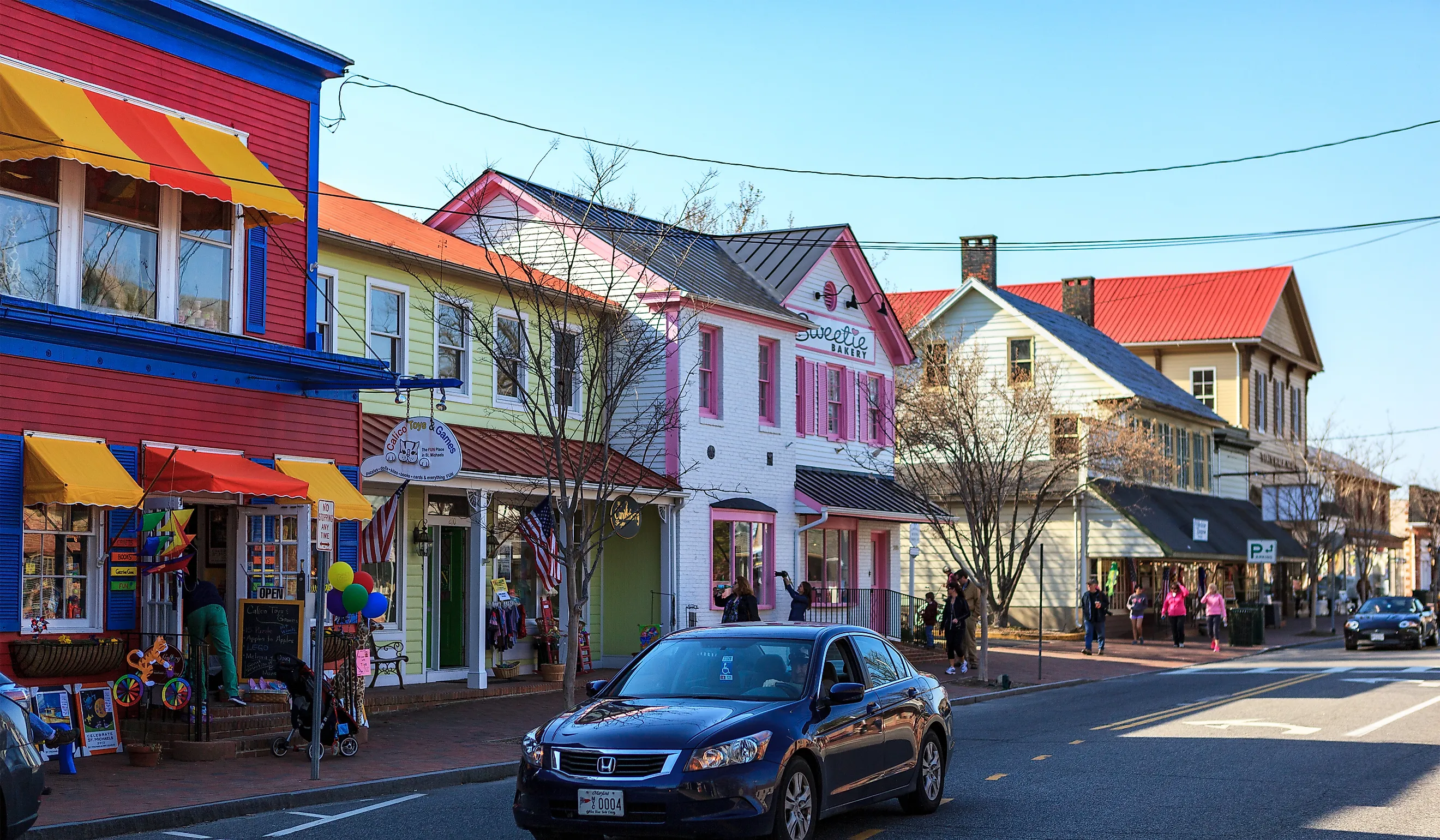
St. Michaels was founded in 1672 and takes its name from the Episcopal parish of St. Michael the Archangel. It developed a reputation as a bustling shipbuilding center before gradually developing a strong oystering and crabbing industry. Today, its maritime heritage forms the backbone of its attractions, including the Chesapeake Bay Maritime Museum. On this 18-acre property, one can learn about the bay's history from an experienced storyteller or visit the 1879 Hooper Strait Lighthouse.
One of the town's most famous residents was Frederick Douglass. Born as a slave, he would later become a freedman and one of the most influential writers and abolitionists in the years leading up to the American Civil War. Information about his life and the Battle of St. Michaels in the War of 1812 is available from the St. Michaels Museum. Aside from its history, one of the town's prettiest attractions is the Classic Motor Museum, with its collection of vintage cars and tractors.
Tilghman, Maryland

Tilghman sits on Tilghman's Island in Maryland, surrounded by the Chesapeake Bay and the Choptank River. The community here honors crabbing, boating, fishing, and biking. In fact, St. Michaels Road has 8-foot-wide shoulders, making it ideal for cyclists. Families and solo travelers can easily explore the Chesapeake Bay from the Sinclair Avenue Waterfront Park, which is also home to the Tilghman Island Marina & Rentals. This facility supplies jet skis and kayaks.
The community celebrates all the boatbuilding, fishing, and seafood activities through the Tilghman Watermen's Museum. Here, you can see workboat models, tools, and art inspired by this seafaring lifestyle. One of its most important artists was William E. Cummings, a man who drew scenes of fishing and water activities from memory, offering a unique look into a world gone by in the early to mid-1900s.
St. Mary's City, Maryland

St. Mary's City is one of the oldest communities in the Chesapeake Bay area. Founded in 1634 as the colony's first capital, it is often considered the birthplace of religious freedom in America, as it was established to allow freedom of expression for both Catholics and Protestants. Today, the entire community is a restored historic site that keeps alive a 17th-century heritage that is difficult to find in America.
The city contains the Brick Chapel, a reconstruction of the original from 1667, with lead coffin coverings of three of the original colonists, and a reconstructed State House of 1676. The city also honors the struggle for freedom of enslaved people via the Struggle for Freedom Exhibit located within a building on the former Brome Plantation that was used to house slaves. Lastly, visitors can see an active archeological dig at the St. Mary's Fort Archeological Site, where the original fort stood in 1634.
Lusby, Maryland

Lusby, Maryland, is a small community southeast of Washington, DC, that contains the oldest continuously operated lighthouse in Maryland and a laid-back Chesapeake Bay park. The Cove Point Lighthouse was first built in 1828 to guide ships, and it has remained in operation ever since, even as its technology has evolved. Another attraction near Lusby is the Calvert Marine Museum, which regularly hosts events and concerts.
The most beautiful site in Lusby is the Calvert Cliffs State Park. These cliffs were formed 10 to 20 million years ago by a warm sea. As a result, Calvert Cliffs is not only a great place to swim but also to look for fossils, especially along the 1.8-mile Red Trail, which leads to the beach.
The Birthplaces of America
America never had a single birthplace. Several towns along the Chesapeake Bay have a real claim to the phrase, and their beauty is bound up with that history. A morning of fossil hunting on the Calvert Cliffs pairs naturally with an afternoon walking the colonial streets of Onancock. The lighthouses at Cove Point and Hooper Strait still stand over the same water the first settlers sailed. These nine towns reward anyone who wants pretty scenery and the country's early story in the same trip.