7 Most Rattlesnake Infested Areas in New England
New England only supports one species of rattlesnake: the timber rattlesnake. Only this one rattlesnake species can survive in the mountainous, colder landscape this far north, and even then, it faces many threats, both from habitat destruction and human activities.
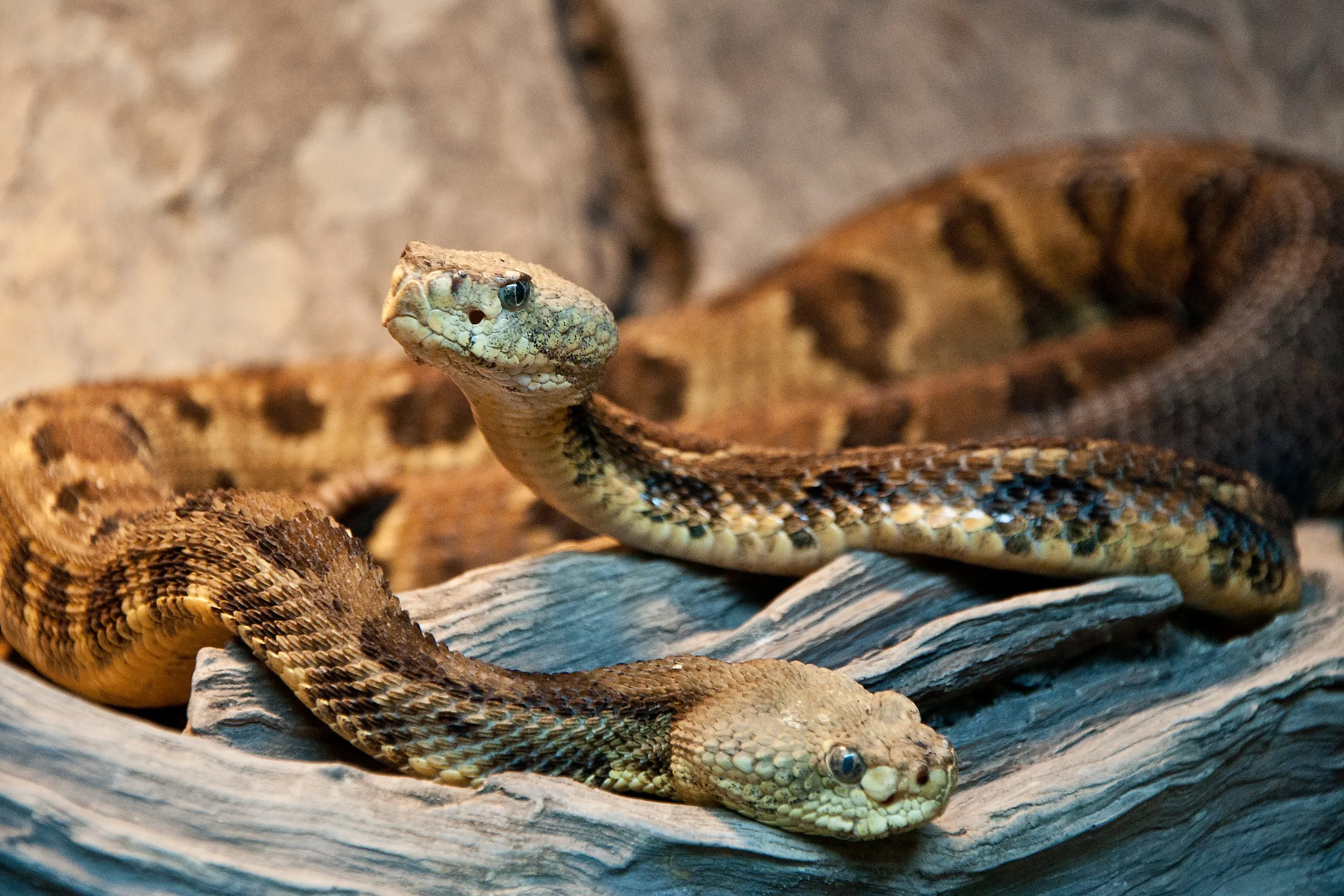
Growing from around 3 to 5 feet in length, timber rattlesnakes are typically light brown with dark brown or black crossbands. They have triangular-shaped heads and two heat-sensing pits on either side of their heads. These snakes are no longer found in Maine or Rhode Island, but do exist in mountainous regions and in mixed woodlands throughout the rest of New England. Some of the most common places you might run into them are along the Connecticut River Valley, into the mountains of Connecticut, hiding in the Blue Hills of Massachusetts, and along a gentle forest stream in New Hampshire. Read on to learn more about these snakes and the 7 most rattlesnake-infested areas in New England.
Blue Hills Reservation

The Blue Hills Reservation is a 7,000-acre park located 10 miles south of Boston, and regularly attracts city dwellers looking for a natural escape. From the 635-foot Great Blue Hill, one can see the skyline of downtown Boston. The reservation protects several rare ecosystems in Massachusetts, ranging from upland forests to swamps, meadows, and a bog. It also hosts one of the few rattlesnake and copperhead populations in Massachusetts.

Timber rattlesnakes have largely been eliminated from Massachusetts, but have found a home here in the upland forests and hills of the reserve. As the park is so close to Boston, some timber rattlesnakes have wandered out into urban areas. Park authorities have to work closely with metro authorities to capture and transport these snakes back to the Blue Hills Reservation.
Housatonic State Forest

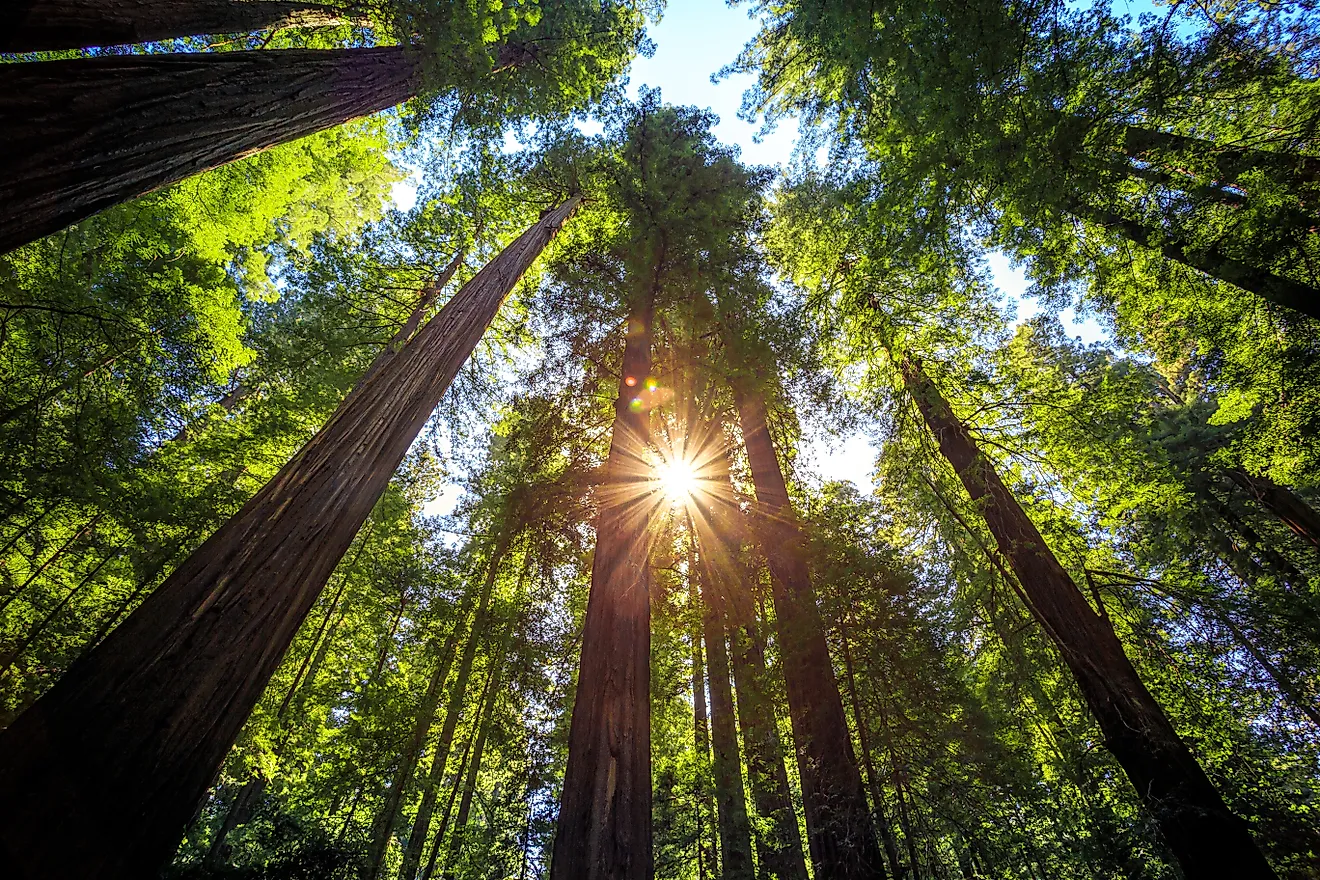
Housatonic State Forest is a park in Connecticut with 10,000 acres of mountains, gorges, and white pine tree stands. The famous Appalachian Trail, which goes from Georgia to Maine, cuts through this forest, making it a popular backpacking stop. The park gets its name from the Housatonic River, which also serves as a water source for timber rattlesnakes. These snakes are particularly active during the summer as they go out to hunt prey or bask in the sun out on the rock outcrops. Female snakes are more likely to be seen out on the trails, especially when they are pregnant during mating season from spring to late summer.
Meshomasic State Forest

The Meshomasic State Forest connects multiple communities in central Connecticut. Its primary habitats are second-growth forests of deciduous and white pine trees, Ice Age-era boulders and rocks, and a few hills and one mountain: the 916-foot Meshomasic Mountain.

The rocky forest floor offers an ideal environment for timber rattlesnakes, which is why it has the largest population of rattlesnakes in Connecticut. The forest provides easy access to water sources and rocky ledges for the snake to find a den. Although timber rattlesnakes used to be found throughout the state, especially in colonial times, habitat destruction and hunting by humans have cut down the snake's population significantly. Today, it is endangered within Connecticut and is protected by local authorities. Timber rattlesnakes can feed on many creatures found in the forest, from small mammals to other reptiles.
Rutland County, Vermont

In Vermont, the only county known to contain timber rattlesnakes is Rutland County, particularly in the Taconic Mountains, whose northern edge lies in the county. Human activity has severely impacted the range of these creatures, and today they are carefully protected by wildlife authorities.

In Rutland County, these snakes can be found in mixed woods and hills. During the winter, they hide in southern facing slops in dens. It is still possible for humans to happen upon these timber rattlesnakes when hiking at parks such as West Rutland State Forest, a 344-acre forested park within the Taconic Mountains. Experts state that there are no other timber rattlesnakes found outside of West Rutland, and those that are reported to be rattlesnakes are usually milk snakes.
Connecticut River

The Connecticut River is a lifeline for New England, with a watershed that feeds the most fertile soil in the region and provides 70% of the fresh water in the Long Island Sound. It runs for 406 miles from Canada down to the Sound off the shores of Connecticut.

The wider Connecticut River Valley supports some of the last timber rattlesnake populations in Massachusetts. They often live in the river bluffs around the river, but can come out close to it as a water source, as a way to travel in search of prey. Unfortunately, environmental destruction in rocky areas has forced them into smaller regions in the valley, which can lead to inbreeding in the population, which in turn makes them more susceptible to disease.
Bear Brook State Park

This nature preserve in Allenstown, New Hampshire, is one of the largest parks in the state at 10,000 acres. Named after the Bear Brook stream, it is part of the Northeastern coastal forests ecoregion, consisting of mixed forests common in New England. Throughout the park are bogs, marshes, and ponds, which act as a water source for a population of timber rattlesnakes.

Timber rattlesnakes are highly endangered in the state of New Hampshire, and Bear Brook State Park is one of the few places that can support them. It offers mixed forest with openings for basking, and outcroppings with crevices for them to settle in during the winter. Park authorities carefully guard the known sites of their dens to protect this state-endangered snake.
Mount Tom State Reservation

Located in Massachusetts along the Connecticut River Valley, Mount Tom State Reservation is often described as an ecologically rich place due to its rocky outcroppings, wetlands, meadows, and mixed and old-growth forests. Bird watchers come here to see the many hawks and falcons that migrate here. On the southwestern-facing slopes and cliffs in Mount Tom, there have been reports of timber rattlesnakes.

As mentioned above, timber rattlesnakes are quite rare in Massachusetts. This state is actually at the very northern edge of the territory where timber rattlesnakes can survive, as they have to find dens that are above freezing to live through the winter. They choose these cliffs to bask in the sun and to find warm dens for winter hibernation. Unfortunately, these snakes are still at risk of being killed by human visitors, who will react in fear to this creature.
What are your odds of seeing a timber rattlesnake in New England?
Your odds of actually seeing a timber rattlesnake in any of these areas are fairly low, as they tend to hide from humans. After all, we are a far greater threat to them than they are to us. That doesn't mean that hikers shouldn't show caution. Most rattlesnake bites occur because someone stepped on a snake or handled it without proper training. If you do see a rare timber rattlesnake in New England, make sure your only interaction with it is taking a photo of it as a keepsake.