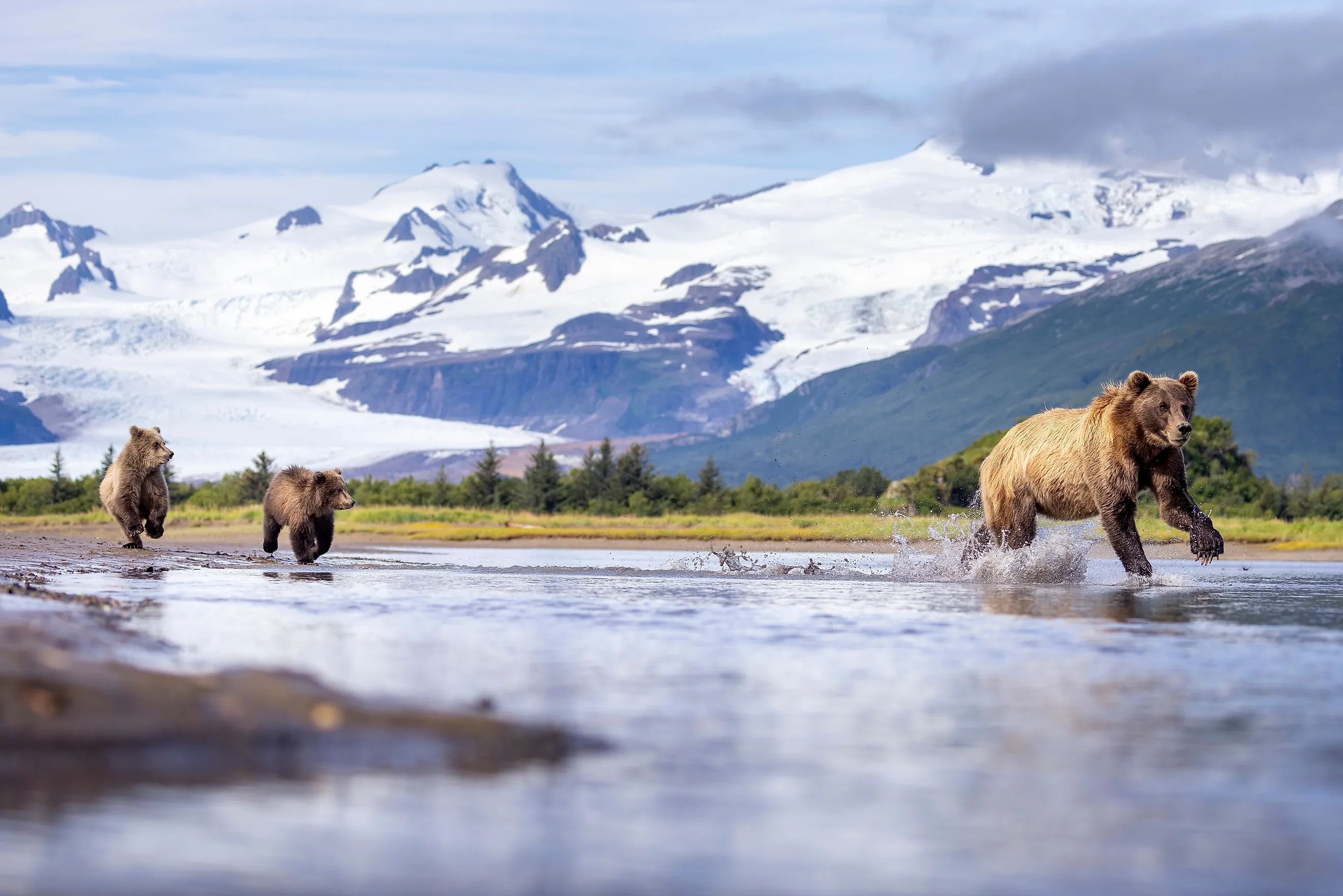
4 Wild Animal Hotspots In Alaska
Alaska covers over 665,000 square miles and holds more national parkland and wildlife refuge acreage than the rest of the country combined. All of which matters when you’re planning a wildlife trip to this beautiful North American destination. Unlike other parts of the country, animals here have plenty of space to roam, so knowing where to find them takes a little more effort. But whether you’re looking to view bears gorging on salmon in Denali National Park or whales cruising the Kenai Fjords, Alaska is a wildlife viewer's paradise.
Denali National Park And Preserve

Covering more than six million acres of Interior Alaska, Denali National Park and Preserve is home to 39 mammal species and 169 bird species. But most visitors come with a single goal in mind: the chance to spot the park's so-called “Big Five” of grizzly bears, wolves, moose, caribou, and Dall sheep.
The park’s popularity stems from its consistently high wildlife-sighting rates, which are attributed to the fact that private vehicles aren’t permitted beyond Mile 15 on the 92-mile-long Denali Park Road. From here, only park buses and transit vehicles travel the road, resulting in low traffic… and lots of animal activity.

Grizzlies feed throughout the summer here, with Thorofare Pass near Mile 37 being particularly rich in sightings. The Denali Caribou Herd uses the park year-round, providing some of the more dependable wildlife sightings. Dall sheep tend to cling to the steep ridgelines visible from Polychrome Pass, roughly 45 miles in. Wolves are also present in the park but are rarely seen, preferring to avoid human traffic as much as possible.
Bus tours depart from the Denali Visitor Center at the park entrance and range from half-day Tundra Wilderness Tours to full-day trips reaching Kantishna at the road's end. For the best chance of seeing all of the “Big Five” species, the longer routes reaching beyond Eielson Visitor Center at Mile 66 are recommended.
Kenai Fjords National Park

Kenai Fjords National Park, located on the Kenai Peninsula near the town of Seward, protects a spectacular stretch of coastline where glaciers descend to the water's edge, creating ideal conditions for marine life to use as feeding and breeding grounds.
This meeting point of the Gulf of Alaska and the inland fjord system of Resurrection Bay supports five species of whale, large colonies of sea lions and seals, as well as sea otters. Other wildlife you might spot include Dall's porpoises, tufted and horned puffins, and bald eagles. Mountain goats and black bears also inhabit the park's coastal slopes and can sometimes be spotted from the water.

Day cruises out of Seward offer the most practical way to access the park's marine wildlife. One of the best, Major Marine Tours, offers half-day cruises through Resurrection Bay as well as full-day trips into Aialik Bay, where the park's tidewater glaciers are located. Kenai Fjords Tours travels similar routes with stops at the Chiswell Islands, part of the Alaska Maritime National Wildlife Refuge, where puffins nest on sea cliffs from May through August.
Humpback whales are present in the fjords from mid-April through November, feeding on krill and small fish, and orca pods frequent Resurrection Bay from mid-May through mid-June
Katmai National Park and Preserve

Located on the Alaska Peninsula, 290 miles southwest of Anchorage, Katmai National Park and Preserve is where you’ll find one of the most dramatic wildlife encounters in North America. The action takes place in summer as sockeye salmon head up the Brooks River in enormous numbers, attracting brown bears to feast. It’s a remarkable site, especially around Brooks Falls, a six-foot waterfall that forces the salmon to leap out of the water to continue their upstream journey. Bears literally line the lip of the falls to intercept the leaping salmon.
Three elevated viewing platforms have been erected along the river: one at the falls itself, one downstream, and one at the river's mouth where it meets Naknek Lake. Up to 43 bears have been recorded at the falls in a single day, with peak viewing taking place in July when sockeye is most active. A second bear surge happens in September, when spawned-out salmon weaken and die, making them easier catches.

Getting to Brooks Camp, the region’s ranger station, requires either a floatplane or a boat from King Salmon, about 30 miles away. But it’s well worth the effort and expense. Regular scheduled service connects Anchorage to King Salmon, from which charter floatplanes complete the final leg. Tour operators, including Rust's Flying Service, run day trips from Anchorage that include the floatplane transfer, safety orientation at Brooks Camp Visitor Center, and several hours on the viewing platforms.
If you want more time here, Brooks Lodge on the shore of Naknek Lake offers multi-day packages. Reservations are hard to get, though, and are handled through a lottery system.
Arctic National Wildlife Refuge

The Arctic National Wildlife Refuge (ANWR) covers a vast 19 million acres of northeastern Alaska, stretching from the Brooks Range south through the boreal forest all the way to the Beaufort Sea coast to the north. And for dedicated wildlife spotters, it’s a must-visit as it’s the only place in the United States where all three North American bear species (black, brown, and polar) share a single protected landscape.
It’s also home to the Porcupine caribou herd, one of the world’s largest at around 200,000 animals (calving season is in June). Other wildlife you’ll want to look out for include Dall sheep, muskoxen, wolves, and wolverines, which all inhabit the mountain ranges and river corridors inland. The refuge is also home to more than 200 bird species from four continents that come to breed, feed, and rest during the brief Arctic summer.

While access to the ANWR requires serious planning (there are no roads, trails, or facilities within the refuge), it’s doable via charter plane from Fairbanks. River rafting trips are a great way to travel through the interior refuge, with adventures typically taking six to ten days. Polar bear viewing is also popular, with groups like the Northern Alaska Tour Company running day trips from Fairbanks to Kaktovik, combining a floatplane flight over the refuge with a boat tour to the bear viewing areas.
Your Alaska Wildlife Experience
Getting to the best wildlife hotspots in Alaska does require plenty of planning, but it's worth the effort. The practical window for most of these experiences runs from late May through September, with those wanting to visit multiple sites in a single trip typically basing themselves in Anchorage, which is within easy reach of the Kenai Peninsula and is the main hub for flights to Katmai and other remote parks. The ANWR is the most challenging (and expensive) destination, requiring advance planning, guide arrangements, and flexibility for weather delays, but it's the most rewarding if you can swing it.