11 Best Places To Retire In New Zealand
Kerikeri sits in the subtropical Bay of Islands and holds the Mission House, the oldest surviving wooden building in New Zealand, built in 1822. Blenheim anchors Marlborough wine country with one of the country's largest cluster of vineyards. Taupō wraps around the country's largest lake with geothermal hot springs across the basin. Greytown was voted New Zealand's Most Beautiful Small Town in 2017 and holds the oldest cricket and rugby clubs in the country. The eleven New Zealand towns ahead each handle a different version of retirement for 2026: stable healthcare, walkable downtowns, mild climate, and dedicated retirement-village infrastructure that the country's broader senior-care system supports across both islands.
Kerikeri

Kerikeri sits at the top of the North Island in the Bay of Islands, where subtropical air keeps winters mild and summers warm. The Kerikeri River runs through town toward the Pacific, with weekends pulling residents to Charlie's Rock Waterfall, Opito Bay Beach, and Wharau Road Beach. Some of the country's earliest European buildings stand here: the 1822 Mission House (the oldest surviving wooden building in New Zealand), St. James Church, and the Stone Store right beside it (the oldest surviving stone building in the country, built in 1832).

Kerikeri Retirement Village keeps adding units to meet demand, and the Department of Social Services has a strong local presence. The annual Kerikeri Open Art Studios Trail, known as KOAST, fills Labour Weekend with open studios across the wider district. The town runs about 8,000 residents, with nearly a quarter aged 65 or older and a median age just above 51. In 2023, the Far North District recorded its lowest crime rate in a decade per Infometrics, with about 279 incidents per 10,000 residents.
Blenheim

Blenheim sits in the heart of Marlborough wine country at the top of the South Island, ringed by one of the country's largest clusters of vineyards (about 25,000 hectares under vine, the largest wine-growing region in New Zealand). Long before colonial settlement, Māori communities lived in the Wairau Valley for centuries, with the riverbanks serving as food sources and trade routes. The modern town runs close to 30,000 residents, many of whom moved here for the dry weather and the relaxed pace. Lake Grassmere supplies a large share of the country's salt production.
Walkability is one of Blenheim's selling points. Pollard Park offers a green corner for an afternoon stroll, while Seymour Square anchors the town with its clock tower and tidy plantings. Retirees gather at the Blenheim Golf Club and the local tennis and croquet clubs nearby. The Richmond Range and Wither Hills shield the Wairau Valley from passing storms, giving Blenheim the longest annual sunshine total in the country (typically more than 2,500 hours).
Taupō

Taupō wraps around New Zealand's largest lake (616 square kilometres, the caldera lake of a supervolcano whose last major eruption around 232 AD was the largest globally in 5,000 years) and suits anyone who wants distance from city traffic. Mount Tauhara, a dormant volcano, marks the eastern horizon, while geothermal activity feeds hot springs across the basin where bathing temperatures stay consistent year-round. Walkways trace the Waikato River through Hipapatua Reserve toward Huka Falls, and Tongariro National Park (the country's oldest, designated in 1887) is close enough for a regular day trip. The Taupō Museum holds preserved documents and skeletal remains of the extinct moa.
Taupō Golf Club runs two courses, Tauhara and Centennial, both pulling a steady older crowd. The climate stays mild oceanic, with easy winters. Taupō Hospital runs round the clock. Wharewaka, once a quiet corner, has grown into a major subdivision with full-scale retirement villages, pushing the local median age above 57 as of the 2018 census. A dedicated Senior Services division covers elder-focused needs across the town.
Greytown

Greytown sits in the Wellington Region about 80 kilometres from the capital, with the Māori name Hūpēnui. The land here was purchased from the namesake iwi in the 19th century, and the town has grown about 35 percent over the past two decades. Around 30 percent of residents are 65 or older. Greytown was voted New Zealand's Most Beautiful Small Town in 2017, and the designation still fits in 2026. Lake Wairarapa lies a short drive away, with the beaches and lagoons of Lake Ferry nearby. Surrounding fruit orchards make the area a horticultural standout. The country's first tree-planting festival took place in Greytown in 1890, and trees remain a local point of pride.
The Wairarapa Line passes through nearby Woodside Railway Station and links Greytown back to the capital. Older fans of cricket and rugby find clubs that have been running for over 150 years, with full-day summer matches still drawing a good crowd. The Wairarapa Times-Age has reported that Greytown has the lowest crime rate in the Wairarapa, sometimes going weeks without a single incident. Senior options include Greytown Orchards Lifestyle Retirement plus dedicated aged care at Ultimate Care Palliser House.
Tākaka
Tākaka rests in the Tasman District at the top of the South Island with a mild climate and a community-driven daily rhythm that suits many retirees. The Golden Bay Museum (locally Te Waka Huia o Mohua) runs exhibits on Abel Tasman's 1642 encounter with the Ngāti Tūmatakōkiri (the first documented European contact with Māori in New Zealand), the region's industrial past, and a full pilot whale skeleton. Local landmarks include Tākaka Hill, Tasman Bay, and Paine's Ford. The nearly century-old Golden Bay theatre now operates as a neighborhood café and reflects how the town treats its heritage.
According to the latest census, 23 percent of the township is 65 or older and 46.5 percent are 30 to 64, putting the bulk of residents firmly in the mature bracket. The Bank of New Zealand keeps a local branch. Senior-focused spaces include the Senior Citizen Hall and the Memorial Library, both popular for socializing and quiet study. The Golden Bay Community Gardens and Sustainable Living Centre encourages cross-generational work on practical skills and shared wellness.
Ōmokoroa

Part of Greater Tauranga, one of New Zealand's largest cities, Ōmokoroa stretches as a thin peninsula with water on three sides and Matakana Island to the east. The Bay of Plenty views lift the mood of most visitors who pass through. Tauranga is roughly 21 kilometres south and visible from the lookouts at Minden and the Puketoki Reserve. Medical care stays within easy reach: Tauranga Hospital and Grace Hospital both in the city, with the Omokoroa Medical Centre handling daily needs in town.

The 2018 census put the township's median age at 58, which lines up with the lifestyle on offer. Ōmokoroa Country Estate operates as a retirement village within walking distance of the beach and the bird-roosting habitat at Cooney Reserve. The reserve protects species including the Australasian swamphen, with controlled visitor access and a dog exclusion area. Ōmokoroa Country Club runs a more indulgent model, with resort-style living arrangements and on-site care along the green edge of Tauranga Harbour.
Alexandra

Alexandra sits in Central Otago at the bottom of the South Island with one of the warmest dry climates in the country (and the largest annual temperature range, with summer highs into the 30s°C and winter lows below freezing). The town is bordered on three sides by the Manuherikia and Clutha rivers (the Clutha is also known by its Māori name Mata-Au), which gives it an almost island feel. The neoclassical Alexandra Bridge is the prime spot for watching the two rivers meet. Downstream, the Clutha widens toward Clyde and the Clyde Dam comes into view. Stone fruit orchards stay central to the local identity, often turning up in scones, preserves, and weekend markets.
Pioneer Park acts as the town's open-space anchor, holding the Central Stories Museum and Art Gallery plus a botanical garden. The September Blossom Festival turns the gardens into a flowering meadow that pulls visitors from across the South Island. According to RealEstate.co.nz, the median property price is NZD 720,000, more affordable than neighboring Clyde. Clyde's medical facilities include a helipad for emergency transfers to Dunstan Hospital, while Alexandra itself hosts the Central Otago Maternity Unit and Centennial Health. Preferred aged care options include Castlewood Nursing Home and Ranui Court Retirement Village.
Richmond

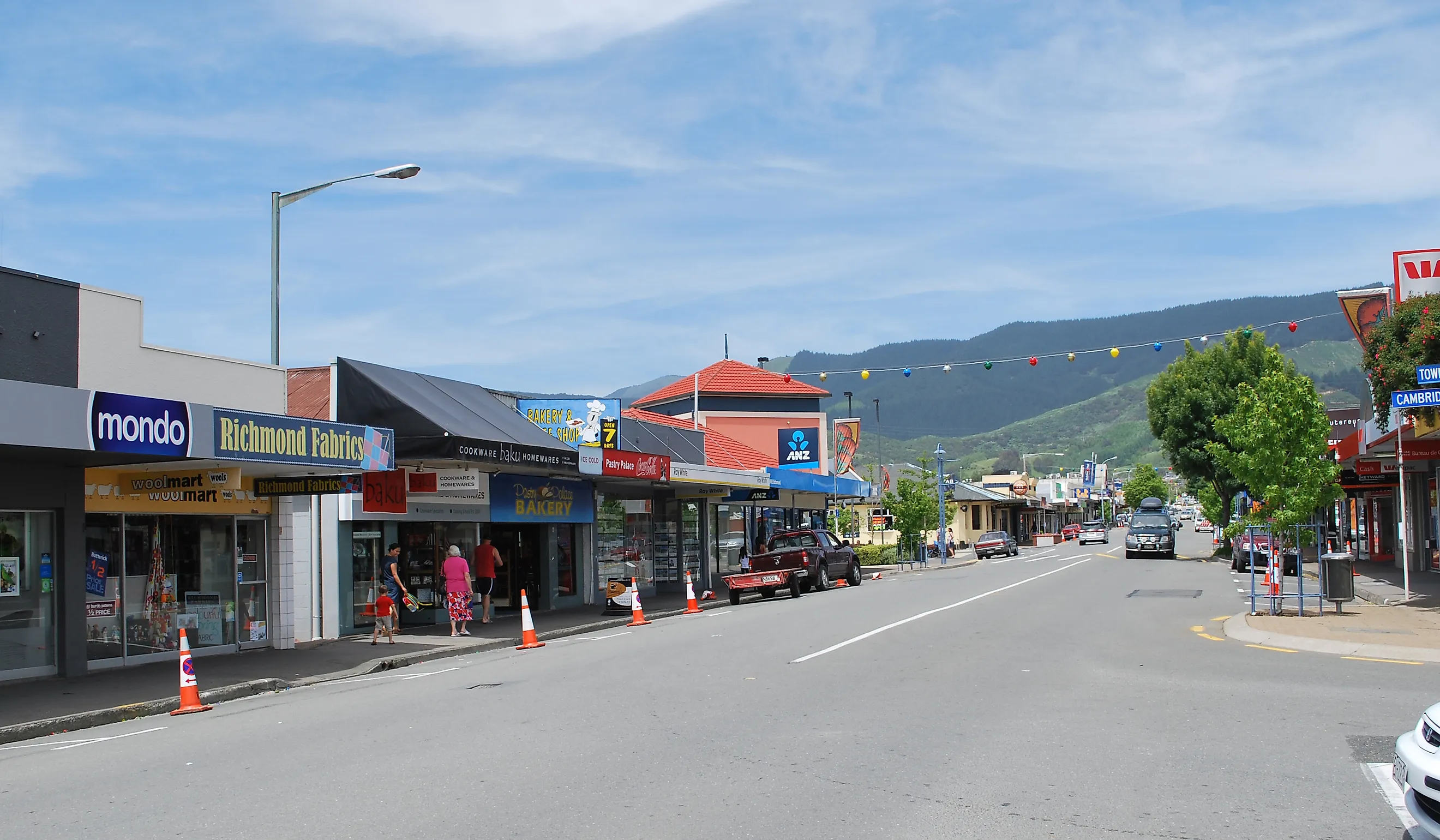
Richmond serves as the Tasman District Council seat and sits just southwest of Nelson at the top of the South Island. The town runs about 19,000 residents, with roughly a quarter of them seniors. Retirees often go for Richmond's mix of small-town calm and easy access to a larger urban hub, since it functions as part of the wider Nelson metropolitan area. Richmond West, a neighbourhood that skews older, had a median age of 56.4 years as of the 2018 census. The NZ Town Directory gives the town a safety score of 8.4 out of 10. Local landmarks like Gardens of the World, Foster Reserve, and the bayside views around Waimea Inlet stay within easy reach.
The greenery and steady weather make morning and evening walks an easy habit for residents. Local elder care options like Stillwater Lifecare and Village run welcoming grounds and good amenities. Medical coverage is solid, with Lower Queen Street Health, several other clinics, and additional medical institutes around the town centre for general and urgent care. Nelson Hospital, in the namesake city up the road, handles advanced care when needed.
Pauanui

Pauanui rests beside the Tairua River on the eastern Coromandel Peninsula, with a layout that makes the settlement feel like an inland island. As one of the older holiday spots in this Polynesian country, Pauanui draws a largely older crowd. Nearly half of residents come in above the median age of 62, around 60 percent higher than the national median. Both the township and the wider Thames-Coromandel District rank among the top picks for retirees. Pauanui's roots go back to the 1960s, when it became one of the first New Zealand townships designed entirely with families in mind, including consciously laid red roads meant to alert drivers and prioritize foot traffic. That setup still pays off for older residents, since mobility runs easier here than in most conventional suburbs.
The eastern beaches face the outer Coromandel and the Pacific. The west and north sides hold riverside reserves, family-friendly zones, and cycling paths. The Mount Pauanui climb starts on the southern side, following the Tangiteroria Stream toward its namesake waterfall and the wider Tairua Forest. The Lakes Resort Golf and Country Club at the southwestern corner is part of many longtime residents' weekly routines. The township also has an airstrip, the Pauanui Sports and Recreation Club, and the Pauanui Pines Retirement Resort. While the permanent population stays just over 1,100, summer can boost that headcount more than tenfold.
Collingwood

Collingwood sits along Golden Bay (also known by its Māori name Mohua), where a gentle sea breeze moves through town all year. Once a hub for coal, asbestos, gold, and mineral pursuits, the Tasman District town has eased into dairy farming as the average age has crept upward. About 80 percent of residents are 30 or older, and one-third are over 60. The Real Estate Institute of New Zealand recorded a median sale price of NZD 587,000, reflecting moderate demand within a small population. St Cuthbert's Church, built in 1873, still acts as a regular gathering spot.
On the coast, Farewell Spit stretches more than 30 kilometres of golden sand as the longest natural sandspit in the country. The Aorere and Tākaka rivers carry echoes of Collingwood's mining-era past. The Heaphy Track in Kahurangi National Park is accessible right from the town and counts as one of New Zealand's Great Walks.
Pukekohe

Part of the Franklin ward, Pukekohe sits in a fertile valley between the Bombay Hills and the remnants of ancient volcanoes from the South Auckland Volcanic Field. Eruptions between 500,000 and 1.5 million years ago enriched the soil and sculpted the landscape. The Tāmaki Māori and various Waiohua tribes cultivated life across the region, with habitation dating back to the 13th and 14th centuries. The Bombay Hills take their name from the ship Bombay, which brought European settlers in the 1860s. A diverse township, Pukekohe holds strong representation from Māori, Pasifika, and Asian communities (the latest census records the largest non-European population share of any Franklin town).
There are plenty of retirement options in Pukekohe, including Chatswood Village, Possum Bourne Retirement Village, and Lakeside Retirement Lodge, the last looking out over Whangapouri Creek. Though motorsports and mountain biking dominate Pukekohe's public identity, quieter facilities tend to suit older residents better. The Auckland Metropolitan Clay Target Club covers shooting sports and social gatherings. Franklin Pool and Leisure Centre handles swimming, aquarobics, and gentle health-based routines. Median home prices have run around NZD 830,000 over the past year, well below the wider Auckland standard. For everything else, Auckland sits about 63 kilometres north.
New Zealand Retirement Read
New Zealand welcomes retirees as residents who quickly find their stride. While the country's ridges and volcanic plateaus famously stood in for Middle-earth in The Lord of the Rings, the slower scale of these small towns is the actual draw for anyone planning a long stay. Kerikeri and Pauanui hold North Island warmth and water access. Blenheim, Tākaka, Richmond, and Collingwood anchor the top of the South Island around wine country, Golden Bay, and the Tasman District. Greytown delivers Wairarapa village heritage 80 kilometres from Wellington. Taupō wraps the largest caldera lake in the country. Alexandra holds Central Otago's stone fruit and dry climate. Each of these eleven places clears the retirement bar for 2026 in a different working way.