6 Cutest Small Towns on the Pacific Coast to Visit
John Jacob Astor's Pacific Fur Company built the original Fort Astoria at the mouth of the Columbia River in 1811, the first US settlement west of the Rockies. Spanish padre Junípero Serra founded the Carmel Mission on the Monterey Peninsula in 1771, the second of 21 California missions. The Pacific Coast strings these and other working towns along the 1,500-mile shoreline of the western United States. The six towns ahead each carry a specific historical anchor and a working downtown that holds its own beyond the views.
Carmel-by-the-Sea, California

Carmel-by-the-Sea covers exactly one square mile on the Monterey Peninsula with about 3,200 residents. The town runs on a unique municipal code: no street addresses on residential homes (mail goes to a downtown PO box), no streetlights, no parking meters, and no neon signage. The 1922 high-heel ordinance technically requires a permit to wear heels over two inches in public (rarely enforced but legally still on the books). Carmel Beach, the white-sand crescent at the foot of Ocean Avenue, sits a mile south of Pebble Beach Golf Links. Clint Eastwood served as Carmel's mayor from 1986 to 1988.
The Carmel Mission Basilica (Mission San Carlos Borroméo de Carmelo), founded by Junípero Serra in 1771, holds Serra's grave and runs a small basilica museum. The mission is the most architecturally restored of California's 21 missions. The annual Carmel Bach Festival each July fills the historic Mission and other venues with classical music. The Carmel International Film Festival each October draws filmmakers from across the country.
Port Townsend, Washington

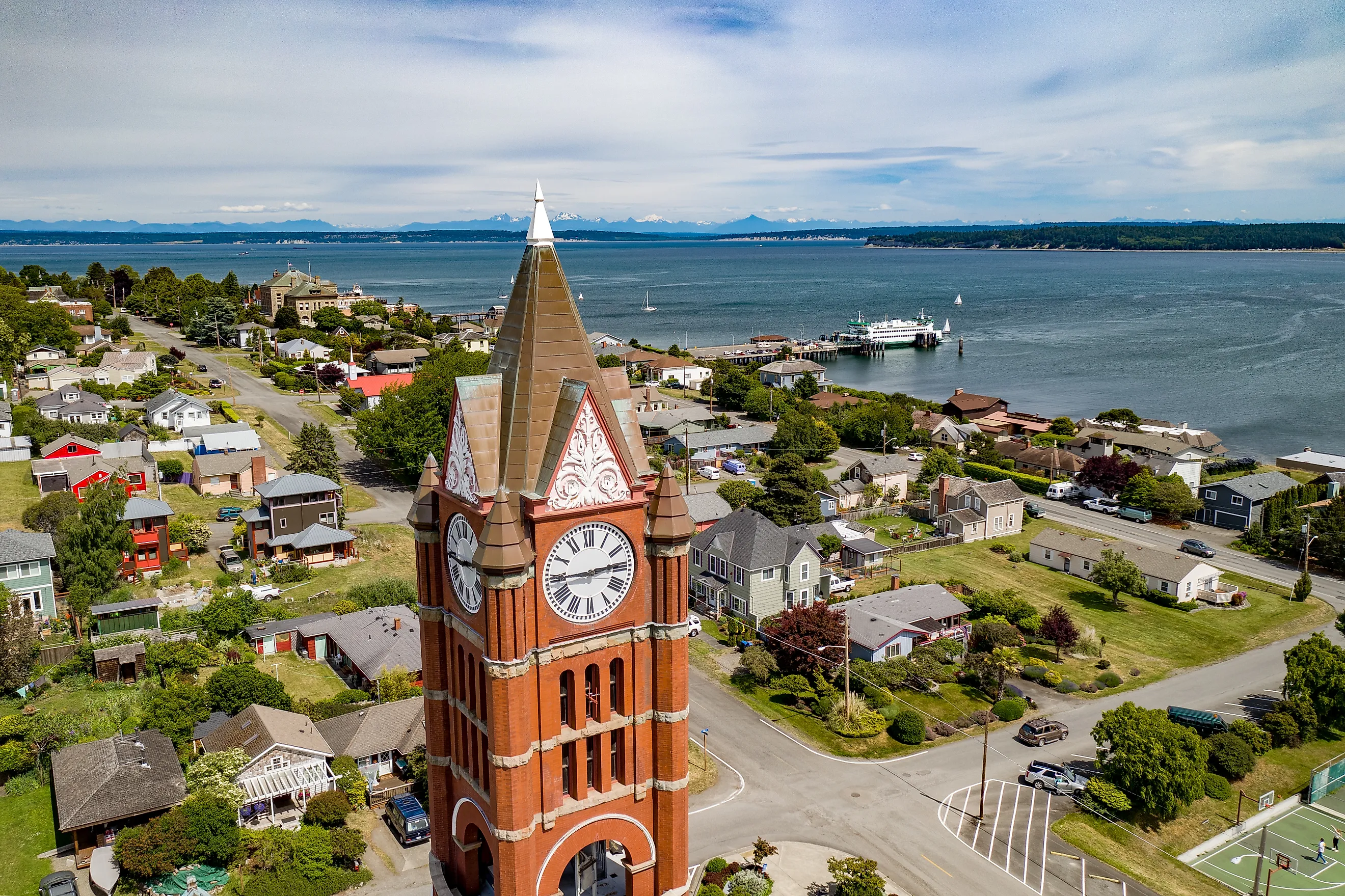
Port Townsend sits at the northeastern tip of the Olympic Peninsula in Washington, about 90 minutes northwest of Seattle by car and ferry. The town runs about 9,800 residents and holds the strongest preserved Victorian-era architecture on the West Coast outside of San Francisco. The Port Townsend National Historic Landmark District covers the downtown commercial zone and the Uptown residential area, with the town's economy frozen mid-boom in 1893 when the planned Union Pacific railroad bypassed it for Seattle.
The Northwest Maritime Center runs scenic boat tours, kayaking trips, and the country's largest wooden-boat building school. The Port Townsend Wooden Boat Festival each September is the largest event of its kind in North America, with more than 300 wooden boats on display. Fort Worden State Park, just outside town, holds the abandoned 1898 Coast Artillery fortifications and panoramic views across the Strait of Juan de Fuca toward the Cascade Range and Mount Baker.
Astoria, Oregon

Astoria sits where the Columbia River meets the Pacific Ocean in northwest Oregon, founded in 1811 as Fort Astoria by John Jacob Astor's Pacific Fur Company. It is the oldest American settlement west of the Rockies. The Astoria Downtown Historic District preserves the Victorian commercial buildings that came after the fur-trade era, with the town's salmon-cannery boom running 1873-1947.
The Columbia River Maritime Museum holds the country's most thorough collection on the Columbia River Bar (the river's mouth where the river meets ocean swells), nicknamed the "Graveyard of the Pacific" for the more than 2,000 shipwrecks documented there. The Astoria Column on Coxcomb Hill carries a hand-painted spiral frieze depicting Oregon history and climbs 164 spiral steps to panoramic views. The Flavel House Museum preserves the 1885 Queen Anne mansion of bar pilot Captain George Flavel. The annual Great Columbia Crossing each October sends 10K runners across the 4.1-mile Astoria-Megler Bridge, North America's longest continuous truss bridge.
Ojai, California

Ojai sits in the Ventura County hills between Los Angeles and Santa Barbara, in a 10-mile valley enclosed by the Topatopa Mountains. The town runs about 7,500 residents and carries a serious arts and wellness identity that has drawn writers, musicians, and yoga teachers since the early 20th century. Ojai's "Pink Moment" (when the Topatopa range turns rose-coloured at sunset) is the local visual signature.
The Ojai Art Center, founded 1939, is the oldest continuously operating non-profit arts centre in California, with year-round exhibitions, plays, and music performances. The Ojai Music Festival each June brings a lineup of classical, contemporary, and experimental musicians to Libbey Bowl, the outdoor concert venue in the town's Libbey Park. The Ojai Valley Inn & Spa, the 220-acre resort that has operated since 1923, anchors the high-end wellness scene with treatments, golf, and a long-running reputation for retreats.
Cannon Beach, Oregon

Cannon Beach sits 75 miles northwest of Portland with about 1,600 year-round residents. Haystack Rock, the 235-foot sea stack rising directly from the beach, is one of the most recognizable rock formations on the Oregon coast. The rock is protected as both a Marine Garden and part of the Oregon Islands National Wildlife Refuge, with tide pools, sea anemones, and a tufted puffin nesting colony that returns each April through August.
Ecola State Park just north of town holds the panoramic beach overlook that opens the 1985 film The Goonies and dozens of other films set on the Oregon coast. The Stormy Weather Arts Festival fills three days each November with regional art and music. The annual Sandcastle Contest each June, running since 1964, draws roughly 10,000 spectators and amateur sand sculptors for one of the longest-running events on the Oregon coast.
Mendocino, California

Mendocino sits on the Mendocino Headlands above the Pacific Ocean with about 850 residents and Victorian-era commercial buildings preserved as a California Historical Landmark since 1971. The town was founded in 1850 by New England loggers and shipbuilders, which explains why directors have repeatedly chosen the village as a stand-in for coastal Maine. Every episode of the CBS series Murder, She Wrote (1984-1996) filmed exterior shots in Mendocino, casting it as fictional Cabot Cove, Maine. East of Eden (1955) and The Russians Are Coming, the Russians Are Coming (1966) also used the town as a New England substitute.
Mendocino Headlands State Park wraps the town on three sides with trails to secluded beaches, tide pools, and whale-watching points (grey whales migrate past in spring and fall). The Mendocino Art Center has been running workshops, exhibitions, and artist residencies since the 1950s. The Mendocino Music Festival each July brings classical, jazz, opera, and bluegrass performances to the headlands.
The Pacific Read
The six towns above pair coastline with serious history and a working downtown. Carmel runs Mission-era California and the country's strongest no-streetlights ordinance. Port Townsend keeps Pacific Northwest Victorian architecture intact because the railroad bypassed it in 1893. Astoria opened the West Coast to the American fur trade in 1811. Ojai, Cannon Beach, and Mendocino each layer their coastlines with festivals, galleries, and longstanding arts communities. The drive between any two of them adds enough coastline to anchor a full road trip.