4 Rattlesnake Hotspots In Mississippi
Home to 55 different species, Mississippi is a hotbed of snake activity. Out of the state’s six venomous snake, three of them are rattlesnakes, found throughout the state from the Gulf Coast to the hilly northeast corner. Mississippi is home to both the largest species of rattlesnake, the eastern diamondback, as well as the smallest, the pygmy rattlesnake. Let's take a closer look and see where Mississippi’s rattlesnake hotspots are.
Gulf Islands National Seashore

Gulf Islands National Seashore is a chain of barrier islands along the coast of the Gulf of Mexico. It is the largest national seashore in the United States, comprising of 160 miles spread across Mississippi and Florida. The Mississippi side of the seashore has a visitor center displaying information, exhibits, a bookstore, maps, and films; and, allows for many outdoor-based recreational activities including fishing, swimming, hiking, biking, picnicking, camping, and observing wildlife such as the eastern diamondback rattlesnake (Crotalus adamanteus).

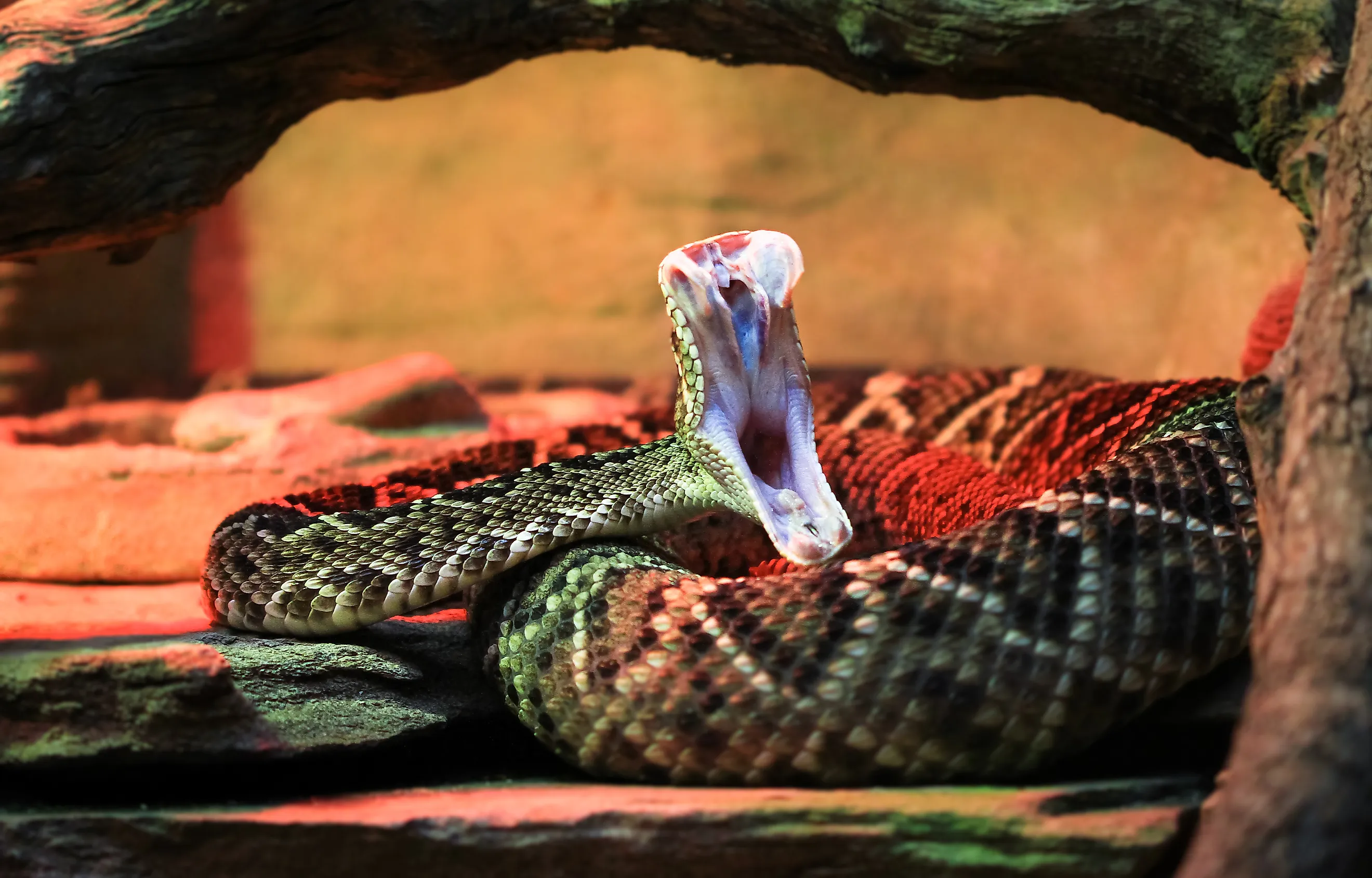
Eastern diamondback rattlesnakes are longest and heaviest species of rattlesnake in North America, with individuals having been recorded attaining close to eight feet in length. They are native to the Gulf Islands National Seashore and are sometimes seen making their way across the road. Getting the opportunity to observe an adult eastern diamondback rattlesnake in the wild is bound to be a memorable experience for everyone, regardless of whether they love or fear snakes.
Natchez Trace Parkway

The Natchez Trace Parkway is a 444 mile long recreational road and scenic route which passes through Tennessee, Alabama, and Mississippi and spans back over 10,000 years of history. The route is dotted with historic towns and markers, natural landmarks, and the opportunity for outdoor recreation. While the chances of seeing a snake while hiking or picnicking on the parkway are rare, caution should be exercised, as venomous snakes live along the Parkway, such as the timber rattlesnake (Crotalus horridus).

Although sometimes referred to as “canebrake rattlesnakes” they are almost exclusively referred to as timber tattlesnakes in Mississippi. They occur throughout forests and river bottoms in the state, but are absent from the immediate Gulf Coast. Unlike other rattlesnakes, the timber rattlesnake remains calm in the presence of humans and rather than shake its rattle, chooses to remain quiet in the hope it goes unnoticed.
Pearl River

The Pearl River rises in east-central Mississippi, flowing south for most of its course in Mississippi, passing through the city of Jackson before it enters Louisiana. The river flows for close to 500 miles from its headwaters on native Choctaw Lands and empties into the Gulf of Mexico. The river provides habitat for over 300 different species of fish, birds, and other wildlife, including rattlesnakes.

The eastern diamondback rattlesnake is present in the Pearl River watershed; however, it is now considered a species of concern. As such a large rattlesnake, it requires large territory and ample sandhill habitats. Eastern diamondbacks have been known to inhabit gopher tortoise and alligator burrows. Due to habitat loss, eastern diamondback rattlesnakes are declining within their range in Mississippi, so a sighting is increasingly rare.
Enid Lake

Enid Lake is located on the Yocona River in north-central Mississippi. The lake comprises of 28,000 acres and has ample opportunities for boating, fishing, swimming, hiking, horseback riding, picnicking. The North Mississippi Fish Hatchery Visitor Education Center is also on-site and features a 10,000 gallon aquarium, interactive exhibits, and artifacts.

The pygmy rattlesnake (Sistrurus miliarius) is known to inhabit areas around Enid Lake. This rattlesnake has sporadic distribution throughout the state, with the highest density found on the Gulf Coast and in northeastern Mississippi. They frequent flatwoods, pine and hardwood forests, and swamps. Bites on humans are quite common, though due to their small size, the pygmy rattlesnake has a lower venom yield than larger venomous snakes, and therefore rarely deal a fatal bite.
Mississippi's Rattlesnake Hotspots
While rattlesnakes are found throughout most of Mississippi, they are generally shy and non-confrontational animals, choosing to hide under rock piles or sound the rattle at the end of their tail in an attempt to ward off potential threats. Furthermore, rattlesnakes face habitat loss and experience dwindling numbers. Although they may seem threatening, they are best left alone to go about their business as bites are generally uncommon unless they are captured or handled.