8 Must-See Historic Forts In Alabama
Alabama is home to several historic forts that offer a direct look at the coastal defenses, frontier outposts, and military sites that shaped the state’s early history. Built during the French colonial era and the early American frontier period, these forts served a wide range of purposes. Some protected growing Gulf Coast towns and ports, while others guarded important roads and trade routes used by settlers and soldiers. Many also played roles in major moments in American history, from Fort Morgan’s part in the Civil War’s Battle of Mobile Bay to later updates made at Fort Gaines during the Spanish-American War. Today, these places live on as parks and historic sites.
Fort Morgan

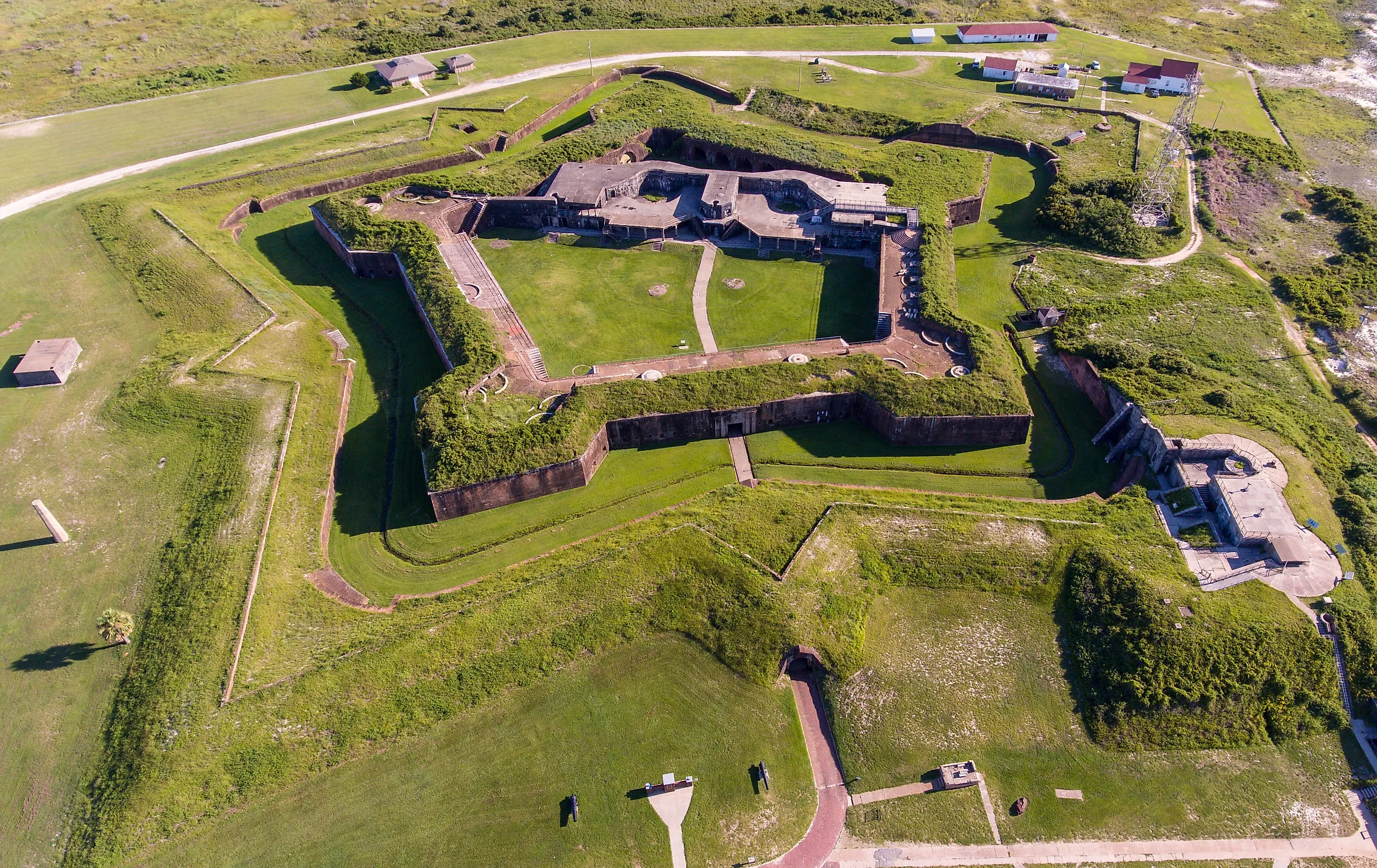
One of Alabama's must-see historic forts, Fort Morgan stands at Mobile Point, west of Gulf Shores, at the entrance to Mobile Bay, and has stood watch for nearly two centuries. Construction began in 1819 and was officially completed in 1834. The massive brick fort played a key role in the Civil War's Battle of Mobile Bay in 1864, famously linked to Union Admiral David Farragut's bold command, "Damn the torpedoes!" Over the years, Fort Morgan also served during the Spanish‑American War and both World Wars before being preserved as the Fort Morgan Historic Site, recognized as a National Historic Landmark. Today, visitors can explore the fort and its concrete artillery batteries, along with the on-site museum, which interprets the history of Mobile Point through displays and exhibits. Beyond its military significance, the fort is a haven for nature lovers, serving as a stopover for Neotropical migratory birds each spring and fall. The American Bird Conservancy has even recognized it as a Globally Important Bird Area.
Fort Gaines

Just across from Fort Morgan, Fort Gaines sits at the eastern tip of Dauphin Island. Built in the early 19th century as part of Alabama's coastal defense system, it played a key role during the Civil War's Battle of Mobile Bay, working alongside Fort Morgan to help block Union forces from entering the harbor. In 1976, it was listed on the National Register of Historic Places. The Fort Gaines Historic Site contains original cannons and pre-Civil War brick buildings that still stand in the interior courtyard. Tunnel systems lead to fortified bastions, while an operational blacksmith shop, historic kitchens, and a museum detail the fort's history, including the region's French colonial presence and later updates made during the Spanish-American War. The site also offers guided group tours led by costumed interpreters.
Fort Toulouse-Fort Jackson Park

Fort Toulouse and Fort Jackson are two historic forts that share the same site at the fork of the Coosa and Tallapoosa rivers near Wetumpka. Built nearly a century apart, each played a pivotal role in Alabama's early history. Fort Toulouse was established by the French in 1717 as a trading and diplomatic post, while Fort Jackson later became an American military outpost during the War of 1812 and the Creek War, where the Treaty of Fort Jackson was signed in 1814. Today, that shared history is preserved at Fort Toulouse-Fort Jackson Park, which features recreated Creek Indian homes, an ancient Indian mound, and the scenic one-mile Bartram Nature Trail. The park also includes a convenient campground and hosts a variety of events throughout the year, including Alabama Frontier Days, one of the state's largest living history celebrations.
Fort Condé

Fort Condé was originally built in 1723 by French colonists as a strategic outpost for the French colony in Mobile. Over the years, it passed between colonial powers and was known by several names, including Fort Charlotte under British rule, and Fuerte Carlota under the Spanish. While the original fort was demolished long ago, remnants were uncovered in 1966 during the construction of the George Wallace Tunnel. A replica, Colonial Fort Condé, built at a four-fifths scale, opened in 1976 as part of the nation’s bicentennial celebration, reconstructing approximately one-third of the original fort. Today, it interprets Mobile’s colonial past through exhibits and artifacts recovered from the original site. Throughout the year, special reenactment events and living history programs also take place there.
Fort Blakeley

Located near Spanish Fort along the Tensaw River in the Mobile‑Tensaw Delta, Fort Blakeley was the site of one of the last major battles of the Civil War. Though the fort no longer stands as a single structure, its earthworks, breastworks, and monuments mark the Union siege and the Confederate defenses that fell on April 9, 1865. The battlefield is preserved at Historic Blakeley State Park, where trails, exhibits, and preserved earthworks trace the site’s Civil War history. The site includes hiking, biking, and horseback riding trails that wind through fortifications and scenic natural areas, while campgrounds and cabins provide overnight stays. The park also operates the Delta Explorer boat, which offers guided cruises through the delta and surrounding waterways, home to a wide variety of wildlife. Throughout the year, the park hosts educational programs and historical events that bring the stories of Fort Blakeley and the surrounding area to life.
Fort Mitchell

Fort Mitchell, near the Chattahoochee River, was established in 1813 along a path that later became the Federal Road. It served as a military and trading post in Creek territory, helping protect travelers and settlers moving from Georgia to the Mississippi Territory. It also had a tavern and later became an Indian agency. Over the years, it served as a base for troops; a gathering point during the Creek removal, which became part of the Trail of Tears; and even the site of disputes and duels between people from Alabama and Georgia. With soldiers at the fort facing harsh conditions and outbreaks of disease, federal troops began to leave, and the fort was abandoned by 1840. In the 1970s, archaeologists uncovered the ruins, including the fort, barracks, gravesites, and other buildings. In 1990, it was designated a National Historic Landmark. Today, the Fort Mitchell Historic Site includes reconstructed buildings, a museum, and the Chattahoochee Indian Heritage Center, while the Fort Mitchell National Cemetery sits nearby.
Fort Harker

Just outside Stevenson, Fort Harker was built by Union forces during the Civil War in the summer of 1862 to protect an important railroad junction. Soldiers and freed slaves of the Army of the Cumberland helped build the fort on a hill overlooking Crow Creek, guarding the rail lines, warehouses, and supply depots that kept Union troops and supplies moving through the region. The fort had high walls, a dry moat, cannon platforms, a bomb-proof powder magazine, and a wooden blockhouse at its center. No major battles took place there, but skirmishes and sniper fire were common as Union and Confederate forces fought for control of the area. Today, the site of Fort Harker is a city park that hosts annual reenactments and living history events, bringing its Civil War past to life.
Walking Through Alabama’s Fort Sites
Sometimes the best way to understand history is to step outside the history books and stand where it actually happened, and Alabama’s historic forts make that possible. At Fort Morgan, overlooking the entrance to Mobile Bay, visitors can walk along the massive brick walls that once roared to life during the Civil War’s Battle of Mobile Bay. Across the water on Dauphin Island, Fort Gaines offers tunnels, cannons, and sweeping bay views that bring that same historic battle into focus. Farther inland near Wetumpka, Fort Toulouse-Fort Jackson Park tells an even older story, where French soldiers, Creek leaders, and later American forces once crossed paths. Together, these sites show how Alabama’s military and colonial history unfolded across its coasts, rivers, and frontier settlements.