8 Australia Towns Where Time Stands Still
Across Australia, some towns still wear the marks of the industries and immigrant communities that built them. In Beechworth and Maldon, the 1850s gold rush survives in mine relics and remarkably intact main streets. In Hahndorf, founded in 1839, German heritage still shapes the shopfronts and cultural landmarks along the main road. Strahan remains tied to Macquarie Harbour, the same remote western gateway that once served Tasmania’s mining coast, while York, established in 1831, still looks every bit like the first inland town in Western Australia. Together, these places show how settlement history can remain visible in streetscapes and public buildings that still define daily life.
Beechworth, Victoria

Beechworth is situated in the foothills of Victoria’s Victorian Alps and was first settled during the gold rush of the 1850s. Many of the stately stone structures built during this period still dominate the town’s historical center. For instance, the town’s most famous landmark is the Beechworth Courthouse, where the infamous Australian bushranger Ned Kelly was once tried in 1880. Nearby is the Beechworth Gaol, where visitors can take a tour of the prison where Kelly and his fellow inmates were once confined. Strolling through the town means strolling through Ford Street, which is Beechworth’s main street and where visitors can browse through bakeries, bookstores, and antique shops housed in gold rush-era buildings.
Daylesford, Victoria

Daylesford was established during the mid-19th-century gold rush but is most famous for its mineral water and spa culture. The town is surrounded by wooded hills and small lakes, and it has a peaceful, rural atmosphere. Just outside of town is Lake Daylesford, where walking paths follow the lake’s edge under willow trees and over stone bridges. Nearby is the Wombat Hill Botanic Gardens, situated on an extinct volcano with views over the town and featuring heritage plantings from the late 1800s. In town, Vincent Street is lined with Victorian-era storefronts now housing cafes and galleries. The mineral water that originally drew visitors to town is still piped in and flows through fountains around town, giving visitors the sense that life in Daylesford is unchanged over the years.
Hahndorf, South Australia

Hahndorf, located in South Australia, was established in 1839 by Prussian immigrants of Lutheran descent and is Australia’s oldest surviving German settlement. We see remnants of this in Hahndorf's main street, which is adorned with traditional German architecture and shops. Along Mount Barker Road in Hahndorf are traditional German half-timbered structures housing bakeries and shops. Hahndorf Academy is a historic school building from 1857, now used as an art gallery and cultural center. Just outside of town is The Cedars, the home and studio of Australian artist Hans Heysen, known for his landscapes of rural Australia. Hahndorf is like entering into another world and another century through its traditional German architecture and rural Australian atmosphere.
Strahan, Tasmania

Strahan is situated at the edge of Macquarie Harbour in the remote west coast of Tasmania. In the late 19th century, it was the main port for nearby mining towns. Today, the peaceful waterfront area is still centered on Macquarie Harbour, with timber piers reaching into the water. Many trips depart from this harbor to explore the Gordon River, which flows through rainforest in the Tasmanian Wilderness World Heritage Area. Another historical site in this area is Sarah Island, a penal settlement that was originally a prison colony for recidivists from other colonies. Weathered mooring posts scarred by 19th-century chains, rusted relics of a bustling port, and old warehouses lining the shore serve as tangible reminders that Strahan was once a frontier settlement in a distant past.
Maldon, Victoria

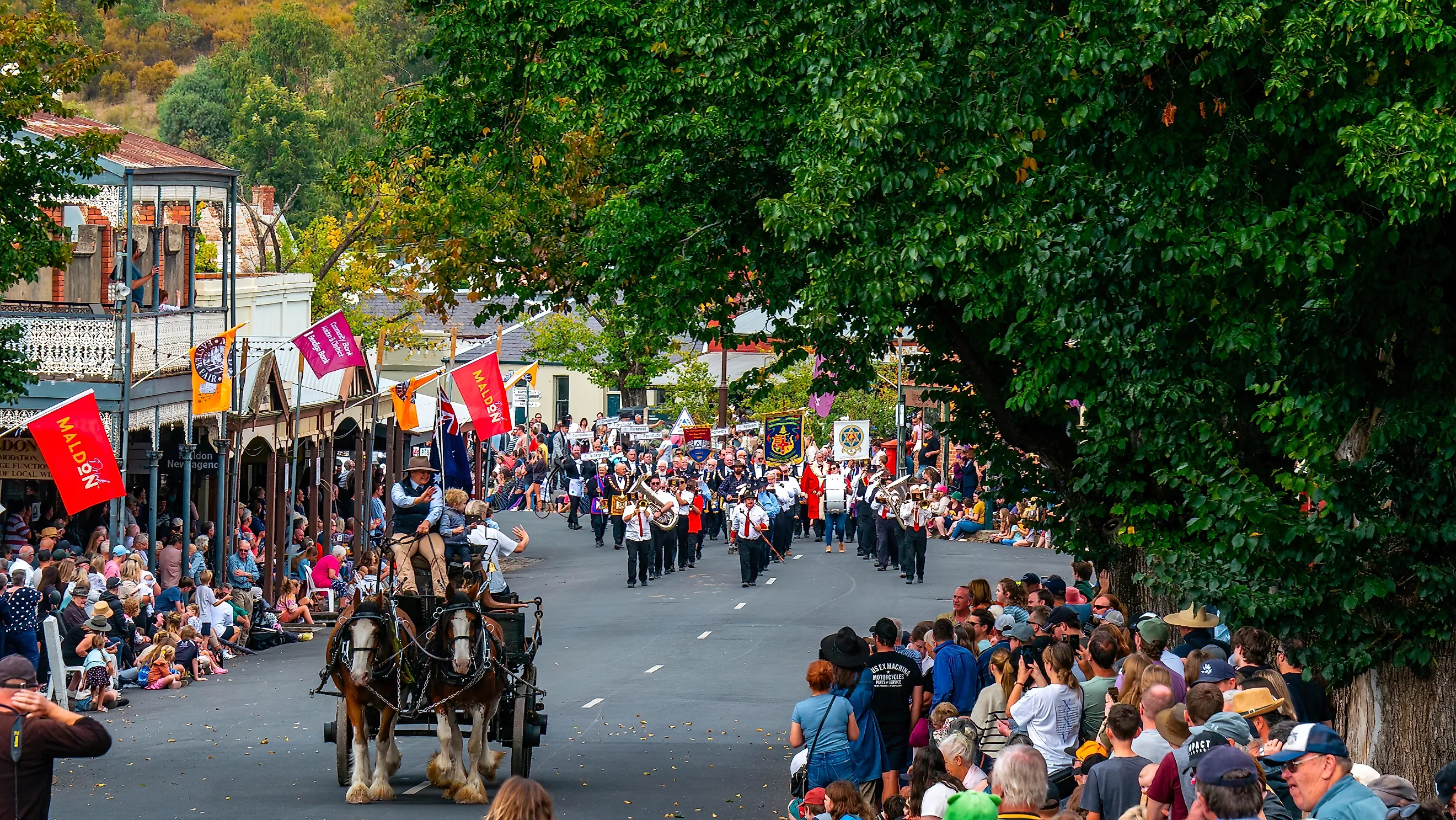
Maldon is a Victorian-era gold rush settlement that now carries a National Trust classification as one of Australia’s most intact historic towns. The main area of this historic town is centered on Main Street, where shops and hotels still display their original Victorian-era iron roofs and face the main road that horse-drawn carriages would have traveled in the 1800s. Overlooking this historic town is the Maldon Beehive Chimney, a large brick structure that originally served a nearby gold mine. Visitors to this area can also ride a heritage steam train on a 19th-century railway connecting Maldon and Castlemaine.
Bellingen, New South Wales

Bellingen is a small town located on the Bellinger River in north coast New South Wales, and was originally a 19th-century timber and dairy farm settlement. The old town is along Hyde Street, which features weatherboard buildings and verandas housing cafes and bookstores. Walking paths along the riverbank pass under the shade of fig trees and lead to Lavenders Bridge Park, a quiet park with views over the river. A short drive from Bellingen is the Dorrigo National Park, offering rainforest walks and waterfalls, and giving insight into the landscape surrounding the valley.
York, Western Australia

York is a small town located in the Avon Valley, just east of Perth. It was established in 1831 and is the first settlement established in the interior of Western Australia. The town was originally established as a base for transporting products from farms throughout the region. Many old buildings are located along Avon Terrace, including the York Courthouse Complex, built in the 1890s. People often walk across the Avon River Suspension Bridge, a pedestrian bridge connecting the town with parkland on the other side. Nearby is the York Motor Museum, housed in a historical building and featuring early Australian motor vehicles. The streets are wide and old, recalling the days when they accommodated carts and livestock on their way to market. Today, those same streets are filled with weekend markets and local festivals, where stallholders set up beneath historic facades, and locals gather much as they have for generations. In this way, York’s streets remain the vibrant center of community life, their purpose continually renewed.
Montville, Queensland

Montville, a town in Queensland, Australia, sits high on the Blackall Range, offering views over the Sunshine Coast hinterland. The town was established in the late 1800s, when timber getters and farmers began settling in the mountain ranges. Main Street Montville is along the ridge line, offering wooden buildings housing galleries like the Montville Art Gallery, chocolate shops, and cafes with views over the valleys below. A short drive from the town, rainforest walks through Kondalilla National Park offer views of the stunning Kondalilla Falls. With its maintained main street and forested slopes beyond town, Montville still carries the atmosphere of the small mountain settlement that first formed here.
The 8 Australian towns discussed in this piece all have populations of less than 50,000 and are characterized by historical architecture and landscapes that have not changed significantly over the years. Strolling through these towns means strolling past sandstone courthouses, iron-roofed pubs, and quiet harbors that look no different from how they looked when first settled. Collectively, these towns illustrate how Australia’s past history of settlement is still evident in places that appear remarkably unaltered by time.