4 Most Alligator-Filled Swamps In Alabama
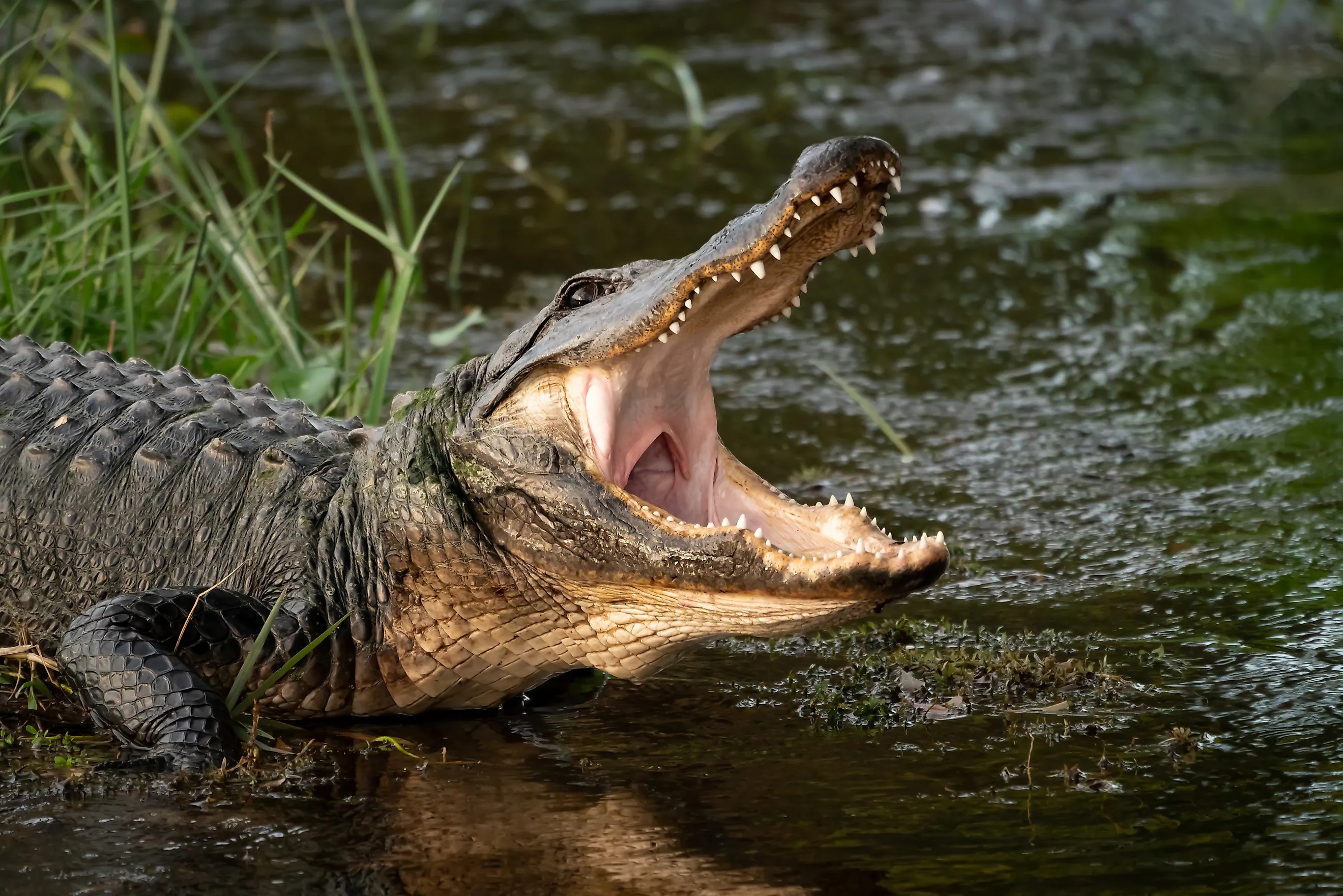
Alligator sightings in Alabama are common enough now that they rarely make headlines, making it all the more important for people to know where they might encounter them. The heaviest American alligator populations concentrate in the state’s southern swamps and in similar environments along the Gulf Coast, with additional groups established around the Tennessee River in the north. Wildlife officials confirm steady numbers in and around places such as Grand Bay National Wildlife Refuge and the Mobile-Tensaw River Delta, where swamps, river channels, and backwater creeks overlap. If you cast a fishing line at dusk, ease a kayak into a shaded slough, or follow a muddy bank trail in the following swamp regions, you are sharing space with a predator that can exceed 13 feet in length.
The Mobile-Tensaw River Delta

In southern Alabama, immediately north of Mobile Bay, the Mobile-Tensaw River Delta spreads across roughly 260,000 acres of swamps, marshes, bayous, and bottomland hardwood forest. Formed where the Alabama and Tombigbee rivers meet before emptying into the bay, it is the second-largest river delta in the contiguous United States and the largest swamp and wetland complex in Alabama. Cypress-tupelo swamps and tidal freshwater forested wetlands dominate the landscape, creating the prime habitat for alligators.
Alligators have occupied this delta for centuries, though unregulated hunting and habitat loss reduced numbers sharply by the early 1900s. A federal endangered listing in 1967, followed by a recovery and reclassification in 1987 to “threatened due to similarity of appearance,” allowed populations to rebound under state management. Today, the Delta is widely regarded as Alabama’s most alligator-dense swamp and river system, accounting for an unspecified but substantial quantity of the state's estimated 70,000 alligators.
Since 2006, Alabama has regulated alligator hunting through designated Alligator Management Areas across the state; those seasons have recorded individual reptiles reaching well over 13 feet, including specimens topping a whopping 700 pounds. In these cypress-lined backwaters and river channels, alligators are not incidental sightings but a defining presence in one of the most expansive wetland ecosystems in the Southeast.
Grand Bay National Wildlife Refuge

Along Alabama’s Gulf Coast near the Mississippi state line, the Grand Bay area encompasses some of the region’s most extensive coastal swamp and wetland alligator habitats outside the Mobile‑Tensaw Delta. This zone includes the Grand Bay National Wildlife Refuge, a roughly 10,188‑acre protected area where wet pine savanna transitions into swamps, freshwater marshes, tidal wetlands, and backwater bayous fed by the Escatawpa River system. The refuge overlaps with part of Mississippi's Grand Bay National Estuarine Research Reserve, together protecting nearly 18,000 acres of low‑lying forested wetland and marsh that lies between the upland pine ridges and the brackish waters of Mississippi Sound. On the Alabama side, the Grand Bay National Wildlife Refuge sits beside the Grand Bay Savanna Forever Wild Complex as well as the Grand Bay Swamp.
Alligators in the region range from juveniles less than a meter long to males that can exceed 14 feet and approach 1,000 pounds. Swamp patches, threaded by slow water and dense woody vegetation, provide nesting material for cordgrass and sawgrass mounds, while adjacent bayous and shallow sloughs serve as both prey-ambush and foraging areas.
Gulf State Park In Baldwin County

Gulf State Park in southern Baldwin County extends behind the Gulf Shores beach community across more than 6,100 acres of freshwater marsh, coastal hardwood swamp, and the broad surface of Lake Shelby. In this network of shallow water and wetland forest, American alligators are a consistent presence, especially where slow water meets shaded banks and floating vegetation. Alligators use the maze of canals, marsh edges, and backwater streamlets around Lake Shelby.
Adult male alligators in Gulf State Park can reach lengths exceeding 12 feet, and observers have documented females with hatchlings in the same waterways. Alligator activity slows when air temperatures fall below about 70°F, but during warm months, it is frequent along the shallows and marsh fringes.
Because of the frequent sightings of these reptiles, safety protocols are enforced within park boundaries. Feeding or enticing alligators carries fines under Alabama Code 220‑2‑.95, and visitors are advised to keep their distance and be mindful when near the water's edge on hiking and bike trails that intersect with the park's swamps. The fishing canals off Lake Shelby, the edges of coastal hardwood swamp, and the complex backwaters visible from Alligator Marsh Trail are all locations where these reptiles are most likely to be encountered.
Eufaula National Wildlife Refuge
In far southeastern Alabama, along the Alabama-Georgia line, the swamps around Eufaula National Wildlife Refuge form one of the state’s most reliable places to spot alligators in the wild. Established in 1964 with support from the U.S. Army Corps of Engineers, the 11,184-acre refuge stretches along the Chattahoochee River and the upper reaches of Walter F. George Lake, better known locally as Lake Eufaula. Unlike Alabama’s coastal cypress swamps, the refuge’s swamp areas are filled with bottomland hardwoods, including oak, sweetgum, and other flood-tolerant species. During high water, these woods stand partially submerged, creating a protected habitat where alligators rest, forage, and nest along elevated banks.
The refuge encompasses 11,184 acres, and its wetland units and wooded floodplain support a stable alligator population within Alabama’s eastern range. Out on Lake Eufaula, broad water and creek mouths produce some of Alabama’s largest recorded alligators. The lake is one of five designated Alligator Management Areas in Alabama and operates under a regulated, lottery-based hunting system that began in 2006. By contrast, the refuge prioritizes habitat protection and wildlife viewing, offering one of the most consistent places in the region to see alligators.
From the freshwater cypress swamps of the Mobile-Tensaw Delta to the hardwood floodplains of Eufaula National Wildlife Refuge, Alabama’s swamps host dense populations of American alligators, with coastal wetlands like Grand Bay and inland marshes around Gulf State Park adding critical habitat. These forested wetlands, creeks, and backwaters are where alligators rest, hunt, and nest. Visitors should maintain safe distances, avoid feeding, and keep pets away from water. Plan your excursions carefully, and explore these swamps responsibly to witness Alabama’s apex reptiles in their natural home.