This Hawaii Downtown Is Made For Strolling
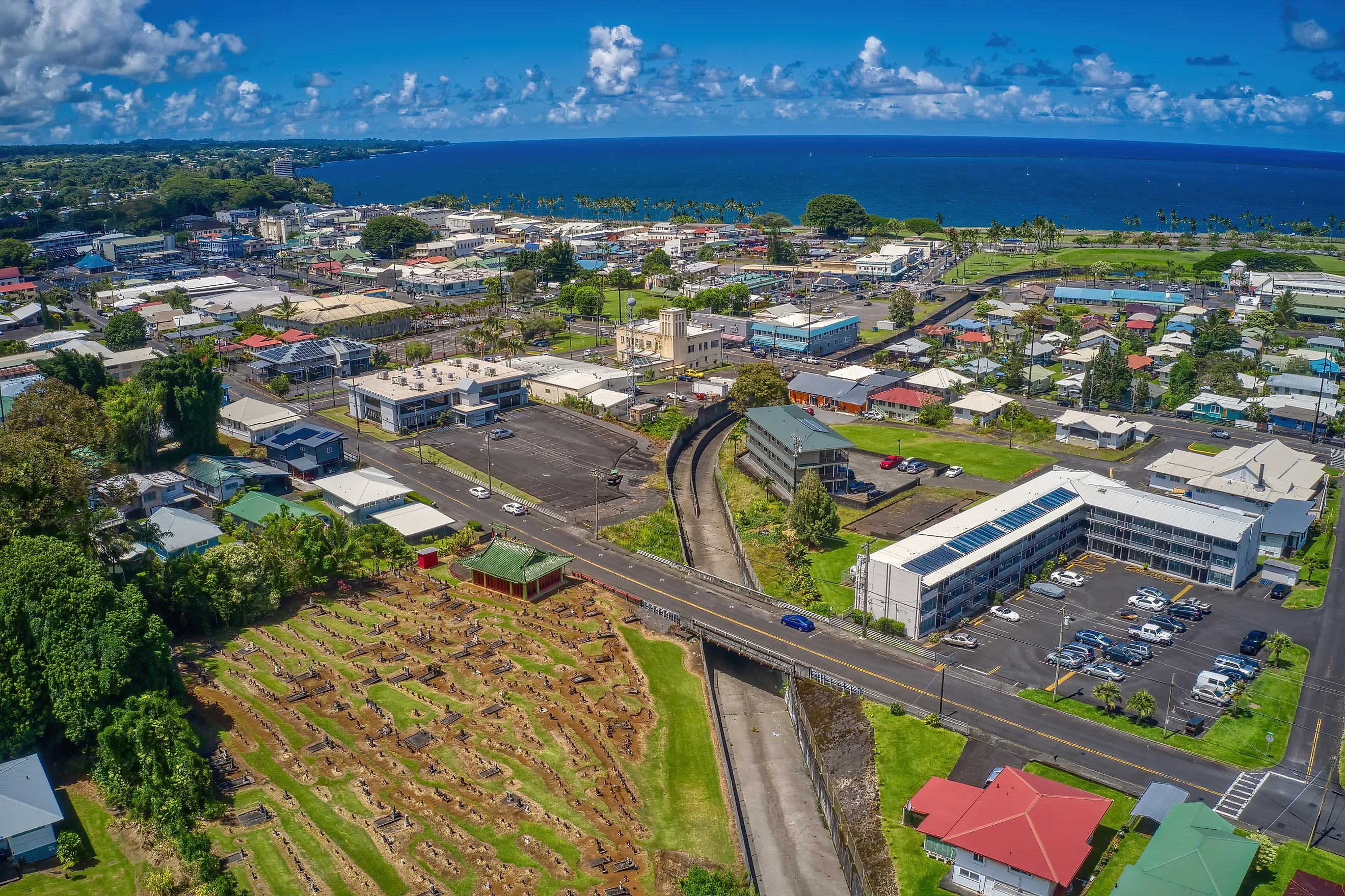
Downtown Hilo spans a few easy-to-walk streets lined with historic wooden structures, such as the Mission House. Many of Hilo’s buildings are listed on the National Register of Historic Places, and it also has more modern establishments like the Hidden Nene, an underground speakeasy serving Hawaiian spirits and food. While Hilo is often regarded as a gateway to Hawaiʻi Volcanoes National Park, it also offers quintessential Hawaiian scenery accessible from downtown, such as Hilo Bayfront Beach Park.
It is hard to believe that one downtown can have a blend of historic and modern attractions and ample green space, but you will need to walk the streets to find out for yourself. But make sure you are wearing your sandals, though, because downtown Hilo was built overlooking crescent-shaped Hilo Bay.
Kamehameha Avenue

Start your day in Hilo when you depart the bus from the terminal at Mo'oheau Park, which lets you off on Kamehameha Avenue, the heart of Hilo’s downtown.
From here, cross the road and quickly slip up Mamo Street to the Hilo Farmer’s Market, which is open seven days a week from 7 am to 3 pm. Here you will find locally roasted coffee, exotic tropical fruit like strawberry papaya, and sweet treats such as butter mochi. With over 200 vendors, you are sure to find a light snack to grab and take out with you as you head back to Kamehameha Avenue.

Head further along Kamehameha Avenue to the Pacific Tsunami Museum, which educates visitors through exhibits on interpreting tsunamis, the Pacific Tsunami Warning System, the history of tsunamis in the Pacific Basin, and public safety measures in the event of tsunamis. Hilo was hit by two tsunamis: once in 1946, and again in 1960. The Tsunamis are a key part of Hilo’s history as they forced the town to be rebuilt further inland, using parkland as a buffer.
Historic Landmarks

From the Pacific Tsunami Museum, take a left and make your way up Waianuenue Avenue until you reach the Naha Stone outside of the Hilo Public Library. The Naha Stone was brought to Hilo in the 12th century from the banks of the Wailua River on the island of Kaua‘i. The stone is considered sacred and was relocated to its current site in front of the library in 1952.
Continue up Waianuenue Avenue, turn left down Kapiolani Street and onto Haili Street, where the Lyman Museum and Mission House sit. The Lyman Museum is the only Hawaiian history museum on the Island of Hawai’i, illustrating the story of Hawaii’s people and its islands. Whereas the Lyman Mission House is the oldest wooden frame structure on the island and may be visited via guided tour only.
Dining and Drinking
At this point, you will have no doubt worked up an appetite, so go back down Haili Street towards the bay. Haili Street branches off into other streets with places to eat that suit whatever your agenda is. If you want something you can eat while you move, turn right onto Kinoole Street to L&L Hawaiian Barbecue, an island-themed fast food chain serving Hawaiian barbecue plates that are perfect for munching if you still have a lot of town to see.
Alternatively, if you have seen a lot and want to sit in, turn right onto Keawe Street from Haili Street, and if you can find it, secure a table at the Hidden Nene, an underground speakeasy that serves handcrafted specialty cocktails, beer, and wine, and small plates.
Relax on the Beach
Now that you have eaten, find your way back to Kamehameha Avenue and cross over onto Hawai’i Belt Road, where you will walk along the beach to Hilo Bayfront Beach Park. The park is easily accessible from the Farmer’s Market or the bus terminal.
The beach is long and composed of black sand and receives very gentle and small waves, making it a great place to wade in or soak your feet after a long day of walking around town. Its gentle waters also make it a suitable place for using watercraft such as kayaks or canoes.
Similar Hawaiian Towns

Much like Hilo, Honoka’a is often considered a gateway to nearby natural attractions, like the Waipiʻo Valley. Much like Hilo, it has historic buildings within its compact and walkable downtown area. The Honokaa People’s Theatre is reflective of the architectural style of buildings in rural Hawai’i during the 1920s and 1930s. Outside of Hilo, this is the largest theatre on the island.
Hanalei is a small town on the north shore of Kauai with a crescent-shaped bay of its own and historical structures. Hanalei Pier is at the mouth of the Hanalei River and was originally used for transporting rice and sugar. Today, it is a popular spot for fishing, picnicking, beach walks, and even wading into the water.
Stroll Hilo's Streets
Without a doubt, the best way to learn about Hawaiian culture, appreciate the power of the Pacific Ocean, and visit the oldest wooden frame structure on the Island of Hawai’i is to walk the streets of downtown Hilo. With an international airport at the edge of town, and a bus route that drops you off right on Kamehameha Avenue, everything to see downtown is within a few blocks that are easily navigable on foot.