Why The Megalodon Went Extinct
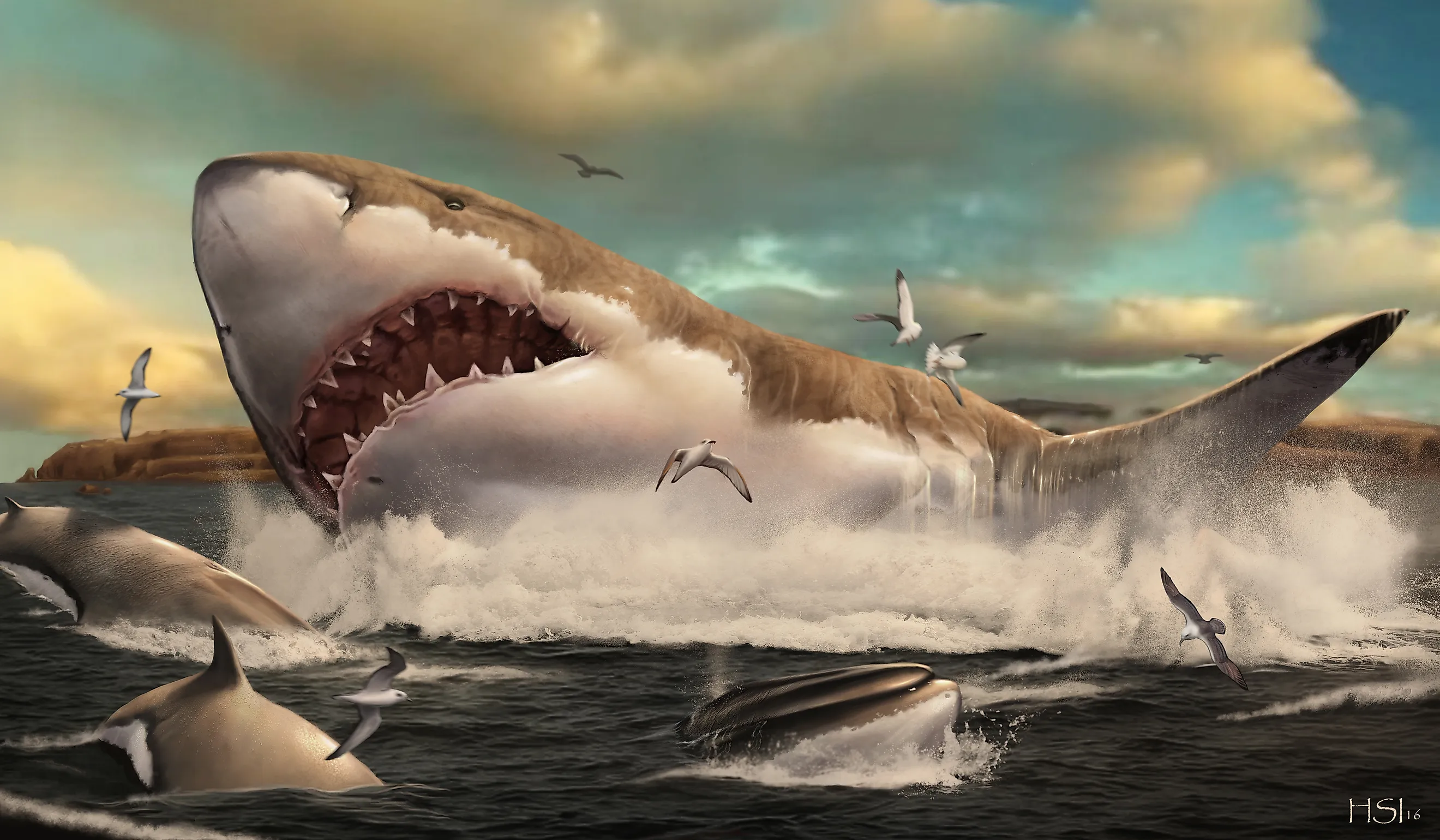
Just as on land, the animals that used to live within our oceans were completely different from what we can see in our day and age. Perhaps the most well-known and recognizable of these animals is the famed Megalodon. Just like the rest of the animals of ancient Earth, it too became extinct over time. While the Megalodon was able to adapt to an ever-changing environment, it is more likely that its prey was not. The changes in ocean temperatures and currents either killed off a lot of the food that the Megalodons relied on or pushed it out of reach. However, in its heyday, it was an apex predator that sat at the top of the food chain and terrorized Earth's waters with impunity.
What Was the Megalodon?

The Megalodon was a massive whale-eating shark that lived on Earth roughly 23 to 3.6 million years ago. This shark is the largest of any other kind known to man; at its maximum size, a Megalodon could reach an estimated 50ft in length and weigh anywhere between 66,000 lbs and 143,000 lbs.

Being such a large predator meant that it needed to feed on considerably large prey to survive. The main staple of the Megalodon diet was medium-sized baleen whales. Modern examples of baleen whales include things like the Blue Whale or Humpback Whale. In the time of the Megalodon, the population of baleen whales was likely much higher than today, so it did not need to look very far for its next meal.
The Megalodon lived on Earth for millions of years, and the large pockets where they lived tended to change over the course of such a large amount of time. It is thought that Megalodons lived in many different places, ranging from California, Australia, Bangladesh, and the Mediterranean Sea.
What Did the Megalodon Look Like?

While the fossil record of the Megalodon leaves a lot to be desired, scientists and other experts have a fairly good idea of what one might have looked like from the small amount of teeth and spinal columns that have been uncovered.
Much like modern-day sharks like the Great White, the Megalodon would have had triangular teeth that were serrated, which would have helped with tearing through the thick flesh and fat of large whales.
Similar to the sharks that are observable in our oceans today, the Megalodon was not exclusively cold-blooded. It likely generated heat by contracting its muscles while swimming. This could have allowed it to hunt in colder waters that were essentially an exclusive hunting ground for the Megalodon. Especially if other large aquatic predators were unable to mimic such a useful ability.
Why Did the Megalodon Die Out?

Originally, it was assumed by experts that climate change was the main contributor to what led to the downfall and eventual extinction of the Megalodon. The average temperatures of the Miocene epoch were considerably higher than they are today. However, during the early stages of the Pliocene epoch, temperatures fell to something that would be somewhat recognizable to what we experience today.
Water temperatures also changed as a result of shifting currents and the eventual closure of the Central American Seaway, a body of water that separated North America and South America. By the start of the Pliocene epoch, the water had receded and formed a land bridge that would have resembled roughly what Central America looks like in modern times.
While it is certain that the change in water temperature played a role in the demise of the Megalodon, it might not have been as direct or as significant a primary reason as researchers first had thought. As stated earlier, the Megalodon was able to regulate its body temperature at least to a level that would not result in widespread extinction when the oceans became colder.
A Change in the Ecosystem
Although megalodon could tolerate changing ocean conditions, shifts in currents and marine ecosystems may have reduced or redistributed the prey it depended on.
Other experts also theorize that it was around the end of the Miocene epoch that the Megalodon had to start to compete with other sharks, such as Great Whites and early forms of what would later become killer whales. In short, the amount of prey decreased while the number of predators the Megalodon had to compete with shot up exponentially.
The Megalodon used to rule the oceans of ancient Earth. An apex predator that had no equals met a sad and unremarkable end due to a series of factors that were accelerated by rapidly changing climates that affected both the Megalodons and their prey alike. Without a routine food source and an increasingly competitive environment spurred on by other sharks, it is thought that the last Megalodons died out around 4 million years ago. Today, all that remains are fossils that have been recovered and the imagination of artists and movie directors.