Why Scientists Added A Fifth Ocean
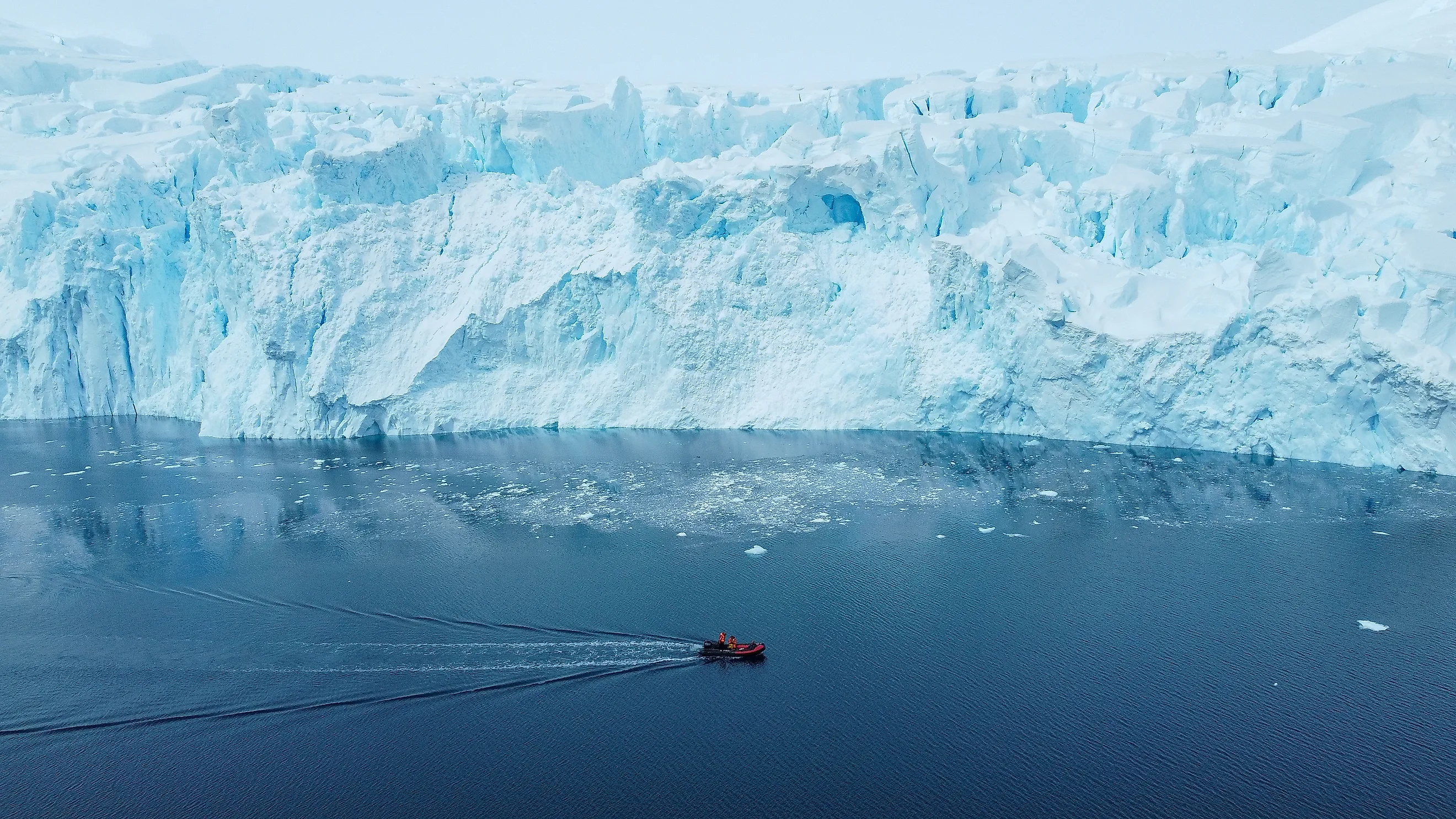
Scientists have long recognized the waters surrounding Antarctica as a distinct oceanic region; however, the Southern Ocean was not officially recognized until recently. This was due to a lack of international agreement, as geographers debated whether the waters around Antarctica were distinct enough to warrant their own name. In 2021, the Southern Ocean gained renewed attention when the National Geographic Society began recognizing it as the world's fifth ocean on its maps, in line with the Society's initiative to conserve the world's oceans. In doing so, its cartographers hoped to focus public awareness on a region in particular need of a conservation spotlight.
The Southern Ocean surrounds Antarctica and connects the Indian, Atlantic, and Pacific Oceans. Scientists point to its essential characteristics and vast size in describing it as a distinct ecosystem worthy of recognition. Here is a closer look at why the Southern Ocean was recognized as a fifth ocean.
Unique Water Properties

The Southern Ocean differs from its bordering counterparts in its water properties. Much of that distinct character comes from the Antarctic Circumpolar Current, which flows around Antarctica and separates its colder, slightly less salty waters from warmer waters farther north. Southern Ocean waters can fall below 0°C because dissolved salts lower the freezing point of seawater to roughly -1.8°C, depending on salinity. Melting glaciers pour enormous amounts of fresh water into the sea, diluting its salinity. The Southern Ocean also has high oxygen levels. Its cold water retains gas much better than warmer water does, and the uninterrupted winds that circle Antarctica drive large amounts of atmospheric oxygen deep below the surface. These same properties push nutrient-rich water north, one of the processes that regulate the Earth's climate.
Global Climate Systems

Definitions of the Southern Ocean's extent vary, but researchers generally agree that the broader region plays a disproportionately large role in regulating the Earth's climate. According to the National Oceanic and Atmospheric Administration, studies suggest that the Southern Ocean has absorbed more than two-thirds of the excess heat taken up by the global oceans. It also accounts for roughly 40% of the anthropogenic carbon absorbed by the world's oceans. There, the Antarctic Circumpolar Current drives carbon dioxide deep below the surface, where it stays trapped for centuries.

The Southern Ocean is also a key component of the global ocean overturning circulation, sometimes called the "Global Ocean Conveyor Belt." When sea ice forms around Antarctica, much of the salt is expelled into the surrounding water, making it colder, saltier, and denser. This dense water then sinks and helps form the Antarctic Bottom Water, one of the densest water masses in the global ocean. The mass spreads northward along the seafloor, driving a circulation system that connects the Atlantic, Pacific, and Indian Oceans. Elsewhere in the Southern Ocean, deep, nutrient-rich waters rise toward the surface through upwelling, supplying nutrients that support marine ecosystems and then travel through the wider ocean circulation.
Ecological Diversity

One of the Southern Ocean's most remarkable characteristics is its highly specialized marine ecosystem and ecological diversity. Freezing temperatures and the Antarctic Circumpolar Current, which forms a powerful biogeographic barrier around Antarctica, have helped shape one of the planet's most specialized marine ecosystems. Over millions of years, this relative isolation has allowed many Antarctic species to evolve distinctive adaptations to the region's extreme conditions.

The ecosystem supports species found nowhere else. Antarctic krill sit at the foundation of the Southern Ocean's food web. According to the Commission for the Conservation of Antarctic Marine Living Resources, the shrimp-like crustaceans gather in swarms that stretch for miles and serve as a keystone species. That foundation supports animals with unusual adaptations, including clear-blooded icefish, giant sea spiders, and giant isopods. Krill also feed many of the Southern Ocean's best-known animals, which makes the region a vital sanctuary for whales, seals, penguins, squid, and fish.
Conservation

Conservation in the Southern Ocean is a pressing issue given its vast size and biodiversity. Because no single country owns the ocean, protecting it requires global negotiations and strict regulations. The Commission for the Conservation of Antarctic Marine Living Resources (CCAMLR) leads that effort and pays especially close attention to its most valuable species, Antarctic krill. Commercial fleets harvest krill for animal feed products and nutritional supplements. Because many predators depend on krill, changes in its availability can affect the wider food web and the health of the Southern Ocean ecosystem. To address this, CCAMLR has established Marine Protected Areas in parts of the Southern Ocean to safeguard ecosystems and biodiversity while regulating activities such as fishing.
Other environmental threats include freshening. As glaciers and ice shelves melt, freshwater enters the ocean and dilutes its salinity. Reduced salinity then makes the surrounding water lighter, which can weaken the global conveyor and alter rain and climate patterns. Under the Kunming-Montreal Global Biodiversity Framework adopted in 2022, the United Nations set a global target to protect at least 30% of the world's marine and coastal areas by 2030.
The Case For A Fifth Ocean
The Southern Ocean is a valuable part of the world's ecosystem. Long overlooked, it has distinct characteristics that scientists could no longer set aside. It surrounds Antarctica and connects the Atlantic, Pacific, and Indian Oceans, and its water properties, its influence on global climate systems, and its ecological diversity set it apart from the other four. Systems like the global conveyor belt help slow the rate of global warming. Its biodiversity and unusual ecosystem are a reminder that nature should not be underestimated, and they are a large part of why scientists made the case for a fifth ocean.