The Warmest Ocean Water In The United States
Some US beaches feel like bathwater by August, and it has less to do with how far south they sit than you might think. What really warms the water is shallow ground and shelter from open-ocean currents. Ranked by the average high each spot reaches in its warmest month, here are the warmest ocean waters in the United States.
- Key West and Naples tie for the warmest average ocean water in the country, both hitting 87°F at their July and August peak.
- Peak seasonal sea surface temperature sets this ranking, and depth and shelter matter more than distance from the equator.
- The list covers three states and four US territories, with entries in the Gulf of Mexico, the Caribbean, and the South Pacific.
Every spot here is measured the same way. We took the average high each place reaches in its warmest month, drawn from NOAA satellite and buoy sea surface temperature records. That method leaves out the Pacific Northwest and New England, where cold currents hold summer peaks down in the 60s year after year. What decides this list is not latitude but depth and shelter. That is why some entries beat out places much closer to the equator. Latitude alone will fool you here. A shallow bay or a lagoon fenced off from open-ocean currents can turn a few feet of depth into several degrees.
Key West, Florida

Key West sits right where the Atlantic Ocean meets the Gulf of Mexico, which some newer federal maps now label the Gulf of America, out on the southern tip of the Florida Keys inside the Florida Keys National Marine Sanctuary. The water plays tricks with depth. Sand Key Reef, about six miles south of the island, stays shallow and warm, while the Florida Straits just beyond it run cooler as the Gulf Stream drags colder water north.
- Peak temperature: 87°F
- Peak month: July-August
- Defining feature: Convergence of the Atlantic and the Gulf, plus the Dry Tortugas reef tract offshore
Naples, Florida
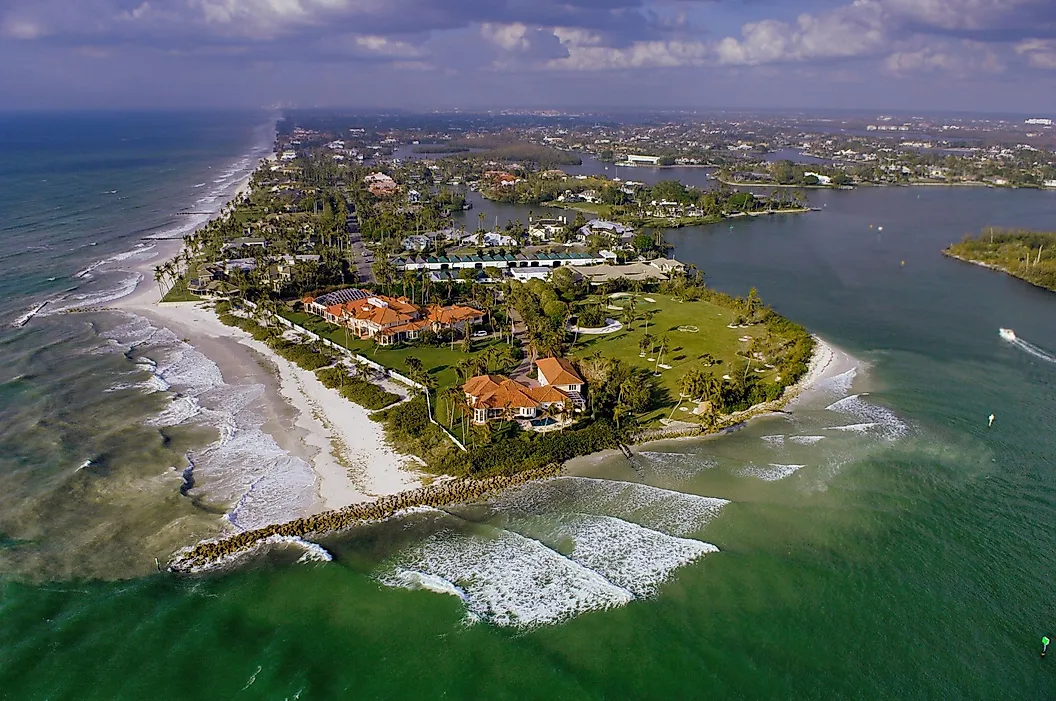
Naples ties Key West for the top spot, but it gets there a different way. Off its beaches, Florida's Gulf coast stays shallow for miles, and shallow water heats up faster than deep water under the same summer sun. Head south of the city and the Ten Thousand Islands mangrove estuary bottles up even more heat in its tidal creeks than the open Gulf ever does.
- Peak temperature: 87°F
- Peak month: July-August
- Defining feature: Shallow Gulf continental shelf and the Wiggins Pass and Cocohatchee River estuary to the north
South Padre Island, Texas

Here is a surprise. The Texas record for warmest average ocean water belongs not to famous South Padre Island but to little Port Mansfield, just up the coast. Padre Island shields both towns from the open Gulf's swells, and right behind them lies the Laguna Madre, one of only a handful of hypersaline lagoons on Earth. Evaporation there concentrates salt and heat in water that trades places with the open Gulf slowly, if at all.
- Peak temperature: 86°F
- Peak month: Late August into September
- Defining feature: Shielded by Padre Island and backed by the hypersaline Laguna Madre
San Juan, Puerto Rico
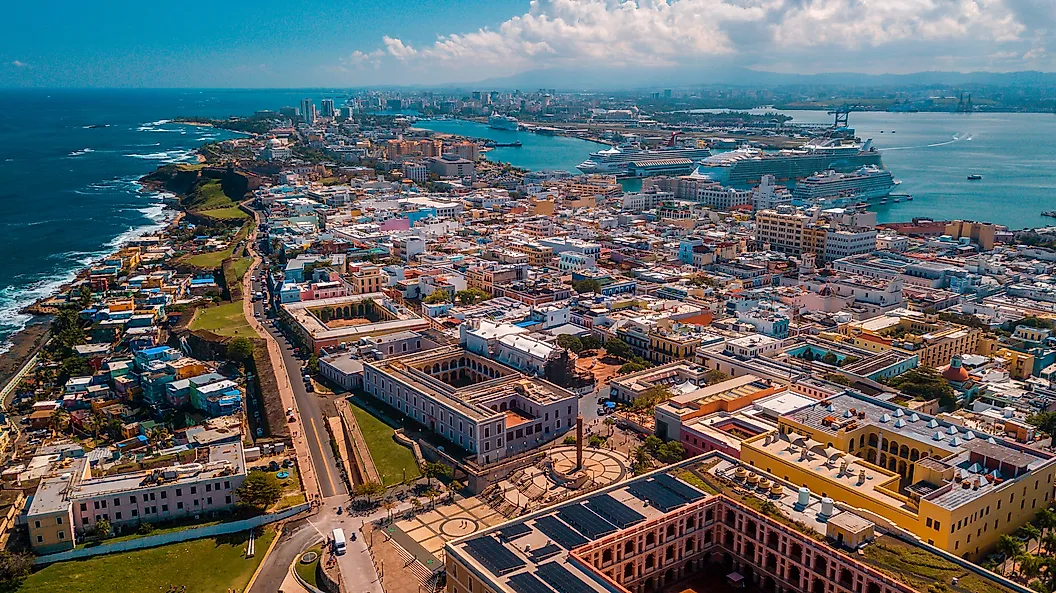
San Juan hits its high point in early fall, a good few months after the Gulf coast peaks in midsummer. That lag is classic Caribbean, where the Atlantic's slower seasonal cycle keeps the calendar shifted. Right in the city, Condado Lagoon, cut off from the open Atlantic by a thin strip of beach, runs a degree or two warmer than the ocean on the other side of the sand.
- Peak temperature: 85°F
- Peak month: September-October
- Defining feature: Condado Lagoon runs warmer than the open Atlantic beside it
Guam

Guam barely has an off-season. Its coastal water holds in the mid-80s all year, warm enough to swim any month you like. Tumon Bay, the island's main beach, sits inside a fringing reef that keeps the shallows calm and sun-warmed while the open Pacific churns past the reef line. And here is the strange part. About 200 miles southwest, that same seafloor plunges into the Mariana Trench, where Challenger Deep bottoms out around 10,935 meters, or 35,876 feet, the deepest spot on Earth.
- Peak temperature: 84-86°F
- Peak month: August-October
- Defining feature: Warm fringing-reef shallows directly above the Mariana Trench
American Samoa

American Samoa runs on its own calendar. Sitting south of the equator, it warms up when everywhere else cools down, so its peak arrives in March rather than August. The water tops out around 85°F by NOAA's satellite climatology, though NOAA's own sanctuary program pegs the year-round average closer to 82°F, a reminder of how little the temperature moves here between seasons. Just outside Pago Pago Harbor, the National Park of American Samoa guards the coral reefs.
- Peak temperature: About 85°F
- Peak month: March, the Southern Hemisphere summer
- Defining feature: Pago Pago Harbor formed inside a collapsed volcanic caldera, one of the deepest natural harbors in the South Pacific
U.S. Virgin Islands
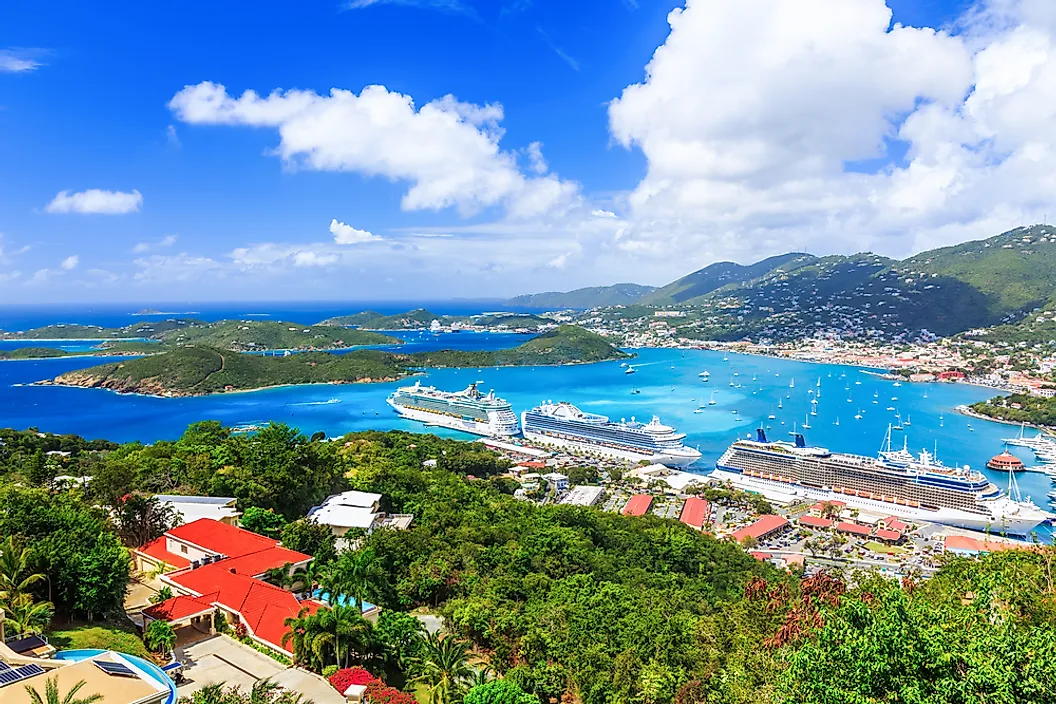
In the US Virgin Islands, the warmest water and the Caribbean hurricane season land in the same stretch, September through November. It is the same heat doing both jobs, making the swimming glorious and feeding the storms that roll through. Off St. Croix's northeast coast, Buck Island Reef National Monument protects one of the Caribbean's most intact elkhorn coral reefs.
- Peak temperature: 84°F
- Peak month: September-November
- Defining feature: Buck Island Reef National Monument off St. Croix
Honolulu, Hawaii

Honolulu closes the list with the coolest peak of the bunch, though you would hardly call it cold. Jump in during January and the water still feels fine, because Waikiki Beach stays within about 5°F of its summer high all year, one of the steadiest ranges of any US coastal city. Oahu's south shore has the North Equatorial Current to thank, arriving already warm after thousands of miles across the open tropical Pacific.
- Peak temperature: 82-84°F
- Peak month: August-October
- Defining feature: Warmed by the North Equatorial Current, with Hilo a few degrees cooler on an even tighter 3°F range
Rising Water Temperatures
These rankings will not hold still. NOAA's Northern Gulf Institute found that Gulf of Mexico surface water warmed about 1.8°F between 1970 and 2020, roughly twice the global ocean average, and it warmed most in the same shallow top layer that makes Key West and Naples the hottest entries here. The wider Caribbean, which takes in the San Juan and US Virgin Islands entries, has climbed at a similar pace, with regional fisheries data putting the rise near 1°C per century. Five of the eight spots on this list sit in the Gulf or the Caribbean, the two basins NOAA flags as warming faster than the global average. Read the numbers above as a snapshot of a trend still climbing.