The Parts Of The Ocean Where Almost Nothing Lives
A few miles off the Louisiana coast in the Gulf of Mexico, the ocean can become nearly uninhabitable. Fish and shrimp flee, while animals trapped on the seafloor suffocate. This seasonal "dead zone" is one of several places where marine life becomes unusually scarce.
Some of the ocean's emptiest regions receive almost no nutrients. Others contain water that is too salty, hot, or oxygen-poor for most organisms. Even there, "almost nothing" rarely means nothing at all. Microbes survive in environments once considered sterile, sometimes using so little energy that researchers struggle to determine whether they are active.
The Gulf of Mexico's Seasonal Dead Zone

Every summer, low-oxygen water develops near the bottom of the Gulf of Mexico's northern continental shelf. In 2026, scientists measured the dead zone at approximately 1,332 square miles, making it the second smallest in 40 years of surveys, according to NOAA. Tropical Storm Bertha mixed oxygen-rich surface water downward shortly before the survey, contributing to the unusually small measurement.
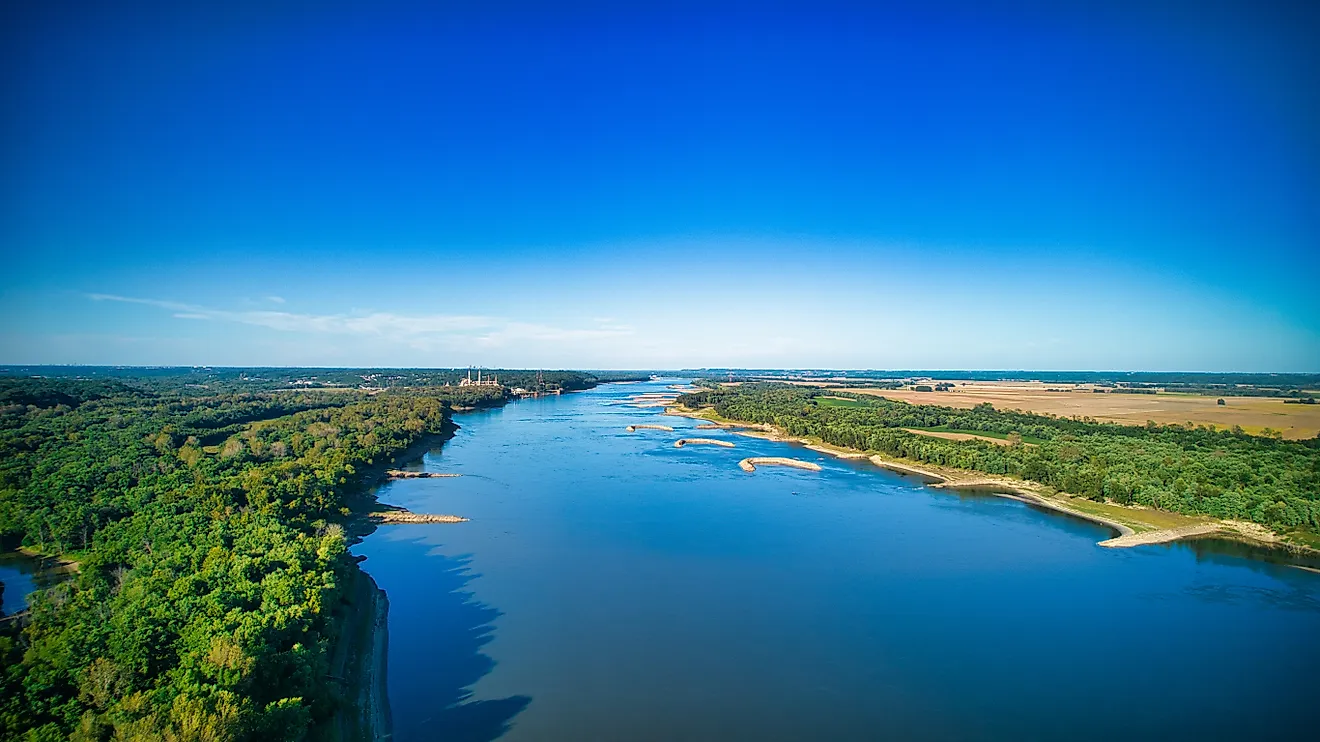
The process begins far inland. The Mississippi and Atchafalaya rivers carry nitrogen and phosphorus from farms, wastewater systems, cities, and other sources into the Gulf. These nutrients encourage algae to grow. When the algae die and sink, bacteria decompose them and consume dissolved oxygen.
Warmer freshwater near the surface can prevent oxygen-rich water from mixing downward. Bottom water then becomes hypoxic, meaning it contains too little oxygen for most marine animals. Mobile fish and shrimp may escape, but slower animals can die. Microbes remain, so the dead zone isn't completely dead.
The Most Barren Waters Of The South Pacific

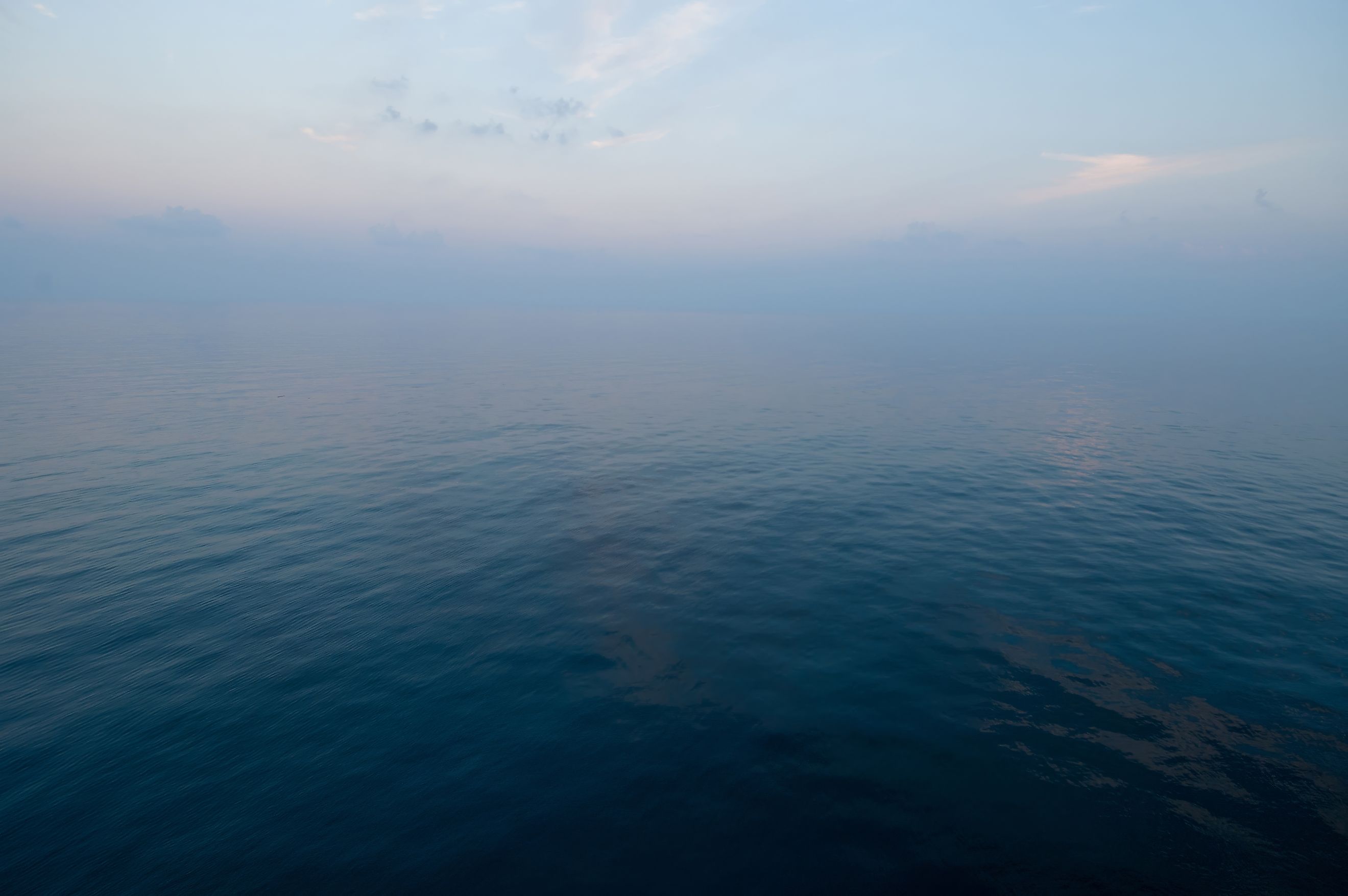
The South Pacific Gyre is the planet's largest oceanic desert. This enormous system of rotating currents occupies a remote part of the Pacific, far from continents that could supply dust, minerals, or river-borne nutrients.
Relatively little nutrient-rich deep water rises through the gyre's center. With limited nitrogen, phosphorus, and iron available, microscopic algae grow slowly, leaving little food for larger organisms. Researchers have recorded some of the lowest concentrations of microbial cells ever measured in ocean surface water.
The gyre's clear blue water looks clean and inviting, but its clarity partly reflects how little biological material it contains. On the seafloor, sediment can accumulate at rates of only about 0.1 to 1 meter per million years. Nevertheless, scientists have detected living microbes throughout some sediment cores. The gyre is exceptionally barren, but not sterile.
The Oxygen-Starved Eastern Tropical Pacific

Another nearly empty region lies below productive waters off Mexico, Central America, and western South America. Here, a broad oxygen-minimum zone generally occupies depths between approximately 200 and 1,000 meters.
Sunlight and nutrients support abundant plankton near the surface. Dead organisms and waste then sink, and bacteria consume oxygen as they decompose this material. Ocean circulation replenishes the oxygen slowly, allowing levels in the zone's core to approach zero.
Most fish and other oxygen-dependent animals cannot remain there. Some crowd into the thinner layer of usable habitat above the zone, while others enter briefly to feed or avoid predators. Microbes continue living inside by using chemical processes that do not require oxygen. The water may be nearly empty of animals while remaining chemically active.
Underwater Lakes That Can Kill Marine Animals
More than 1,000 meters beneath the Gulf of Mexico are pools resembling lakes on the ocean floor. Their surfaces form visible boundaries, and their dense contents can produce underwater waves. These are brine pools, which are bodies of water so salty that they don't mix readily with the seawater above them.
They form when water beneath the seafloor dissolves ancient salt deposits. The resulting brine rises through the sediment and collects in depressions because it is denser than ordinary seawater.
Inside some pools, extreme salinity combines with little oxygen and potentially toxic concentrations of hydrogen sulfide or methane. Fish or crustaceans entering this water can be stunned or killed. Yet the edges may be crowded. During one Gulf expedition, NOAA Ocean Exploration documented numerous animals around the brine pool, including fish, corals, and tubeworms. Microbes using methane and sulfide help support this rim community, creating a sharp boundary between the hostile pool and its living shoreline.
The Nearly Empty Sediment Beneath The Seafloor

Life extends beneath the ocean floor into what scientists call the subseafloor biosphere. In productive coastal areas, sinking organic material can feed large underground microbial communities. Beneath an oceanic desert, conditions are much different.
Sediment under the South Pacific Gyre receives so little food that microbes operate at extremely low levels. Rather than growing and dividing quickly, some may use most of their limited energy to repair cellular damage and continue functioning.
Researchers have revived microbes recovered from sediment deposited more than 100 million years ago, although that doesn't prove individual cells survived unchanged for the entire period. The experiment showed that ancient sediment could remain capable of sustaining life. In this hidden environment, it can be difficult to distinguish active organisms from dormant cells or dead biological material.
Are The Deepest Trenches Almost Lifeless?

It's easy to imagine the Mariana Trench as an empty crack in the planet. Challenger Deep, its deepest known point, lies approximately 10,935 meters, or 35,876 feet, below sea level. Part of the trench is protected within the approximately 95,216-square-mile Mariana Trench Marine National Monument, near Guam and the Northern Mariana Islands.
Sunlight never reaches these depths. The temperature is near freezing, while the pressure is more than 1,000 times that at sea level. Larger animals are scarce, but the trench isn't lifeless. Amphipods, sea cucumbers, worms, and microbes have adapted to the hadal zone below 6,000 meters.
Trenches can also collect organic material sliding down their steep walls. Scientists have found elevated carbon accumulation and microbial activity in some trench sediments compared with the flatter abyssal seafloor nearby. The deepest place isn't necessarily the emptiest.
Where Hydrothermal Heat Exceeds Life's Limits

Hydrothermal vents are frequently biological oases. Where hot, mineral-rich fluid mixes with cold seawater, microbes use chemical energy to produce food. Tubeworms, crabs, mussels, and other animals gather around them.
The fluid emerging directly from a vent chimney is much less welcoming. It can exceed 350 degrees Celsius, remain liquid under immense pressure, and carry metals and chemicals harmful to most organisms. No known life survives in the hottest undiluted fluid. The highest temperature at which an organism has been confirmed to reproduce under laboratory conditions is about 122 degrees Celsius.
Hydrothermal systems can contain nearly sterile fluid just inches away from crowded animal communities. The habitat becomes suitable for life only after the vent water cools and mixes with the surrounding ocean.
Almost Nothing Is Not Nothing
The ocean's emptiest places are barren for different reasons. The Gulf dead zone loses animals when oxygen disappears. The South Pacific Gyre lacks the nutrients needed to build a rich food web. Brine pools combine extreme salinity with toxic, oxygen-poor water, while subseafloor microbes endure on barely enough energy to remain alive.
Animals with high oxygen and energy requirements generally disappear first. Microbes persist because some can survive without oxygen, draw energy from unusual chemicals, or reduce their activity to extraordinarily low levels.
That persistence is why scientists hesitate to declare any marine environment completely lifeless. Better drilling, sampling, and genetic analysis continue to uncover organisms that earlier expeditions missed. The most barren parts of the ocean aren't blank spaces. They're places where life becomes faint, slow, and difficult to detect, but it rarely vanishes altogether.