The Places Most Likely To Become America's Next National Park
Some of the country's most remarkable landscapes are already federally protected, but a new title could put them in the national spotlight. In Arizona, Chiricahua's towering volcanic hoodoos are one step closer to national park status after legislation advanced through Congress. Wisconsin's Apostle Islands could earn the designation for a landscape famous for its spectacular ice caves. In Georgia, Ocmulgee Mounds preserves an ancient Earth Lodge dating back roughly 1,000 years. Even Washington, D.C.'s Rock Creek Park, established in 1890, is in the running. These four contenders show that becoming a national park isn't always about protecting new land. Sometimes, it's about giving an existing treasure a new title.
Apostle Islands Could Become Wisconsin's First National Park

Apostle Islands National Lakeshore in northern Wisconsin could become the country's next national park through legislation that would redesignate it as Apostle Islands National Park and Preserve. The proposal has already cleared the House Committee on Natural Resources, which voted 20 to 17 in February 2026 to advance the bill.
The change would not create a completely new park landscape. The existing lakeshore already protects 21 islands and 12 miles (19 km) of Lake Superior shoreline, covering nearly 69,400 acres. The islands contain sandstone cliffs, sea caves, beaches, and forests. The National Park Service describes the site as having the largest collection of historic lighthouses in the National Park System.
Apostle Islands also has one of the country's strangest seasonal landscapes. Lake Superior's ice caves can appear along the mainland cliffs when the lake freezes enough to create a stable ice shelf. From 2000 to 2023, the caves were accessible on only 2% of days, according to the NPS.
The proposal would instead divide the existing lakeshore into a national park and national preserve while retaining the current overall area and management. The Congressional Budget Office said the redesignation would not change ownership or management of the land. Hunting, trapping, and fishing would continue under provisions included in the legislation.
Chiricahua Could Become Arizona's Fourth National Park

Chiricahua National Monument in southeastern Arizona has perhaps the strongest legislative momentum of the candidates. A bill to establish Chiricahua National Park passed the House in March 2026, and the Senate version was reported by the Senate Committee on Energy and Natural Resources in September.
The proposed park would not require an entirely new landscape to be assembled. The legislation would redesignate the existing Chiricahua National Monument as Chiricahua National Park. The monument was established in 1924 to protect an unusual landscape of volcanic rock formations in Arizona's Chiricahua Mountains.
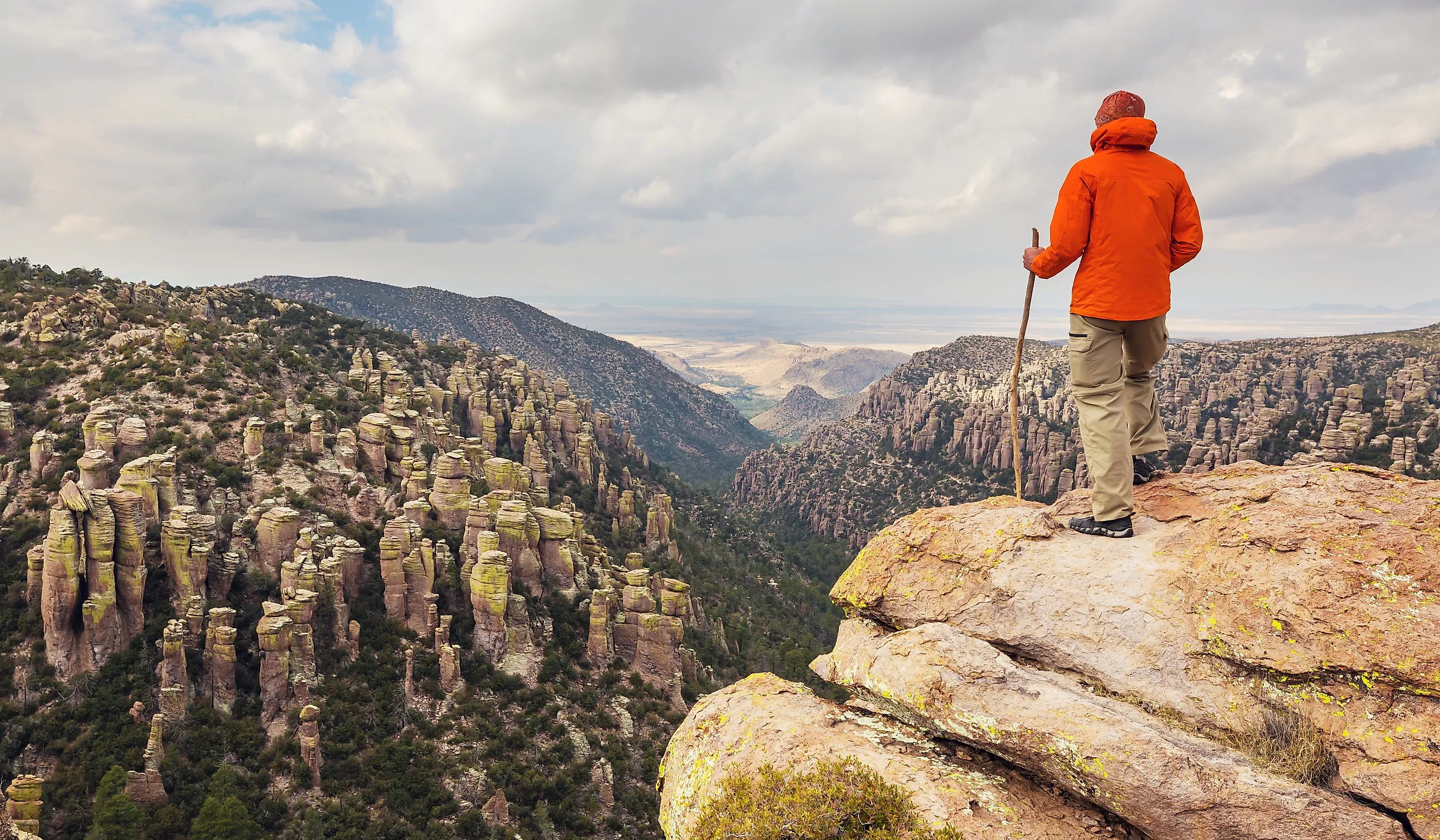
Those formations are what make the site stand out. Erosion has carved layers of volcanic rock into thousands of narrow pillars, balanced boulders, walls, and other formations known as hoodoos. Instead of looking like a conventional desert mountain range, parts of Chiricahua resemble a giant field of stone towers.
The legislation also contains specific provisions for protecting traditional cultural and religious sites and maintaining access for those cultural and customary uses. The Senate bill says the Secretary of the Interior would consult with tribes in carrying out those protections.
Chiricahua's legislative status sets it apart from many other proposed national parks. Both a House and Senate bill are active, and the Senate version has already been reported from the committee. That puts the proposal farther along than many places that appear on informal lists of possible future national parks.
Ocmulgee Mounds Could Gain New Designation in Georgia

Ocmulgee Mounds National Historical Park in Georgia is another existing NPS site with legislation aimed at giving it National Park designation. A Senate bill introduced in 2025 would establish Ocmulgee Mounds National Park and Preserve, while a separate House bill introduced in 2026 would redesignate the existing area as simply Ocmulgee Mounds National Park. The House proposal received a subcommittee hearing in July 2026.
Ocmulgee is different from the other candidates because its significance is primarily cultural and archaeological. The site preserves evidence of more than 12,000 years of human habitation, including massive earthworks built by Mississippian peoples. The Great Temple Mound rises about 55 feet (17 m) above the surrounding landscape.
The site also preserves the original Earth Lodge, whose floor dates to about 1015 CE, along with raised earthen mounds and trails through wetlands and forests along the Ocmulgee River. The NPS says an archaeological excavation at the site became the largest in American history, involving more than 800 workers and uncovering millions of artifacts.
The broader proposal would go beyond simply changing the name. The Senate legislation would establish a national park and preserve encompassing additional lands and would provide for agreements with the Muscogee (Creek) Nation and other tribes concerning management and stewardship. The Department of the Interior has said the area has nationally significant archaeological and cultural resources but has also raised questions about the feasibility of acquiring all proposed lands.
Rock Creek Could Become a National Park Without Moving a Boundary

Washington DC's Rock Creek Park presents a different possibility. A 2026 bill would redesignate the existing Rock Creek Park as Rock Creek National Park, meaning the change would largely occur on paper rather than through the creation of a new protected landscape.
Rock Creek Park has already been federally protected for more than a century. Congress established it in 1890, making it one of the country's earliest federally designated parks and an unusually old example of an urban natural area. The proposed legislation would not change its boundaries or management.
Rather than creating a new protected landscape, the bill would change the site's official designation to a national park. The bill was introduced in June 2026 and referred to the House Committee on Natural Resources; by September it had been referred to the Federal Lands Subcommittee.
Its history gives the proposal an unusual argument. Rock Creek Park was established before the National Park Service itself existed and was designed to preserve forests, wildlife, and natural landscapes for public enjoyment. Today, its wooded trails, streams, historic features, and recreational areas provide a large natural landscape in the nation's capital.
What It Takes to Become a National Park
These proposals demonstrate why becoming a national park is not simply a matter of a place being spectacular enough. Congress can establish new units of the National Park System through legislation, and it can also change the designation of existing NPS sites. The National Park Service notes that Congress may request studies evaluating whether an area has the resources and qualities necessary for a new designation, although Congress is not required to conduct a study before creating a new unit.
The four proposals are also at different stages. Chiricahua has advanced through both chambers' committees, while Apostle Islands has cleared a House committee but has no Senate companion bill yet. Ocmulgee has active legislation in both chambers, but its proposals involve a more complicated expansion and management structure. Rock Creek's bill would make the smallest practical change by renaming an existing park.
Based on legislative progress, Chiricahua has advanced farther than the other three proposals, while Apostle Islands, Ocmulgee Mounds, and Rock Creek remain at earlier stages of the legislative process. None, however, becomes a national park until Congress passes legislation and it becomes law.
The next national park could therefore look very different from any other one. It might be a volcanic landscape filled with stone towers, an island chain surrounded by Lake Superior, an archaeological site preserving thousands of years of human history, or an urban forest that has already been protected for more than 130 years. In each case, the final step is not a scenic ranking or a popularity contest; it is an act of Congress.