The Difference Between A National Park And A National Monument
The difference between a national park and a national monument lies in how they are declared. National monuments can be established by the President under the Antiquities Act, while national parks can only be established by Congress. More generally, there is also a difference between how many resources a park and a monument preserve. A national park is designated to protect a diversity of natural resources and landmarks and can be quite large, whereas a national monument can encompass only one resource, which can be historic or natural. National monuments are also typically smaller than national parks, per the National Park Service. Despite these generalities, several national parks and national monuments defy the definition.
History of National Parks and Monuments
The National Park Service was created in 1916 under the Woodrow Wilson administration to manage this relatively new land classification. From 1872 to 1916, there had been a major expansion of publicly protected land, led by conservationists such as John Muir and public figures like President Theodore Roosevelt. By 1916, there were 35 national parks and monuments in the US.
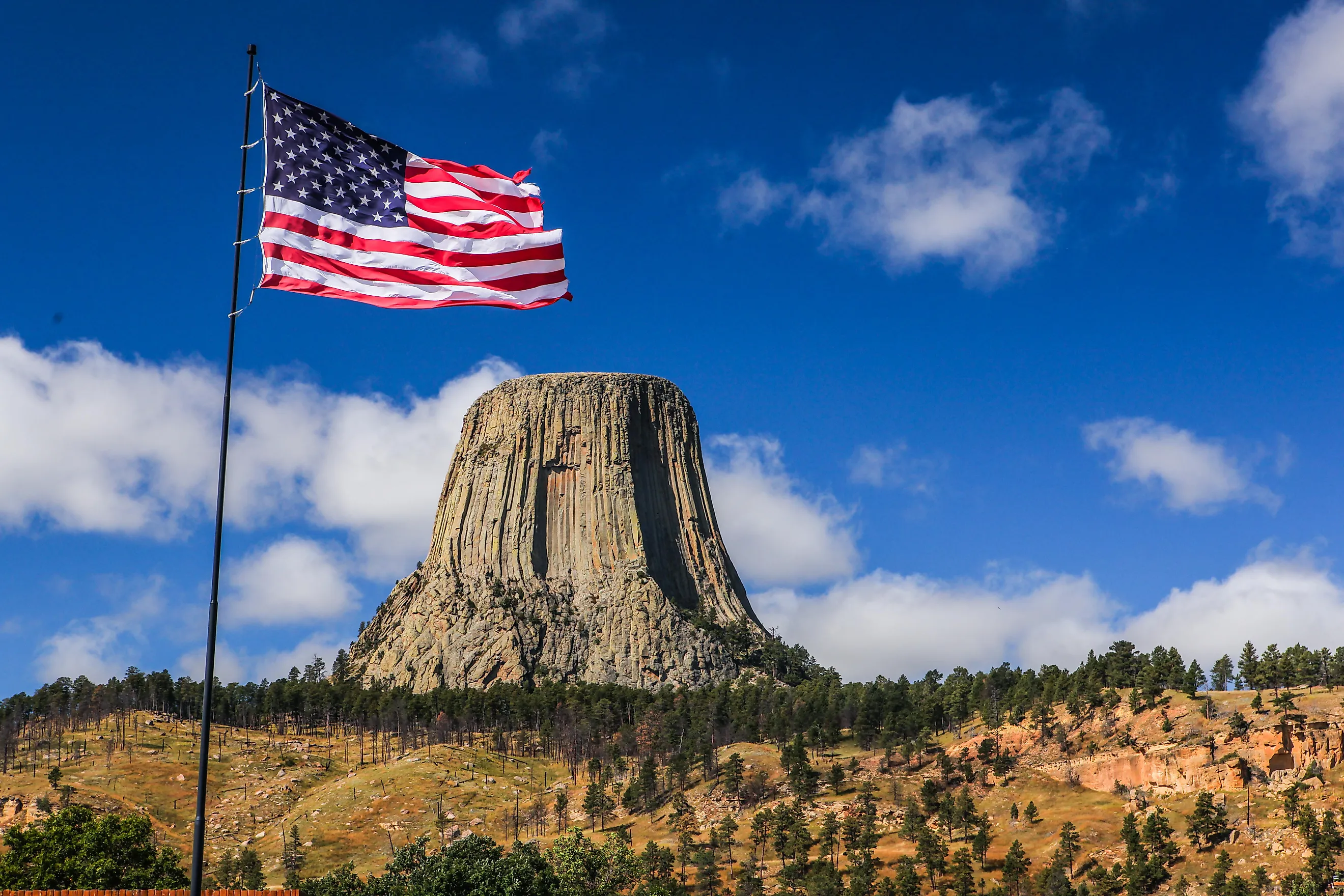
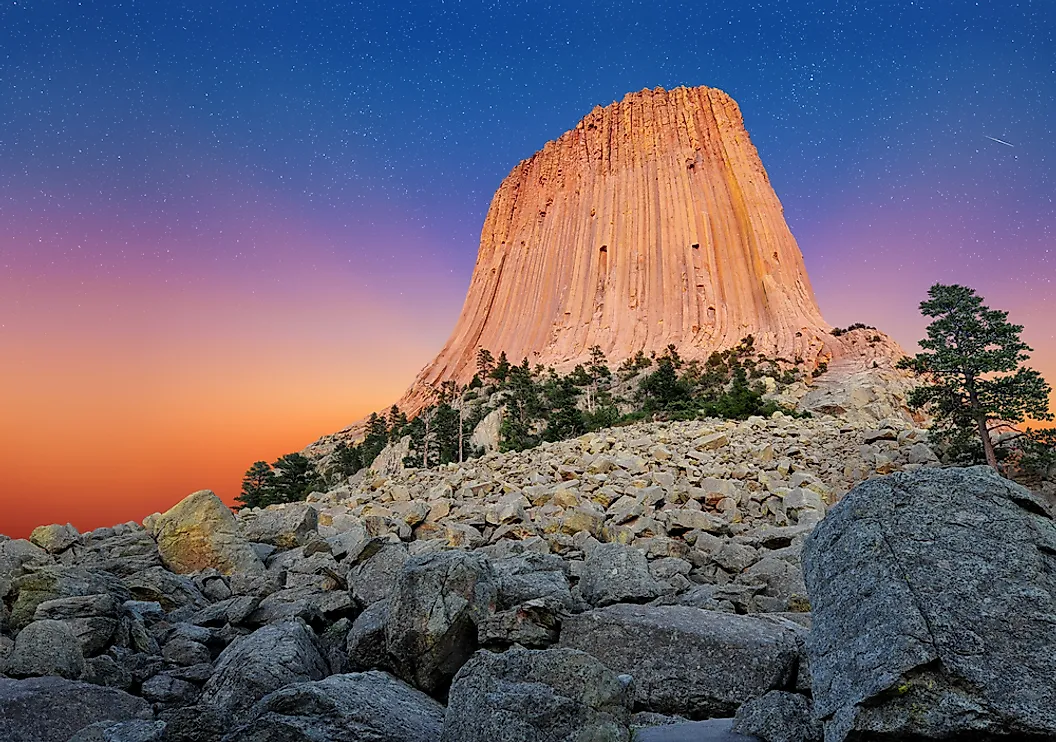
The first national monument was established on September 24, 1906, by Theodore Roosevelt at Devils Tower, a rock formation in Wyoming visible from many miles off. He used the Antiquities Act of 1906, which lets the President protect federal land holding objects of historic or scientific interest. It was meant to ensure private collectors wouldn't steal or damage resources. Roosevelt used the act to set aside 18 national monuments. Most were small, with one glaring exception: Grand Canyon National Monument, which he proclaimed in 1908 at more than 800,000 acres. It stayed a monument until 1919, when Woodrow Wilson signed the legislation redesignating it Grand Canyon National Park.

The actual organization of monuments varied, as many were owned by other government departments. In 1933, Franklin D. Roosevelt signed an executive order giving over 56 national monuments and military sites from the Forest Service and the War Department to the National Park Service. Furthermore, in the General Authorities Act of 1970, the National Park Service was given charge of a wide variety of other natural and historic areas.
Today, the purview for national monuments and parks falls more to Congress. The National Park Service works with Congress on proposed additions to the national park system, including monuments and parks; however, Presidents still use the Antiquities Act to create or enlarge monuments. Joe Biden created 10 new monuments between 2021 and January 2025, expanded two others, and restored protections at three more. One of the newest ones is Avi Kwa Ame National Monument, which covers more than 500,000 acres of the Mojave Desert in southern Nevada.
The Largest National Monuments

Several national monuments break that pattern, and Avi Kwa Ame is one. Established in March 2023, it covers roughly 506,814 acres. The Interior Department's Bureau of Land Management, Bureau of Reclamation, and the National Park Service each administer pieces of it. It takes in Spirit Mountain, Joshua tree forests, and desert habitat, and it is sacred ground for the Fort Mojave and other Yuman-speaking tribes. That makes it larger than most national parks. On the NPS acreage tables, it would sit just below Great Smoky Mountains National Park in Tennessee and North Carolina, and just above North Cascades in Washington, around the 20th largest in the country.

There is another national monument larger than all the national parks combined: Papahānaumokuākea Marine National Monument. It spans about 582,578 square miles of ocean, coral reefs, atolls, and islets northwest of Hawaii. President George W. Bush established it in June 2006 under the Antiquities Act, and President Barack Obama expanded it more than fourfold in August 2016. Its reefs are among the most northerly on Earth, and Kure Atoll at its far end is the northernmost atoll in the world.
There are rare animals here, such as Hawaiian monk seals, black-footed albatrosses, and many others. In 2010, it was inscribed as a World Heritage Site for both its natural and cultural value. Native Hawaiians reached and settled the islands of Nihoa and Mokumanamana long before European contact, with radiocarbon dates indicating habitation between roughly 1000 and 1700 CE. Within this region is the strategically important island of Midway, site of a major World War II battle between Japan and the US in 1942.
This national monument not only eclipses the national parks in size, but it also preserves far more natural and historic resources than most national monuments. On the national park side of the equation, there is one that many have debated more accurately fits under the umbrella of national monuments. It is Gateway Arch National Park in St. Louis, Missouri.
Gateway Arch National Park

Gateway Arch National Park is one of the newest national parks, established in February 2018. It is also the smallest at about 91 federal acres, roughly 0.14 square miles. It is unusual in that nearly everything in it was designed and built by people, including the 630-foot-tall steel arch itself. The area that would become the park was designated in December 1935 by Franklin D. Roosevelt, through Executive Order 7253, as the Jefferson National Expansion Memorial. It commemorates the Louisiana Purchase of 1803 and the westward expansion that followed.

The arch was designed by Finnish-American architect Eero Saarinen, whose plan used deep foundations to hold each leg steady until the two halves met at the top. Saarinen died in 1961, four years before the arch was completed in October 1965. A major renovation begun in 2013 added green space linking the grounds back to downtown. Today, the park takes in the Old Courthouse, the museum, and the arch itself.
In June 2017, Senator Roy Blunt introduced a bill, S. 1438, calling for the site to be redesignated Gateway Arch National Park. That July, the Senate Energy and Natural Resources Subcommittee on National Parks held a hearing in which Robert Vogel, acting deputy director of the National Park Service, testified that it should be designated a national monument instead. He argued that at 91 federal acres, the memorial was "too small and limited in the range of resources" to carry the national park title. Every national park designated at that point protected at least thousands of acres. Despite this concern, the bill was passed and signed into law on February 22, 2018, by President Donald J. Trump.
What's the Real Difference Between a Monument and a Park?

The fact is that while preservation and accuracy do matter, politics plays a significant role in nationally recognized designations and can often be controversial. The Antiquities Act tells Presidents to reserve the smallest area compatible with protecting the objects in question. Courts have consistently deferred to their judgment about what that means, so acreage has rarely been a real constraint. On the congressional side, the decision to turn a space into a national park ultimately lies with Congress itself, which can vote yea or nay for any reason.
Congressional proposals draw the same fight. The Apostle Islands in Wisconsin are currently part of a national lakeshore, and Representative Tom Tiffany has pushed to designate them as the state's first national park. He introduced the Apostle Islands National Park and Preserve Act in 2024, and when it expired, he reintroduced it in September, 2025. The House Natural Resources Committee advanced the bill on a 20-17 vote in February, 2026. However, the Red Cliff Band of Lake Superior Chippewa opposes it, as do the Ashland and Bayfield county boards, over concerns about tribal consultation and a visitor influx the area is not staffed to handle.
As these exceptions demonstrate, the real distinction between a monument and a park can vary, with some parks more similar to monuments in features and purposes, and vice versa. The real difference between the two is political.