The National Parks Farthest From A Hospital
A twisted ankle on a remote trail can become a serious emergency when medical care is hours away. Across America's national parks, the distance to the nearest hospital varies widely, from a drive along an Alaska highway to an aircraft or boat journey across wilderness and open water.
Gates of the Arctic National Park and Preserve and Kobuk Valley National Park in Alaska have no conventional road access. Meanwhile, Dry Tortugas National Park in Florida is about 70 miles west of Key West in the Gulf of Mexico. Other parks have road connections, but their enormous size makes reaching a hospital from a remote campsite much longer than traveling from the park boundary.
Distances use specific hospitals and park locations where possible. Driving distances, air miles, and water crossings are listed separately because the same mileage can involve very different trips. Where the exact route is unclear, distances are estimates.
Gates of the Arctic National Park and Preserve, Alaska

Gates of the Arctic National Park protects approximately 8.4 million acres of wilderness in the Brooks Range, north of the Arctic Circle. There are no roads or marked hiking trails crossing its interior, and access generally requires an aircraft followed by travel through the backcountry.
The nearest major hospital to Gates of the Arctic is Fairbanks Memorial Hospital in Fairbanks. It is about 180 to 200 air miles south of the park's southern areas. The distance varies with the location within the park and the landing site used. Fairbanks Memorial Hospital provides hospital care, but there is no direct road connecting the park's interior to the facility.
An emergency evacuation may require an aircraft to collect the injured and transport them to Fairbanks, potentially with an intermediate transfer. Weather, aircraft availability, and the patient's condition can all affect the journey. The 180 to 200 air-mile estimate is a useful indication of the distance to hospital care, although it isn't the same distance from every park entrance.
Kobuk Valley National Park, Alaska

Kobuk Valley National Park covers about 1.75 million acres in northwestern Alaska. Its Great Kobuk Sand Dunes rise unexpectedly from the surrounding tundra, but reaching them requires more planning than driving to a trailhead. There are no highways leading into the park, and access typically involves an aircraft or travel along the Kobuk River and across the tundra.
For medical care in the region, Maniilaq Health Center in Kotzebue, a 17-bed hospital with 24-hour emergency care, serves communities across northwestern Alaska. Kotzebue is approximately 75 to 100 air miles west of the park, and the exact distance to the hospital varies with the destination inside it.
Kotzebue is also the main starting point for journeys into the park, but the Great Kobuk Sand Dunes and other backcountry areas can't be reached by road from the hospital.
Wrangell-St. Elias National Park and Preserve, Alaska

At approximately 13.2 million acres, Wrangell-St. Elias National Park is the largest unit in the National Park System. Unlike Gates of the Arctic and Kobuk Valley, it has road access to several areas, although some routes are long, unpaved, and separated from major services.
For urgent medical needs near Glennallen, Cross Road Medical Center is located at Mile 186.5 on the Glenn Highway. The clinic provides urgent and observation care, along with family medicine, diagnostic services, and other outpatient services. Cross Road Medical Center is not a full-service hospital, so it shouldn't be considered the final destination for someone requiring emergency surgery or inpatient admission. From Glennallen, the nearest hospital is Providence Valdez Medical Center, a critical access hospital with 24-hour emergency services, about 120 road miles south in Valdez.
The main National Park Service headquarters is in Copper Center, about 10 miles south of Glennallen. The park's two principal road approaches are the Nabesna Road and the McCarthy Road, both of which are unpaved. The McCarthy Road extends 59 miles to the Kennicott River bridge, where public vehicle access ends, and Kennecott another five miles beyond it. The National Park Service estimates that driving from Anchorage to Kennecott takes seven to eight hours. Someone deep inside the park may face a much longer journey, and a patient requiring hospital admission or surgery may need transport to Valdez or a larger medical center beyond it.
Katmai National Park and Preserve, Alaska

Katmai National Park and Preserve is known for its brown bears gathering to catch salmon around Brooks Falls. The park has no road connection to Alaska's highway system, and reaching Brooks Camp, one of its principal developed areas, generally requires a plane or boat. Brooks Camp is approximately 30 air miles from King Salmon, where the park headquarters is located. King Salmon is the park's regional hub, and Kodiak is about 165 air miles southeast of it, so the hospital is considerably farther away than the park headquarters.
Emergency department care, hospital admission, and surgery are offered at Providence Kodiak Island Medical Center on Kodiak Island. It's located across the Shelikof Strait from the Alaska Peninsula.
Reaching the hospital from Katmai requires air or water transportation rather than a road journey. The exact distance to Providence Kodiak Island Medical Center varies with the starting point within the park and the route used for evacuation. Weather, aircraft availability, and the need for onward transport can affect how quickly someone reaches hospital care. More specialized treatment may require a further transfer to a larger medical center in Anchorage, about 290 air miles northeast of King Salmon.
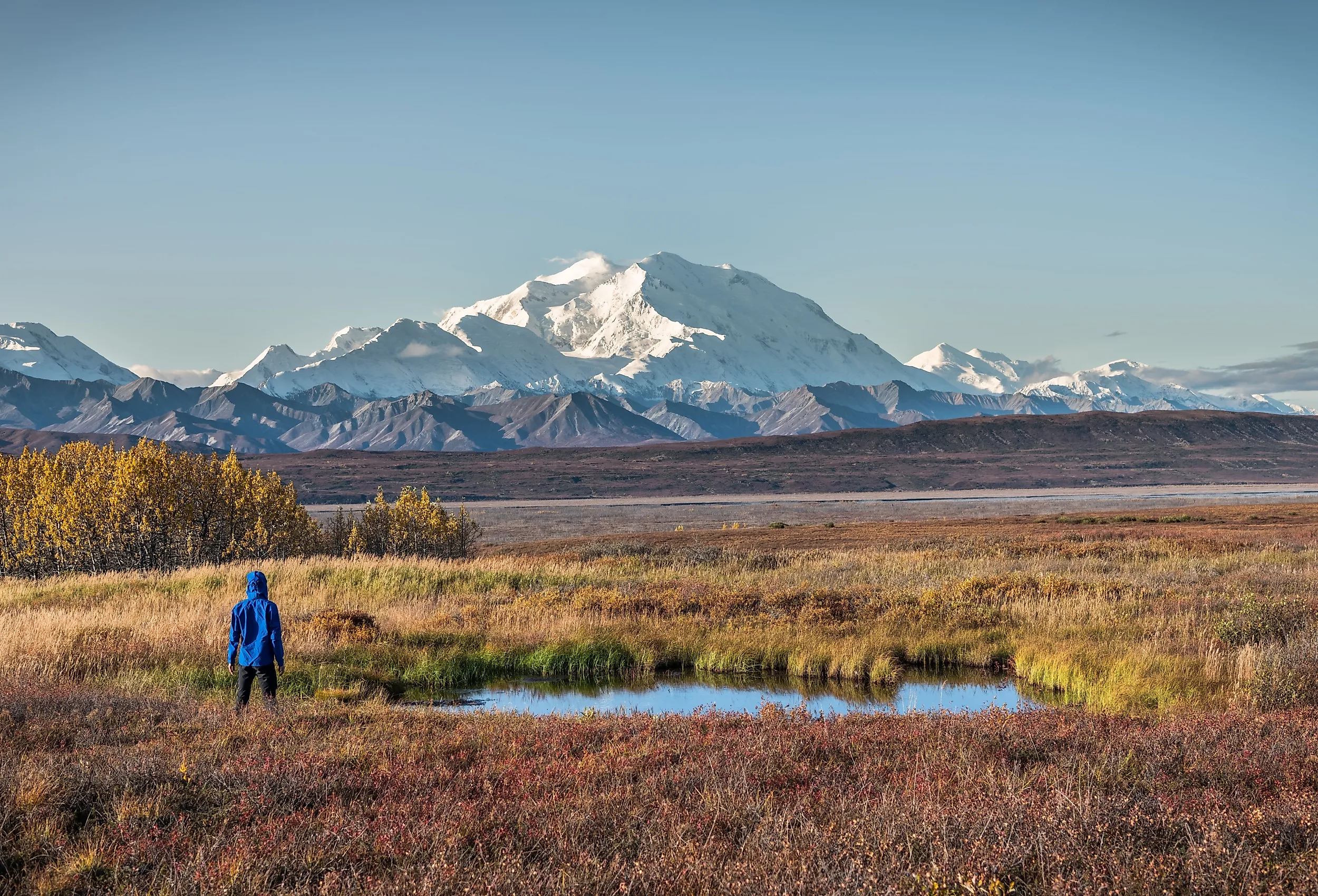
Denali National Park and Preserve, Alaska

Denali National Park and Preserve has more straightforward road access than many of Alaska's remote parks. Its sole road entrance lies at Mile 237 on the George Parks Highway, about 120 miles south of Fairbanks and 12 miles south of Healy.
The nearest major hospital for someone at the park entrance is Fairbanks Memorial Hospital, approximately 120 road miles north, using Fairbanks as the regional hospital destination. The National Park Service identifies Fairbanks as about 120 miles from the entrance, about a two-hour drive under favorable conditions. Healy has local medical services, including clinics, but these aren't equivalent to a hospital. Fairbanks is therefore the practical reference point for someone who needs hospital care.
Denali also extends much farther into the wilderness than the entrance suggests. The Denali Park Road runs 92 miles into the park, so someone well beyond the entrance area may have a much longer journey to hospital care. Travel within the park, transport back to the highway, and the onward drive to Fairbanks all add to the time required.
Dry Tortugas National Park, Florida

Dry Tortugas National Park is about 70 miles west of Key West in the Gulf of Mexico. Its seven small islands are surrounded by open water, and there are no roads or bridges connecting the park to the Florida Keys. The nearest hospital is Lower Keys Medical Center in Key West, approximately 70 miles east of the park as a broad geographic estimate.
Unlike a mainland park, Dry Tortugas can't be connected to a hospital by road. Travel to Key West requires a boat or seaplane, and the time depends on the vessel or aircraft, weather, and sea conditions. The scheduled ferry isn't designed to serve as a dedicated emergency medical evacuation service. For a serious emergency, a dedicated medical evacuation may be required. Monroe County operates Trauma Star, an air medical transport service that can transport patients from the Florida Keys to trauma centers on the mainland when appropriate.
Planning Ahead for Hospital Access
Before traveling to a remote national park, identify the nearest hospital and determine the actual route from the planned destination. Check whether the journey requires a car, boat, aircraft, or a combination of transport methods. Confirm that the destination is a hospital rather than a clinic, and check if it can provide the treatment that might be needed. A nearby medical facility may offer basic care without having the staff or equipment required for major trauma or emergency surgery.
Carry essential medications, a first-aid kit, and reliable emergency communication equipment, particularly in areas without cell service. In parks with limited road access, consider how an evacuation could work before setting out, including whether weather could prevent an aircraft from flying.
The distance to a hospital is only one part of emergency preparedness, but it's an important one. Knowing the nearest facility, the route to reach it, and the available transport options can help people plan more safely for time in remote landscapes.