The Only National Parks Where Wolverines Have Survived
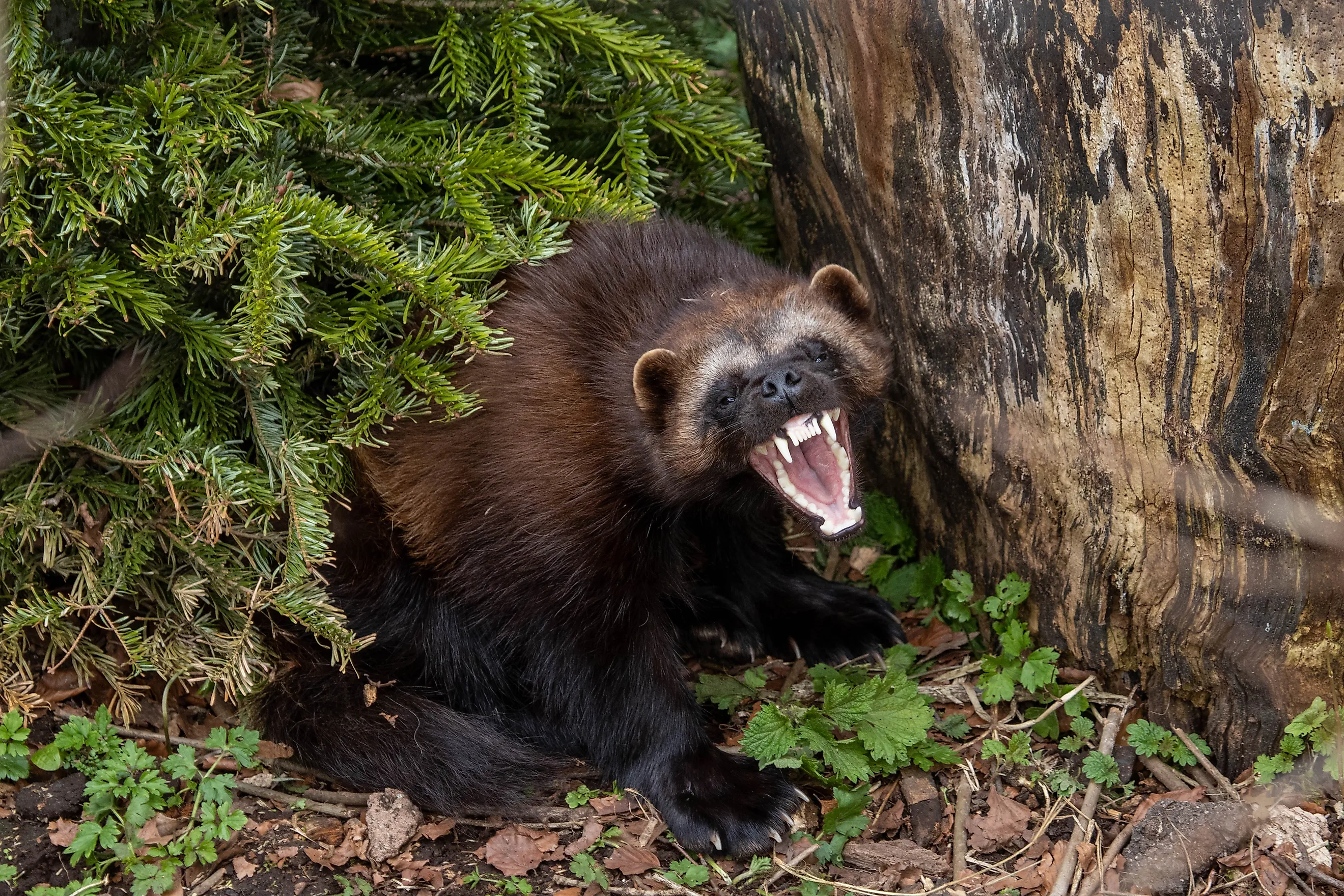
In 2020, Mount Rainier National Park documented its first reproductive female wolverine and two kits in more than a century. That was an extraordinarily surprising return for an animal that survives in low densities, let alone across some of the coldest, snowiest terrain in the West. Wolverines do indeed still occur in a handful of U.S. national parks, albeit sightings are exceptionally rare. Sadly, climate-driven loss of persistent spring snow remains the biggest long-term threat to the wolverine population, although conservation efforts are working to reverse that trend. These six parks are among the places where wolverines are confirmed, recolonizing, or central to active restoration plans.
Denali National Park

Located in the "Great Alone" of Alaska, Denali is a haven for wildlife spotting, with the park's "Big Five" being grizzly bears, moose, gray wolves, caribou, and dall sheep. But beyond those five, there's an even rarer animal to spot: wolverines. Wolverine sightings in Denali are rare due to the remote habitats they inhabit and their shy nature, but the park is known to have a population of them. While there are fewer than 10 human sightings in an average year, scientists have used the Denali wolverine population to track and study wolverine behavior in the wild.
Glacier National Park

In the mountains of Montana, one of the densest and most stable populations in the contiguous United States (or what Alaskans call the "lower 48") can be found in Glacier National Park. Researchers have indeed documented more than 50 individuals in the park over time. Visitors to the park are encouraged to keep their eyes open in hopes of spotting one of the wolverine residents, but are also warned to give any wolverine plenty of space. Back away slowly if the wolverine appears startled, but no need to be too frightened. Wolverines are generally timid and far more likely to run from a human than attack one.
Mount Rainier National Park

Washington State's Mount Rainier National Park is a popular spot for hiking and enjoying scenic mountain views, but it wasn't thought to be home to wolverines. That is, until 2020, when, over a century after what was thought to be the park's last wolverine sighting, a family of wolverines was sighted and photographed. This was an especially significant development because the sight of a mother wolverine and her two kits meant that there were enough wolverines present in the park for them to be reproducing. Only a year later, in 2021, a second litter of kits was spotted in the park, leading to hope that the wolverine population would continue to grow.
North Cascades National Park

Another Washington State National Park, the North Cascades, is one of America's least-visited. The park itself is largely roadless wilderness, which in turn limits access and also helps keep much of its wolverine habitat remote and lightly disturbed. That may be bad news for potential visitors, but it's good news for wolverines, who can roam the mountainous park undisturbed. Wolverines are thought to have returned to the Cascade region from Canada after being nearly eradicated in the early twentieth century. Wolverines have been reported within the park, as have their fellow mustelids, river otters, and more than 70 additional mammal species.
Gates of the Arctic National Park

Wolverines still roam the vast Brooks Range of Alaska's Gates of the Arctic National Park, where tundra, boreal forest, and rugged mountains provide the cold, remote habitat favored by the species. The National Park Service (NPS) lists wolverines among the mammals inhabiting this immense protected landscape, alongside other wildlife such as wolves, moose, and grizzly bears. Still, wolverines naturally occur at very low densities and can range across hundreds of square miles (39-309 square miles). This means encounters with these elusive animals remain exceptionally uncommon, even where populations are established. This park has no roads or maintained trails entering it. This, on top of millions of acres of designated wilderness, means that much of the wolverines' habitat remains remarkably undisturbed.
Yellowstone National Park

One of America's most famous national parks, Yellowstone is beloved for its natural geysers and herds of bison, but it's also home to a population of wolverines. The number of wolverines in the park is thought to be quite small, with some naturalists estimating that fewer than a dozen live in Yellowstone. Yellowstone's exact wolverine population remains difficult to quantify. NPS documented seven animals in eastern Yellowsotne and adjoining national forests between 2006 and 2009. Biologist Jim Halfpenny has separately compiled dozens of verified individuals and sightings across the Greater Yellowstone Ecosystem since 1990. He tracked reports of 83 individual verified wolverines, with at least 31 sighted between 2021 and 2026 (wolverines have distinctive markings and other physical characteristics that make it possible to tell one individual from another). These numbers suggest a substantial wolverine population in Yellowstone, one of several dozen individuals.
Remember, wildlife spotting in a National Park should be approached with caution. Not only are there no guarantees of seeing any particular creature, but any wildlife should be kept at a safe distance, for the sake of visitors and animals alike. Moreover, it's important to follow the "leave no trace" rules of visiting national parks. Whether or not a wolverine or any other wild animal is sighted, enjoy the beauty of the park, and have a safe and fun time!