The National Forests With The Most Bighorn Sheep
National Forests can be fantastic spots for birdwatchers, but there are also other creatures to consider, like deer, and, depending on the forest, bears and wolverines that may cross a path. Sheep may not seem like obvious additions to this list, but that's because most people think of domesticated sheep when the animals come to mind, like the ones that get sheared at county fairs each summer.
Bighorn sheep are something else entirely. These hardy creatures, far less woolly than their domestic counterparts, are wild animals found primarily in rugged, mountainous areas in the western United States. There are multiple varieties of bighorn sheep, starting with the desert bighorn in the southwestern United States. There is also the Sierra Nevada bighorn in California's Sierra Nevada Mountains, and the Rocky Mountain bighorn in the Rocky Mountains, among others.
What Are Bighorn Sheep?

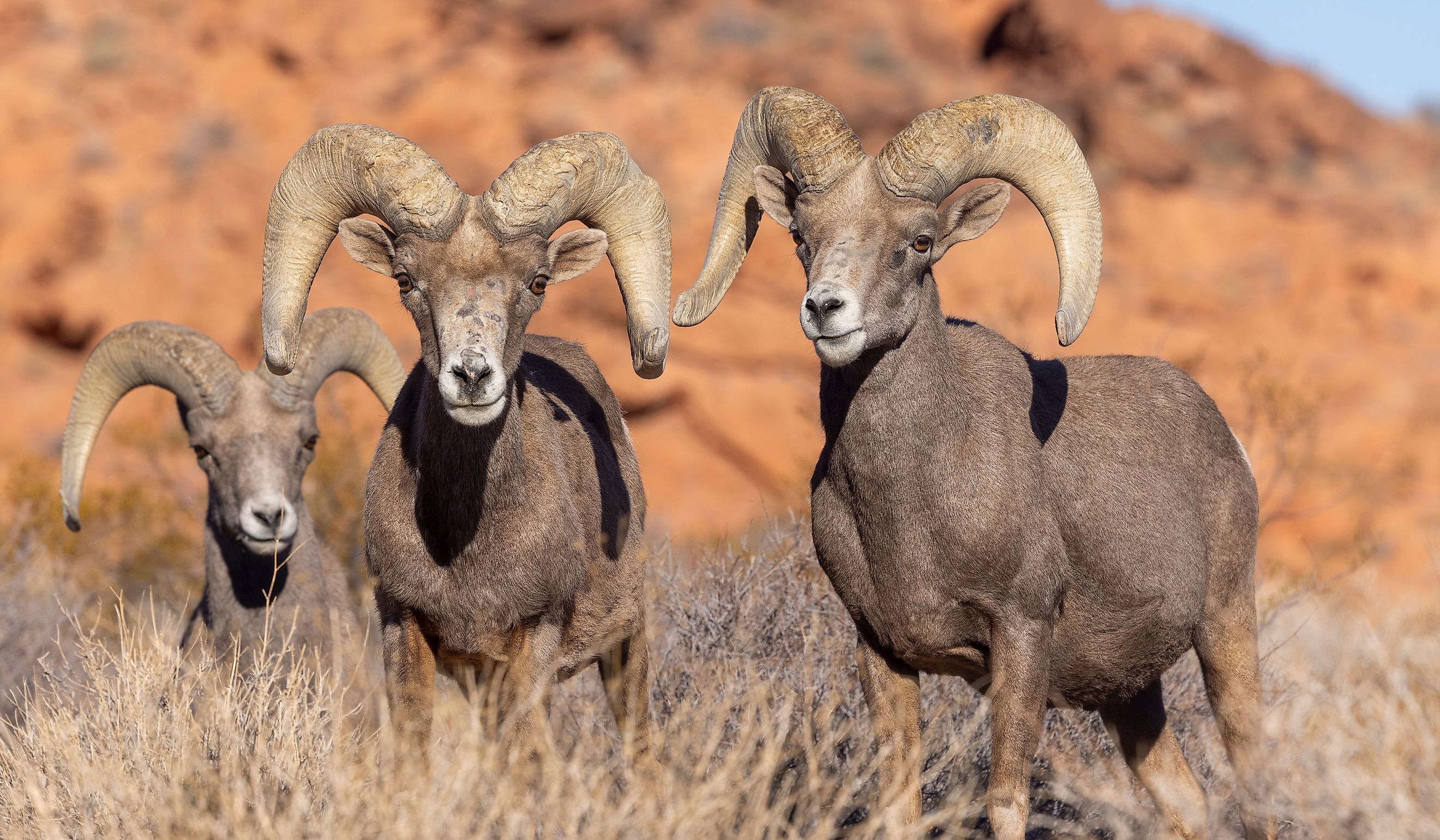
As their name suggests, bighorn sheep are a variety of sheep notable for their large, curling horns. These are especially pronounced on male bighorn sheep, who are known as rams, while females, or ewes, have smaller horns with less of a curve. Bighorn rams famously compete with each other in headbutting competitions every autumn, charging at up to twenty miles per hour, and clashing horns with a distinctive sound. Older rams often have damage on their horns from these annual displays of strength and ferocity.
While bighorn sheep tend to live in relatively remote areas, meaning that it's somewhat rare for people to see them in the wild, there's one particular National Forest where visitors' odds of an encounter are especially high. This doesn't mean anyone who visits is guaranteed to meet bighorn sheep, and even those who encounter them should exercise extreme caution and keep a safe distance. After all, bighorn sheep are wild animals, and those horns aren't just for competitions with other sheep. With that said, though, here are the National Forests where (perhaps unsurprisingly) there are populations of bighorn sheep roaming the grounds:
Angeles National Forest
The bighorn sheep population of Angeles National Forest in Southern California is not as large as in some National Forests, but it is still notable. That's because the sheep in this forest aren't just any bighorns; they're a rare, desert-adapted subspecies, known as desert bighorns.
The desert bighorn population at Angeles National Forest isn't evenly distributed; it's concentrated at the Sheep Mountain Wilderness, an area of over 41,000 protected acres within Angeles National Forest. Visitors need a Wilderness Permit to enter the area, and even then, due to the small population of sheep and the highly dispersed nature of the sheep population, spotting them can be extremely difficult, and is never a guarantee.
Bighorn National Forest

Yes, that's correct, the bighorn sheep population in this National Forest is so well known, and the Forest Service is so proud of them, it's even reflected in the name. Bighorn National Forest is located in Wyoming, and is considered by some as a less-crowded alternative to Yellowstone National Park. It's a large National Forest, spanning over a million acres of land, including mountains, lakes, meadows, and canyons. And, of course, including the homes of bighorn sheep.
Despite the name, bighorn sheep are sadly less common in Bighorn National Forest, and across the United States, than they once were. Some varieties of bighorn sheep have been declared endangered on the federal level after habitat loss and other issues have caused their numbers to drop. Even the bighorn sheep found in Bighorn National Forest have seen their numbers sadly reduced, due in part to competition for grazing land and resources from the domestic sheep, which have been permitted to graze on National Forest land.
However, while the bighorn sheep population in Bighorn National Forest has declined from its previous heights, there are still substantial populations of sheep, and opportunities for visitors to the forest to see them. Specifically, there's a dedicated Sheep Observation Site. While there's no way to guarantee that sheep will be present and active at the Bighorn Sheep Observation Site, there are ways to improve the odds. Visiting during the early morning or around sunset is generally recommended for maximizing sheep activity and sightings.
Inyo National Forest
Another spot for bighorn conservation, there are only a few hundred animals making up Inyo National Forest's bighorn population, but each one represents something important. That's because these are Sierra Nevada bighorn sheep, and they're federally listed as endangered. In fact, they're the only federally endangered mammal in Inyo National Forest.
The sheep live at some of the highest points of the forest's three mountain ranges. This means that sighting them is exceedingly challenging and rare, and as they are endangered wild animals, attempting to seek them out is not wise. However, for those who come to Inyo National Forest specifically for its mountains, such as those hoping to summit the forest's famous Mount Whitney (permit required) may get lucky and catch a glimpse. Be warned, though, that the forest is also home to black bears, and all wildlife should be treated with caution.
Rio Grande National Forest

While not home to as large a number of bighorn sheep as Bighorn National Forest, the bighorn population at Rio Grande National Forest, which is spread across 11 separate herds, totals over 1,000 animals. The Rio Grande bighorns won a major legal victory in April 2026, when a federal judge halted efforts to allow domestic sheep grazing on National Forest land used by bighorns, citing concerns over the sheep and their well-being when faced with resource competition from domestic animals.
Rio Grande National Forest does not have designated sheep spotting sites, but visitors report sighting the sheep on social media. The forest is also beloved for its access to the Rio Grande River. Visitors to the forest, whether they are lucky enough to spot a bighorn sheep or not, can fish or kayak on the river, and in the winter, the terrain in the forest is also popular for cross-country skiing.
While Sheep Observation Sites, like the one at Bighorn National Forest, allow visitors to observe bighorn sheep from a safe distance, those who encounter bighorn sheep elsewhere in the forest, at ground level, must be cautious. While bighorn sheep are not often aggressive, they can be if they feel threatened, which can lead to danger for both humans and sheep. Be sure to keep a distance of at least 75 feet from any bighorn sheep in the forest; those who do accidentally come closer to one or several sheep are advised to move away slowly, while remaining calm and avoiding making any loud noises.
Beyond wildlife spotting, National Forests have plenty of other activities to enjoy. Even those who come for the sheep can savor the hiking, fishing, and rock climbing opportunities within the forest. And there's no reason to be restrictive; depending on your forest and your schedule, a scenic drive, sighting some sheep, a little hiking, and even lakeside fishing and camping can all be incorporated into a single National Forest experience.