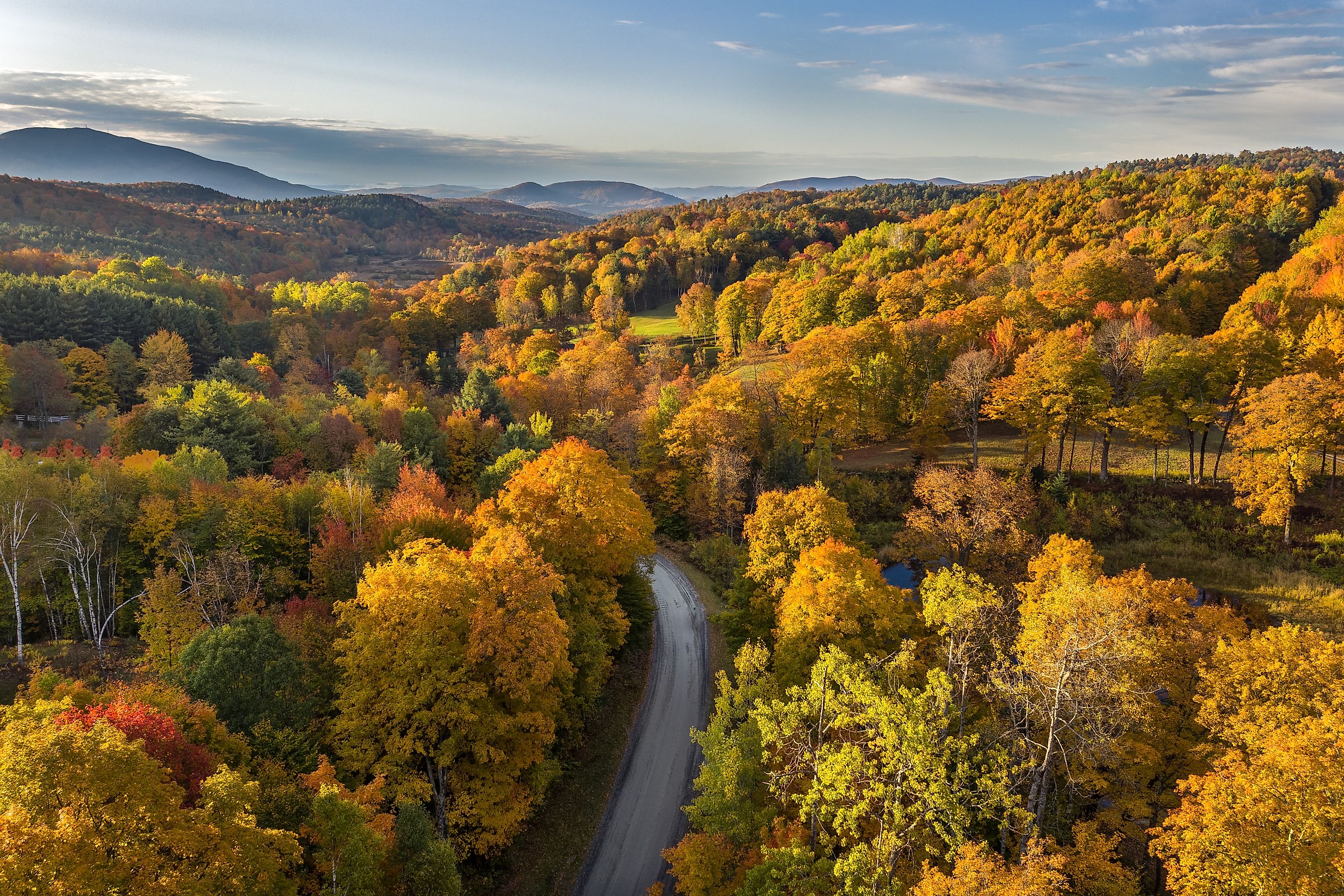
This Vermont Scenic Byway Is The Road Trip Of A Lifetime
If you want a Vermont road trip that feels less like checking destinations off a list and more like wandering through a postcard, the Connecticut River Byway is hard to beat. Stretching 500 miles from the Canadian border to the Massachusetts line, the byway follows the Connecticut River through Vermont and New Hampshire. It passes through quiet villages, covered bridges, historic sites, farms, forests, and beautiful places you'll want to pull over for. You don't have to tackle the entire route. This four-day itinerary follows US Route 5 from St. Johnsbury to Brattleboro, with stops in Norwich, White River Junction, Windsor, and Bellows Falls. Think of it as a loose guide rather than a strict schedule. If something catches your eye, stop and explore, then get back on the road for more.
Day 1: St. Johnsbury

Start in St. Johnsbury, a northern Vermont town with a historic downtown and several worthwhile attractions. Begin at the Fairbanks Museum & Planetarium, then wander over to the St. Johnsbury Athenaeum to admire its architecture and art. If you have the time to spare, make the short drive to Dog Mountain, a quirky 150-acre hilltop property with walking trails and the Stephen Huneck Gallery. The Dog Chapel is papered wall-to-wall with notes visitors have left for pets they have lost. When hunger strikes, the Kitchen Counter Cafe on Railroad Street handles breakfast and lunch, or stop farther up Railroad Street at Boule Bakery for coffee and a pastry. For dinner, Salt Bistro on Eastern Avenue makes a good choice before calling it a night.
Heading south, Route 5 picks up the Passumpsic River, which meets the Moose and the Sleepers right at St. Johnsbury. The road tracks that water downstream to Barnet, where the Passumpsic empties into the Connecticut, then carries on past the farm fields of McIndoe Falls and Wells River with the New Hampshire hills climbing toward the White Mountains on the far bank. Slow down for the farm stands and the scenic pull-offs. That's really the spirit of this byway: enjoying the smaller communities instead of rushing between the major attractions.
Day 2: Norwich and White River Junction

Follow US Route 5 south toward Norwich and White River Junction. Below Wells River, the road runs close to the water through Newbury and Bradford, and at Fairlee, the Palisades rise in a bare rock wall above the highway, with Lake Morey sitting a mile to the west. The Ompompanoosuc River comes in from the north between Thetford and Norwich, and the valley widens out into some of the best farmland on the Vermont side.
In Norwich, stop at King Arthur Baking Company, Café, Store & School for breakfast or something sweet. If you're a baking fan, you may find it difficult to leave without picking up a treat for the road. Nearby, the Montshire Museum of Science is another worthwhile stop. Set on 110 acres along the river, it combines hands-on exhibits with outdoor trails, making it a fun stop for both kids and adults.

Continue to White River Junction, a historic transportation hub shaped by railroads and rivers. The village takes its name from the White River, which meets the Connecticut at its eastern edge. Check out Boston & Maine Railroad No. 494, then wander through the eclectic Main Street Museum, housed in a former fire station. For dinner, Thyme serves farm-to-table cuisine inside the old Tip Top Bread bakery building, now full of artist studios and shops. It's a nice place to slow down after a day of exploring.
Day 3: Windsor and Bellows Falls

South of White River Junction, Route 5 threads through Hartland farmland before Mount Ascutney appears ahead. The 3,144-foot peak stands alone above the valley, and a paved road inside Ascutney State Park climbs most of the way to the summit if you want the view. Continue south to Windsor, known as the "Birthplace of Vermont." Its walkable downtown is packed with history and makes a pleasant place to stretch your legs.
The Old Constitution House is closed for renovations through the 2026 season, with reopening planned for 2027, so make the American Precision Museum your main stop. Housed in the 1846 Robbins & Lawrence Armory, the museum traces the rise of interchangeable parts and the machine tools this valley sent out to the rest of the world. Afterward, grab lunch in downtown Windsor before crossing the Cornish-Windsor Covered Bridge into New Hampshire, a 449-foot Town lattice span built in 1866. The surrounding hills are especially beautiful when fall foliage arrives.

Then continue to Bellows Falls, a village known for its historic downtown and its role in early American transportation. The drive south of Ascutney runs through Weathersfield and along the eastern edge of Springfield, and the Williams River comes in from the west just above the village, where the Connecticut narrows and drops through a rock gorge. Fall Mountain rises straight off the far bank in Walpole, New Hampshire. Walk the brick blocks downtown, then follow the water to the Frank Adams Grist Mill, an 1831 stone-and-timber mill in Riverfront Park that opens on weekends through the warm months. This is a place worth wandering without an itinerary.
Day 4: Brattleboro and the Southern Valley

For the final leg, Route 5 continues south through Westminster and Putney with the river on one side and the eastern wall of the Green Mountains on the other. Black Mountain rises above Dummerston, and the West River arrives from the northwest just as you reach Brattleboro, one of the liveliest communities along Vermont's portion of the byway. Wantastiquet Mountain stands 1,335 feet above the far bank in New Hampshire, close enough to fill the windshield before the town does. Start at the Brattleboro Museum & Art Center in the town's historic Union Station, then explore Main Street's independent shops, bookstores, galleries, and restaurants.
If you want a little more scenery, take a detour up Route 30 to the West Dummerston Covered Bridge, a 280-foot Town lattice span built in 1872 over the West River and the longest covered bridge sitting entirely inside Vermont. Or drive about 15 minutes north to Putney, a small community known for its artists, artisans, shops, and countryside. Return to Brattleboro for your final evening. For dinner, T.J. Buckley's is a memorable splurge, serving local farm-to-table cuisine inside a restored 1925 Worcester dining car with eight tables and an open kitchen. It's a fitting way to finish a road trip that's all about slowing down and enjoying the journey.
Timing The Drive

Fall is hard to beat, with September and October bringing colorful hills and forests throughout the Connecticut River Valley. The color reads differently along the route: bare rock and hardwoods at the Fairlee Palisades, a long open view from the Mount Ascutney summit road, mist sitting on the water at Bellows Falls. Summer is good for hiking, paddling, farm stands, and warmer weather, while spring is quieter but can bring muddy roads. Winter turns the valley stark and quiet, although snow and ice can make driving more challenging. The byway is a year-round network of roads, but individual attractions have seasonal hours, so check conditions and schedules before you go.
The Road Trip You'll Remember

The Connecticut River Byway isn't about getting somewhere quickly. It's about the little moments: a covered bridge around a bend, a farm stand selling maple products, a historic village green, or a mountain view that makes you reach for the camera. Follow this itinerary closely or wander off when a pretty road catches your eye. With scenic roads, welcoming towns, great food, and plenty of places to stop along the way, the byway is practically designed for travelers who like to slow down and see where the road leads. And that's exactly what makes the Connecticut River Byway feel like the road trip of a lifetime.