How Many Wolves Live In Yellowstone Now
Wolves returned to Yellowstone National Park in 1995, nearly 70 years after the last of the park's original wolves were killed. Three decades later, the count has slipped well below the 108 wolves biologists tallied at the end of 2024, and the reason for the shortfall is complex. A predator-control campaign from a century ago, a virus that hits pups hardest, and the park boundary where hunting becomes legal all play a part. The latest number comes as a surprise, especially compared with a national park on Lake Superior, where wolves are now thriving. Here is how many wolves Yellowstone has left, what is driving the decline, and where to look for them in the park today.
The Wolf Hunt of the 1920s

In an effort to "tame" the great American wilderness, the US government sought to eradicate all large predators in Yellowstone National Park, including wolves. This looked like supporting targeted killings, which continued until 1926, when the park's last wolves were killed. According to historical records, approximately 136 wolves were killed in the park throughout the early 20th century. But why would the government seek to eradicate the wolf?
Wolves were seen as threats to local livestock, game herds like elk, and people. The result was a series of policies and attitudes that led to the huge decrease in wolf populations that have been hard to recover from ever since. Over the decades, grey wolves have also been on and off the Endangered Species Act (ESA), which hasn't helped their population growth. Federal protections for wolves ended in Idaho and Montana in 2011 and in Wyoming in 2017, and all three states now allow wolf hunting outside the park.
Other Population Impacts

The small numbers of wolves remaining in Yellowstone aren't just due to hunting and government policies; disease has also taken a heavy toll on wolf populations. In 2005, the Canine Distemper Virus (CDV) broke out, primarily affecting wolf pups. Distemper killed about two-thirds of the pups in the park that year, which caused a dramatic decrease in survival rates. But 2005 wasn't the last time a virus swept through, taking out the wolf population. In 2025, CDV flared up again. The virus was detected in 64% of wolves tested in Wyoming's trophy game area just outside the park, and only 17 of at least 36 Yellowstone pups survived the year. Distemper likely drove the 2025 drop, but most wolves inside the park die in fights with rival packs, while human causes, including hunting, kill most wolves outside it. Fortunately, there are advocates and organizations working to save the wolves.
Saving the Wolves

Biologists, researchers, and organizations across the board are working to preserve and protect the dwindling wolf population in Yellowstone. The Yellowstone Wolf Project's biologists monitor wolf pack sizes, pup survival, and overall health and help inform park and government policy for preservation. Digital tools like bioacoustics and AI help researchers hear and analyze wolf howls in Yellowstone to better understand their location and communication. Meanwhile, philanthropic organizations like Yellowstone Forever are working to conserve and maintain the wolf and other mammal populations.
Other Parks With Strong Wolf Populations

Yellowstone's slump stands out against wolf country in the Upper Midwest. In northern Minnesota, the statewide wolf population has typically ranged between 2,400 and 3,000 animals since the 1990s. Around Voyageurs National Park, the Voyageurs Wolf Project counted about 100 wolves in 2025, the lowest figure in more than a decade, a dip researchers tied to fewer deer. Even so, the project's biologists describe the area's wolves as a fairly stable, high-density population that should grow again as deer numbers rebound.
The biggest comeback belongs to Isle Royale National Park in Michigan. A decade ago, the island in Lake Superior was down to just two inbred wolves. The National Park Service brought 19 wolves to the island in 2018 and 2019, and by winter 2026, researchers from Michigan Technological University estimated 37 wolves living in three packs, the highest count since the 1970s. The rebound has come at a cost to the island's moose, which fell to an estimated 524 animals, down from about 2,000 in 2019.
Where the Wild Wolves Roam Now
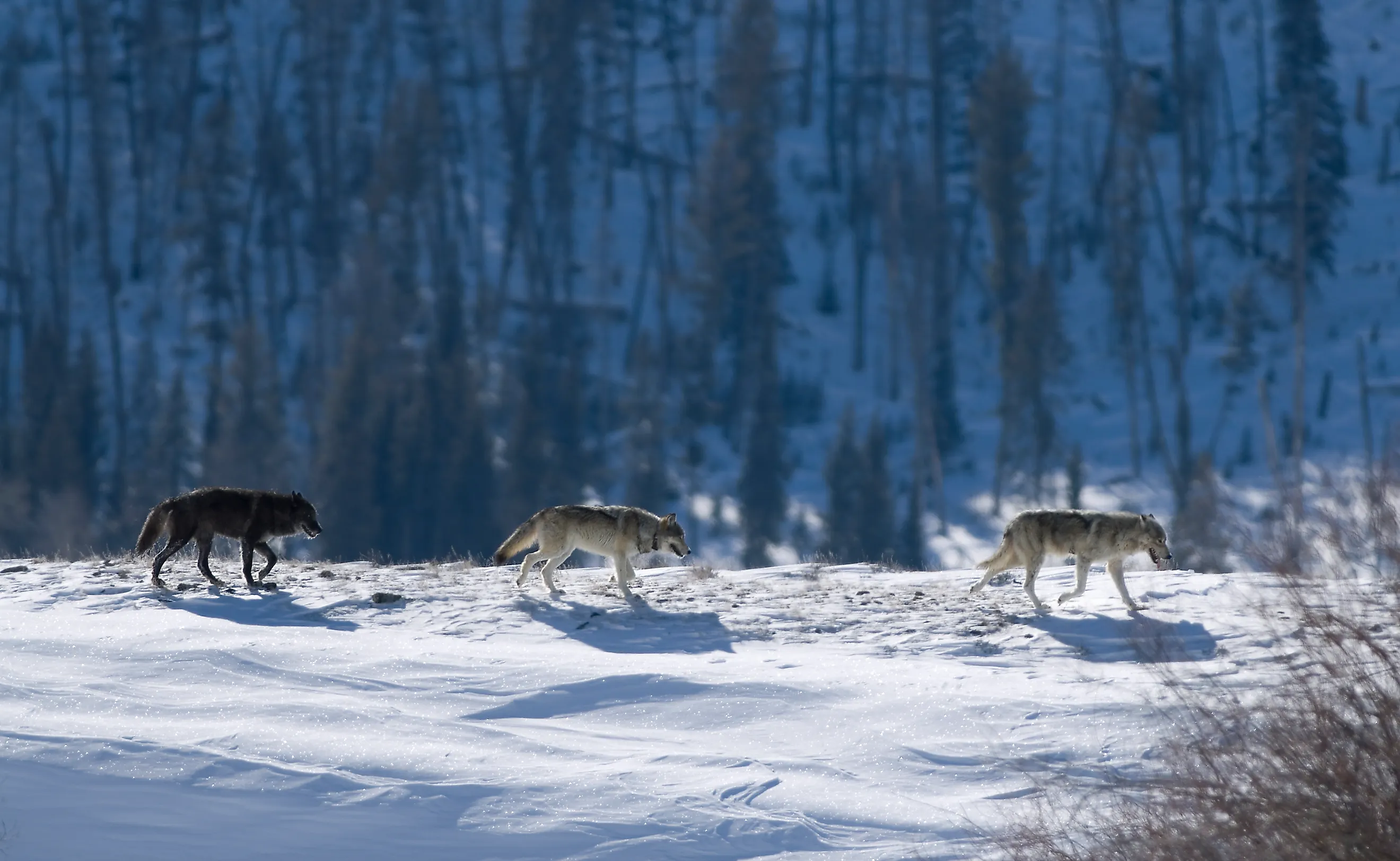
Yellowstone's wolves now range throughout the greater Yellowstone ecosystem, including just outside of the park boundaries. There, it's still legal to hunt them. Within the park, a pack's home range typically spans 185 to 310 sq. miles (300 to 500 sq. km), depending on pack size, food, and season. Although they are heavily monitored within these areas, you can also find them roaming around the open spaces in the Lamar Valley, Hayden Valley, and Blacktail Plateau. The wolf population's rebound will depend heavily on government regulation and protections against hunting within and outside the national park. Organizations and technology are here to help monitor the health and well-being of the wolf population, with the hopes of staving off diseases while boosting their presence as natural predators in Yellowstone.