The National Monuments That Get More Visitors Than National Parks
Nine national monuments each drew more visitors in 2025 than over a third of the country's 63 national parks, and most of them sit a short drive or a ferry ride from a city. The two in New York Harbor each logged more visits than Glacier National Park, and even the smallest crowd of the nine was bigger than Mesa Verde's. Most of these monuments stay open all winter, and a few are at their best right now. Gray whales pass a point in California from late December to mid-March, and cannon firings are on the calendar at a Spanish fort in Florida through January.
Castle Clinton National Monument, New York
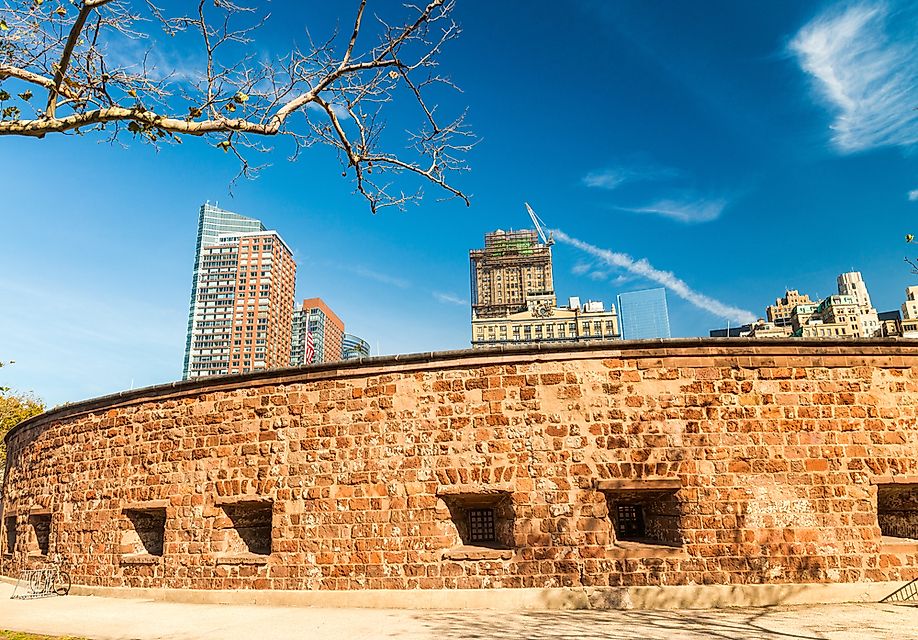
The busiest national monument in the National Park System has a ferry ticket office inside it. Castle Clinton, a fort at the southern tip of Manhattan finished in 1811, is the starting point for the boats to the Statue of Liberty and Ellis Island, and the only on-site office selling authorized tickets for them is inside its walls. It counted 3,656,350 visits in 2025, about 72,000 more than Olympic National Park. The fort handled a different crowd in the 19th century. It opened as Castle Garden, an immigrant landing depot, in 1855, and more than 8 million people entered the United States through it over the next 34 years. A museum gallery inside traces the fort and Lower Manhattan in dioramas from 1811 to 1940.
Statue of Liberty National Monument, New York and New Jersey

The climb to the Statue of Liberty's crown starts at the pedestal and covers 162 steps on a narrow double-helix stairway with no elevator. Gustave Eiffel's framework is in full view the whole way up. Crown tickets are limited and must be bought in advance, and Statue City Cruises allows 10 minutes inside the crown.
Getting that far starts with airport-style security at The Battery or at Liberty State Park in New Jersey. The time printed on a ferry ticket is the time to join the screening line, and at peak times, the wait can run an hour or more. Statue City Cruises is the only ferry service to the island, and its boats brought 3,538,231 visits to the statue in 2025, roughly 400,000 more than Glacier drew. An adult ticket costs $26 and covers both Liberty and Ellis islands.
Cabrillo National Monument, California

A winter day at Cabrillo National Monument, on the tip of San Diego's Point Loma, 8 miles from the Gaslamp District, can start with gray whales. Their season here runs from late December to mid-March and peaks in mid-January, as they migrate from the waters off Alaska to the lagoons of Baja California. The gates open at 9 a.m., and the heights near the Old Point Loma Lighthouse, first lit in 1855, give some of the best views, with a glassed-in observatory and telescopes on an overlook nearby. Even with its gates shut from October 1 to November 12 during the federal shutdown, Cabrillo drew 769,336 visits in 2025, more than Glacier Bay or Crater Lake.
The tidepools have their best season now, too. Late fall and winter have the good daytime low tides, while summer's lowest tides fall in the middle of the night. The pools can be explored for about two hours on either side of low tide, and the tidepool area closes at 4:30 p.m., half an hour before the main gate.
Muir Woods National Monument, California

Every car and every shuttle rider headed to Muir Woods, 12 miles north of the Golden Gate Bridge, has needed a reservation since 2018. A standard parking spot costs $10 through GoMuirWoods, plus the $15 entrance fee for visitors 16 and older. There is no cell service or Wi-Fi on site, so the voucher has to be downloaded before the drive, and the seasonal shuttle stopped for the year on October 31. Even with that system in place, the count reached 756,573 visits in 2025, ahead of Theodore Roosevelt National Park's 729,893.
About half a mile in, the main trail reaches Cathedral Grove, which the Park Service manages as a silent preserve. The grove holds the tallest and oldest redwoods in Muir Woods. The tallest tree in the monument stands at least 260 feet, and some of the trees here are at least 1,000 years old.
Cedar Breaks National Monument, Utah

Cedar Breaks sits above 10,000 feet in southern Utah and can receive more than 25 feet of snow, so State Route 148 through the monument usually closes to cars from mid-November to mid-May. Through the winter, the rim overlooks are reached by snowmobile on a marked route or on skis and snowshoes. Only North View Overlook, on State Route 143, stays open to cars when conditions allow.
Shut to cars for about half of every year, Cedar Breaks still outdrew Mammoth Cave in 2025, 718,014 visits to 660,734. In summer, it is about 18 miles from Cedar City and 4 miles from the resort town of Brian Head, and the road follows the rim of an amphitheater 3 miles wide and about half a mile deep. Point Supreme Overlook stands at 10,350 feet.
The Spectra Point Trail runs about a mile out along the rim, and bristlecone pines grow beside it. The oldest known bristlecone in the monument is about 1,700 years old. In winter, the trail is under snow along with every other trail in the monument.
Fort Matanzas National Monument, Florida
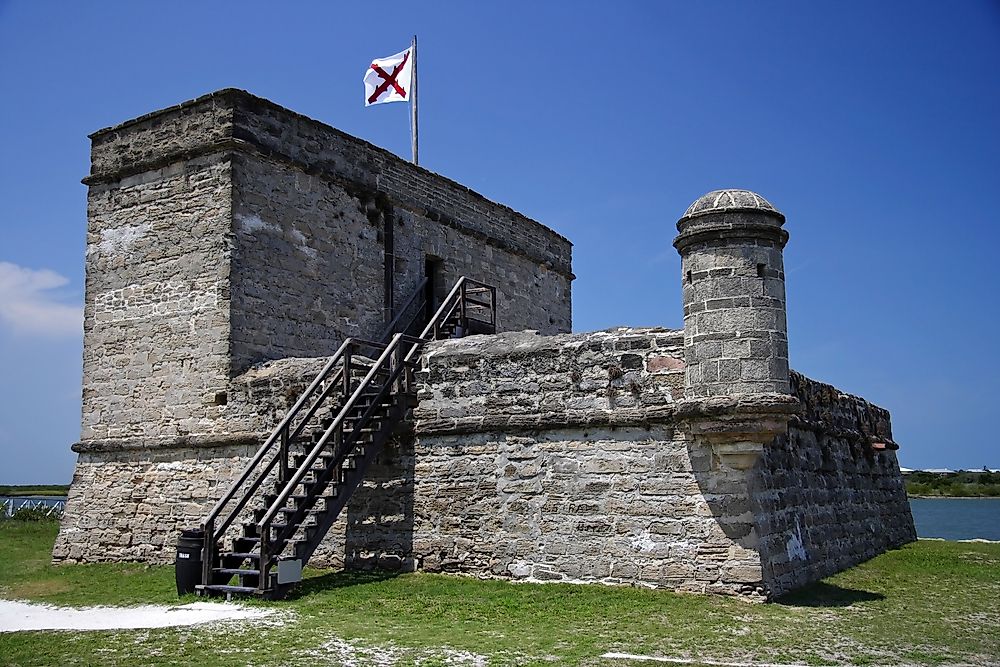
A free ferry from the visitor center dock is the way out to Fort Matanzas, about 14 miles south of St. Augustine. Passes are handed out the same day on a first come, first served basis, with no fort tours on Tuesdays or Wednesdays, and they often run out before 11 a.m. The boat ride takes about seven minutes, and visitors get roughly half an hour at the fort.
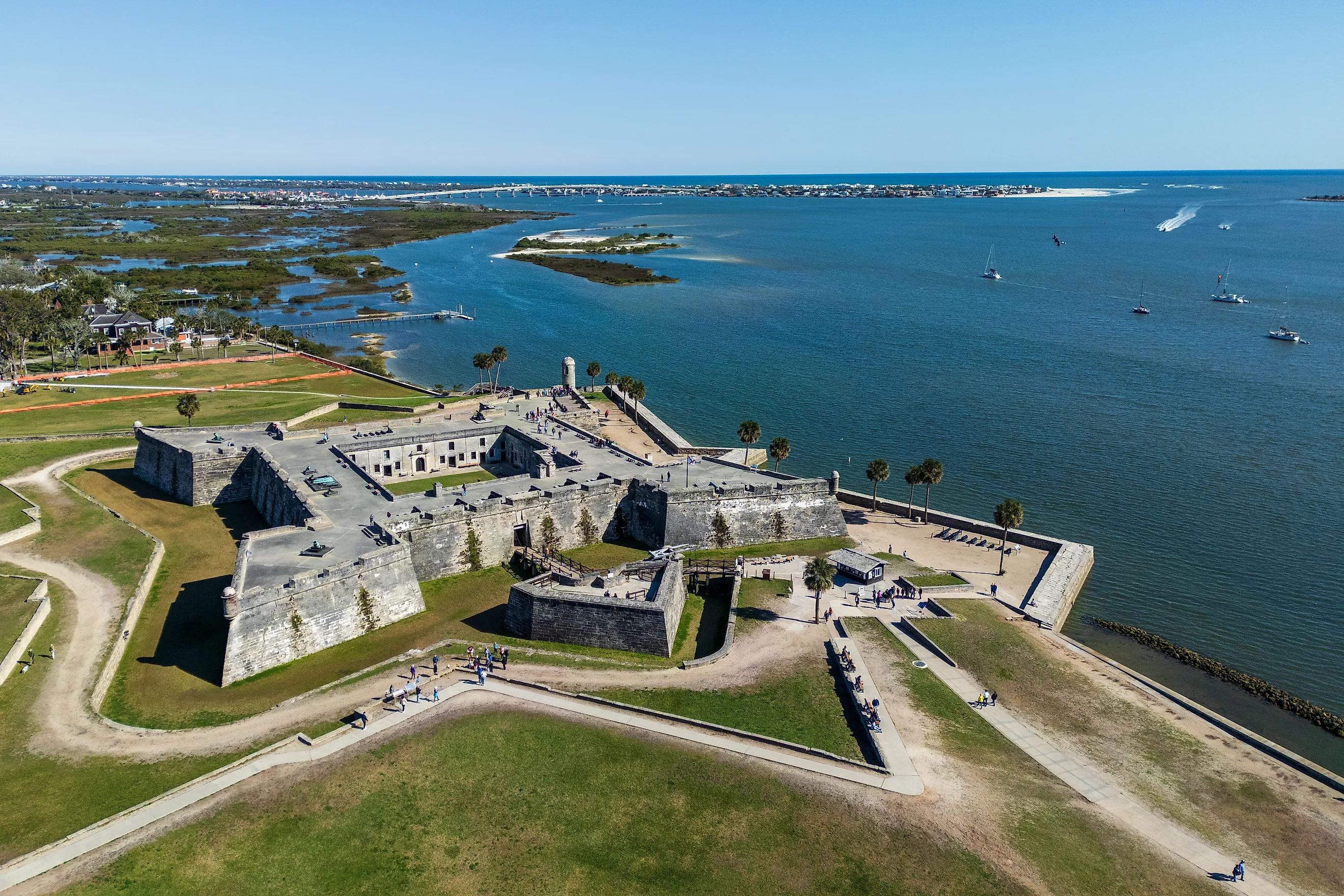
The fort is a coquina watchtower, 50 feet on each side with a 30-foot tower, finished in 1742 to control Matanzas Inlet, the back door to St. Augustine. Seven to ten soldiers and an officer usually stood duty there, and two original cannon still sit on the gun deck. On the visitor center side of the river, the park also has beaches on the Matanzas River and the Atlantic, and entry to all of it is free. Fort Matanzas counted 653,152 visits in 2025, and Big Bend National Park, at 568,104, finished behind it.
Castillo de San Marcos National Monument, Florida
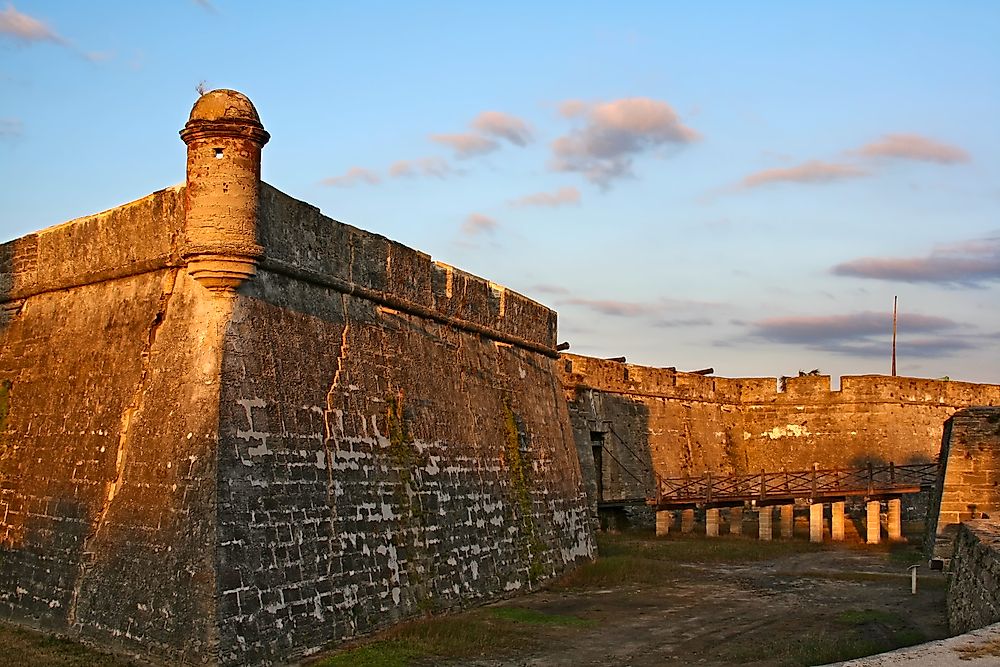
The Castillo de San Marcos stands on the bayfront in downtown St. Augustine, and it is the oldest masonry fort in the continental United States. The Spanish began it in 1672 and finished it in 1695. Visitors cross a drawbridge to the sally port, the fort's only entrance, through walls 14 feet thick. Admission costs $15 for adults and is good for seven days.
The Castillo counted 598,070 visits in 2025, and with Fort Matanzas, 14 miles south, the two forts reached 1,251,222, more than Redwood National Park. Visitation peaks around the holidays, especially from Christmas to New Year's, and St. Augustine's Nights of Lights runs from November 21, 2026, to January 18, 2027. The park's demonstration schedule lists cannon or musket firings on December 13 and 27 and January 10 and 24, five times a day, weather and staffing permitting.
Devils Tower National Monument, Wyoming

Visitor and climber numbers at Devils Tower jumped after 1977, the year Close Encounters of the Third Kind put the 867-foot tower on movie screens. About 12 minutes of the film's footage was shot at the monument the year before. Theodore Roosevelt had made it the country's first national monument in 1906, and in 2025 it drew 515,303 visits, edging out Lassen Volcanic National Park.
The paved Tower Trail makes a 1.3-mile loop around the base, and the tower above it draws 5,000 to 6,000 climbers a year. Anyone heading above the boulder field must register, and each June the park asks climbers to stay off voluntarily, out of respect for American Indian ceremonies. The entrance is 27 miles northwest of Sundance by way of U.S. 14, off Interstate 90, and visitors pass a black-tailed prairie dog town on the drive to the visitor center.
Colorado National Monument, Colorado

Colorado National Monument drew more visits in 2025 than three of the state's four national parks. Its 483,436 visits topped Mesa Verde and Great Sand Dunes and nearly doubled Black Canyon of the Gunnison, leaving Rocky Mountain as the only Colorado park ahead of it.
The east entrance is about 5 miles west of Grand Junction, and no reservation or timed entry is needed. From there, Rim Rock Drive runs 23 paved miles to Fruita through three tunnels and past 19 signed waysides, and desert bighorn sheep are commonly seen along the road. The drive stays open year-round, though it averages more than 27 inches of snow a year and can close temporarily. Among the formations below the drive is Independence Monument, a 450-foot sandstone tower. John Otto, the monument's first caretaker, climbed it in 1911 and started a tradition of raising an American flag on top for the Fourth of July, and climbers still carry the flag up every year.
These nine monuments took in about 11.7 million of the 17.8 million visits the Park Service recorded at national monuments in 2025, close to two of every three. Added together, their 11,688,465 visits topped Great Smoky Mountains, the most visited national park, with 11,527,939. They reached those totals in a down year. Visits across the park system fell 2.7 percent from 2024, and some sites closed completely during the 43-day shutdown in October and November. Fort Matanzas had a setback of its own. Its ferry was out of service in January 2025 after Hurricane Milton damaged the dock, and the fort still finished the year ahead of Denali.