The National Parks With The Most Bat Colonies
At sunset in New Mexico, the mouth of Carlsbad Caverns becomes the stage for one of North America's most remarkable wildlife spectacles. Hundreds of thousands of Brazilian free-tailed bats pour out of the cave, forming a dark, swirling stream against the evening sky. However, it is not the only extraordinary bat gathering protected within America's parks. Deep in Big Bend, Mexican long-nosed bats gather in Emory Cave to raise their young and feed on flowering agaves. At New River Gorge, a purpose-built bat condo can accommodate as many as 10,000 bats. Elsewhere, bats occupy ancient caves, abandoned mines, hollow trees, and narrow cracks in towering cliffs. These national parks protect vital roosting grounds for bats, whose nightly feeding flights help keep insect populations in check and sustain healthy ecosystems.
Carlsbad Caverns National Park - Carlsbad, New Mexico

Carlsbad Caverns National Park in Carlsbad, New Mexico has one of the largest bat colonies in the U.S. National Park System. As of 2005, the colony of Brazilian free-tailed bats ranges by time of year from 400,000 in the summer to 793,000 in the fall and spring. The park is home to 17 species of bats, only 3 species which roost inside the caverns. The count estimates are old, but the park is currently working with researchers from Boston University to install thermal infrared imaging cameras to track current populations.

The park offers visitors a chance to observe the bats daily as they leave the natural cavern opening. At sunset, the park opens the free Bat Flight Amphitheater from April through October. The largest flights typically occur in August and September as the new baby bats take flight. Visitors can also view the bats returning to the cave entrance at pre-dawn.
The majority of the colony living in the caves are Brazilian free-tailed bats, and those are generally the type that leave and return during the bat flight. The other two bat species living in different parts of the caves are Cave Myotis and Fringed Myotis bats. Roosting within the trees within the park are also Eastern Red Bats and Hoary Bats. Canyon bats also roost on rock cliffs and within cracks in the rock walls of the park. All the known bat species within Carlsbad Caverns National Park are insectivores.
The park’s ecosystem variety helps support bat populations. The park offers desert, semi-desert grasslands, desert scrub, woodlands, montane chaparral, and montane woodland ecosystems. The park estimates that more than 600 species of insects inhabit the park, perfect for insectivores.
Challenges For Carlsbad Cavern Bats

Bats in the park face several threats common to other national parks. The first is WNS, or white-nose syndrome. WNS is a fungus that has killed an estimated 6 to 7 million bats in the US. Currently, there is no known WNS fungus within Carlsbad Caverns National Park. However, the park works diligently to keep the bats safe by requesting visitors not to wear clothing worn in any other cave.
Grand Canyon National Park - Northwestern Arizona

Grand Canyon National Park is a critical refuge for the 22 documented bat species that live in the park. The park provides a vast area with access to several roost types to support a wide variety of bat species within the canyon floor, rock formations, and along the river corridor. All of the bat species found in Grand Canyon National Park use echolocation, have small eyes, and large ears. Bats echolocate by emitting high-frequency calls. They determine how far away an object or prey is by how long it takes for their call to echo back to them. Echolocation also helps bats determine the size, texture, and speed of their prey, such as insects.

In Grand Canyon National Park, bats roost in various areas. Many roost within Ponderosa Pine trees, caves, buildings, cracks in cliff walls, or abandoned copper, gold, and uranium mines. The bats within the park tend to be nocturnal and then hibernate or rest during the day. Some of the species of bats found within the park include Western mastiff (Eumops perotis), Big free-tailed (Nyctinomops macrotis), Pocketed free-tailed (Nyctinomops femorosaccus), Mexican free-tailed (Tadarida brasiliensis), Mexican long-tongued (Choeronycteris mexicana), California leaf-nose (Macrotus californicus), Pallid (Antrozous pallidus), Townsend’s big-eared (Corynorhinus townsendii), Big brown (Eptesicus fuscus), and others.
Bat colonies within the park rely on the availability of aquatic flies common along the Colorado River. Bat species that roost along the river corridor include the Canyon bat, California myotis, and Yuma myotis. Due to the bats' reliance on aquatic insects, the park is working with river management and dam operations to promote retaining bug floors within the park and all along the Colorado River.
Challenges For Grand Canyon Bats

Within Grand Canyon National Park, bats face different challenges. One is the presence of rabies. Rabies affects less than 1% of the bats in the park. However, rabies can be transmitted to other mammals, including humans. Rabies is preventable for humans and animals. Humans given PEP (post-exposure prophylaxis) treatment immediately after exposure protects from the disease. For animals, rabies is nearly always fatal. To reduce the risk of rabies exposure, human visitors to the park should never approach or touch wildlife.
Bats in the Grand Canyon face habitat loss and diseases such as rabies and WNS. As of 2018, no WNS has been confirmed in the area. Bats play important roles within our ecosystem as insect predators, prey, and pollinating plants. The Grand Canyon Conservancy works within the park to run a long-term Bat Monitoring Program to gather data on bat diversity, distribution, seasonal roost occupancy, and life patterns within the park. As researchers monitor bat populations in the park, the park hopes to help support the continued health of bats in the park and around the U.S.
Big Bend National Park - Remote West Texas

Big Bend National Park is located 100 miles from any city in the remote Brewster County, Texas. The park supports a documented 22 species of bats found in the West Texas Chihuahuan Desert. The park includes the Rio Grande River, the Chihuahuan Desert, and mountain forests of the Chisos Mountains.

Big Bend started studying bats within the park as early as 1967, and research continues today with the help of Angelo State University. As of 2013, approximately 5700 bats representing 22 species were temporarily captured and documented living within the park. Research is ongoing and includes testing and treating for WNS and expanding general knowledge of bats, genetics, roosting ecology, diet, and ecosystem impacts.
Some of the species found in Big Bend National Park include Big brown (Eptesicus fuscus), Tri-colored (Perimyotis subflavus), Cave myotis (Myotis velifer), Long-legged (Myotis volans), Yuma myotis (Myotis yumanensis), Silver-haired (Lasionycteris noctivagans), Western small-footed (Myotis ciliolabrum), Townsend’s Big-eared (Corynorhinus townsendii), Mexican free-tailed (Tadarida brasiliensis), and others.

Emory Cave Maternity Roost
Emory Cave within Big Bend National Park serves as a maternity roost for the Mexican long-nose bat. Every summer, female bats travel to the cave during their annual bat migration from Mexico. The females roost and raise their young (cubs). They emerge every evening to feed, especially on flowering agave plants. The bats effectively serve as pollinators for the agave.
Traditional methods of counting bat populations fail to work on the Mexican long-nose. The park, with the help of Angelo State University, Warnell School of Forestry and Natural Resources, and the Washington Fish and Wildlife Office, used thermal imaging cameras to count the bats within Emory cave. The colony numbers as of 2023 vary from 294 to 3360 in the summer. Population numbers are stable, which is good news for restoring the endangered bat species and the ecosystems they support.
Challenges For Big Bend Bats

The WNS fungus was first detected in Texas in early 2017. Four species of bats within the park appear to suffer from the fungus, including the Cave Myotis, Tri-colored, Townsend’s big-eared, and the Mexican free-tailed bats.
Yosemite National Park - California

Yosemite National Park is located in east-central California within the Sierra Nevada Mountains. As of 2026, the park is home to 17 species of bats. However, the native species seen regularly are the Western mastiff, Spotted, Big Brown, Mexican free-tailed, and Canyon bats. Park biologists continuously track colonies roosting within the sheer granite cliffs within the park, as well as behind Yosemite Lodge.
Bat species found in Yosemite include Little brown (Myotis lucifugus), Big brown (Eptesicus fuscus), Long-legged myotis (Myotis volans), Long-eared myotis (Myotis evotis), Fringed myotis (Myotis thysanodes), Yuma myotis (Myotis yumanenesis), Western pipistrelle (Parastrellus hesperus), Western red (Lasiurus blossevillii), and several others.
Bats are one of the tiniest mammals and one of the most mobile. Bats can fly, which enables them to establish roosts in a wide range of habitats, including the rock walls of Yosemite. Yosemite bats have known roosts at elevations greater than 10,000 feet. They roost in rock crevices, cracks, caves, under loose bark, bridges, and tree cavities.

Yosemite bats, like many others, undergo torpor or a daily sleep state during the day. Their body temperatures adjust to the temperature within the roost. When temperatures are cold, bats tend to be sluggish during torpor or resting periods. Bats in Yosemite tend to roost where the temperature remains stable and at least a few degrees above freezing (31 degrees Fahrenheit). Yosemite Park researchers use acoustic technology to locate bats. They will attach radio-tracking devices to learn where roosts are located. The devices stick to the bats typically for two weeks and then fall off. Several bat species within the park move into fire-scarred hollows of Yosemite’s sequoia trees.
Challenges For Yosemite Bats

Bats in Yosemite are threatened by invasive diseases such as WNS, habitat loss, and wildfires. Yosemite’s bats tend to live where visitors can’t see or access them. The bats protect the health of the park by controlling insects, cycling nutrients, and as a food source for predators. As of 2026, WNS exists throughout California but has not been detected in Yosemite National Park bats. The Yosemite Conservancy finances research to conserve bats and cliff ecosystems, understand the bats' feeding habits, and monitor bat health, including WNS.
Great Smoky Mountains National Park - North Carolina/Tennessee

The Great Smoky Mountains National Park straddles the border of North Carolina and Tennessee. The park sits on the ridgeline of the Great Smoky Mountains, which are part of the Blue Ridge Mountains and the larger Appalachian Mountain chain. The park has been monitoring bats for WNS since 2016. As of 2016, the park is home to 13 bat species roosting in caves, hollow trees, rock crevices, buildings, and forest leaf litter. All 13 species are insectivores. Caves where known bat roosts exist are closed to the public.
Bat species living in Great Smoky Mountains National Park include Eastern small-footed (Myotis leibii), Tri-colored d(Perimyotis subflavus), Hoary(Lasiurus cinereus), Indiana bat (Myotis sodalis), Seminole (Lasiurus seminolus), Silver-haired (Lasionycteris noctivagans), Rafinesque’s big-eared (Corynorhinus rafinesquii), Southeastern myotis (Myotis austroriparius), Eastern red (Lasiurus borealis), etc.

Current Research Projects
The Great Smoky Mountains National Park (GRSM), as of 2026, has two active bat research projects. The BatPack project includes a partnership with the University of North Carolina and studies bat populations along the Appalachian Trail. The Bat Hibernacula Monitoring and White-Nose Syndrome Surveillance project will monitor bat health throughout the park in cooperation with North Carolina Wildlife.
Challenges For Great Smoky Mountain Bats
WNS has severely impacted cave-dwelling bats in GRSM. The fungal disease was first detected in 2010 and has adversely affected up to 95% of all cave- or mine-roosting bats within the park. All caves and mines are closed to the public in order to protect both bats and visitors. Habitat loss also affects bat populations. Tree clearing and landscape alterations within the park reduce roosting sites for bats. Insecticide use also negatively impacts bats by reducing food sources. Additionally, bright outdoor lighting around buildings or homes can disturb bats' feeding patterns and expose them to predators.
Great Basin National Park, Nevada

Great Basin National Park is located in east central Nevada in White Pine County. The documented 10 species of bats within the Great Basin are insectivores. The park houses a maternity roost in Lehman Cave for the Townsend’s big-eared bat. Researchers work to monitor the Lehman Cave roost for signs of WNS, which is known to impact Townsend’s big-eared bats. Bats are temporarily captured and fitted with a tag that allows researchers to follow their path and track survival and life history.
Another roost of Mexican free-tailed bats exists in a cave at the western edge of the park. Mexican free-tails migrate in the spring and fall. The Nevada Department of Wildlife and research partners have outfitted around 30,000 bats with identity wing bands. The data captured is used to understand the best methods of preserving the bats, especially those impacted by a growing number of wind energy installations.

Great Basin National Park is currently working on several projects making abandoned mines within the park safe for both humans and bat populations. Researchers perform bat flight surveys at the entrances of mines. Mines found with existing bat populations are not closed, but instead are closed to humans using bat-friendly gates. The bat species found in the Great Basin include Big brown (Eptesicus fuscus), Long-legged (Myotis volans), Long-eared myotis (Myotis evotis), Silver-haired (Lasionycteris noctivagans), Western small-footed (Myotis ciliolabrum), and others.
Challenges For Great Basin Bats
Bats within the Great Basin National Park are impacted by wind energy developments popular in the state. In addition to general threats to bats, including pollution, insecticides, and lack of water due to drought. Recreational caving also disturbs bat colonies. Many bats have moved into abandoned mines because they offer a stable microclimate free of human contact. Many bats in the Great Basin National Park use mines as maternity roosts and day roosts, and use them year-round.
Pinnacles National Park - California

Pinnacles National Park is located in central California within San Benito and Monterey counties. The park is home to an estimated 13 species of bats as reported in 2005. Bats living in Pinnacles National Park typically roost in caves, cliffs, and trees. Pinnacles is home to a large colony of Townsend’s big-eared bats in the Bear Gulch Cave as well as a colony of Western mastiff bats in the Balconies Cave. Both colonies serve as ecosystem health monitors for the park.
Bats are essential for the ecosystem of Pinnacles. Bats consume large quantities of insects, including mosquitoes and agricultural pests such as grasshoppers, earwigs, and beetles. Changes in bat populations serve as indicators of environmental shifts, habitat loss, pollution, or the impact of climate change on the health of the overall Pinnacles ecosystem. Pinnacles National Park is dedicated to conserving bat habitats and protecting bat colonies. Monitoring and research projects occur as resources allow to manage threats like WNS.
Bat species found in Pinnacles National Park include Western red (Lasiurus blossevillii), Hoary(Lasiurus cinereus), Townsend’s Big-eared (Corynorhinus townsendii), Mexican free-tailed (Tadarida brasiliensis), Western mastiff (Eumops perotis), Western small-footed myotis (Myotis ciliolabrum), and other species.
Park visitors should check for seasonal closures for Bear Gulch Cave and the Balconies Cave. The Bear-Gulch cave is typically closed from mid-May to mid-July.
Challenges For Pinnacles Bats

Pinnacle’s bat populations face the same challenges as other national parks in the U.S., including WNS, climate change disruptions to water and temperature, habitat loss through human encroachment, pesticides that reduce food sources, wildfires, and wind turbines popular in the western states.
Rocky Mountain National Park - Colorado

Rocky Mountain National Park is located in north-central Colorado within the Front Range of the Rocky Mountains. Gateway communities that have an entrance to the park include Estes Park and Grand Lake. Visitors camping or staying within the park after sunset enjoy an incredible display of bat aerial acrobatics over lakes and ponds as the bats search for insects. The park’s last species count was performed in 2018 and is home to 9 bat species.
Bat species found in Rocky Mountain National Park include Big brown (Eptesicus fuscus), Little brown myotis (Myotis lucifugus), Long-legged myotis (Myotis volans), Fringed myotis (Myotis thysanodes), Silver-haired (Lasionycteris noctivagans), Hoary(Lasiurus cinereus), Townsend’s Big-eared (Corynorhinus townsendii), etc.
Bats within the park tend to live near water sources or forest clearings. Bat colonies and roosts have been detected using acoustic monitors at elevations between 7600 and 11,350 feet. Most bat populations live in sagebrush, lodgepole pine, ponderosa pine, spruce, or subalpine trees. Bat maternity roosts have been found in park buildings. At those locations, bat boxes have been installed to provide safer roosting environments and reduce disturbances from humans.

Rocky Mountain National Park receives research funds for monitoring bats from Colorado Parks & Wildlife, US Geological Survey, U.S. Fish & Wildlife Service, the National Park Service, and the Rocky Mountain Conservancy. In 2022, the first confirmed case of WNS was reported in nearby Larimer County and has been detected at the Holzarth Historic Site within the park.
Rocky Mountain National Park has partnered since 2018 with the Colorado Natural Heritage Program at Colorado State University to study bats and fill in knowledge gaps for bats living within the park. Specifically, the park wants more information on bat diversity, abundance, and health.
Challenges For Rocky Mountain Bats

Rocky Mountain bats face challenges from WNS, climate change that affects normal temperature patterns, humidity levels, and water resources within the park. Habitat loss and disturbances from humans or other animals to roosts in caves, rock crevices, and old trees also impact the longevity and health of the park’s bats.
New River Gorge National Park & Preserve - West Virginia

New River Gorge National Park & Preserve is located in southern West Virginia in the Appalachian Mountains. The nearest gateway town with a park entrance is in Fayetteville, West Virginia. The park is home to 10 species of bats, as reported in 2016.
Bat species living within the New River Gorge National Park include Indiana bat (Myotis sodalis), Virginia big-eared (Corynorhinus townsendii virginianus), Northern long-eared (Myotis septentrionalis), Little brown (Myotis lucifugus), etc.
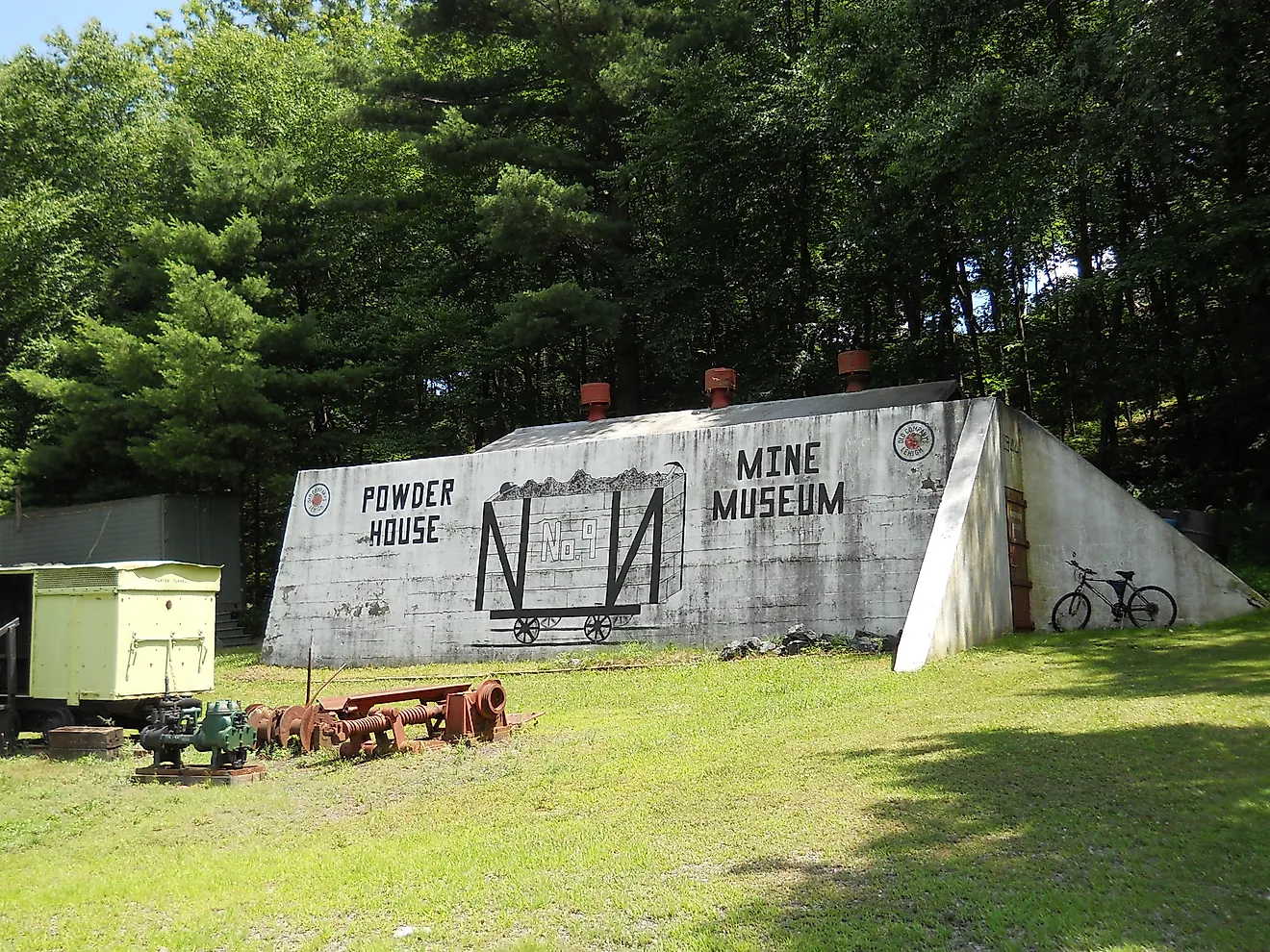
The park works on conserving bat habitats to support the several endangered bat species known to roost in the park. Many bats live in hollow trees or underneath loose bark. Typically, migrating bat species return year after year to the same tree to roost. The park works to minimize work scheduled in areas with active bat roosts to avoid disturbing the colony. Within the park, bats also live within abandoned mines. As of 2026, 30 mines have been gated to allow bats to enter and keep people out. Abandoned mines provide steady, warm temperatures, which are ideal for species that hibernate during the winter.
The park has built a bat condo. The Grandview Bat Condo was constructed near a large field and pond and is capable of holding a roost of 10,000 bats. The bats occupy the condo from late spring to early fall. Visitors can watch the bats flying out at night to feed and returning at dawn to sleep.

The park has partnered with nearby Gauley River National Recreation Area to support bat conservation by having rock climbers indicate where and when bats are spotted. Working with Colorado State University, Climbers for Bat Conservation, and the New River Alliance of Climbers, the public generates ongoing data to better understand where the bats roost and how they impact the habitat when living in cliffs and rocky crevices.
Challenges For New River Gorge Bats

Bats living in New River Gorge National Park & Preserve face WNS, limited natural caves, disturbance by humans, and the impact of climate change on temperatures, humidity, and water levels. Additionally, roosting in abandoned mines can be risky due to toxic gases and continually burning fires.
Visitors to the park help bats by respecting cave closures and staying out of closed areas. Additionally, park visitors should clean their gear before entering a different cave. WNS can be transported on clothing and gear when worn in different caves without being decontaminated. Give bats space. Watch it from a distance. Notify a park ranger if you see a bat on the ground.
Humans rely on bats to pollinate food such as avocados, bananas, cashews, dates, figs, peaches, and Blue Agave (used to make Tequila). Additionally, the large majority of U.S. bats are insectivores that help control insect populations. Bats range in size from less than an inch to bats with a six-foot wingspan. The majority of U.S. bats prey on moths, mosquitoes, and beetles, which are essential for healthier crops without the use of insecticides. Additionally, they have huge appetites, capable of consuming up to half their body weight in insects every night.